


Lab vs home health tests: what men 40+ need to know
You’ve probably seen the bold claims on at-home health test packaging. “98% accurate.” “Clinically proven.” It sounds reassuring, almost too good to be true. And honestly? Sometimes it is. Home test accuracy claims are often based on analytical performance under ideal lab conditions, not real-world use by someone in their bathroom on a Tuesday morning. If you’re over 40 and trying to stay on top of your health without the hassle of GP appointments and waiting rooms, it’s worth understanding exactly what you’re getting from each type of test before you trust the results.
Table of Contents
- How lab tests and home tests work
- Accuracy: Claims vs real-world performance
- When should you choose home or lab testing?
- Pitfalls and precautions: Avoiding common mistakes
- Why the lab vs home debate misses the real point
- Explore reliable, rapid home health tests
- Frequently asked questions
Key Takeaways
| Point | Details |
|---|---|
| Understand test types | Lab and home tests differ most in how samples are handled and who performs the analysis. |
| Accuracy varies in practice | Home test claims can overstate reliability; user technique and follow-up matter greatly. |
| Use tests appropriately | Home kits are convenient for screening but labs are best for confirmation and complex diagnosis. |
| Avoid common pitfalls | Careful following of instructions and confirming critical results boosts testing confidence. |
How lab tests and home tests work
Let’s start with the basics, because the two approaches are genuinely quite different.
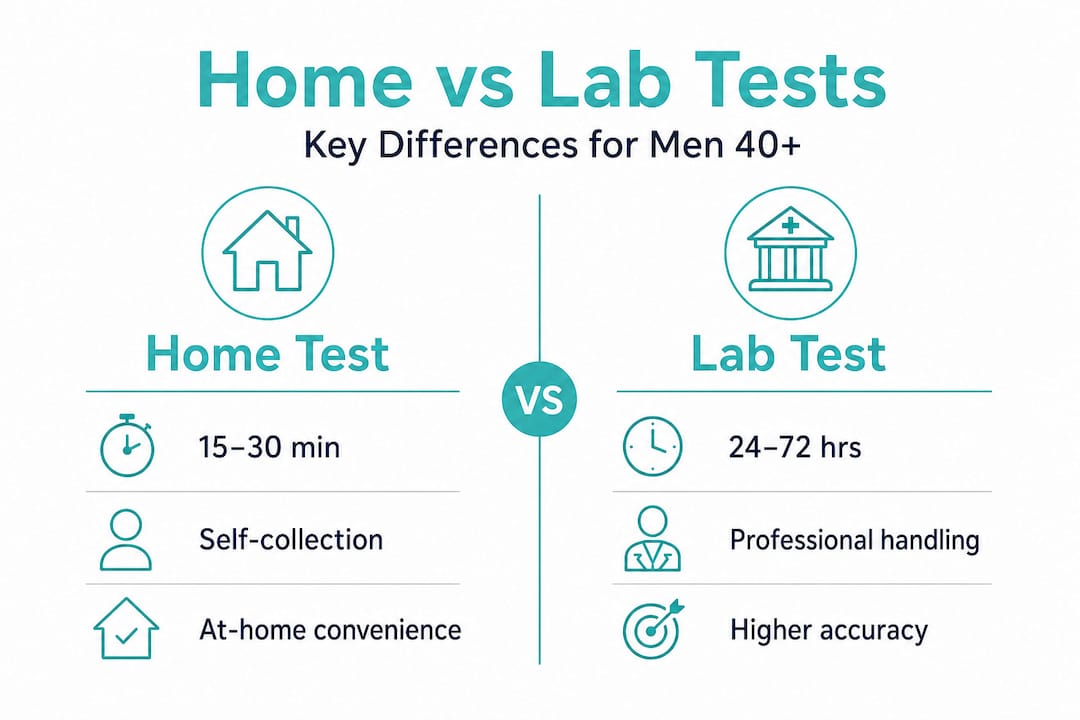
A home test (also called a rapid test or self-test) is a kit you use at home. You collect your own sample, whether that’s a finger-prick of blood, a urine sample, or a swab. You follow the instructions included in the kit. Then you read the result yourself, usually within 15 to 30 minutes. No clinic. No appointment. No waiting days for a letter.
A lab test, on the other hand, involves sending a sample to a professional laboratory. A trained technician processes it using standardized equipment and protocols. Results typically take 24 to 72 hours, sometimes longer, and are interpreted by a medical professional.
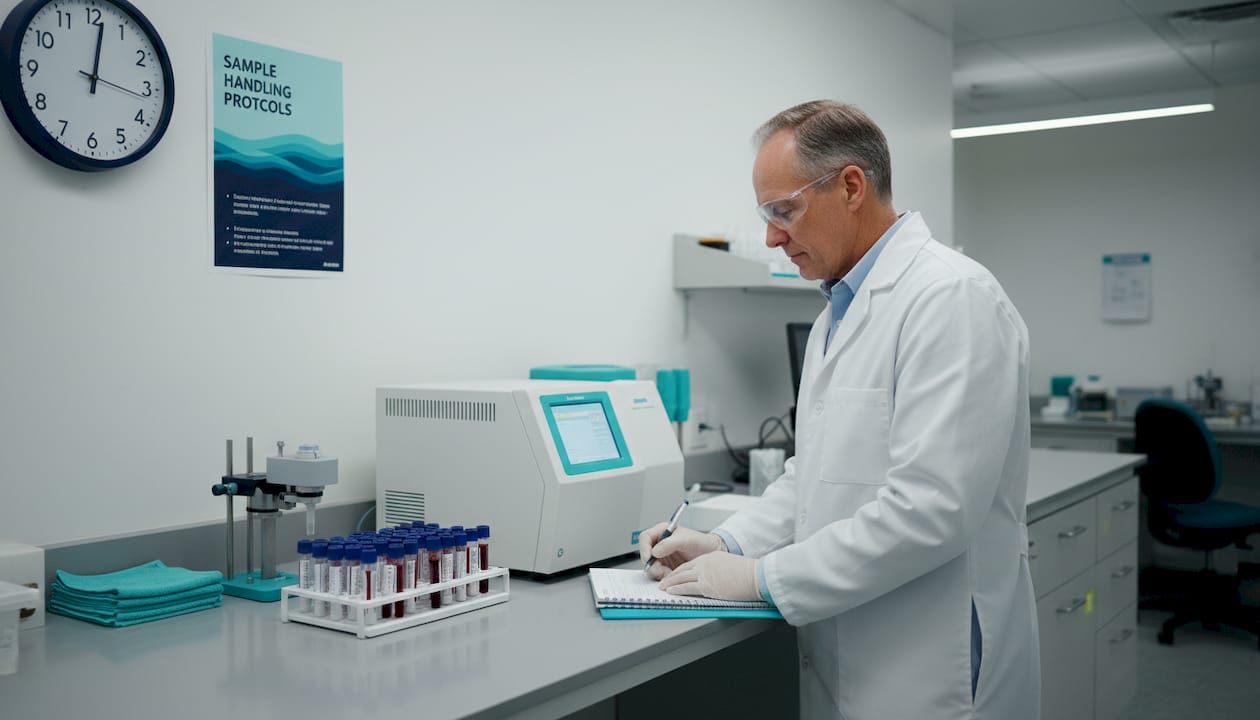
Here’s where it gets important. Pre-analytical variables like how a sample is collected, stored, and handled are responsible for most of the discrepancies between test results. Labs have strict protocols to minimize these errors. At home, those protocols depend entirely on you.
That doesn’t mean home tests aren’t reliable. It means the quality of your result is closely tied to how carefully you follow the process. Learn more about the home test basics before you start, and you’re already ahead of most people.
Comparison: Home test vs lab test
| Feature | Home test | Lab test |
|---|---|---|
| Speed of results | 15 to 30 minutes | 24 to 72+ hours |
| Sample collection | Self-collected | Often clinician-assisted |
| Processing | On-strip or test card | Automated lab equipment |
| Supervision | None | Trained staff |
| Convenience | Very high | Lower |
| Error risk | Moderate (user-dependent) | Low (protocol-controlled) |
| Cost | Lower | Higher |
| Privacy | High | Moderate |
The table makes it clear. Neither option is universally better. They serve different purposes, and knowing which one fits your situation is the real skill.
Accuracy: Claims vs real-world performance
Here’s the part most test packaging doesn’t explain clearly enough.
When a brand says their test is “98% accurate,” that figure usually comes from analytical accuracy. That means the test was evaluated under controlled lab conditions, with properly prepared samples handled by trained researchers. That’s not the same as how it performs when you’re using it at home, rushing through the instructions, or not quite sure if you’ve collected enough sample.
Clinical accuracy is what matters in the real world. It measures how well a test performs when used by actual people, in their actual homes, following actual instructions. And that number is almost always lower.
Many at-home kits report accuracy at 98% or above analytically, but real-world performance dips when users misread instructions, collect samples incorrectly, or test at the wrong time.
Common reasons for false results at home include:
- Not reading instructions fully before starting
- Wrong timing, such as testing too soon after potential exposure for STI tests
- Insufficient sample, like not enough blood from a finger prick
- Improper storage, like leaving kits in a hot car or humid bathroom
- Misreading the result, especially faint lines on lateral flow tests
- Expired kits used past their shelf date
None of these errors would happen in a lab setting, because every step is controlled. At home, you’re the technician.
That said, a well-designed rapid test used correctly is genuinely reliable. It’s not a coin flip. It’s a useful screening tool, and understanding its limits actually makes it more powerful, not less.
Pro Tip: Even if a test claims high accuracy, always double-check the instructions before you start, not while you’re mid-collection. And if a result surprises you or feels inconsistent with your symptoms, treat it as a reason to follow up with a lab test rather than final confirmation.
For a deeper look at the evidence, our breakdown of rapid test accuracy walks through how different test types perform and what the studies actually show.
When should you choose home or lab testing?
Now that accuracy differences are clear, let’s get practical about when each option makes sense.
Home testing works well when:
- You want a fast, private initial screen for something like an STI or PSA level
- You’re doing a routine check rather than investigating a specific concern
- You already know your baseline and are monitoring for changes
- You’d otherwise skip testing entirely because a clinic visit feels like too much effort
- You need immediate reassurance after potential exposure
Lab testing is the better call when:
- You’ve had a positive home test result and need confirmation
- You have persistent symptoms but a home test comes back negative
- The test involves complex, quantitative results (like detailed hormone panels or cancer markers)
- A medical decision, such as starting treatment, depends on the outcome
- You’re in a high-risk group where missing a result could have serious consequences
The benefits of rapid home tests go beyond just convenience. For men over 40 who are more likely to put off health appointments, getting a quick answer at home often means getting any answer at all. That matters. But for complex or critical results, lab testing remains the gold standard, especially for quantitative tests where exact numbers influence treatment.
Which test type suits which situation?
| Test type | Home testing | Lab testing | Both recommended |
|---|---|---|---|
| STI screening (HIV, chlamydia) | Good initial screen | Confirmatory | Yes |
| PSA (prostate marker) | Quick initial check | For borderline/high results | Yes |
| Cholesterol | Useful for monitoring | For full lipid panel | Yes |
| FOB (bowel cancer marker) | Initial stool check | For positive results | Yes |
| Testosterone/hormones | Basic screening | Complex or diagnostic | Yes |
| Fertility (sperm count) | Initial personal check | Clinical fertility testing | Yes |
For most conditions, the smart approach is layered. Use a home test to screen. Use a lab test to confirm if anything looks off or if you’re making a medical decision based on the result. Think of home testing as the early warning system and lab testing as the detailed investigation. Check out our guide to rapid testing for more context on how this plays out across different health concerns.
Pro Tip: If a home test comes back positive, or if you have clear symptoms but a home test says negative, don’t stop there. Book a follow-up lab test. That combination of home speed and lab certainty is the most effective approach you can take.
Pitfalls and precautions: Avoiding common mistakes
Even with the right test in hand, your results are only as good as your technique. This is the part people consistently underestimate.
Here are the most common mistakes men make with home testing, and how to avoid them:
-
Skipping the instructions. Most people glance at the leaflet, assume it’s straightforward, and start testing. Then they miss a critical step like waiting the full collection time or using a specific finger for the blood sample. Read the full instructions before you open anything.
-
Testing at the wrong time. STI tests have window periods. PSA tests can be affected by physical activity in the 48 hours before testing. Fertility tests are more accurate at certain times. Timing matters more than most people realize.
-
Poor sample collection. A finger-prick test needs enough blood on the strip. A urine sample needs to be midstream. A swab needs firm contact with the right area. Rushing any of these steps compromises your result.
-
Storing kits badly. Heat, humidity, and direct sunlight degrade test components before you even open the box. Keep kits at room temperature, away from bathrooms and windowsills.
-
Skipping confirmation after a positive or persistent negative. A home test is a screen, not a diagnosis. If the result is significant, confirm it.
“Pre-analytical variables, including how samples are collected and handled, are responsible for the majority of discrepancies between home and lab test results. Professional labs use standardized protocols to control for these variables, which is why their results tend to be more consistent and reproducible.” — Medica Trade Fair Expert FAQ
That expert insight is worth sitting with. Labs don’t just have better equipment. They have better process control at every single step. When you replicate those steps at home as closely as possible, your results get meaningfully more reliable.
Why the lab vs home debate misses the real point
Most articles on this topic treat it as a competition. Lab tests win on accuracy. Home tests win on convenience. Pick your side. But that framing misses something important, especially for men over 40.
The real question isn’t which type of test is more accurate in a vacuum. It’s this: which approach will actually get you testing in the first place, and keep you testing consistently over time?
The uncomfortable truth is that a lot of men in their 40s and 50s skip health screening altogether. Not because they don’t care, but because the process feels like a hassle, or slightly embarrassing, or something they’ll get around to eventually. That “eventually” can stretch into years. And that’s where health problems fall through the cracks.
From where we stand, a home test you actually do is worth more than a lab test you never book. The men’s health test benefits of rapid home testing aren’t just about speed or privacy. They’re about removing friction from a part of life that genuinely matters.
The small differences in analytical accuracy between a quality home test and a lab test are rarely the deciding factor in health outcomes. What actually moves the needle is whether you’re checking your PSA levels every year, whether you’re catching an STI before it becomes a bigger problem, whether you’re monitoring your bowel health instead of ignoring it for another decade.
Use home tests to stay engaged. Use lab tests when confirmation counts. That combination is more powerful than either option alone.
Pro Tip: Don’t frame this as a choice between home and lab. Frame it as a system. Screen at home regularly. Escalate to a lab when something needs a closer look. Consistency is the part most health advice forgets to mention.
Explore reliable, rapid home health tests
If this article has made you think “I should actually do something about this,” that’s exactly the right reaction.
At Rapidtest, we make it easy for men over 40 to take proactive control of their health without the queues, the appointments, or the awkward conversations. Our rapid home test kits deliver results in 15 minutes, and they cover the health checks that matter most at this stage of life. Whether you’re thinking about your sexual health or keeping an eye on potential cancer markers, we’ve got you covered. Browse our at-home STI and STD kits for quick, private sexual health screening, or check out our at-home PSA test kits to monitor your prostate health from home. Simple, fast, and genuinely useful.
Frequently asked questions
Are home test kits as accurate as lab tests?
Not quite. While many kits claim 98%+ accuracy, that figure reflects analytical performance under ideal conditions, and real-world reliability is often lower due to user error and sample collection differences.
When should I confirm a home test with a lab test?
You should follow up with a lab if a home test returns a positive result, if symptoms persist despite a negative result, or if a health decision depends on the outcome. Lab tests are the gold standard for anything complex or quantitative.
What is the main risk with at-home health testing?
The main risks are user error, incorrect sample collection, and misinterpreting results. These factors can lead to false positives or negatives that a properly controlled lab process would typically avoid.
Which tests are better suited for home use?
Screening tests for common infections like HIV and STIs, as well as basic health markers like PSA and FOB levels, work well at home. Complex or diagnostic testing still requires a lab, as quantitative and specialized tests need professional equipment and interpretation.