


At-home health check guide: step-by-step for men over 40
Life gets busy fast when you’re over 40. Between work, family, and everything else pulling at your time, booking a clinic appointment can feel like one more thing on an already overloaded list. The truth is, most men in this age group aren’t skipping health checks because they don’t care. They’re skipping them because the process feels inconvenient, slow, and honestly, a bit uncomfortable. At-home testing changes that. Whether you’re checking for STIs, assessing your fertility, or keeping an eye on your PSA levels for prostate health, this guide walks you through the full process, from choosing the right kit to acting on your results.
Table of Contents
- What you need before starting an at-home health check
- Step-by-step: How to collect your samples correctly
- Troubleshooting and avoiding common pitfalls
- Understanding your results and next steps
- A reality check: What home tests can—and can’t—do for men over 40
- Get started: Trusted at-home test kits for peace of mind
- Frequently asked questions
Key Takeaways
| Point | Details |
|---|---|
| Prepare carefully | Read instructions and set up your space to prevent sample errors. |
| Follow collection steps | Collect and label your samples as instructed for each test type. |
| Know the limits | At-home tests screen for issues but always consult a doctor for a positive result. |
| Pick the right kit | Choose a test designed for your needs, checking window periods and accuracy. |
| Act on results | Don’t ignore abnormal or unclear results—contact your GP for follow-up. |
What you need before starting an at-home health check
Now that you know why these checks matter, let’s get you set up for success. Preparation is everything here. The difference between a reliable result and a wasted kit often comes down to the five minutes you spend (or don’t spend) getting organized beforehand.
Essential kit components
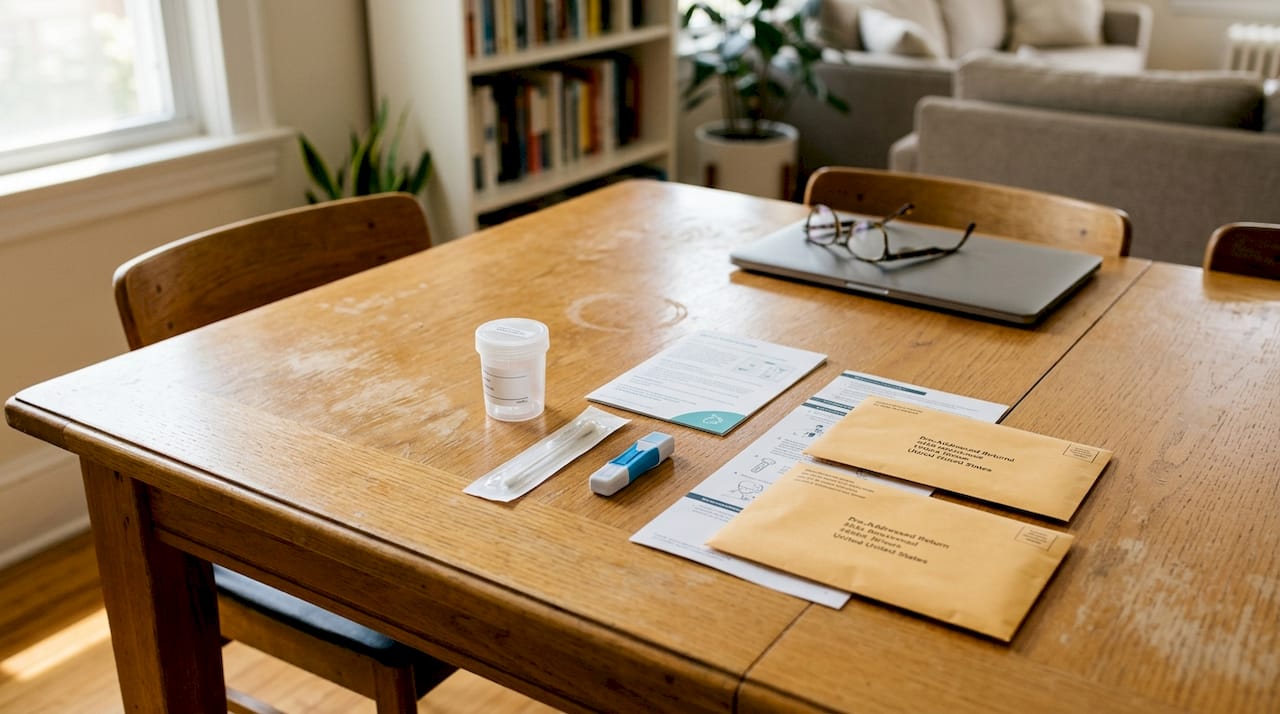
Most at-home health kits include everything you need, but it helps to know what to expect before you open the box. Here’s what a well-stocked kit should contain:
| Component | Purpose |
|---|---|
| Sample collection device | Urine cup, swab, or lancet depending on test type |
| Storage tube or bag | Keeps your sample stable during transport |
| Prepaid return envelope | For lab-based tests sent by post |
| Instruction leaflet | Step-by-step guidance specific to your kit |
| Biohazard bag | Safe sample containment during mailing |
Choosing the right kit
Not all kits are equal. NHS free STI kits test for chlamydia, gonorrhoea, HIV, syphilis, hepatitis B/C, and trichomoniasis, using a postal system where you self-collect and mail your sample. These are a solid option if STI screening is your priority.
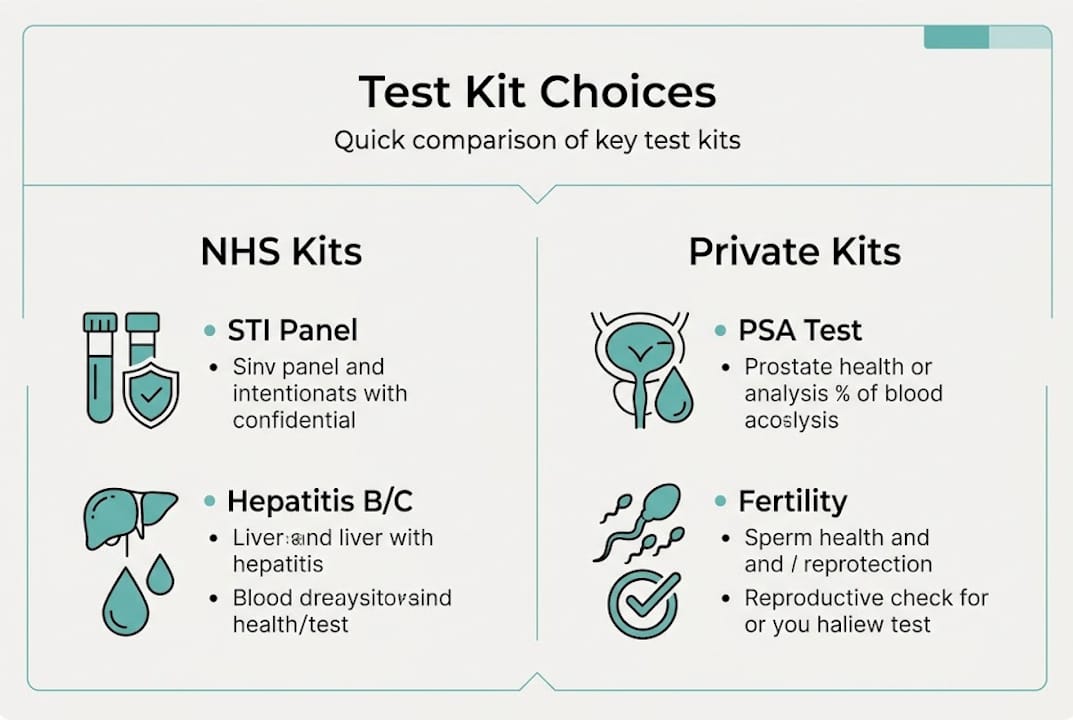
For fertility and prostate checks, you’ll typically need a private rapid test. These give you results in 15 minutes at home, without waiting on a lab turnaround. Understanding the differences between these options is something we cover in depth in self-testing kit basics.
Common mistakes to avoid
- Not reading the full instructions before you start
- Urinating within 1-2 hours before a urine-based STI test
- Failing to fast if the test requires it
- Using a contaminated surface for sample collection
- Forgetting to note the collection time on your sample
Pro Tip: Order a second kit if you’re nervous about getting the sample collection right the first time. It’s a small cost for a lot more confidence.
Step-by-step: How to collect your samples correctly
With your kit and workspace ready, let’s get into the actual collection. This is the part most people overthink, but once you’ve read through it, you’ll realize it’s much simpler than it sounds.
Urine sample
- Avoid urinating for at least 1-2 hours before collection.
- Use the first urine of the morning for best accuracy.
- Collect a midstream sample in the provided container.
- Transfer to the storage tube immediately and seal tightly.
Swab sample
- Wash your hands thoroughly before handling the swab.
- Follow the specific swab site instructions in your kit.
- Rotate the swab as directed and hold for the specified seconds.
- Place into the transport tube without touching the swab tip.
Finger-prick blood sample
- Warm your hand first by rubbing or running warm water over your fingers.
- Use the lancet on the side of your fingertip, not the pad.
- Allow blood to drop naturally into the collection tube.
- Fill to the indicated line, seal, and shake gently if instructed.
Saliva sample
- Avoid eating, drinking, or brushing teeth for 30 minutes prior.
- Spit directly into the tube to the fill line.
- Secure the cap and invert slowly to mix with the preservative.
Once collected, post same day Mon-Thu to ensure your sample reaches the lab fresh. Results typically come back within 2-5 days, though some STI tests include a 2-week window period that affects timing.
Pro Tip: Label your sample the moment you collect it. Write the date and time directly on the tube. It sounds obvious, but it’s one of the most common errors people make when testing at home.
Knowing why at-home testing matters for your overall health routine can also help you stay consistent rather than treating it as a one-time thing.
Troubleshooting and avoiding common pitfalls
Even when you follow all the instructions, things can go wrong. Here’s what to do if problems arise, and how to keep your results as reliable as possible.
Common issues and fixes
- Blood prick fails: Your hands may be cold. Warm them up and try again. Use the opposite finger.
- Insufficient sample volume: Don’t rush. If a urine sample is too small, drink water and try again after 30 minutes.
- Delayed postage: If you miss the post, refrigerate your sample (do not freeze) and mail it the next available day.
- Invalid result on a rapid test: Repeat with your second kit. An invalid line usually means a procedural error, not a health issue.
Understanding false results
This is where it’s worth being realistic. STI false negatives can occur during window periods, and PSA tests carry a false positive rate of over 75%, meaning a high reading doesn’t automatically mean cancer. Fertility tests vary too, with basic kits measuring sperm concentration while more advanced ones include motility data.
That’s why this matters:
“Home kits are for screening. Positives always need clinical follow-up.”
If you’re unsure whether your result is reliable, check out accuracy of at-home tests before drawing any conclusions. And if privacy is part of why you tested at home in the first place, peace of mind testing walks you through how these kits handle your data discreetly.
Understanding your results and next steps
Once you’ve completed your test, it’s time to interpret and act on what you’re seeing. A result is only useful if you know what to do with it.
Result comparison by test type
| Test type | Typical accuracy | Turnaround | Follow-up needed? |
|---|---|---|---|
| STI (lab-based postal) | High if timed correctly | 2-5 days | Yes, if positive |
| Fertility (sperm concentration) | 95%+ lab match | 15-30 mins or 2-5 days | Yes, if low count |
| PSA (prostate screening) | 98-99% claimed accuracy | 15 minutes | Yes, if elevated |
| PRS saliva (genetic cancer risk) | 40% biopsy-confirmed in high-risk | Varies | Yes, always advised |
What your result actually means
Negative result: This is good news, but it doesn’t mean you’re in the clear indefinitely. Schedule regular screening based on your lifestyle and risk level.
Positive result: Don’t panic. A positive on a home kit is a flag, not a final diagnosis. Follow these steps:
- Don’t share or act on the result before speaking to a professional.
- Book a GP or sexual health clinic appointment promptly.
- Bring your kit or result documentation to the appointment.
- Avoid sexual activity until a confirmed result is received for STI positives.
- Discuss long-term monitoring options with your doctor.
Invalid result: Repeat the test if possible. If it happens twice, contact the kit provider or your GP directly.
For a clear walkthrough of how to actually read what’s in front of you, interpreting test results covers each scenario in plain language. And if you want to see how real-world testing looks for men in this age group, at-home test examples is worth a read.
A reality check: What home tests can—and can’t—do for men over 40
Let’s be honest about something. The convenience angle of home testing is real, and we’re big believers in it. But there’s a version of this conversation that gets a bit too cheerful about what a small kit can actually tell you.
Home tests are screens, not diagnoses. They work best for asymptomatic men who want to stay on top of their health between GP visits. They give you control and privacy. That’s genuinely valuable.
What they can’t do is replace a clinical conversation. A high PSA reading, for example, carries a high false positive rate. That can cause real anxiety for no reason, or worse, false reassurance if someone stops at a negative result and doesn’t follow up. The emerging PRS saliva tests are showing real promise here, with 40% biopsy-confirmed cancer in high-risk men versus 25% for PSA alone. That’s a meaningful step forward.
The real winning move? Use home testing to stay consistently informed. Then use those results to have better, more targeted conversations with your doctor. You can see examples for men over 40 that show exactly how this plays out in practice.
Get started: Trusted at-home test kits for peace of mind
Ready to take action? You don’t need an appointment, a waiting room, or an awkward conversation to start looking after your health. Rapidtest makes it straightforward.
Whether you’re due for an STI test kit, want to check your sperm health with a fertility test kit, or need a quick read on your prostate health with a PSA test kit, we’ve got you covered. Discreet delivery, clear instructions, and results in 15 minutes. No queues, no awkward conversations. Just the information you need to stay ahead of your health.
Frequently asked questions
How long do at-home STI test results take?
Results arrive within 2-5 days after you mail your sample, provided you post it on a weekday.
Are at-home PSA and fertility test kits accurate?
PSA kits claim 98-99% accuracy for screening, and top fertility kits can match over 95% lab sensitivity, making them reliable screening tools when used correctly.
What should I do if my home test is positive?
Contact your GP or a sexual health clinic for confirmatory testing. Positives need clinical follow-up before any decisions are made.
Do I need to follow special instructions for sample collection?
Yes. Most kits require specific timing, such as first urine catch and avoiding urination 1-2 hours prior. Always read your instructions fully before you start.
Can at-home health checks replace regular doctor visits?
No. Home tests are for screening, not for diagnosing symptoms or replacing comprehensive clinical care. Use them alongside, not instead of, your GP.