


How accurate are STI self-tests? A guide for men over 40
You want the privacy, the convenience, and the peace of mind. But there’s one question that stops a lot of men in their tracks before they even open the box: can you really trust a home test as much as a clinic? It’s a fair concern. Lower positivity rates in self-sampling compared to clinic testing don’t automatically mean the tests are less reliable. They often reflect the fact that men using home kits tend to be lower-risk or asymptomatic. This guide breaks down what the evidence actually says, who self-testing is right for, and when you should skip the kit and book an appointment instead.
Table of Contents
- What STI self-tests can (and cannot) detect
- How accurate are STI self-tests compared to clinic tests?
- Who should choose self-testing and who should go to a clinic?
- Making STI self-testing work for you: Best practices and pitfalls
- Why accuracy isn’t everything: What most guides miss about self-testing
- Ready to try accurate STI testing at home?
- Frequently asked questions
Key Takeaways
| Point | Details |
|---|---|
| Self-tests are highly accurate | For common STIs, at-home tests offer results comparable to clinics when used correctly. |
| Clinic testing is best for symptoms | Symptomatic or high-risk men should visit a clinic, as home kits may miss some infections. |
| Use best practices for accuracy | Carefully following instructions and timing increases your chances of a reliable result. |
| Test accessibility varies | Not all men have equal access to self-tests, especially in some regions of Europe. |
| Regular action matters | Consistent testing and prompt follow-up are as important as the test’s statistical accuracy. |
What STI self-tests can (and cannot) detect
After setting the stage for why accuracy matters, let’s clarify what these self-tests actually look for and when you should choose a different option.
Most home STI kits are built around the infections that are both most common and most testable outside a lab. They work well and they’re the ones worth knowing about.
What home kits typically cover:
- Chlamydia (urine sample or swab)
- Gonorrhea (urine sample or swab)
- HIV (finger-prick blood sample)
- Syphilis (finger-prick blood sample)
For men over 40, ease of sample collection matters. Urine-based tests are generally the most straightforward. Blood-based tests require a small finger-prick, which most people manage without any trouble. If you’re unsure about the types of STI tests available and what each involves, it’s worth reading up before ordering.
What home kits don’t cover well:
- Herpes (HSV-1 and HSV-2)
- HPV (human papillomavirus)
- Extragenital infections (throat, rectum)
- Trichomonas and less common infections
For those, a clinic visit is the right move. The critical gaps in STI testing across Europe also mean that access to home kits varies depending on where you live. In some countries, free or subsidized self-sampling is available. In others, you’ll need to source kits privately. Either way, knowing what’s covered helps you make a smarter call.
For common infections like chlamydia, gonorrhea, HIV, and syphilis, home kits perform well and are a solid first-line screening tool. For anything symptomatic or less common, a clinic is the better choice.
Pro Tip: If you’ve had unprotected sex with a new partner, a four-in-one kit covering chlamydia, gonorrhea, HIV, and syphilis gives you a broad baseline screen in one go.
How accurate are STI self-tests compared to clinic tests?
Knowing which STIs can be detected is only part of the answer. The real question is, how do self-tests stack up against clinic results?
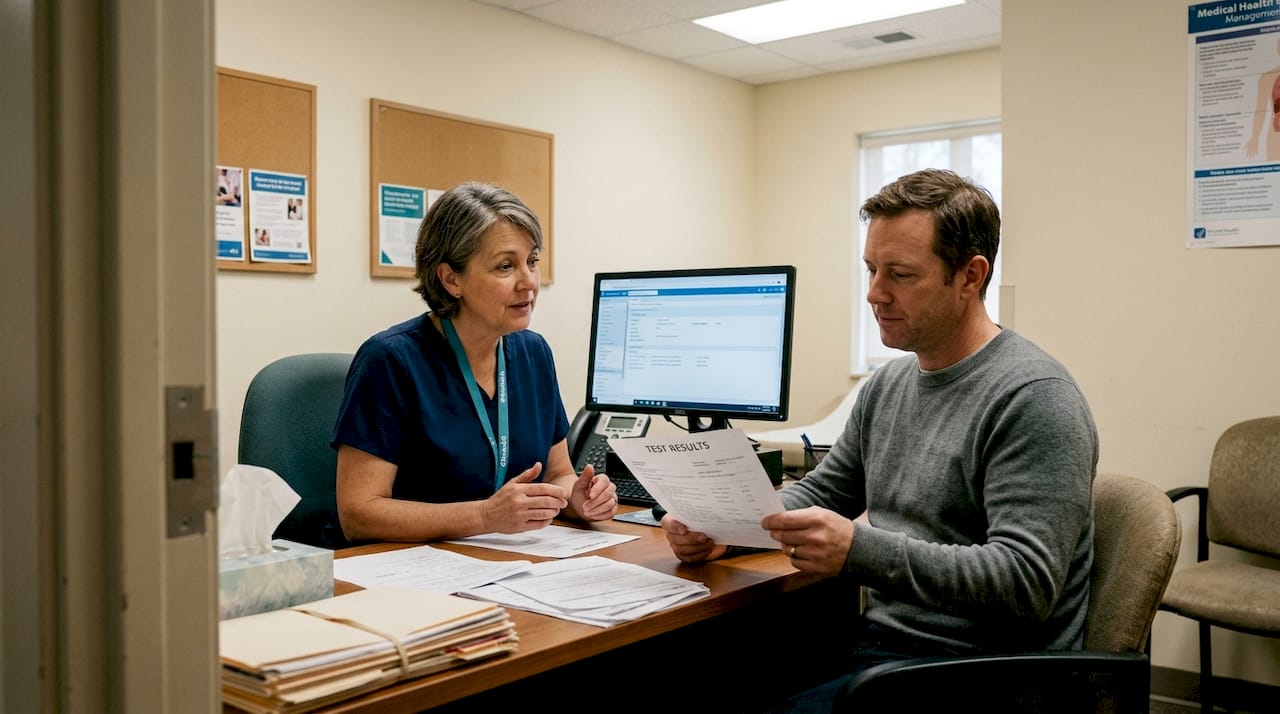
Here’s the short answer: for common STIs, self-tests perform very closely to clinic-based tests. The gap is smaller than most people expect.
| Test type | Chlamydia positivity | Gonorrhea positivity | HIV sensitivity |
|---|---|---|---|
| Clinic testing | 8 to 10% | Varies by region | 99%+ |
| Home self-sampling | 6 to 9% | Comparable | 99%+ |
Self-sampling positivity rates for chlamydia run slightly lower than clinic figures, roughly 6 to 9% versus 8 to 10%. But this isn’t because the tests are less sensitive. It’s largely because the people using home kits tend to be asymptomatic and lower risk. The test itself isn’t missing infections at a meaningful rate.
“The accuracy of a self-test depends as much on who uses it and how they use it as on the technology itself.”
For men over 40 doing routine screening, the full at-home STI bundle offers a practical way to cover the common bases without the awkwardness of a clinic appointment. And at-home STI testing offers real advantages in consistency. When testing feels easier, you’re more likely to do it regularly.
Three things that most affect your individual result:
- Following instructions precisely (sample collection method matters a lot)
- Testing at the right time after potential exposure (window periods vary by infection)
- Using a kit that hasn’t expired and has been stored correctly
Get those three things right and your home result is likely to be just as reliable as what you’d get at a walk-in clinic for the same infections.
Who should choose self-testing and who should go to a clinic?
Understanding accuracy is important, but choosing the right testing method for your personal situation is what really matters.
Self-testing is a genuinely good fit for a lot of men over 40. But it’s not the right answer for every situation. Here’s how to think about it.
Self-testing is a strong option if you:
- Have no symptoms and want routine peace of mind
- Have had a new partner and want a baseline screen
- Prefer privacy and want to avoid waiting rooms
- Are testing for common STIs like chlamydia, gonorrhea, HIV, or syphilis
- Are comfortable following a simple set of instructions
Go to a clinic if you:
- Have symptoms (discharge, sores, burning, swelling)
- Think you may have been exposed to a less common STI
- Need testing for oral or rectal sites
- Have a weakened immune system or complex health history
- Want same-day treatment or partner notification support
For broader guidance on at-home test choices for men over 40, the decision usually comes down to whether you’re screening or investigating. Screening (no symptoms, low to moderate risk) suits self-testing well. Investigating symptoms is a clinic job.
It’s also worth noting that self-tests are not a complete replacement for clinic visits, particularly for older men or those with higher risk. Uptake also tends to be lower in men over 40, which means this group can sometimes fall through the cracks when it comes to consistent testing. Understanding your STI test options helps you match the right tool to the right situation.
Pro Tip: If you’re unsure whether your situation needs a clinic visit, call your local sexual health service. A two-minute phone call can save you a lot of anxiety and help you decide without committing to an appointment.
Making STI self-testing work for you: Best practices and pitfalls
Now that you know which test suits your needs, let’s talk about how to get the best results from self-testing and avoid common errors.
A self-test is only as good as the person using it. The technology is solid, but the process matters.
Before you test:
- Check the expiry date before opening anything
- Read the full instructions (yes, all of them)
- Make sure the kit covers the infections relevant to your situation and region
- Know your window period. Testing too early after exposure can produce a false negative
When you test:
- Collect the sample exactly as instructed
- Don’t rush. A poorly collected sample is the most common cause of inaccurate results
- Use the test at room temperature if required
After you test:
| Result | What to do next |
|---|---|
| Negative | Retest if within window period; maintain regular screening |
| Positive | Don’t panic. Confirm with a clinic and get treatment |
| Invalid/unclear | Retest with a new kit; contact the supplier if issues persist |
Success with self-testing depends on correct use, choosing the right kit type, and having a plan for what comes next. This is especially true for older men who may be testing less frequently or coming back to sexual health screening after a long gap.
For a private at-home STI test experience that’s genuinely straightforward, the key is preparation. And when testing gaps in Europe mean clinic access is limited, knowing how to use a home kit correctly becomes even more important.
Why accuracy isn’t everything: What most guides miss about self-testing
Here’s a perspective most guides don’t spend much time on. Accuracy statistics are useful, but they don’t tell the whole story.
The real measure of a self-test isn’t its sensitivity in a lab. It’s whether it gets used, used correctly, and followed up on. A clinic-grade test you never book is worth nothing. A home test you take every six months is genuinely protective.
Self-tests increase overall testing rates, but they haven’t fully closed the equity gap. Older men, men in rural areas, and men from lower-income backgrounds still face real barriers. Convenience only helps if the kit is affordable, accessible, and something you’ll actually act on.
The best approach combines reliable at-home STI testing with honest conversations with your partner and your doctor when results call for it. Testing is a behavior, not a one-time event. Making it a habit matters more than chasing perfect accuracy statistics.
Ready to try accurate STI testing at home?
If you’ve made it this far, you now have a clearer picture than most men over 40 walking into a clinic without a clue. Knowledge is the first step. Action is the one that counts.
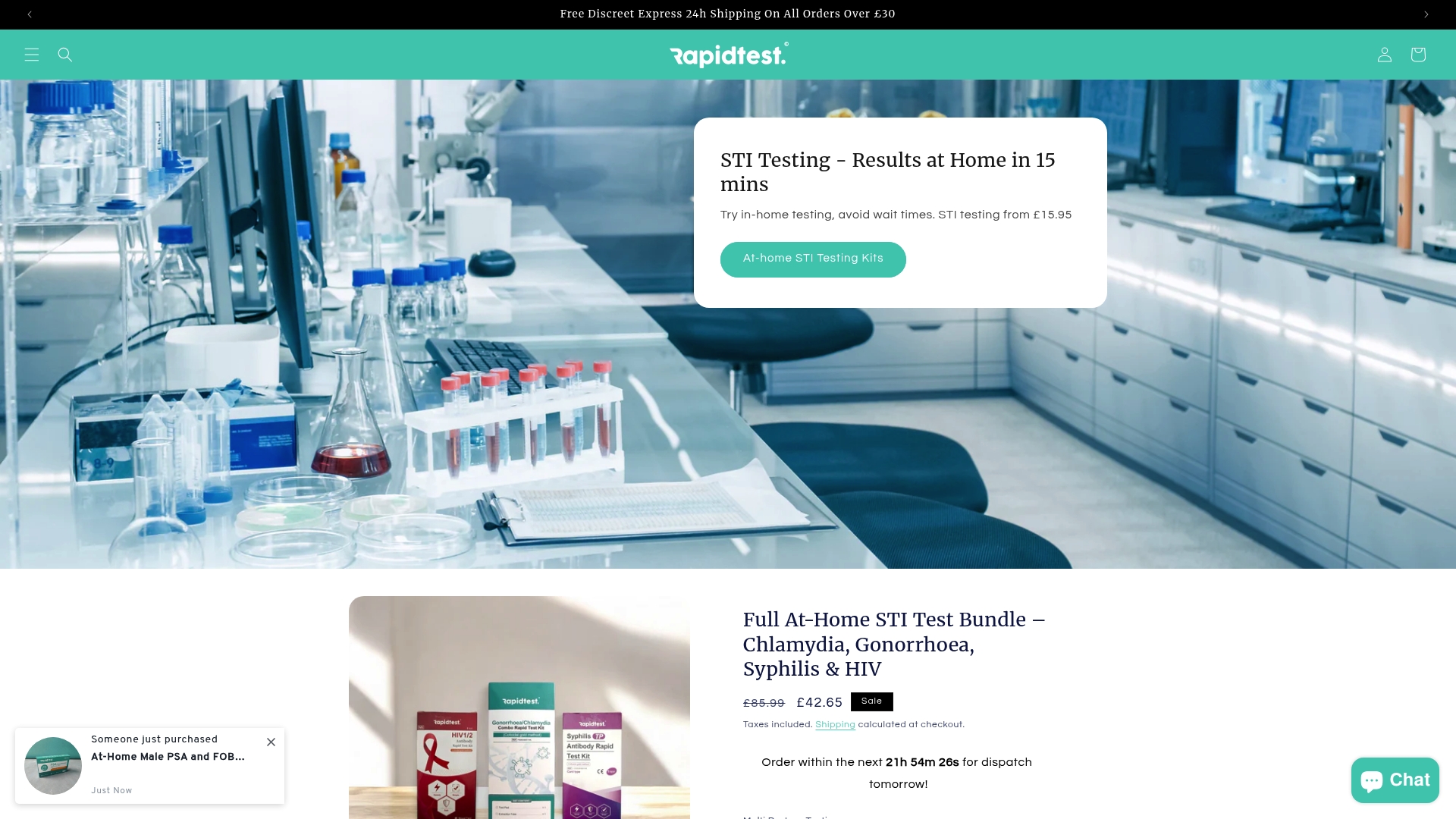
At Rapidtest, we offer at-home STI and STD testing kits that deliver results in 15 minutes. No appointment needed, no waiting room, no awkward conversations. Our STI rapid test kits cover chlamydia, gonorrhea, syphilis, and HIV. If you want to start with a specific focus, our HIV at-home test is 99.8% accurate and takes just 15 minutes. Fast, private, and genuinely reliable.
Frequently asked questions
Are at-home STI self-tests as accurate as clinic tests?
Most at-home STI self-tests have similar accuracy to clinic tests for common infections, but may miss some cases if used incorrectly or for less common STIs. Positivity rates for self-sampling run slightly lower than clinic figures, largely reflecting lower-risk users rather than test failure.
What STIs can at-home tests detect?
Most home kits detect chlamydia, gonorrhea, syphilis, and HIV effectively. Rare infections like herpes and HPV require clinic testing, as home kits cover common STIs but aren’t designed for the full spectrum.
When should I see a doctor instead of self-testing?
If you have symptoms, suspect exposure to a rare STI, or need testing for oral or anal sites, visit a clinic. Self-testing isn’t a replacement for clinic care when symptoms or higher risk are involved.
How can I improve the accuracy of my home STI test results?
Follow instructions carefully, check the expiry date, and test at the right time after possible exposure. Correct use is critical for valid, reliable results.
Are STI self-tests free or covered in Europe?
Free or subsidized home STI tests are not available everywhere in Europe. Critical gaps in access mean coverage varies significantly by country and region.
Recommended
- Self-testing kits explained: Safe, simple health checks at home – RapidTest
- Smart choices: at-home test examples for men over 40 – RapidTest
- How to read STI test results: at-home kit guide – RapidTest
- Home health testing privacy guide for men 40+ – RapidTest
- Practical guide to lasting behavioral change for men