


Your guide to all types of STI tests: affordable options & FAQs
Choosing the right STI test can feel genuinely confusing. There are different test types, different window periods, and a growing number of ways to access them, from NHS clinics to home kits you can order online. And with STI rates rising across Europe, getting tested regularly isn’t just a good idea. It’s one of the most responsible things you can do for yourself and your partners. This guide breaks down every main type of STI test, what each one involves, who needs what, and how to access affordable options without the stress of a waiting room.
Table of Contents
- Understanding the criteria: When and why different STI tests are needed
- Most common types of STI tests: What each one involves
- How and where to access STI tests in the UK and Europe
- Special considerations: Extragenital testing, higher risk groups, and expert tips
- Summary comparison: Pros, cons, and speed of each STI test type
- Our take: What regular STI testing is really about — beyond the test types
- Get started: Affordable, discreet STI tests for total peace of mind
- Frequently asked questions
Key Takeaways
| Point | Details |
|---|---|
| Match the test to exposure | Choose your STI test based on the type of sexual contact and when it occurred. |
| Affordable and free options exist | NHS clinics and home kits provide major STI tests for free or low cost across the UK and much of Europe. |
| NAAT kits are highly accurate | For chlamydia and gonorrhoea, NAAT home test kits are more than 95% accurate and easy to use. |
| Special tests for higher risk | Men who have sex with men and those with anal/oral sex may need extra throat or rectal swabs. |
| Clinic visit if in doubt | If you have symptoms, see a clinician for examination even if your home test is negative. |
Understanding the criteria: When and why different STI tests are needed
Not every test works for every situation. The type of test you need depends on a few key factors: what you may have been exposed to, how recently it happened, and whether you have symptoms or you’re just doing routine screening.
Window periods matter more than most people realize. These are the gaps between exposure and when a test can actually detect an infection. Getting tested too early gives you a false sense of security. Window periods vary by infection: chlamydia and gonorrhoea need up to 2 weeks, HIV needs 45 to 90 days, and syphilis requires up to 12 weeks. If you’ve had a recent exposure, test early and plan to retest.
For more on timing, when to test after exposure is a helpful starting point. And if you’re unsure how long to wait after sex, external guidance can help you map it out.
Symptoms vs. routine screening is another key split. If you have discharge, sores, burning, or unusual pain, you need a clinical exam alongside testing. Routine screening, on the other hand, is for people without symptoms who are staying on top of their sexual health.
Specimen types also vary depending on the infection:
- Urine samples are used for chlamydia and gonorrhoea
- Blood tests are used for HIV, syphilis, and hepatitis B/C
- Swabs (genital, rectal, or throat) are used for bacterial and viral infections at specific sites
Frequency matters too. Men who have sex with men (MSM) are typically advised to test every 3 months. Under 25s who are sexually active should test annually at minimum. Anyone with a new or multiple partners should test more often.
Pro Tip: If you’re not sure which test to pick, many clinics and home kits guide you based on your sexual activities and any symptoms you’re experiencing. You don’t need to figure it all out alone.
Most common types of STI tests: What each one involves
Now that you understand the reasons behind testing, here’s a breakdown of the main types of STI tests and what to expect from each.
NAATs (Nucleic Acid Amplification Tests) are the gold standard for chlamydia and gonorrhoea. They work by detecting the genetic material of bacteria in a urine sample or swab. NAATs have over 95% sensitivity and specificity, making them the most reliable option for bacterial STIs. You can find NAAT chlamydia and gonorrhoea tests designed for home use that are just as accurate as clinic versions.
“NAATs are preferred due to their high accuracy and speed.” — IUSTI guideline, 2025
Blood serology tests are used for HIV, syphilis, hepatitis B, and hepatitis C. These tests look for antibodies or antigens in your blood. A small finger-prick sample is usually enough for home kits, while clinics may draw from a vein.
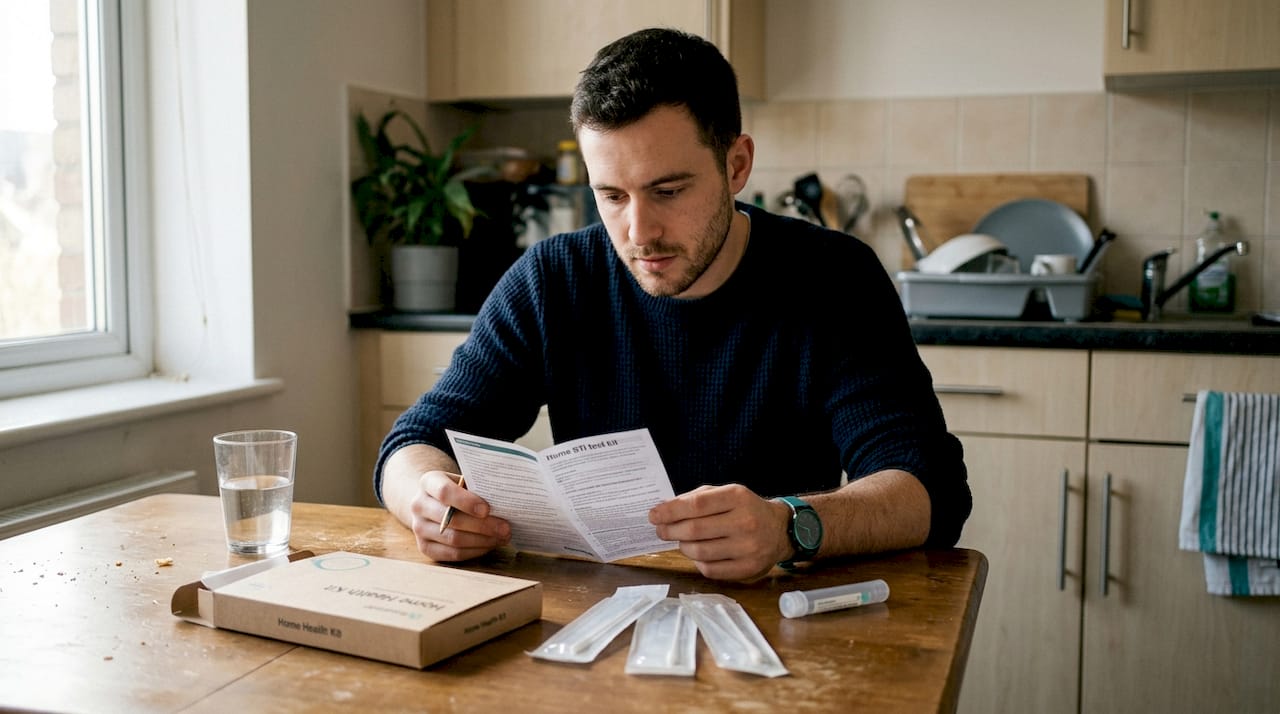
Clinical examination and lesion swabs are used for herpes and genital warts. These typically require a clinician to visually examine sores or lesions and take a swab directly from the affected area. You can’t reliably test for herpes at home if you don’t have an active outbreak.
Here’s a quick overview of the main test types:
- NAAT: Urine or swab, for chlamydia/gonorrhoea, highly accurate
- Blood serology: Finger-prick or venous draw, for HIV/syphilis/hepatitis
- Lesion swab: Clinician-collected, for herpes/warts during active outbreaks
- Self-collected swabs: Rectal or throat, validated for home use
Pro Tip: Research confirms that self-collected swabs are just as effective as those taken by a clinician. So if you’re testing at home, you’re not compromising on accuracy. For more STI testing resources, our blog covers a wide range of topics in plain language. The NHS STI overview is also a solid reference.
How and where to access STI tests in the UK and Europe
Once you know which test you need, here’s how to access them in a way that suits your budget and privacy needs.
In the UK, the NHS offers free STI testing through sexual health clinics, GPs, and postal home kits for core infections like chlamydia, gonorrhoea, HIV, and syphilis. You can find free NHS testing services near you online. Across Europe, public health services vary widely. Some countries offer free or subsidized testing; others require private payment.
Private and online kits are a popular alternative, especially for people who value speed and discretion. Costs typically range from £25 to £109 depending on what’s included. Private STI test kits are widely available online and can cover multiple infections in one go.
| Option | Cost | Speed | Privacy | Best for |
|---|---|---|---|---|
| NHS clinic | Free | 1 to 5 days | Moderate | Comprehensive testing |
| NHS postal kit | Free | 3 to 7 days | High | Routine screening |
| Private online kit | £25 to £109 | 15 mins to 2 days | Very high | Fast, discreet results |
| Pharmacy | Varies | Same day | Moderate | Convenience |
The benefits of home STI kits go beyond just convenience. They remove barriers like embarrassment, travel, and waiting lists.
Typical steps when ordering a home kit:
- Choose a kit that covers the infections relevant to your situation
- Collect your sample (urine, blood, or swab) following the instructions
- Read your result at home, usually within 15 minutes
- If positive, contact a clinician or sexual health clinic for treatment
- Consider a full test kit option if you want broader coverage
Special considerations: Extragenital testing, higher risk groups, and expert tips
Beyond the basics, some situations call for different or extra STI tests. Here’s what you need to know if you have higher risk or unique needs.
If you have oral or anal sex, genital-only testing isn’t enough. Rectal and throat swabs are validated for self-collection and are recommended for anyone with relevant exposures. Infections like gonorrhoea can live in the throat or rectum without causing symptoms, so skipping these sites means you could miss an active infection entirely.
For trans and non-binary individuals, testing should be based on the anatomy you have, not your gender identity. Clinicians and home kit providers are increasingly aware of this, but it’s worth being upfront about your anatomy when seeking guidance.
Hepatitis B and C testing is often overlooked but matters for anyone with multiple partners, a history of injecting drug use, or travel to high-prevalence regions.
Expert-recommended testing strategies for higher risk groups:
- MSM should test every 3 months for chlamydia, gonorrhoea, syphilis, and HIV, including rectal and throat swabs
- Anyone on PrEP should test at every prescription review
- People with symptoms should always attend a clinic rather than relying solely on home kits
- Test-of-cure (retesting after treatment) is recommended for gonorrhoea due to rising antibiotic resistance
- Doxy-PEP, a newer approach using doxycycline after potential exposure, may be discussed with a clinician for high-risk individuals
For private testing advice tailored to different situations, we’ve got you covered. And for clinical nuance, the IUSTI guidelines are the most up-to-date European reference.
Pro Tip: Always tell your provider or kit selection tool about every site of potential exposure. Throat, rectal, and genital testing each require different samples, and missing one means missing potential infections.
Summary comparison: Pros, cons, and speed of each STI test type
To wrap up, compare each test type side by side to help you pick the best option for your situation.
NAATs are preferred over culture for most bacterial STIs, while clinics remain essential for symptom-based or exam-dependent diagnoses. Home testing increases accessibility significantly, but it has limits. Here’s how the main test types stack up:
| Test type | Accuracy | Speed | Cost | Sample site | Best use case |
|---|---|---|---|---|---|
| NAAT | Very high (>95%) | 15 mins to 2 days | £ to ££ | Urine or swab | Chlamydia, gonorrhoea |
| Blood serology | High | 1 to 3 days | £ to ££ | Finger-prick or vein | HIV, syphilis, hepatitis |
| Lesion swab | Moderate to high | Same day | ££ | Clinic only | Herpes, warts (active) |
| Clinical exam | Comprehensive | Same day | ££ to £££ | Clinic only | Symptoms, complex cases |
For most people doing routine screening without symptoms, rapid at-home STI kits cover the most important infections quickly and privately. If you have symptoms or need a full workup, a clinic visit remains the right call. For context on UK STI test standards, the expectations around accuracy and clinical care are clearly defined.
Our take: What regular STI testing is really about — beyond the test types
Let’s be real. All the clinical detail in the world doesn’t capture what testing actually means for most people. It’s not just about sensitivity percentages or specimen types. It’s about feeling in control.
For too long, STI testing carried shame. People avoided it not because they didn’t care, but because the system made it feel like an accusation rather than a routine health check. The shift toward home testing is changing that, and we think that’s one of the most meaningful developments in sexual health in years.
When you can test privately, quickly, and without judgment, you’re far more likely to actually do it. And that matters enormously for public health outcomes. Normalizing testing isn’t just a nice idea. It’s a practical strategy for reducing transmission.
Here’s the perspective we’d offer: knowing your options isn’t just clinically useful. It’s empowering. Every time you test, you’re making a clear statement that your health and the health of your partners matters. As we see it, taking control of your sexual health is an act of self-respect, not fear.
Get started: Affordable, discreet STI tests for total peace of mind
If this guide has helped you figure out what you need, the next step is simple. You don’t need a doctor’s appointment, a waiting room, or an awkward conversation to get tested.
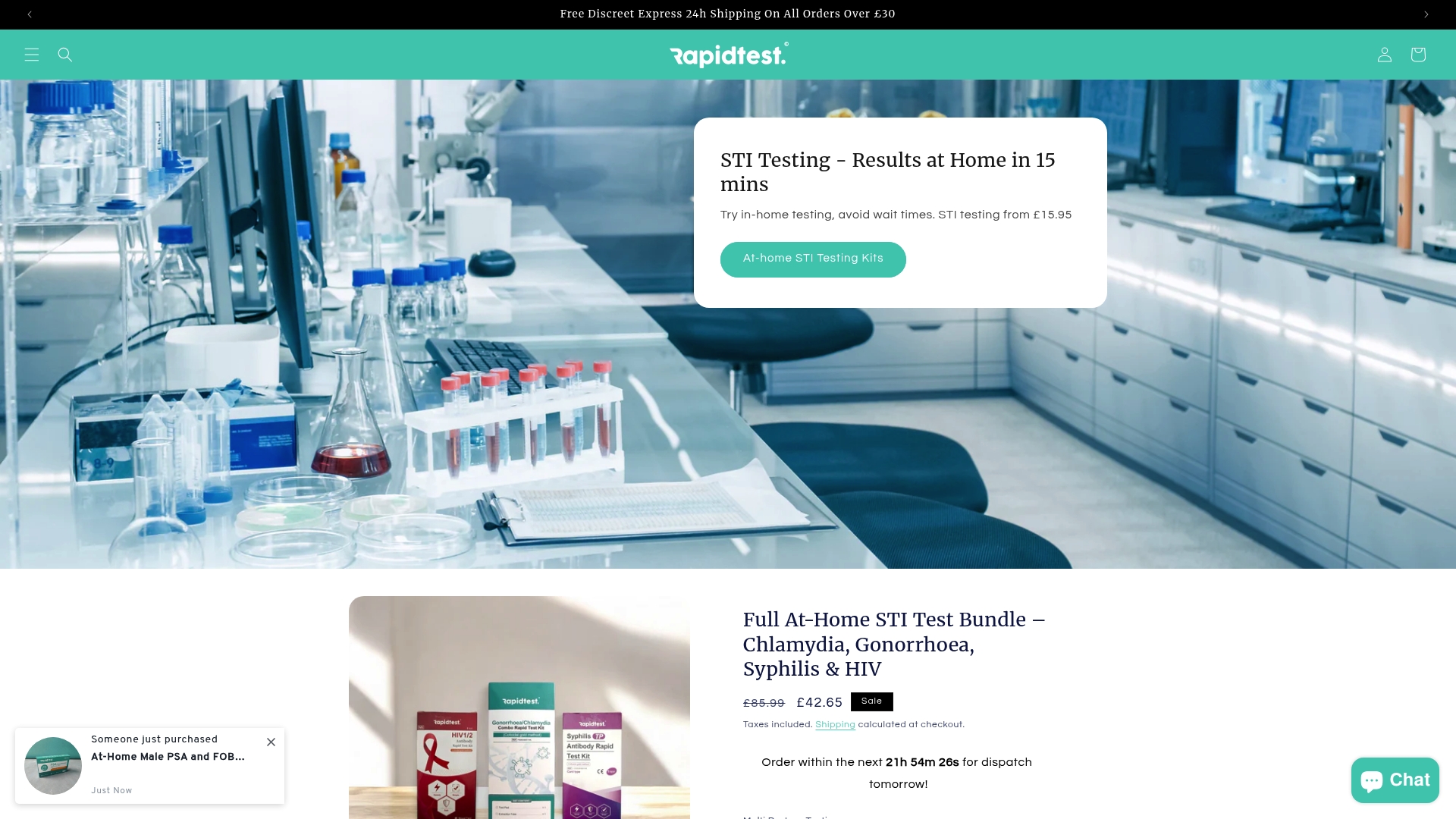
At Rapidtest, we offer at-home STI test kits that give you results in 15 minutes, covering the most important infections including chlamydia, gonorrhoea, HIV, and syphilis. Everything arrives in discreet packaging, and the process is straightforward from start to finish. If you want broader coverage, see all home STI test options to find the right kit for your situation. Fast, private, and genuinely affordable. That’s how sexual health screening should feel.
Frequently asked questions
How soon after unprotected sex should I take an STI test?
For chlamydia and gonorrhoea, wait at least 2 weeks; for HIV, around 7 weeks; and for syphilis or hepatitis B/C, up to 12 weeks after exposure. Testing too early can produce inaccurate results.
Are at-home STI test kits accurate?
Yes. NAAT home kits for chlamydia and gonorrhoea have over 95% sensitivity and specificity, and self-collected swabs are clinically validated for accuracy.
Can I get a free STI test in the UK or Europe?
In the UK, NHS sexual health services offer free testing for major STIs, though availability across Europe varies by country and public health system.
What if I have symptoms but my home test is negative?
See a clinician for a full diagnostic exam. Some infections, like herpes, require clinical evaluation or a lesion swab that can’t be done at home.
Do I need to test for throat or rectal STIs?
If you have oral or anal sex, or are a man who has sex with men, additional throat or rectal swabs are recommended since infections at these sites often cause no symptoms.