


Smart choices: at-home test examples for men over 40
If you’re a man over 40 trying to stay on top of your health without the hassle of waiting rooms or awkward conversations, you’re not alone. At-home testing kits have exploded in popularity, but the market is crowded, confusing, and frankly, not all of it is trustworthy. Finding reliable options for STIs, fertility, and cancer screening feels like navigating a minefield. This guide cuts through the noise. We’ll walk you through exactly what to look for, review trusted test types, compare the evidence, and give you practical tips so you can make smart, confident choices from the comfort of home.
Table of Contents
- Choosing the right at-home test: Criteria and considerations
- STI and STD at-home tests: Trusted options for discreet screening
- Fertility tests for men: At-home solutions and digital advances
- Cancer screening at home: Prostate and bowel tests explained
- The uncomfortable truth about at-home tests for men’s health
- Find discreet at-home tests for your specific needs
- Frequently asked questions
Key Takeaways
| Point | Details |
|---|---|
| Reliability varies | STI and sperm tests are highly accurate, but rapid PSA home tests remain unreliable for diagnosis. |
| Privacy matters | At-home tests offer discreet sample collection and results, ideal for sensitive health needs. |
| Clinical confirmation | Always follow positive at-home test results with your doctor for confirmed diagnosis and treatment. |
| Expert-informed choice | Use evidence-backed selection criteria to choose tests and prioritize those with proven performance. |
Choosing the right at-home test: Criteria and considerations
Not all at-home tests are created equal. Some are clinically validated and genuinely useful. Others are little more than glorified guesswork in a box. So before you order anything, it pays to know what separates a reliable kit from a risky one.
Here’s what actually matters when you’re evaluating an at-home health test:
- Clinical validation: Has the test been independently tested and approved? Look for CE marking or FDA clearance. A kit without third-party validation is a gamble.
- Accuracy rate: Reputable tests publish their sensitivity and specificity figures. If a brand won’t tell you how accurate their kit is, that’s a red flag.
- Privacy from start to finish: This means discreet packaging, no identifiable labels, and secure result delivery. You shouldn’t have to worry about what the postman sees.
- Result speed: Some kits give you results in 15 minutes at home. Others require you to send a sample to a lab and wait days. Both have their place, but know what you’re signing up for.
- Follow-up guidance: A good kit doesn’t just give you a result and leave you hanging. It points you toward next steps, whether that’s a GP visit or a specialist referral.
One area where this really matters is prostate screening. Rapid at-home PSA tests have come under scrutiny because home PSA kits can produce inconsistent and unreliable results. That doesn’t mean you should avoid them entirely, but it does mean you need to use them wisely.
For STI testing, the picture is more encouraging. Reliable STI test kits that use lateral flow technology have strong track records when used correctly. The key is following the instructions precisely and not skipping the follow-up step if you get a positive.
Pro Tip: Always treat a positive at-home result as a starting point, not a final answer. Follow up with your GP or a sexual health clinic for confirmed diagnosis and treatment options. This applies to every test type, no exceptions.
STI and STD at-home tests: Trusted options for discreet screening
Understanding the right criteria makes it easier to review concrete examples of trusted STI and STD at-home tests. This is one area where home testing genuinely shines. The technology has matured, the accuracy is solid, and the privacy benefits are real.
Here are the most commonly tested infections with at-home kits and what you should know about each:
- HIV: At-home HIV testing kits are among the most accurate available, with some reaching 99.8% accuracy. A finger-prick blood sample is all it takes.
- Syphilis: Highly reliable with lateral flow tests. Early detection is critical because syphilis is easily treated in its early stages but causes serious harm if left unchecked.
- Chlamydia and gonorrhea: Urine or swab-based tests. Very common in men over 40 who are re-entering the dating scene after long-term relationships.
- HPV: Less commonly tested at home but available. Useful for awareness, though clinical follow-up is always recommended.
Here’s a quick comparison of popular STI test types:
| Test type | Sample needed | Result time | Accuracy |
|---|---|---|---|
| HIV | Finger-prick blood | 15 minutes | Up to 99.8% |
| Syphilis | Finger-prick blood | 15 minutes | Over 95% |
| Chlamydia | Urine or swab | 15 minutes | Over 95% |
| Gonorrhea | Urine or swab | 15 minutes | Over 95% |
| HPV | Swab | 15 minutes | Over 95% |
Lab-based STI tests provide over 95% accuracy, making them genuinely suitable for discreet initial screening. That’s a meaningful number. It means you can trust the result as a strong indicator, even if clinical confirmation remains the gold standard.
If you test positive, don’t panic. Contact your GP or a sexual health clinic. Most STIs are very treatable, especially when caught early. The stigma around this stuff is fading fast, and healthcare providers are used to these conversations.
Pro Tip: Consider bundled kits that screen for multiple infections at once. They’re more cost-effective, more discreet (one order instead of several), and give you a fuller picture of your sexual health in one go.
Fertility tests for men: At-home solutions and digital advances
With STI kits covered, it’s time to review the leading options in male fertility testing at home. This is a topic many men over 40 avoid, but the numbers tell a clear story. Male fertility declines with age, and sperm quality matters as much as quantity.
At-home male fertility tests generally fall into two categories:
- Sperm count and motility tests: These measure how many sperm are present and how well they move. Motility is often more important than count alone.
- Hormone tests: These check levels of LH (luteinizing hormone), FSH (follicle-stimulating hormone), and testosterone. Hormonal imbalances can affect sperm production without you feeling any different day to day.
Digital sperm analyzers have been a genuine step forward. Many now connect to your smartphone via an app, letting you view results visually rather than just reading a line on a strip. Digital sperm tests deliver over 95% accuracy for initial home screening, which puts them on par with many clinical tools for basic assessment.
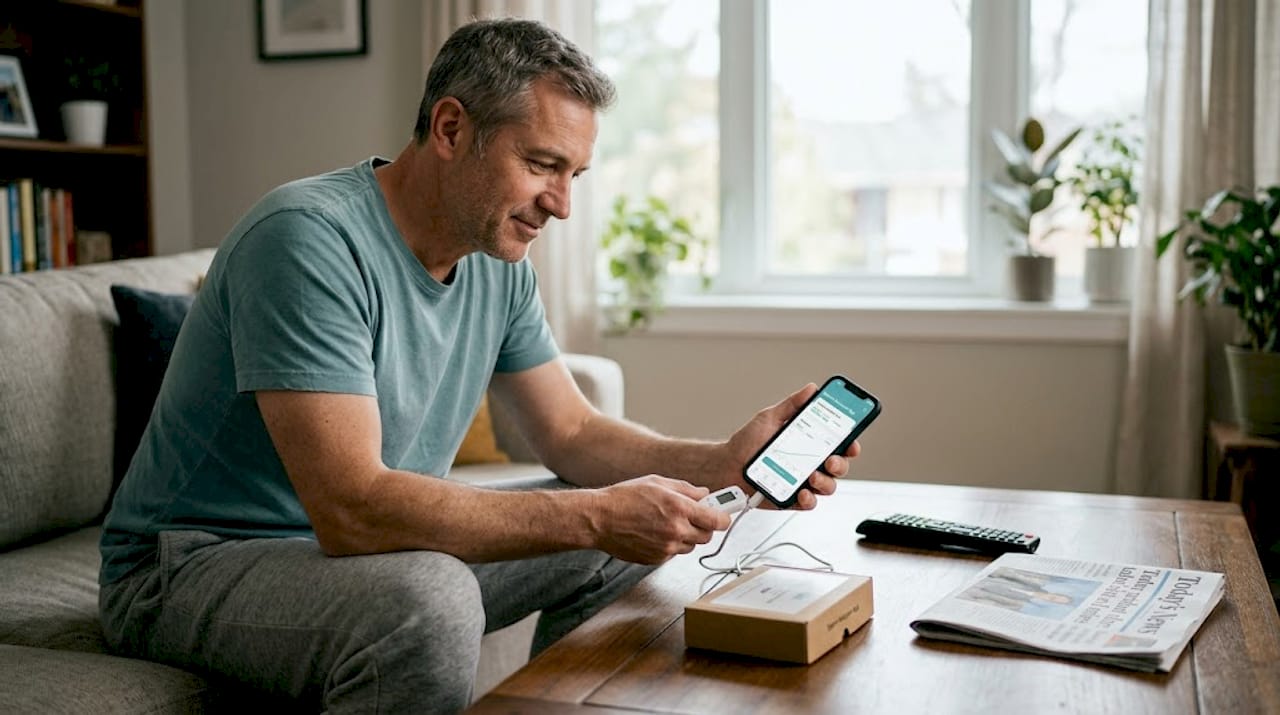
The male fertility test bundle from Rapidtest covers sperm count with results in 15 minutes, no lab visit needed. It’s private, straightforward, and gives you a real baseline to work from.
What should you do if results look abnormal? Don’t self-diagnose. Sperm count can vary significantly day to day depending on stress, sleep, and recent illness. One low result doesn’t confirm infertility. But it does mean you should book an appointment with your GP and ask for a clinical semen analysis.
You can explore the full range of at-home fertility testing options to find the right fit for your situation.
Pro Tip: Digital sperm kits are great for a quick, private snapshot. But if results come back abnormal, treat it as a prompt to get proper clinical testing, not a verdict.
Cancer screening at home: Prostate and bowel tests explained
Completing the overview, we turn to at-home cancer screening, often misunderstood but essential for early detection. This is where the stakes are highest and where you need to be most careful about what you trust.
Prostate cancer and PSA testing
PSA stands for prostate-specific antigen, a protein produced by the prostate gland. Elevated levels can indicate prostate cancer, but also benign conditions like an enlarged prostate or infection. There is no UK national prostate screening program. Men over 50, or those at higher risk, can request a PSA test through their GP.
Home PSA tests exist and are popular, but the evidence is sobering. In one BBC investigation, rapid PSA home tests produced 1 false positive, 3 false negatives, and 1 unreadable result out of a small sample. That’s a significant error rate for something this serious.
“Prostate Cancer UK urges men to understand that rapid PSA tests carry real risks of false reassurance. A negative home result does not rule out prostate cancer.” Prostate Cancer UK
Our PSA rapid test is best used as an initial awareness tool, not a replacement for clinical testing. Use it to start the conversation with your doctor, not to end it.
Bowel cancer and FOB testing
FOB stands for fecal occult blood, a test that detects hidden blood in your stool. It’s one of the most effective early warning tools for bowel cancer and is already part of the NHS screening program for adults over 60. The at-home bowel test kit lets you screen earlier and more frequently if you have a family history or symptoms.
| Test | What it detects | Accuracy | NHS recommended | Best use |
|---|---|---|---|---|
| PSA (home) | Prostate antigen levels | Variable | No | Initial awareness only |
| PSA (clinical) | Prostate antigen levels | High | Yes (via GP) | Diagnosis support |
| FOB (home) | Blood in stool | High | Yes (over 60) | Early bowel cancer detection |
The uncomfortable truth about at-home tests for men’s health
Let’s be real for a moment. At-home tests are genuinely useful, and we believe in them. But there’s a version of this story that gets told too simply, and it does men a disservice.
The appeal is obvious. Private, fast, no waiting rooms, no judgment. You get a result in 15 minutes and you feel like you’ve done something proactive. And you have. That matters. But the risk is treating that result as the final word.
For STI screening, at-home kits are a strong first line. The accuracy is there, and early detection genuinely saves lives and prevents transmission. For fertility, they’re a useful starting point that can prompt important conversations. For cancer screening, especially prostate, the picture is more complicated. Men should use home tests for discreet initial screening, but always follow with clinical confirmation before making any health decisions.
The future looks promising. NHS app-based testing integration is expected to improve by 2027, making it easier to connect home results directly with clinical follow-up. Until then, the smartest approach is to use your PSA test results as a conversation starter with your GP, not a conclusion.
At-home tests give you the first piece of the puzzle. Don’t stop there.
Find discreet at-home tests for your specific needs
You’ve seen the evidence, weighed the options, and now you know what to look for. The good news is that taking action doesn’t have to mean booking appointments or sitting in waiting rooms.
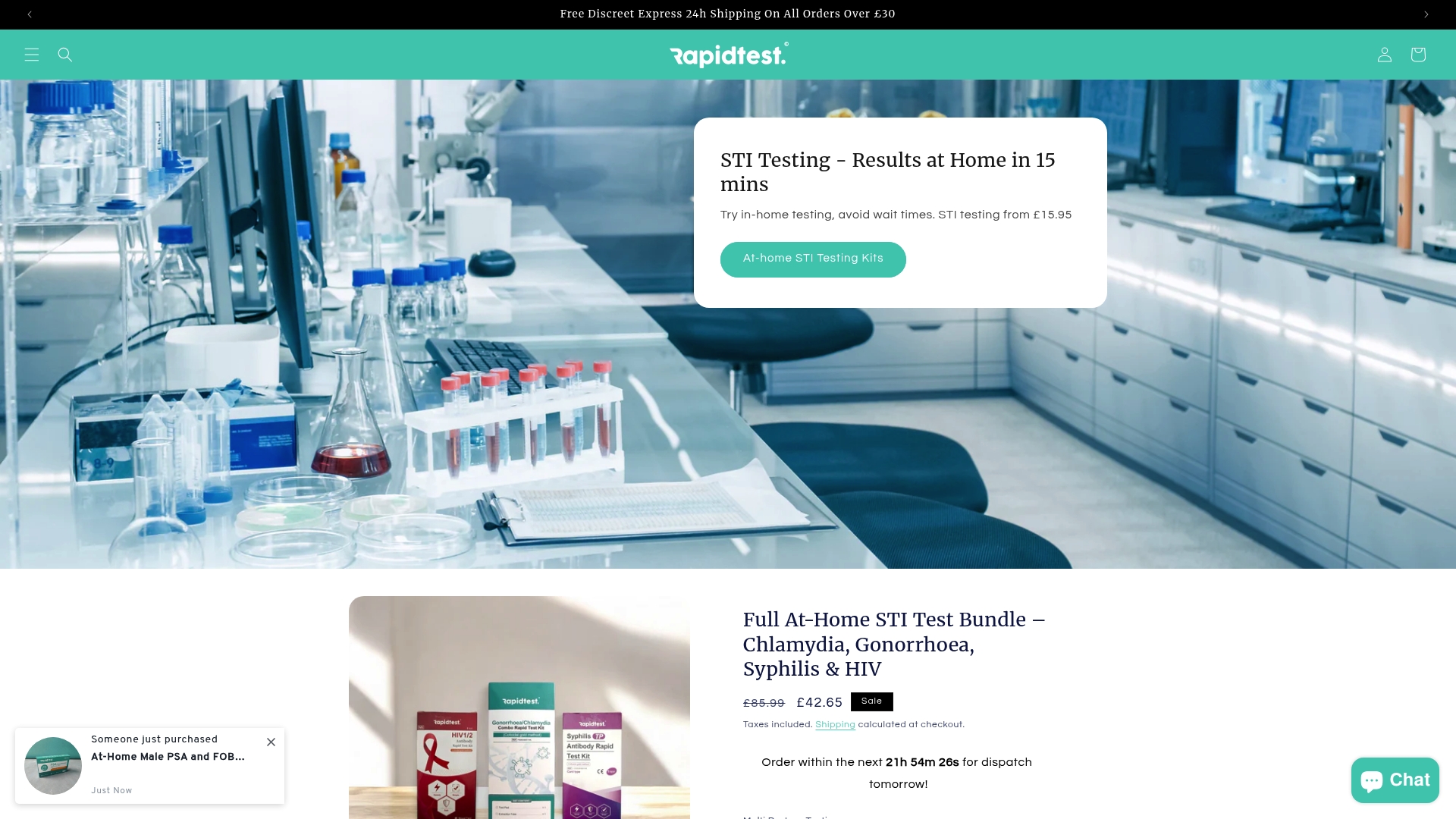
At Rapidtest, we offer discreet STI testing solutions, fertility test options, and a PSA test bundle that gives you results in 15 minutes, delivered to your door in plain packaging. No queues, no awkward conversations, no waiting. Just clear, fast answers that help you take the next step with confidence. Browse by category, order privately, and know that clinical support is always available when you need it.
Frequently asked questions
Are at-home PSA tests reliable for prostate cancer screening?
Rapid at-home PSA tests are not reliable for diagnosis and frequently produce false positives and negatives; a clinical PSA test through your GP remains the recommended route for accurate prostate screening.
How accurate are STI/STD home testing kits?
Most lab-based at-home STI kits deliver over 95% accuracy and are well-suited for discreet initial screening, with HIV and syphilis kits being particularly reliable options.
Should I trust home sperm count and fertility analyzers?
Digital sperm count tests offer strong initial screening accuracy, but any abnormal result should be confirmed by a medical professional before drawing conclusions about your fertility.
What should I do if a home test result is positive?
Consult your GP or a specialist as soon as possible to confirm the result and discuss next steps; a positive at-home result is an important signal, but it’s only the starting point for proper diagnosis and treatment.
Recommended
- Home health testing privacy guide for men 40+ – RapidTest
- At-Home Male PSA and FOB Testing Kits - Results in 15 minutes, no lab – RapidTest
- At-Home Mens PSA Test Kits - Results in 15 minutes – RapidTest
- The Best Fertility Tests for Couples at Home: How to Check Fertility f – RapidTest
- Healthy Aging Self-test – LifeUnlocked