


Self-testing kits explained: Safe, simple health checks at home
Think self-testing kits are just a gimmick or something only people in a panic use? Think again. These kits have quietly become one of the most reliable, practical tools for men over 40 who want to stay on top of their health without fitting a GP appointment into an already packed schedule. Whether you’re screening for STIs, checking your prostate health, or keeping tabs on your fertility, self-testing kits allow you to do it privately at home. This article breaks down exactly how they work, what you can test for, and what the limitations really are.
Table of Contents
- What are self-testing kits and how do they work?
- Step-by-step: How to use self-testing kits for sexual health and more
- Which conditions can you test for? STI and health screening for men over 40
- How accurate and reliable are self-testing kits?
- Limitations and important warnings to consider
- The truth about self-testing: What most men over 40 get wrong
- Take control: Find the right self-testing kit for your needs
- Frequently asked questions
Key Takeaways
| Point | Details |
|---|---|
| Self-testing kits demystified | These kits allow you to test for STIs and men’s health conditions privately at home using simple sample methods. |
| Accuracy and reliability | Lab-based kits are highly accurate but always confirm results, and rapid tests are most useful for regular screening. |
| Know the limitations | Window periods, symptoms, and missed areas can impact results—seek clinical care when in doubt. |
| Tailored for over-40 men | Self-testing kits now include prostate, fertility, and vitamin D tests ideal for older men’s unique needs. |
What are self-testing kits and how do they work?
A self-testing kit is a home health screening tool that lets you collect a sample yourself, without needing a nurse, a clinic, or an awkward waiting room conversation. You collect the sample, and either read the result yourself or mail it off to a lab. Simple.
Two main types exist: instant rapid tests and lab-based self-sampling kits. Both have their place depending on what you need.
Rapid tests give you a visual result in 15 to 30 minutes. You collect the sample at home, apply it to a test device, and read the result from indicator lines. Fast, private, and no waiting.
Lab-based self-sampling kits are a step up in accuracy. You collect your sample at home, then mail it to a certified lab using a prepaid envelope. Results come back online, usually within a few days, and some services include access to a clinician if you need guidance.
Here’s a quick comparison:
| Feature | Rapid test | Lab-based kit |
|---|---|---|
| Result time | 15 to 30 minutes | 2 to 5 days |
| Accuracy | Good | Very high (95 to 99%) |
| Sample types | Urine, swab, finger-prick | Urine, swab, blood |
| Best for | Quick screening | Confirmed results |
| Clinician access | Rarely | Often included |
What can you actually screen for? Quite a lot:
- STIs: chlamydia, gonorrhoea, syphilis, HIV, hepatitis B and C
- Prostate health: PSA (prostate-specific antigen) levels
- Fertility: sperm count and motility
- General health: vitamin D, cholesterol
For at-home test options tailored to men over 40, the range has expanded significantly in recent years. Thanks to the rise of at-home testing, what used to be a niche product is now a mainstream health habit. The NHS test kit options have also expanded, making it easier than ever to get screened without stepping foot in a clinic.
Pro Tip: If you’re testing for the first time, start with a lab-based kit for greater accuracy. Rapid tests are better suited for routine follow-up checks once you understand your baseline.
Step-by-step: How to use self-testing kits for sexual health and more
Now that you know what these kits are, let’s walk through exactly how you use one.
The process is more straightforward than most people expect. Here’s how it typically goes:
- Order your kit. Choose a kit based on what you’re screening for. It arrives discreetly packaged, usually within one to two days.
- Read the instructions. Every kit is different. Spending five minutes here prevents errors that could affect your results.
- Prepare your sample. Depending on the kit, you’ll collect urine (mid-stream), a swab (throat, genital, rectal), or a small finger-prick blood sample.
- Collect the sample. Follow the instructions carefully, especially for timing. For example, some urine tests require you to wait at least one hour after your last bathroom visit.
- For rapid tests: Apply the sample to the test device and read the result within the indicated window (usually 15 to 30 minutes). Lab kits use prepaid envelopes for mailing samples and deliver online results; rapid kits show visible lines in 15 to 30 minutes.
- For lab-based kits: Seal the sample, place it in the prepaid return envelope, and post it. You’ll receive an email or text when your results are ready online.
- Access your results. Lab results come with a secure online portal. Many services include optional clinician messaging if you have questions.
Pro Tip: Collect your urine sample in the morning for the most concentrated result. Avoid urinating for at least an hour before collection if the kit instructs it.
For specific conditions like chlamydia and gonorrhoea home tests, the process is quick and highly private. And when it comes to reading at-home test results, there’s practical guidance available so you’re never left guessing. For a full overview of the self-sampling process, the NHS self-sampling instructions are a solid reference point.
The key takeaway? The hardest part is simply deciding to do it. Once the kit is in your hands, most men find the process takes under ten minutes.
Which conditions can you test for? STI and health screening for men over 40
Once you know how the kits work, it’s key to understand what you can actually test for, especially as an older male.
Panels range from basic to comprehensive, covering anywhere from two STIs to eleven or more conditions including prostate markers, vitamin D, and fertility. NHS kits focus on the most common infections, while private kits give you a much broader picture.
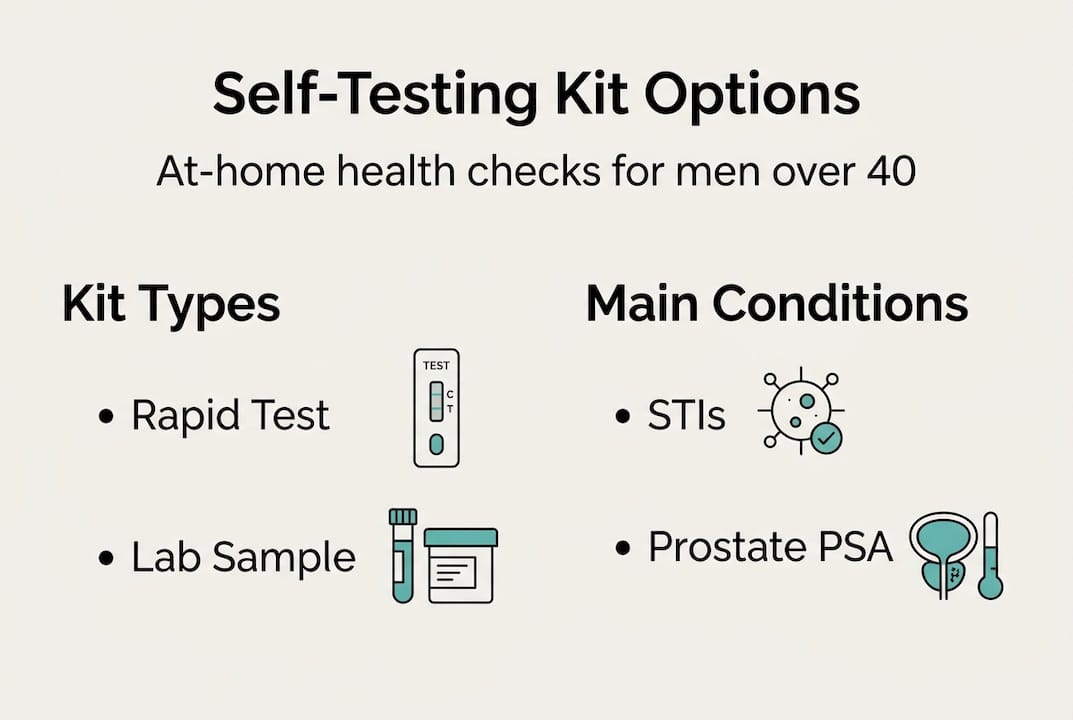
Here’s how the screening options break down:
| Category | What’s included | NHS or private? |
|---|---|---|
| Basic STI | Chlamydia, gonorrhoea | NHS (free) |
| Standard STI | + syphilis, HIV | NHS/private |
| Comprehensive STI | + hepatitis B/C, others | Private |
| Men’s health add-ons | PSA, fertility, vitamin D | Private only |
For STIs specifically, the most commonly tested include:
- Chlamydia (the most common STI in the UK)
- Gonorrhoea
- Syphilis
- HIV (with a window period consideration)
- Hepatitis B and C
- Mycoplasma genitalium (in some comprehensive panels)
Men over 40 should also think beyond STIs. PSA testing is increasingly important as prostate cancer risk rises with age. Sperm health matters too, especially for men considering starting or expanding a family later in life. And vitamin D deficiency is surprisingly common among men in Northern Europe, affecting energy, immunity, and mood.
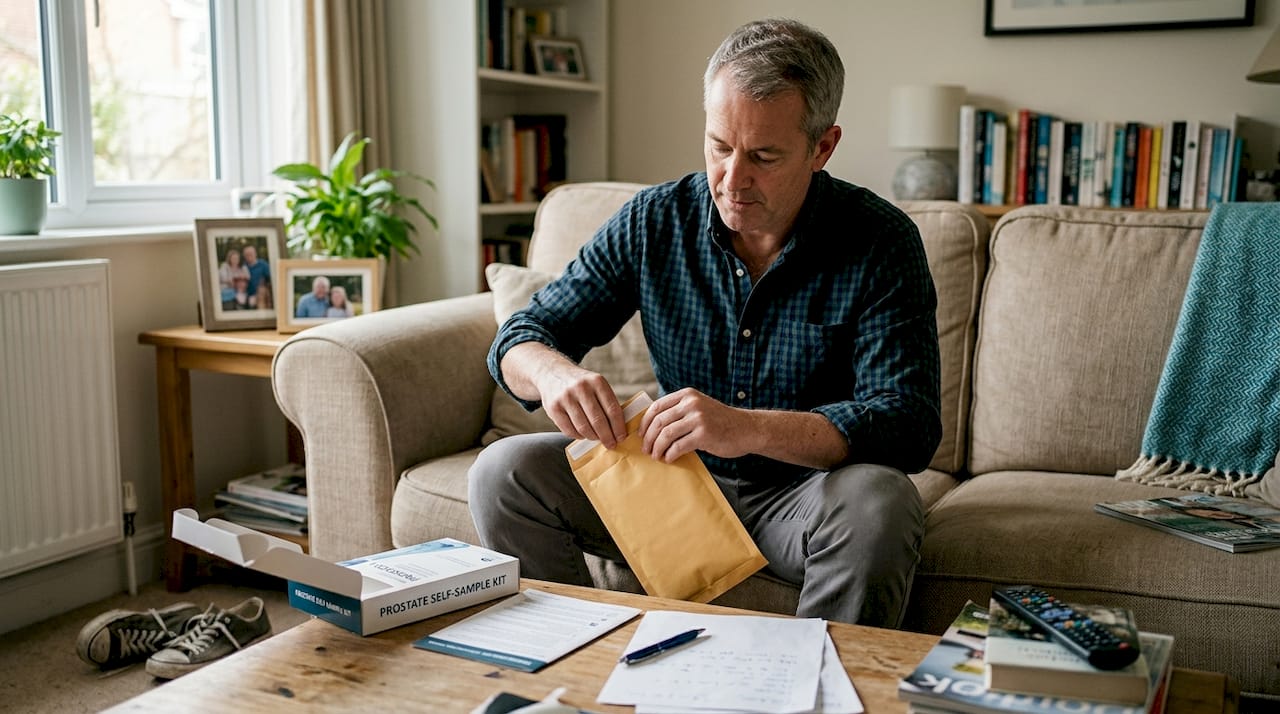
For a look at popular screening panels available specifically for men, the options have expanded considerably. And if you’re thinking about health privacy tips around storing or receiving results discreetly, that’s also worth reading up on. For a broader private panel comparison, comprehensive STI test kits show exactly what’s available beyond the NHS basics.
The bottom line? The older you get, the more value you get from a multi-condition panel. A kit that covers STIs, PSA, and vitamin D in one go is efficient and genuinely useful.
How accurate and reliable are self-testing kits?
But the most important question: Can you really trust a self-testing kit result?
The short answer is yes, with a few important caveats.
Lab-processed self-sampling kits provide over 95 to 99% sensitivity and specificity when used correctly. That’s not far off what you’d get in a clinic, because the same certified labs process your sample.
Rapid tests are a different story. They’re convenient but slightly less sensitive, meaning there’s a small chance of a false negative if infection levels are low or you test too soon. They’re great for routine checks, but less suitable when accuracy is critical.
Here’s what can affect your result:
- Window periods: Every infection has a window period, the time between exposure and when a test can detect it. Testing too soon gives a false negative, not because the kit is broken, but because the infection isn’t detectable yet.
- Sample quality: A poorly collected swab or an overly diluted urine sample can skew results.
- Cheap kits: RCGP cautions that supermarket tests are often unreliable and positive results require clinical follow-up.
- Storage conditions: Kits exposed to heat or moisture before use may be compromised.
For a deeper look at what the science says, the BMJ self-test analysis gives an honest breakdown of where these kits perform well and where they fall short.
A positive result always warrants clinical confirmation. A negative result from a quality kit, used correctly and outside the window period, is genuinely reassuring. For help understanding kit accuracy and interpreting your results confidently, there’s a practical guide worth bookmarking. That’s also why home testing matters as a regular habit rather than a one-time reaction.
Pro Tip: Always check the window period for the specific infection you’re testing for before you test. Testing too early is the single most common reason for a misleading negative result.
Limitations and important warnings to consider
While these kits are convenient, they have important limitations to know before you rely on them.
The biggest mistake men make is treating a home kit like a full clinical exam. It isn’t. These kits are designed for asymptomatic screening, not diagnosis. Self-testing kits are not for symptomatic cases or immediate partner notification, and window periods along with improper sampling may yield false results.
Here’s what you need to keep in mind:
- Symptoms mean go to a clinic. Discharge, pain, sores, or burning are all signals to get a proper clinical examination, not just a home test.
- Not all sites are covered. Most kits only test genital samples. If you’ve had oral or anal sex, throat or rectal swabs may be needed and many kits don’t include them.
- Window periods are real. HIV, for example, has a window period of up to 45 days. Testing before that window closes can produce a false negative.
- Herpes and HPV are usually excluded. These infections are difficult to test for outside of a clinical setting and most kits simply don’t cover them.
- Partner notification needs clinical support. If you test positive, formal partner notification services are provided through sexual health clinics, not home kits.
- Complex exposures need expert assessment. If you’ve had multiple partners or a high-risk exposure, a face-to-face consultation gives you far more context.
For more on privacy and safety tips around using home kits responsibly, that’s a useful read. And for specific guidance on when home testing isn’t enough, the NHS advice on limitations is clear and practical.
Use these kits as part of a broader health habit. They’re not a replacement for clinical care. They’re a smart addition to it.
The truth about self-testing: What most men over 40 get wrong
Here’s the thing nobody tells you: the men who get the most out of self-testing kits are the ones who understand what these tools are actually for.
They’re not a one-off panic buy after a scare. They’re not a magic shield that clears you of worry forever. They work best as part of a regular screening habit, the same way you might check your blood pressure or your weight. Done consistently, they catch things early. Done once in a blue moon, they give you false confidence.
The other myth worth challenging? That a negative result means you’re done. It means you were clear at that point in time, within the window period, for the infections that kit covers. That’s still genuinely valuable information. But it’s not the full picture.
As you get older, your health profile changes. More sexual partners over a lifetime, reduced immune resilience, and higher baseline risk for conditions like prostate issues means that regular, honest screening isn’t paranoia. It’s just smart. Smart test choices for men over 40 look like building a testing rhythm, not chasing reassurance after every encounter. Use these tools wisely and they genuinely earn their place in your health routine.
Take control: Find the right self-testing kit for your needs
You’ve done the reading. Now it’s time to act on it.
At Rapidtest, we make it easy to screen from home with no queues, no awkward appointments, and results in as little as 15 minutes. Whether you’re looking to stay on top of your sexual health or get a clearer picture of your prostate or fertility, we’ve got you covered.
Our fast STI self-testing kits are accurate, discreet, and genuinely quick to use. If prostate health is on your mind, our at-home PSA tests give you a reliable read on your PSA levels without a clinic visit. And for men thinking about their fertility, our fertility testing for men kit delivers results in 15 minutes at 99.8% accuracy. Private, affordable, and built around your life.
Frequently asked questions
Are self-testing kits for STIs accurate?
Lab-based self-sampling kits use NAAT/PCR technology and deliver over 95 to 99% accuracy, but rapid tests are slightly less sensitive and all positive results should be confirmed at a clinic.
Who should use self-testing kits for health screening?
Men over 40 who are sexually active and have no current symptoms are the ideal users, particularly for regular STI or prostate screening as part of a routine health habit.
Can self-testing kits miss infections?
Yes. Window periods and missed sample sites can lead to false negatives, so always follow up if you have concerns or tested close to a potential exposure.
Are NHS-provided self-testing kits free?
Many NHS self-sampling kits are available at no cost, but private comprehensive panels typically cost between £35 and £150 depending on how many conditions are included.
When should I avoid self-testing and see a doctor?
If you have symptoms, need partner notification support, or have had a complex or high-risk exposure, self-testing is not appropriate and a full clinical examination is the right step.
Recommended
- Home health testing privacy guide for men 40+ – RapidTest
- Smart choices: at-home test examples for men over 40 – RapidTest
- The Rise of At-Home STI Testing Kits: Privacy, Convenience, and Peace – RapidTest
- How to read STI test results: at-home kit guide – RapidTest
- Safe ear care at home: step-by-step guide for families