


What is an at-home STD test? Discreet answers for men 40+
A lot of men assume home STD tests are either inaccurate, unreliable, or just not private enough to trust. That’s a misconception worth challenging right away. The reality is that home STI test kits available in the UK today are lab-equivalent to what you’d get at a clinic, and the demand is growing fast, especially among men over 40. If you’ve been putting off getting tested because you’d rather avoid a waiting room and an awkward conversation with a stranger, this article is for you. Here’s everything you need to know about how at-home STD testing works, what it covers, and whether it’s right for your situation.
Table of Contents
- How do at-home STD tests work?
- Who should use at-home STD tests and how often?
- What do at-home STD tests cover, and what are the limits?
- Are at-home STD tests accurate, safe, and confidential?
- Why routine at-home testing matters more than ever for men 40+
- Explore at-home STD testing options
- Frequently asked questions
Key Takeaways
| Point | Details |
|---|---|
| Lab accuracy | Modern home STD tests use labs as reliable as NHS clinics when used correctly. |
| Privacy assured | Providers ship kits discreetly with confidential results for maximum privacy. |
| Regular screening recommended | Men over 40 should get annual STD tests if sexually active, according to UK and EU guidance. |
| Coverage limits exist | Basic home kits may not include herpes or Mycoplasma; check before buying. |
| Action is key | Routine at-home testing is a simple, effective self-care habit for men 40+. |
How do at-home STD tests work?
At-home STD testing has come a long way. It’s no longer just a gimmick or a compromise. You’ve got two main types to choose from, and each has a clear use case depending on what you need and how quickly you want answers.
Type 1: Rapid self-read tests
These are the kits you use at home and read yourself, usually within 15 minutes. Think of them like a pregnancy test, but for infections. You collect a sample (urine, blood from a finger prick, or a swab), apply it to the test, wait, and read the result directly. No sending anything off. No waiting days. You get your answer the same afternoon you ordered, if you already have the kit on hand.
Type 2: Mail-in lab kits
These kits let you collect your own sample at home, then post it to a laboratory for analysis. The lab processes your sample with the same equipment and standards used in clinics. In fact, UKAS/CPA accredited labs are used for the best mail-in options, meaning the accuracy is equivalent to an NHS clinic test. Results come back digitally, usually within a few days of the lab receiving your sample.
Here’s what the process typically looks like for both:
- Order online from a reputable provider, usually with plain packaging and no identifying labels on the outer box
- Collect your sample at home using the kit instructions, which walk you through exactly what to do step by step
- Read or post your sample depending on the kit type
- Receive your results either immediately (rapid tests) or via a secure digital portal (lab kits)
- Follow up if needed with your GP or a sexual health clinic if your result is positive
What happens with a positive result? This is where a lot of men get nervous, and understandably so. The good news is that most reputable providers offer next steps built into their service, including signposting to treatment, partner notification support, and referrals. Your results are never shared without your consent. Privacy is built into every stage.
“Home testing kits give you the ability to manage your own sexual health on your own terms, without relying on appointment availability or dealing with waiting lists.”
Pro Tip: Always follow the instructions exactly, especially around sample collection timing and storage. This is the single biggest factor in getting an accurate result. Learn more about using home STI tests safely to make sure you’re doing it right every time.
If you want to understand the science behind it, the STI test accuracy breakdown for men over 40 is worth reading before you buy.
Who should use at-home STD tests and how often?
Understanding the process is one thing, but is home STI testing right for you, and how often do you really need it? Here are the expert-backed guidelines.
Let’s be clear: men over 40 have exactly the same STI testing recommendations as anyone else who is sexually active. There’s no age bracket that bumps you into a different category, and there’s no reason to assume your risk is lower just because you’re older or in a long-term relationship. Life changes. Partners change. Testing should be part of your routine.
The general guidance across the UK and Europe is consistent: if you’re sexually active, annual STI screening is recommended. If you have multiple partners or unprotected sex, you should test more frequently, every three to six months. That’s not a moral judgment. It’s just good health practice.
Here’s a simple checklist to figure out where you stand:
- You are sexually active with a new or multiple partners and you haven’t tested in the past 12 months. You should test now.
- You’ve had unprotected sex even once since your last test. Test again, even if you feel fine.
- Your partner has been diagnosed with an STI. Test immediately, regardless of your symptoms.
- You’re starting a new relationship and you want to share a clean bill of health. This is one of the most responsible things you can do.
- You have no symptoms but haven’t tested in over a year. Most STIs are completely asymptomatic. Feeling fine is not the same as being clear.
That last point is critical. The majority of chlamydia and gonorrhea infections in men produce no symptoms at all. You can carry and transmit an infection without ever knowing it. This is why routine screening matters far more than reactive testing.
“The biggest mistake men make is waiting for symptoms before they test. By then, you may have already passed an infection on without realizing it.”
Privacy is a genuine concern for many men in this age group, and it’s completely understandable. That’s why understanding your rights and the privacy guide for men 40+ is worth a few minutes of your time. You’ll find that your data, your results, and your order history are all kept completely confidential.
It’s also worth noting that PSA testing (prostate-specific antigen) is a separate conversation from STI testing but equally important for men over 40. They’re different tests for different things, but both fit neatly into a routine home health check. More on testing accuracy for men over 40 if you want the full picture.
What do at-home STD tests cover, and what are the limits?
Once you know how often to test, the next step is understanding what each kit covers and when you might need more, and where home tests might not be enough.
Most standard home STI kits cover the infections that matter most statistically. That means chlamydia, gonorrhea, HIV, and syphilis. These four infections account for the vast majority of diagnosed STIs in the UK and Europe. A solid home kit targeting these four gives you meaningful, practical coverage for everyday risk.
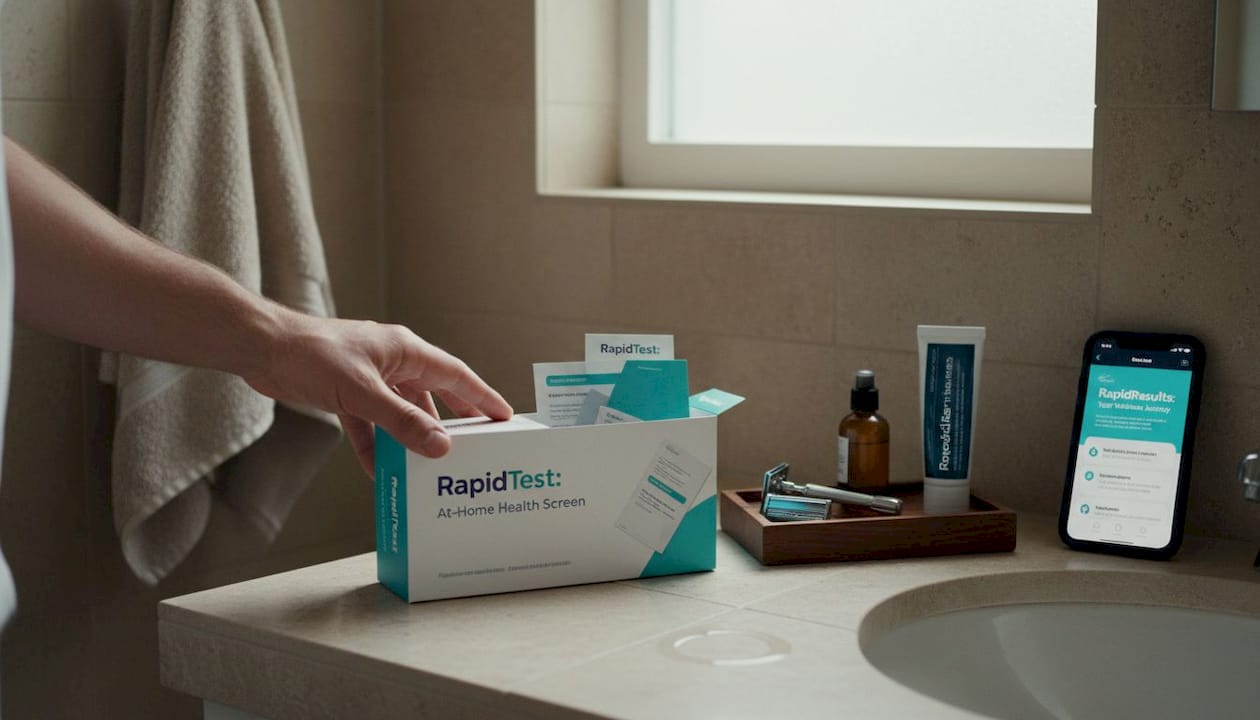
However, not all infections are included in basic kits. Herpes, Mycoplasma, and Ureaplasma are often left out of entry-level options and only available in premium or specialist kits. Herpes in particular is tricky because blood tests for it can produce ambiguous results in the absence of symptoms, and many providers choose not to include it for this reason.
Here’s a quick comparison of what you typically get:
| Kit type | Infections covered | Approx. cost | Lab standard |
|---|---|---|---|
| Basic NHS free kit | Chlamydia, HIV | Free | CPA accredited |
| Standard private kit | Chlamydia, gonorrhea, HIV, syphilis | £30 to £60 | UKAS/CPA lab |
| Premium private kit | All above + herpes, Mycoplasma, Ureaplasma | £80 to £150 | UKAS/CPA lab |
| Clinic-based test | Full range including specialist infections | Varies | NHS standard |
There are situations where a clinic visit is still the better choice. Be honest with yourself about these:
- You have active symptoms such as discharge, sores, or pain. A physical examination may be needed.
- You’ve had a high-risk exposure recently and need post-exposure prophylaxis (PEP) for HIV. PEP must be started within 72 hours, and that requires a clinic.
- You need full comprehensive screening including infections not covered in any home kit.
- A previous home test came back positive and you need treatment or professional follow-up.
Home tests are powerful tools, but they work best as part of a broader health strategy, not as a complete replacement for clinical care when it’s genuinely needed. Check out the full range of types of STI tests and learn more about the rise of home STI testing if you want to understand how the market has evolved.
Are at-home STD tests accurate, safe, and confidential?
Many wonder: can you really trust at-home STD tests with your health and privacy? The data says yes, but here’s what you need to know.
The short answer is that modern home STD tests are genuinely reliable when used correctly. Research validates that self-administered STI tests achieve high accuracy rates when instructions are followed properly. The tests themselves use the same detection technology employed in clinical settings. The difference between a clinic test and a home kit is mostly in who collects the sample, not in the chemistry behind the result.
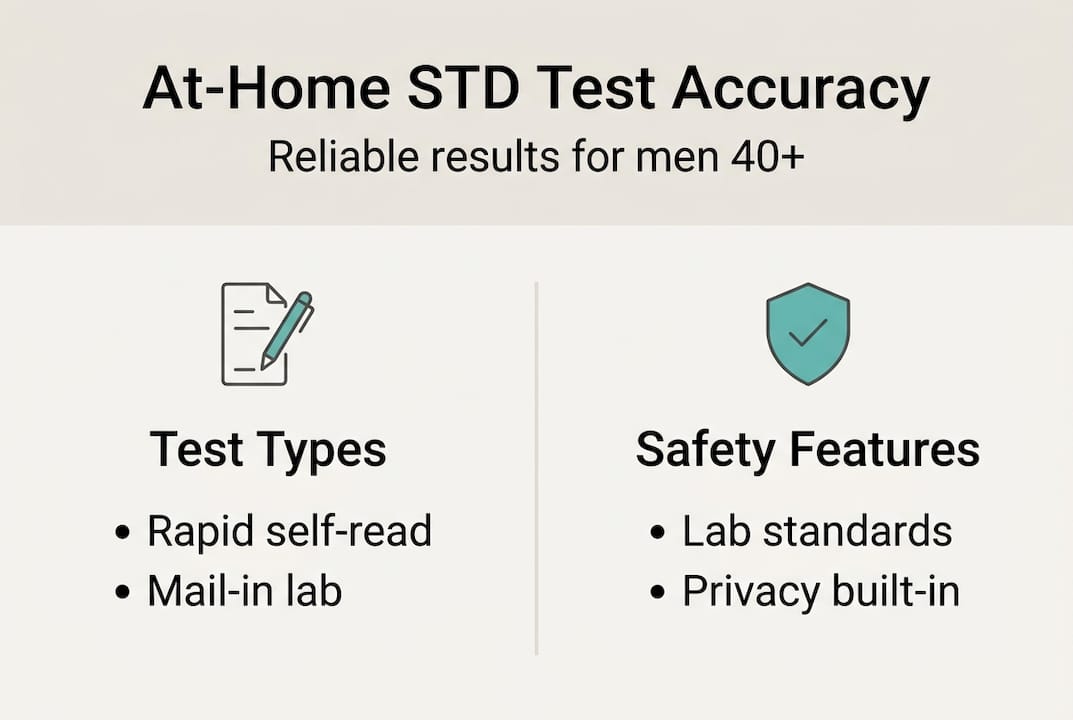
Here’s a summary of what you can expect in terms of standards and privacy:
| Feature | What it means for you |
|---|---|
| UKAS/CPA lab accreditation | Your results meet the same standards as NHS clinic results |
| High sensitivity and specificity | Very low rates of false positives or false negatives when used correctly |
| Plain packaging | No identifying labels on the outer packaging |
| Secure digital results | Password-protected portal, no results by post or email in plain text |
| Anonymous ordering option | Some providers let you order without creating a named account |
| No GP notification | Your results stay between you and the provider unless you choose otherwise |
Privacy is built into every step of the process. From the moment you place your order to the moment you read your results, reputable providers take confidentiality seriously. Packaging is plain and discreet. Results arrive via secure digital portals. Your GP is not automatically notified.
Pro Tip: Men over 40 should prioritize providers that clearly state their lab accreditation on their website. If a kit doesn’t tell you which lab processes your sample, that’s a red flag. Read more about privacy with home testing and get a practical walkthrough for screening for STIs at home before your first test.
One important caveat: accuracy depends heavily on following the sample collection instructions. The most common reason for an inaccurate result is user error during collection, not a fault with the test itself. Read the instructions carefully. Do exactly what they say. If you’re unsure at any point, contact the provider before you test, not after.
Why routine at-home testing matters more than ever for men 40+
Let’s get real. After all the facts, the data, and the how-to guides, what actually stops men from testing regularly? It’s not the cost. It’s not even the process. It’s the discomfort of confronting the subject at all.
There’s still a stubborn stigma around sexual health testing for men, especially as you get older. Some men feel that booking an STI test implies something about their character or their relationship. That idea is outdated and honestly a bit damaging. Testing is not a confession. It’s maintenance, the same way you’d check your blood pressure or get your eyes tested.
Making testing routine is the most effective way to strip the anxiety out of it. When you test at home, in your own time, with results in 15 minutes, there’s no waiting room anxiety. There’s no awkward conversation. There’s just you, a simple kit, and the peace of mind that comes with knowing your status.
The real risk isn’t getting tested. It’s not testing and letting something go undetected that’s easily treatable. Your privacy is protected. Your results are rapid. Don’t wait for symptoms that may never come.
Explore at-home STD testing options
Ready to take control of your health? The next step couldn’t be simpler.
At RapidTest, we’ve made it genuinely easy for men across the UK and Europe to screen for the most common STIs from home, with no queues, no doctor visits, and no awkward conversations. Our kits deliver results in 15 minutes and ship in plain, discreet packaging. Whether you want a quick rapid result or a comprehensive lab-analyzed screen, we have you covered.
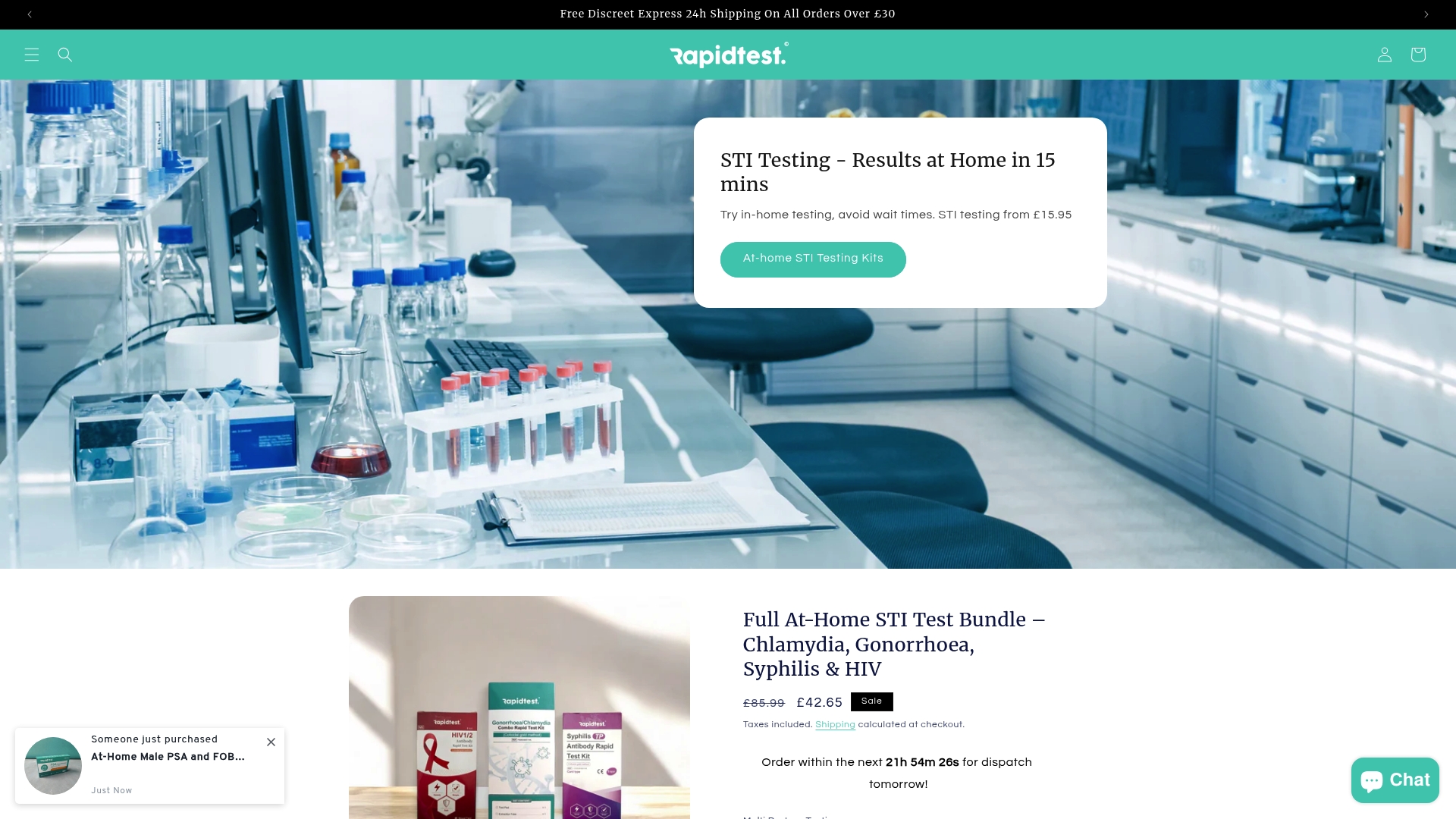
Browse our full range of STI and STD test kits to find the right fit for your situation. Or explore our complete collection of at-home STI screening kits if you want to compare options side by side. Taking care of your sexual health shouldn’t feel like a big deal. With RapidTest, it doesn’t have to.
Frequently asked questions
Are at-home STD tests as accurate as clinic tests?
If you follow the instructions carefully, modern home STD tests using accredited lab standards are as accurate as clinic-based tests. The key variable is how well the sample is collected, not the test technology itself.
How long does it take to get results from a home STD test?
Rapid tests give you a result in 15 minutes, while mail-in lab kits typically return results within a few days of the lab receiving your sample. Both are significantly faster than waiting for a clinic appointment.
Is my data and privacy protected when ordering or using a home STD test?
Yes. Reputable providers use plain packaging and confidential secure digital portals for results. Your GP is not notified, and your information is never shared without your explicit consent.
What infections aren’t usually covered in basic home STD kits?
Herpes, Mycoplasma, and Ureaplasma are typically absent from standard kits and only available in premium options. Basic kits usually focus on chlamydia, gonorrhea, HIV, and syphilis.