


How to screen for STIs at home: step-by-step guide
Booking a clinic appointment for an STI check sounds straightforward until real life gets in the way. Long waits, judgmental receptionists, and the awkward silence in the waiting room put a lot of people off. The good news? At-home STI testing has become genuinely reliable. Across Europe, services like Test2Know in Belgium offer discreet postal self-sampling for HIV and multiple STIs, and the science backs up the accuracy. This guide walks you through exactly how to screen for STIs at home, step by step, so you can take care of your sexual health on your own terms.
Table of Contents
- What you need to screen for STIs at home
- How to prepare for an at-home STI test
- Step-by-step guide: At-home STI sample collection
- What to do after your at-home STI test
- Expert perspective: The truth about at-home STI screening
- Explore reliable at-home STI test options
- Frequently asked questions
Key Takeaways
| Point | Details |
|---|---|
| Reliable and private | At-home STI screening offers accurate, discreet options trusted across the UK and Europe. |
| Proper preparation matters | Following instructions and sample prep steps is key for getting trustworthy results. |
| Recognize when clinics are needed | Home testing is ideal for regular checks, but clinics are best if you have symptoms or recent risks. |
| Act on your results | Take immediate action on positive or unclear tests by reaching out to professionals for guidance. |
What you need to screen for STIs at home
Now that you know why at-home testing matters, let’s get clear on what you’ll need and how to choose trustworthy testing options.
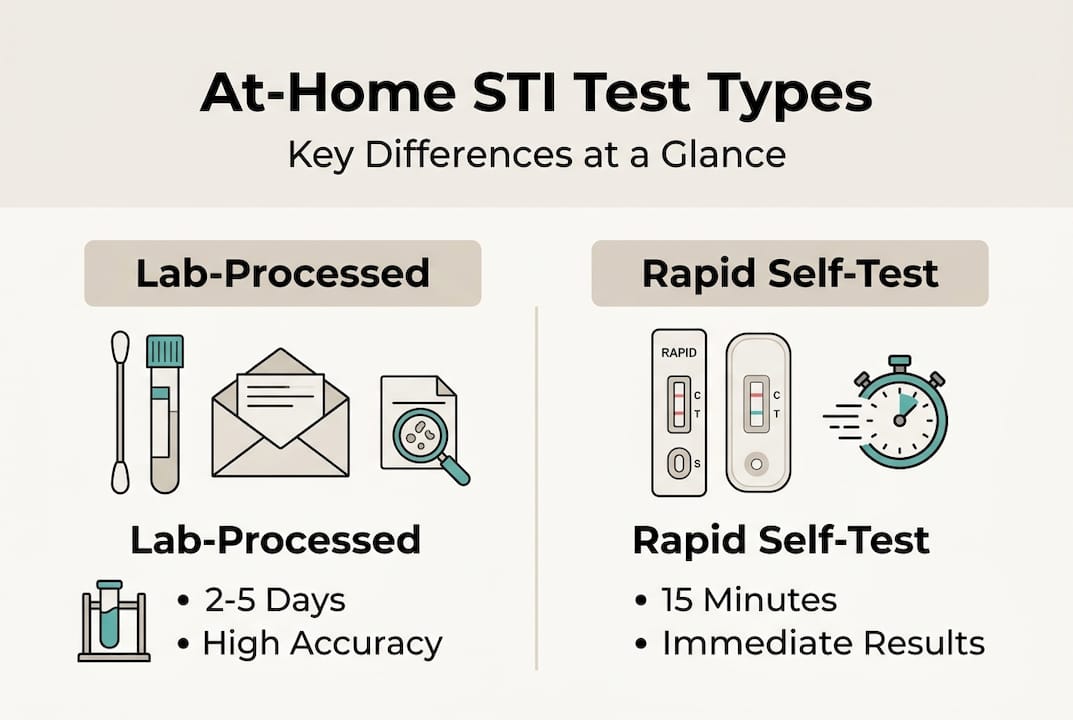
Not all kits are the same, and that distinction really matters. There are two main types you’ll come across:
- Lab-processed postal kits: You collect your sample at home and mail it to a certified lab. Results usually arrive within a few days via a secure online portal. These tend to be more accurate.
- Rapid instant test kits: You get results in around 15 minutes, right at home. Great for convenience, but quality varies significantly by provider.
Here’s a quick comparison to help you choose:
| Feature | Lab-processed kit | Rapid/instant kit |
|---|---|---|
| Result time | 2 to 5 days | 15 minutes |
| Accuracy | Very high (95 to 99%) | Varies by brand |
| Best for | Regular screening | Quick peace of mind |
| Sample types | Urine, swab, blood | Swab, finger-prick |
Most reputable kits can screen for chlamydia, gonorrhea, HIV, syphilis, and sometimes more. Understanding the types of STI tests available helps you match the right kit to your specific needs.
When choosing a provider, look for:
- A CE mark or equivalent regulatory approval
- Clear, step-by-step instructions included in the kit
- A transparent privacy policy covering your data and packaging
- Genuine customer reviews from verified buyers
Be cautious about going for the cheapest option you can find online. Cheap rapid home tests often have documented accuracy issues, so sticking with reputable providers is genuinely worth it. You can also explore the privacy benefits of at-home testing if discretion is a priority for you.
Pro Tip: Always check the provider’s certification date. Regulatory approvals get updated, and an outdated CE mark is a red flag.
How to prepare for an at-home STI test
With trustworthy tools in hand, it’s time to ensure you’re fully prepared because the accuracy of your results depends on it.
Preparation isn’t complicated, but skipping it is the most common reason people get unreliable results. Follow these steps before you even open the kit:
- Check the expiry date. Every kit has one. An expired kit can give you a false result, and that’s the last thing you need.
- Inventory the contents. Lay everything out and confirm all components are present before you start.
- Read the full instructions. All of them, before doing anything. This sounds obvious, but most errors happen because people skim.
- Time your sample correctly. For urine samples, first morning urine is often recommended. Avoid testing during menstruation for vaginal swabs where possible. For HIV and some blood-based tests, there’s a window period to consider post-exposure.
- Wash your hands thoroughly. Clean hands prevent contamination. Don’t use antibacterial gel immediately before collecting a genital swab, as it can interfere with results.
- Avoid urinating for at least one hour before collecting a urine or urethral sample, as it dilutes the concentration of bacteria.
“When instructions are followed correctly, lab-processed self-samples are just as reliable as clinic-taken samples, with accuracy exceeding 95 to 99% for chlamydia and gonorrhea.” That’s genuinely reassuring, and it shows that the prep stage is where real accuracy begins.
If you’re unsure about accuracy of STI self-tests, that resource breaks down what the numbers really mean in practice.
Pro Tip: Set a phone reminder to re-test at the appropriate interval if you’re in a higher-risk period. Once isn’t always enough for peace of mind.
Step-by-step guide: At-home STI sample collection
Once you’ve checked your instructions and are prepared, follow these steps for a smooth and accurate testing experience.
Different STIs require different sample types. Here’s how to handle the three most common:
Urine sample:
- Use the first urine of the day if instructed.
- Remove the lid from the sample pot without touching the inside.
- Collect mid-stream urine directly into the container.
- Fill only to the marked line, then seal immediately.
- Label the sample with your details and place it in the provided biohazard bag.
Swab sample (throat, rectal, or vaginal):
- Open the swab packaging without touching the tip.
- Insert gently to the area specified and rotate for 5 to 10 seconds.
- Place the swab back in its tube and seal firmly.
- Avoid touching the swab tip at any point.
Finger-prick blood sample:
- Warm your hands first to encourage blood flow.
- Use the lancet on the side of your fingertip, not the pad.
- Collect drops into the blood collection tube provided.
- Apply the bandage strip once you’ve collected enough.
Here’s a quick comparison of each method:
| Sample type | Ease of use | Best for testing |
|---|---|---|
| Urine | Very easy | Chlamydia, gonorrhea |
| Swab | Moderate | Gonorrhea, herpes, HPV |
| Finger-prick blood | Moderate | HIV, syphilis, hepatitis |
Research shows that self-samples achieve sensitivity of 0.90 to 0.94 compared to clinician-collected samples, with high user acceptability. Once your sample is ready, understanding reading your test results is the natural next step.
What to do after your at-home STI test
With your sample on its way or rapid result in hand, it’s important to know what to do next and how to act on your results responsibly.
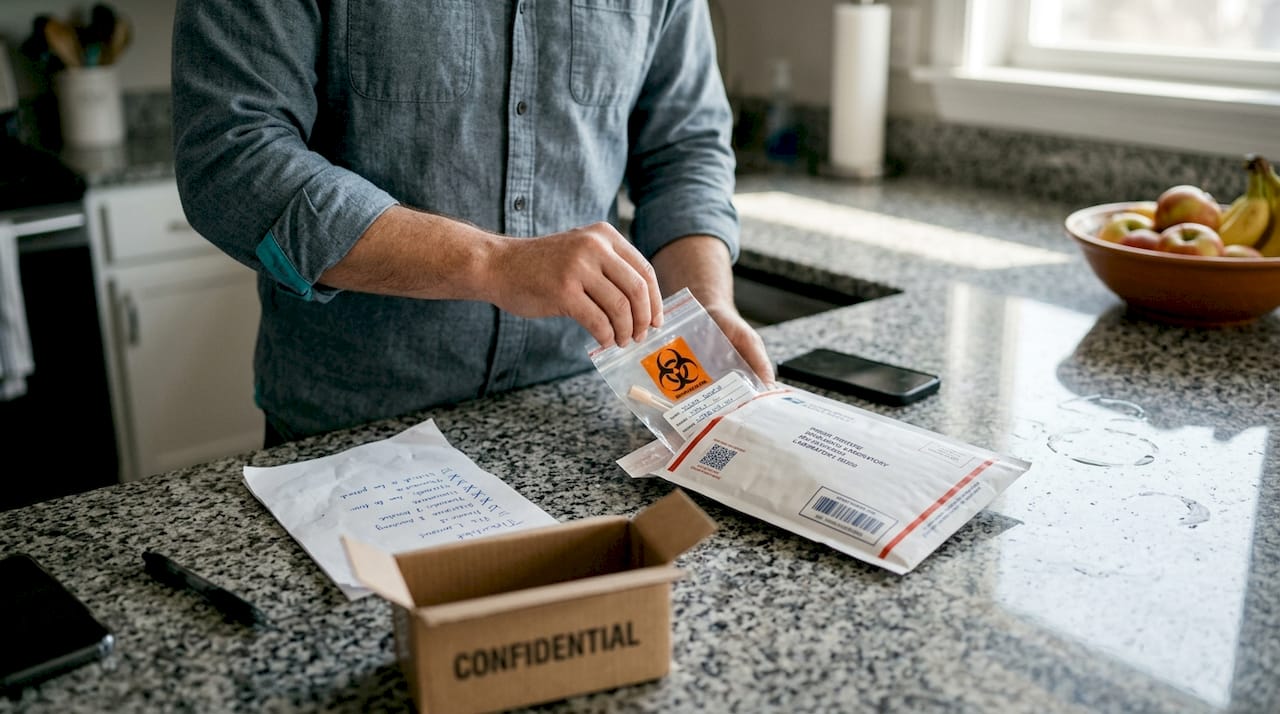
For lab-based kits, seal your sample in the biohazard bag provided, then place it in the pre-paid return envelope. Most providers include all of this. Post it as soon as possible, ideally the same day you collect it. Delays can affect sample integrity.
For rapid kits, read your result at the exact time stated in the instructions. Reading too early or too late can change what the test shows.
Here’s how to interpret what comes back:
- Negative result: Reassuring, but remember there are window periods for some infections. If you’ve had a recent high-risk exposure, re-testing after the window period is a smart move.
- Positive result: Don’t panic. Contact a healthcare provider for confirmation and treatment options. Most common STIs are very treatable.
- Inconclusive result: This means the test couldn’t give a clear answer. Re-test with a fresh kit or visit a clinic.
For people with busy schedules, at-home testing removes the biggest barrier to regular screening. But it works best as part of an ongoing habit, not a one-time check.
Experts note that for complex cases, symptoms, or high-risk exposures, clinical care remains essential. If you’re also exploring private testing for chlamydia or gonorrhea, those resources can help you understand your options more fully.
Pro Tip: Even a negative result isn’t a reason to skip future testing. Build re-testing into your calendar based on your activity level and risk profile.
Expert perspective: The truth about at-home STI screening
Here’s something most screening guides won’t say out loud: at-home testing is not just a backup plan. For people who test regularly, have no symptoms, and follow instructions carefully, it can be just as effective as a clinic visit for routine screening. The research supports that.
But there’s a flip side. Self-sampling boosts uptake among underserved groups and removes the stigma barrier, which is genuinely valuable for public health. However, it works best as a tool for symptom-free, regular users. If you’re experiencing discharge, pain, or unusual symptoms, please see a clinician. A test result doesn’t replace an examination.
Experts also caution against overusing rapid self-tests for acute or complex situations. Rapid kits are convenient, but lab-based kits are the gold standard for accuracy.
The real insight here is balance. Privacy matters, and you deserve access to convenient screening. But acting on your results promptly and seeing a professional when something feels off is how you protect yourself and your partners effectively. Explore examples of smart screening choices to see what a proactive routine actually looks like in practice.
Explore reliable at-home STI test options
Ready to act on what you’ve learned? At Rapidtest, we believe taking care of your sexual health should never feel like a chore or a source of anxiety. Our kits are designed for real people with real schedules.
Browse our at-home STI and STD testing kits for options that deliver results in as little as 15 minutes, no appointment needed, no lab, and no awkward conversations. If you want fast, reliable results from home right now, check out our rapid test results at home range. Discreet packaging, clear instructions, and genuine peace of mind. That’s what we’re here for.
Frequently asked questions
How accurate are at-home STI test kits?
Lab-processed self-samples are over 95% accurate for chlamydia and gonorrhea when instructions are followed carefully. Rapid kits vary more, so provider reputation matters.
Which STIs can I test for at home?
Most kits cover chlamydia, gonorrhea, HIV, and syphilis. Some providers like Homed-IQ in the Netherlands offer tests for 11 STIs, though the scope depends on the service you choose.
Should I use a clinic instead of an at-home test?
If you have symptoms, a high-risk exposure, or get an unclear result, clinics remain essential. At-home tests are great for regular, symptom-free screening but are not a full clinical replacement.
How do I keep my test and results confidential?
Order from providers that offer discreet postal packaging and secure online result portals. Always review the provider’s privacy policy before purchasing.