


What a positive STI test means: next steps and clarity
Getting a positive STI test result can stop you in your tracks. Your heart races, your mind spirals, and suddenly you’re not sure what to do next. But here’s something worth knowing right away: STI cases continue to rise across Europe, which means you are far from alone, and public health agencies are very clear that a positive result is a prompt to act, not a reason to panic. This guide walks you through exactly what a positive result means, what it doesn’t mean, and the clear, confident steps you can take from here.
Table of Contents
- STIs in Europe and the UK: The bigger picture
- How STI tests work and why “positive” isn’t always final
- What a positive STI test means for your next steps
- Reducing onward STI transmission: Your role in prevention
- Looking deeper: Why stigma and silence make STIs harder to manage
- Get peace of mind: Support and next steps with rapid testing
- Frequently asked questions
Key Takeaways
| Point | Details |
|---|---|
| A positive test means action | A positive STI test is a reason to seek medical guidance, not panic. |
| Confirmatory testing matters | Initial positive results, especially from rapid tests, should be confirmed by a healthcare provider. |
| Early treatment stops spread | Quick detection and intervention prevent complications and protect your partners. |
| You’re not alone | STIs are common, and timely action is the most important step you can take. |
STIs in Europe and the UK: The bigger picture
Let’s be real for a moment. When you see that second line on a test or read a positive result, the first instinct is often to feel like you’re the only person this has ever happened to. You’re not. Not even close.
The ECDC reports rising STI rates across the EU and EEA, with early detection and treatment flagged as essential to preventing further transmission and complications. This isn’t just a statistic to make you feel better. It reflects a real, population-wide picture that means clinics, health services, and testing programs across Europe are actively prepared for exactly this situation.
“Early detection and treatment are essential to prevent further transmission and complications.” — European Centre for Disease Prevention and Control (ECDC)
Understanding the risks of STI transmission is key to keeping things in perspective. Some STIs spread very easily through ordinary sexual contact, even when neither partner has visible symptoms. That’s why rising rates across Europe are not a sign of reckless behavior. They’re a sign that STIs are common infections, full stop.
Here’s why knowing the bigger picture matters:
- You are not isolated. Millions of people across Europe receive positive STI results every year and go on to get treated, recover, and continue healthy sexual lives.
- The health system expects this. Clinics and GPs are set up to handle STI diagnoses without judgment. It’s routine care.
- A positive result is not a life sentence. Most STIs are highly treatable, and even those that aren’t curable (like herpes or HPV) are very manageable.
- Testing itself is a responsible act. The fact that you tested means you are already ahead of the curve.
There are many types of STI tests available today, from clinic-based lab panels to rapid home kits. Each has its place, and knowing which type you used matters a lot for interpreting your result.
How STI tests work and why “positive” isn’t always final
Understanding your place in the bigger picture makes it less overwhelming. Now let’s break down what different tests actually look for and why not every positive is the final word.
STI testing broadly falls into two categories: rapid tests (the kind you can do at home or at a walk-in clinic for an instant result) and laboratory-based confirmatory tests (which take longer but offer greater precision). Both have a role to play.
| Test type | How it works | Typical turnaround | Confirmation needed? |
|---|---|---|---|
| Rapid antigen/antibody test | Detects proteins or antibodies in blood or swab | 15 minutes | Sometimes, especially for HIV |
| PCR (lab test) | Detects DNA/RNA of the infection | 1 to 5 days | Generally definitive |
| Culture test | Grows the infection in a lab setting | 3 to 7 days | Highly specific |
| Self-test kit | Detects antibodies or antigens at home | 15 minutes | Often yes, for confirmation |
One of the most important things to understand is that false positives are possible, particularly with rapid tests. A false positive is when the test says you’re positive but you actually aren’t. This can happen due to cross-reactions with other antibodies, test sensitivity levels, or the timing of when you test relative to exposure.
For HIV specifically, testing pathways include confirmatory steps because false positives can occur, particularly in lower-prevalence settings. Every positive rapid HIV result should be confirmed in a lab before any conclusions are drawn.
So what should you actually do when you get a positive result? Here’s a simple sequence:
- Stay calm. A positive result is information, not a verdict.
- Note what type of test you used. A rapid home kit and a lab PCR test carry different levels of certainty.
- Check the test instructions. Make sure you followed them correctly, since user error can affect results.
- Book a confirmatory test. Contact your GP, a sexual health clinic, or use a follow-up lab test to verify.
- Avoid sexual contact in the meantime. Until you have a confirmed result, it’s sensible to pause and protect your partners.
Pro Tip: If you used a rapid home test and aren’t sure how to read your results, check out the guide on reading your test results before you do anything else. Knowing whether you’re looking at a faint line or a clear positive changes everything.
It’s also worth understanding the accuracy of self-tests before you spiral. Many modern rapid kits have high sensitivity and specificity, but they’re not perfect. That’s not a flaw. It’s just how diagnostics work, and it’s why confirmatory testing exists.
What a positive STI test means for your next steps
Once you understand the test process, it’s time to focus on practical responses. Here’s how to handle a positive result with clarity and confidence.

The right next steps depend partly on which STI you’ve tested positive for. Different infections have different treatment pathways, transmission risks, and emotional weight. Here’s a quick comparison:
| STI | Typical treatment | Urgency level | Partner notification |
|---|---|---|---|
| Chlamydia | Antibiotics (single dose or short course) | Moderate, treat within days | Yes, recent partners |
| Gonorrhea | Antibiotic injection | High, treat promptly | Yes, all recent partners |
| HIV | Antiretroviral therapy (lifelong) | High, confirm and start care fast | Yes, advise partners to test |
| Herpes | Antiviral medication (manages symptoms) | Lower, manage ongoing | Yes, inform current/future partners |
| HPV | No direct treatment (monitor, vaccines available) | Low to moderate | Inform partners |
| Syphilis | Penicillin injection | High, treat promptly | Yes, contact tracing recommended |
Early detection and treatment are essential to prevent complications and stop the infection spreading further. That’s especially true for bacterial STIs like chlamydia, gonorrhea, and syphilis, where untreated infections can cause serious long-term health problems including infertility or organ damage.
Here’s what to focus on after a positive result:
- Get confirmation. Use a follow-up lab test or visit a sexual health clinic. This is non-negotiable for HIV and recommended for most other infections.
- Contact your healthcare provider. Your GP or local sexual health clinic will guide treatment. Be honest and direct about your result. They have heard it all before.
- Tell your partners. This is the hardest part for most people, but it’s the right thing to do. You don’t have to do it face-to-face. Many sexual health services offer anonymous partner notification support.
- Take care of yourself emotionally. A positive result can bring up a lot of feelings, including shame, fear, or anger. Those feelings are valid. Reach out to a trusted friend, counselor, or support helpline if you need to talk it through.
- Don’t resume sexual activity until cleared. Whether you’re waiting for treatment to finish or for a follow-up negative test, pausing protects the people you care about.
Understanding how to use at-home STI tests safely and accurately is part of this process. And if you’re thinking about screening for STIs at home on an ongoing basis, building that into your regular health routine is one of the smartest moves you can make.
Pro Tip: When telling a partner, keep it simple and factual. Something like “I tested positive for X and wanted to let you know so you can get tested too.” You don’t need to place blame or over-explain. Short, honest, and calm works best for everyone involved. There are also affordable STI test options you can point partners to so they can test quickly and privately.
Reducing onward STI transmission: Your role in prevention
After your initial response, the next focus is helping protect your partners and community. Here’s how to keep everyone safer.
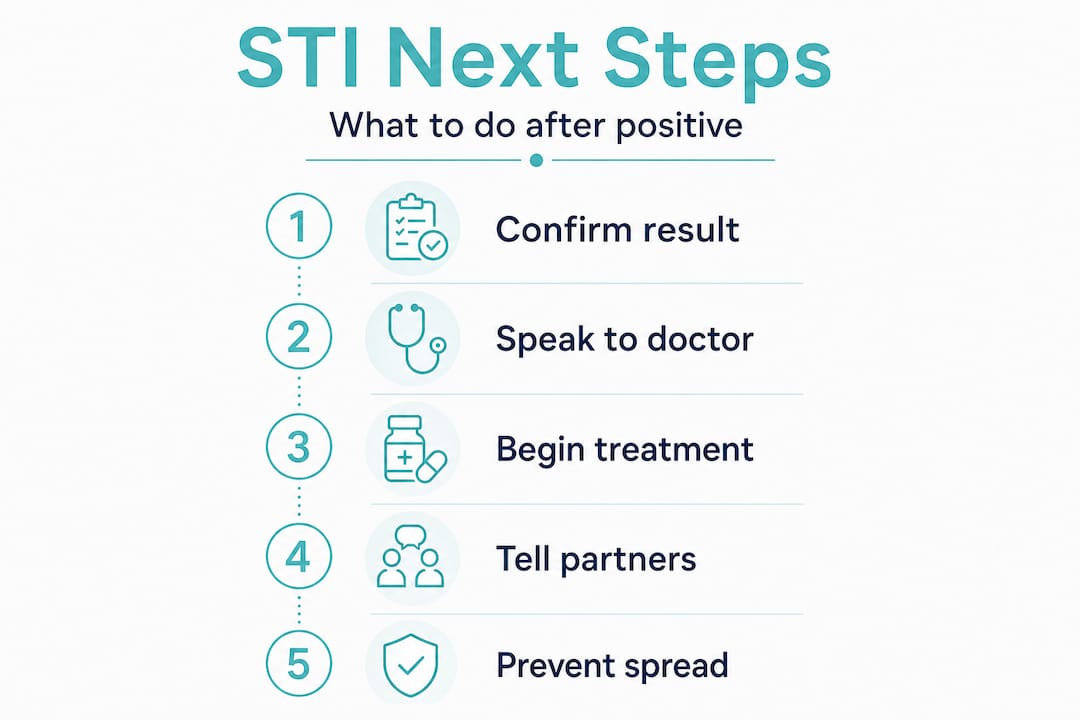
STI control depends on timely diagnosis and treatment. Europe-wide surveillance updates consistently emphasize that prevention and early action after a positive result are the most powerful tools we have as individuals and as a community.
Here’s what you can do right now to reduce the risk of onward transmission:
- Start treatment as quickly as possible. The sooner you treat a bacterial STI, the sooner you stop being contagious. For viral infections like HIV, starting antiretroviral therapy brings the viral load down dramatically, protecting both you and your partners.
- Use condoms consistently until your treatment is complete and you’ve had a follow-up test. This is especially important if you’re waiting for a confirmatory test.
- Notify all recent partners. “Recent” generally means anyone you’ve had sexual contact with in the past three to six months, though this window varies by infection.
- Consider retesting after treatment. Some infections, like chlamydia and gonorrhea, can be reacquired quickly. Retesting a few weeks after treatment confirms everything was cleared successfully.
- Access contact tracing support. In the UK and across Europe, sexual health clinics offer anonymous partner notification services. You give them the details; they handle the outreach. It removes the discomfort of direct conversation if that feels too overwhelming.
“Timely diagnosis and treatment remain the most effective tools for controlling STI spread at both individual and community levels.” — ECDC
Taking a proactive sexual health approach means not just reacting to a positive result but building habits that keep you and your partners safe long term. That includes regular screening, honest communication, and knowing your own status at all times.
Looking deeper: Why stigma and silence make STIs harder to manage
Here’s the uncomfortable truth that most sexual health articles skip over: the stigma around STIs does more damage than most of the infections themselves.
Think about it. If someone tells you they have a broken arm, you don’t look at them differently. But mention a positive chlamydia test and suddenly there’s a whole invisible judgment attached. That stigma is what stops people from testing, from telling partners, from getting treated promptly. It’s the real driver behind rising STI rates, not recklessness.
In our experience of supporting people through the testing process, the biggest barrier is never the swab or the blood test. It’s the fear of what the result means about them as a person. And that fear is built entirely on outdated social attitudes, not medical reality.
Here’s the reframe that changes everything: getting tested is an act of self-respect and care for others. A positive result means you caught something. That’s a win. The alternative, not knowing and not testing, is the version that causes real harm.
Open, honest discussion about sexual health is still rare in most social circles, and that silence lets shame thrive. But every time someone gets tested, shares their result with a partner, or simply talks about sexual health without embarrassment, the stigma shrinks a little. You are part of that shift just by being here and reading this.
Knowledge is power. Knowing your status gives you control. It lets you access treatment, protect others, and make informed choices. Shame doesn’t protect anyone. Knowing your status does. Check out STI testing resources to understand what options are available to you right now, privately and on your terms.
Get peace of mind: Support and next steps with rapid testing
If you’ve received a positive STI result and aren’t sure where to go from here, the good news is that rapid, private testing has never been more accessible. You don’t need a doctor’s referral, a long wait in a clinic, or an awkward conversation. You can get answers in 15 minutes, from home.
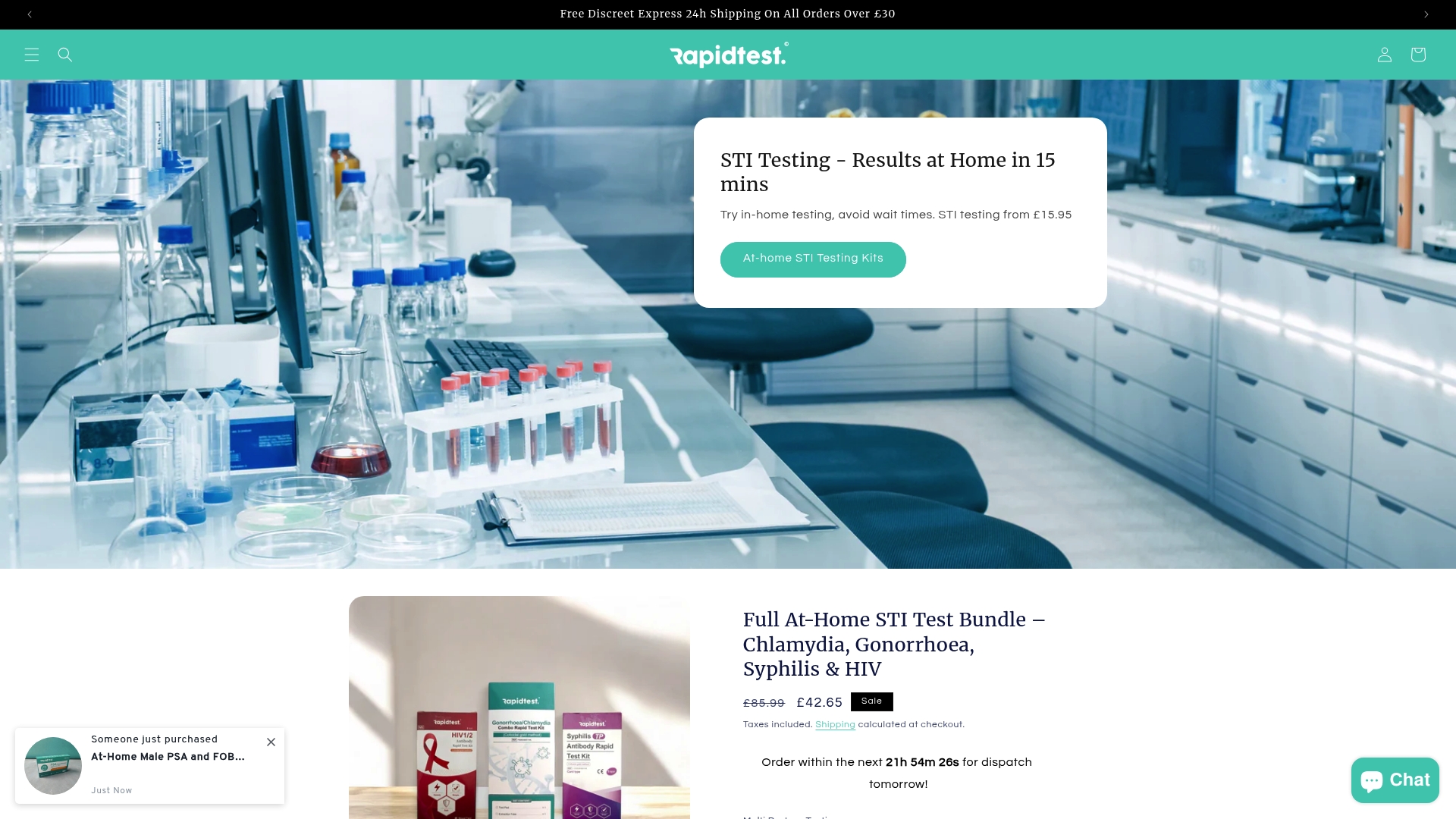
At Rapidtest, we offer at-home STI rapid test kits that give you reliable results quickly and confidentially. Whether you’re confirming a previous result, retesting after treatment, or just staying on top of your sexual health proactively, our kits are designed for real life. No queues, no appointments, no awkward explanations. If you want a broader screening option, our full range of at-home STI and STD testing kits covers multiple infections at once, giving you a complete picture fast. Because knowing your status is the first and most powerful step you can take.
Frequently asked questions
Can a positive STI test be wrong?
Yes, false positives are possible with some rapid tests, so every positive result should be confirmed by a healthcare professional before any final conclusions are drawn. Testing pathways specifically include confirmatory steps for this reason.
What should I do immediately after a positive STI test?
Arrange a confirmatory test with your GP or a sexual health clinic and avoid sexual contact in the meantime. Early detection and treatment are essential to prevent complications and further spread.
Will I have symptoms if I have a positive STI?
Not always. Many STIs, including chlamydia and HPV, can be present without any noticeable symptoms, which is exactly why regular testing is so important.
Do I need to tell my partners about my positive result?
Yes, partners should be informed so they can get tested and treated if needed. Timely action from all involved is the most effective way to break the chain of transmission.
Are at-home STI tests as reliable as those from a clinic?
Clinic-based lab tests are generally more definitive, but many at-home rapid kits have high accuracy when used correctly. Rapid tests may have reduced specificity in some settings, which is why confirmatory testing is recommended for any positive result.