


Why test for STIs before a new partner: risks and facts
Starting something new with someone is exciting. But here’s the thing most people don’t think about: many STIs show zero symptoms, meaning you or your new partner could be carrying an infection without either of you knowing it. No rash, no discomfort, no warning signs at all. That’s not a scare tactic. It’s just how these infections behave. Testing before you become intimate with someone new isn’t about distrust. It’s about being informed, being responsible, and making sure your relationship starts on the healthiest possible foundation.
Table of Contents
- Why testing matters: Asymptomatic risk and rising STI rates
- How STI testing protects you and your partner
- Timing matters: When and how to test for reliable results
- Accessing testing: Where, how, and making it easy
- Why relying on symptoms or condoms alone is risky: The facts most people miss
- Making STI testing simple: At-home solutions for peace of mind
- Frequently asked questions
Key Takeaways
| Point | Details |
|---|---|
| Symptoms aren’t reliable | Most STIs show no symptoms, so regular testing is crucial for everyone with a new partner. |
| Testing protects both partners | Mutual testing before starting a new relationship prevents health complications and builds trust. |
| Timing impacts results | Testing after recommended window periods ensures accuracy and reduces false negatives. |
| Options are accessible | You can choose free NHS clinics, in-person options, or rapid confidential home test kits. |
| Condoms aren’t enough | Because some infections spread through skin contact, testing adds an essential layer of protection. |
Why testing matters: Asymptomatic risk and rising STI rates
Let’s be real about something most people get wrong. We tend to think that if we feel fine, we are fine. That logic works for a lot of things in life, but not for STIs. The numbers tell a very different story.
Asymptomatic rates vary widely depending on the infection, but they’re consistently high across the board:
- Chlamydia: Around 70% of women and 50% of men who have it experience no symptoms at all.
- Gonorrhea: Up to 50% of women and around 10% of men show no obvious signs.
- Syphilis: Early stages can be so mild they go completely unnoticed, especially if the initial sore appears somewhere out of sight.
That means you could be unknowingly passing on an STI to someone you care about, simply because neither of you knew it was there in the first place.
And it’s not just a personal problem. Across Europe, STI rates are climbing at a rate that’s hard to ignore. According to recent surveillance data, STI cases are rising in Europe, with syphilis, gonorrhea, and chlamydia all increasing year over year. The European Centre for Disease Prevention and Control (ECDC) has pointed to critical gaps in testing access and prevention policies as key drivers of this trend.
“Feeling fine is not a clinical diagnosis. The only way to actually know your status is to test.”
The reality is that symptoms only show up in a fraction of cases. When you’re understanding STI rates across different demographics, it becomes clear that transmission often happens between people who genuinely had no idea they were infectious. Not because they were irresponsible. Because they were asymptomatic and untested.
This is especially important to keep in mind when entering a new relationship or sleeping with someone new. The assumption that “we both seem healthy” isn’t a safety net. It’s a gap in your protection.
How STI testing protects you and your partner
Knowing how widespread asymptomatic cases are and seeing the rising incidence rates, let’s focus on how testing can safeguard your relationships and personal health.
Testing before unprotected sex with a new partner isn’t just good advice. It’s recommended by the ECDC as a key step in responsible sexual health management. And it benefits everyone involved.
Here’s what mutual testing actually gives you:
- Clarity and confidence. Knowing your status removes anxiety from the equation. You can move forward with peace of mind rather than nagging uncertainty.
- Protection from complications. Untreated STIs can cause serious harm including infertility, pelvic inflammatory disease (PID), increased susceptibility to HIV, and significant complications during pregnancy.
- Honest communication. Discussing testing openly builds trust. It signals maturity and mutual respect, which is a strong foundation for any relationship.
- Breaking the chain of transmission. If you test positive and treat early, you stop the infection from being passed on unknowingly.
Both partners testing before becoming exclusive is increasingly recognized as responsible practice. Not just responsible. Smart. Here’s a quick comparison to make it tangible:
| Factor | Waiting to test | Testing before sex |
|---|---|---|
| Physical risk | High chance of unknowing transmission | Significantly reduced risk |
| Emotional wellbeing | Ongoing uncertainty or anxiety | Confidence and peace of mind |
| Relationship trust | Built on assumption | Built on transparency |
| Long-term health | Risk of untreated complications | Early detection, early treatment |
| Partner impact | Potential unintended harm | Mutual protection and respect |
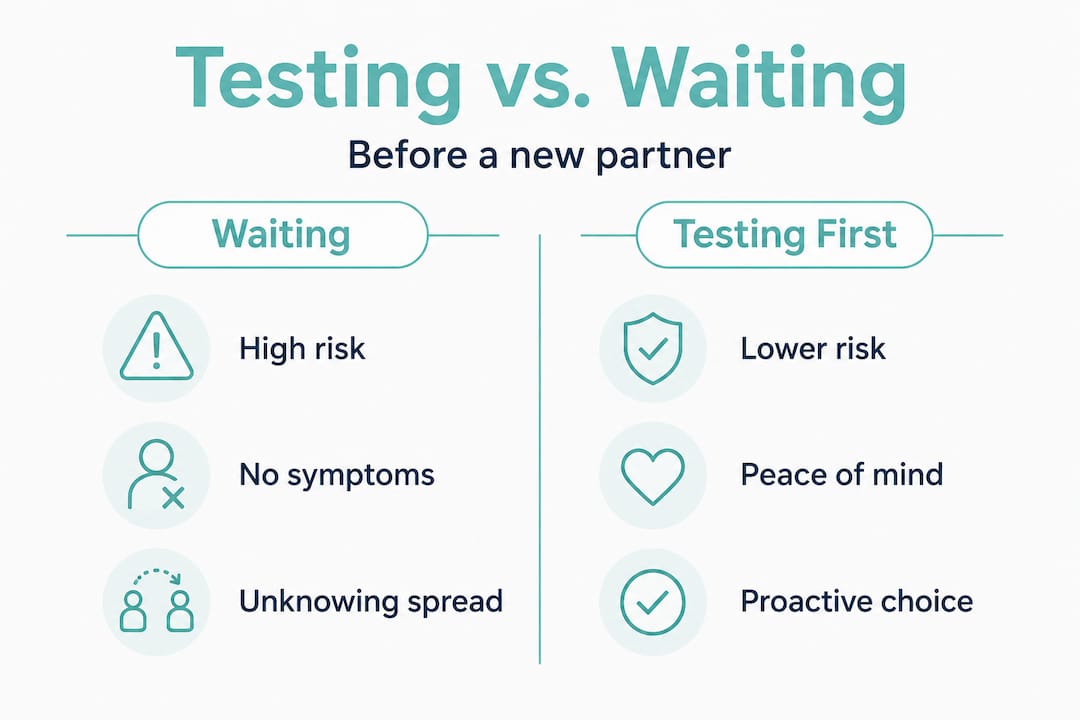
The table doesn’t lie. Waiting might feel easier in the moment, but it carries real costs. Testing is the proactive choice, and it’s the one that protects both of you.
Pro Tip: Before having the “let’s get tested” conversation with a new partner, consider doing your own test first. Coming to the conversation having already taken that step makes it much easier and less awkward.
You can learn more about your options by looking into the types of STI tests available, including what each test screens for and which ones are most relevant to your situation. And if you want a broader picture of what’s out there, check out the full range of STI testing resources to find what fits your needs.
Timing matters: When and how to test for reliable results
Understanding the benefits is crucial, but so is knowing the right timing and method for your tests. Getting this wrong is one of the most common mistakes people make, and it can lead to false reassurance.
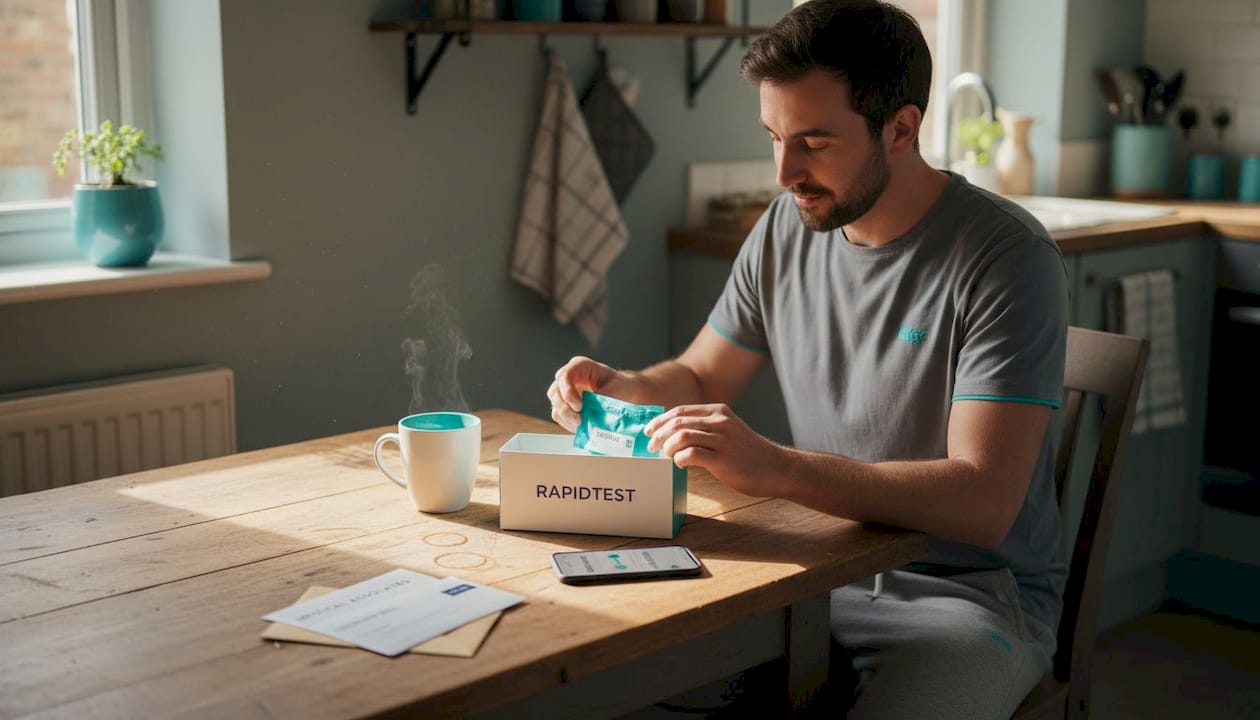
Every STI has what’s called a window period. This is the time between exposure and when the infection becomes detectable by a test. Testing too early, before the window period has passed, can give you a false negative result even if you are infected. You’d think you’re in the clear when you’re not.
Here’s a breakdown of typical window periods for common infections:
| Infection | Recommended test type | Window period |
|---|---|---|
| Chlamydia | NAAT (urine or swab) | 7 to 14 days after exposure |
| Gonorrhea | NAAT (urine or swab) | 7 to 14 days after exposure |
| Syphilis | Blood test | 3 to 6 weeks after exposure |
| HIV | Blood test | 18 to 45 days (4th gen test) |
| Hepatitis B | Blood test | 6 weeks to 3 months |
| Herpes | Swab (active sore) or blood | Varies; blood test best after 12 weeks |
As the data shows, timing your test correctly matters a lot. The general advice from sexual health professionals is to wait at least 6 weeks after your last exposure for a more complete and reliable picture, especially if you’re testing for multiple infections at once.
“Testing too early feels proactive but can actually give you a false sense of security. Timing is everything.”
If you’ve had a recent exposure and you’re still within the window period, you’re not stuck. You can take an initial test now to screen for infections that may already be detectable, then schedule a follow-up test at the appropriate interval. Some infections, like chlamydia and gonorrhea, can often be detected within two weeks, while others require a longer wait.
Different STIs require different testing methods, and that’s worth knowing before you go ahead:
- NAAT tests (nucleic acid amplification tests) are the gold standard for chlamydia and gonorrhea. These use urine samples or swabs from the throat, genitals, or rectum.
- Blood tests are used for HIV, syphilis, hepatitis B, and hepatitis C.
- Swab tests from active sores are the most reliable method for herpes when symptoms are present.
If you’ve had anal or oral sex specifically, you need site-specific swabs, not just a urine sample, to catch infections in those areas accurately.
Pro Tip: If you’ve recently had unprotected sex with a new partner, check out our guide on when to test after exposure so you know exactly when to act and what to look for. And if you’re doing a test at home, our guide on accurate at-home STI testing walks you through how to make sure you get reliable results.
Accessing testing: Where, how, and making it easy
Once you understand timing and the importance of accuracy, it’s time to consider your practical next step. Where and how you’ll get tested, conveniently and confidentially.
The good news is there are more options than ever before. You don’t have to sit in a waiting room if you don’t want to.
NHS and GUM clinics (Genitourinary Medicine clinics):
- Free STI testing is available through NHS sexual health services and GUM clinics across the UK.
- These services are completely confidential, even from your GP if you prefer.
- Waiting times can vary, but many clinics offer online booking and postal testing options.
- Recommended if you have symptoms, have had multiple partners, or are concerned about a specific exposure.
Private clinics:
- Faster appointments, often same-day or next-day access.
- You pay for the service, but results are typically quicker.
- Good option if you need results urgently or want extra privacy.
At-home testing:
- Kits are delivered discreetly to your door.
- You collect your own sample (urine, swab, or finger-prick blood) and either send it to a lab or get results in 15 minutes at home.
- No queues, no awkward conversations, no waiting rooms.
- Results are private and completely within your control.
The option that works best for you depends on your situation. If you’re nervous about visiting a clinic, or if you simply want to know your status quickly and privately, at-home testing is a genuinely great option. Our guide on screening at home covers everything you need to know about the process from start to finish.
Pro Tip: Don’t wait for symptoms before booking a test. If you’ve been sexually active with a new partner in the last few months, testing now is the right move regardless of how you feel.
Why relying on symptoms or condoms alone is risky: The facts most people miss
Here’s where we want to challenge the most common assumptions people carry around without questioning them.
Most people operate with one or both of these mental shortcuts: “I’d know if something was wrong” or “I always use condoms, so I’m covered.” We get it. These feel logical. But the evidence tells a more complicated story, and it’s worth sitting with that for a moment.
The symptoms myth. The reality is that most STI transmission happens between people who have no idea they’re infectious. Asymptomatic rates, as we covered earlier, are staggeringly high. Waiting for a symptom to prompt you to test means you’ve likely already been infectious for days, weeks, or even months. That timeline matters enormously for both your health and your partner’s.
The condom myth. Condoms are excellent. Use them. But they are not a complete solution on their own. Condoms reduce but don’t eliminate risk, particularly for skin-to-skin contact infections like HPV (human papillomavirus) and herpes. These infections can be transmitted through contact with skin that isn’t covered by a condom. That’s a significant gap in protection that a lot of people don’t account for.
Testing fills that gap. It doesn’t replace condoms. It works alongside them to give you a genuinely fuller picture of your sexual health. The benefits of proactive screening go beyond just catching infections. They include catching things early when treatment is simpler, reducing the emotional weight of uncertainty, and building real trust with a partner through open, honest communication.
The truth is, proactive testing is the one strategy that gives you actual information rather than assumption. And actual information is where real confidence comes from.
Making STI testing simple: At-home solutions for peace of mind
Ready to take action? You don’t need to wait for a clinic appointment or rearrange your schedule to know your status.
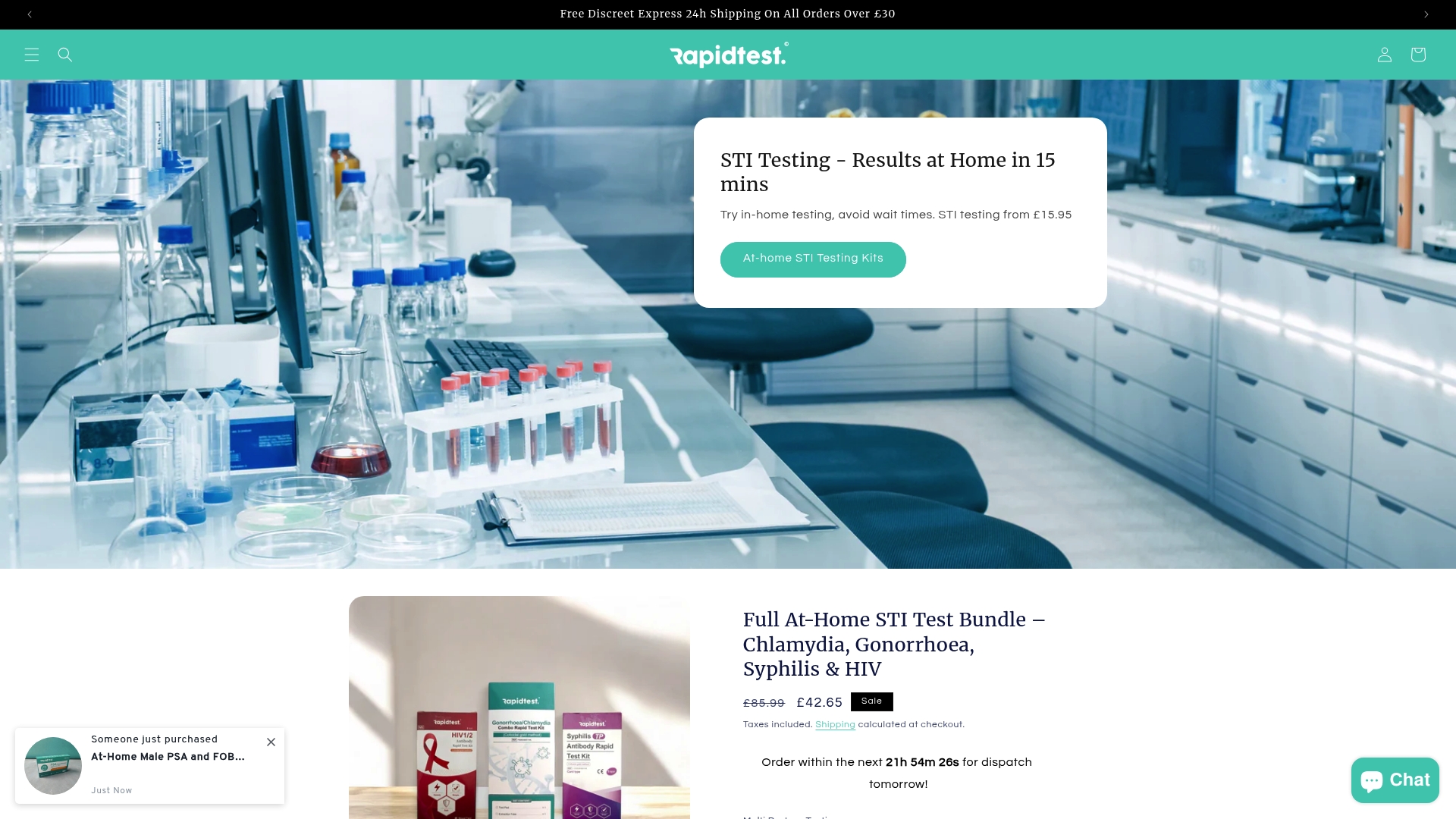
At Rapidtest, we believe knowing your status should be simple, private, and fast. Our at-home STI test kits are designed for people who want to take their sexual health seriously without the hassle of a doctor’s visit. Results in 15 minutes, delivered discreetly, no awkward conversations required. If you want something even faster, our rapid STI tests give you answers quickly from the comfort of your own home. Whether you’re about to start a new relationship or just staying on top of your health, order at-home kits today and get the clarity you deserve.
Frequently asked questions
What happens if I test too soon after exposure?
Testing within the window period may give a false negative result; it’s important to repeat your test at the recommended interval for each infection to get an accurate picture.
Is it necessary to test even if I use condoms?
Yes, because some STIs spread through skin-to-skin contact in areas not covered by condoms, such as HPV and herpes, making condoms alone an incomplete protection strategy.
Are STI tests confidential in the UK?
Absolutely. NHS-provided STI tests are completely confidential and free, and results can be kept separate from your general medical record if you prefer.
What’s the best time to get tested when starting a new relationship?
Testing before intercourse, ideally after the appropriate window period has passed for any recent exposure, gives you the most accurate and responsible results to share with a new partner.