


Men's health awareness month: why testing matters
Men’s Health Awareness Month is defined as a dedicated annual campaign to raise understanding of the specific health risks men face and to encourage proactive screening before symptoms appear. If you are over 35, this month is not just background noise. It is a genuine prompt to act on the checks you have been putting off. Prostate cancer, cardiovascular disease, bowel cancer, and hormonal imbalances are all conditions where early detection changes outcomes dramatically. The problem is that most men do not get tested until something forces their hand. That needs to change.
Why men avoid health testing during men’s health awareness month
Let’s be real. Most men do not book a health check because they feel fine. That logic sounds reasonable, but it is exactly the thinking that allows serious conditions to develop undetected. Elevated blood pressure, rising PSA levels, and early bowel changes rarely announce themselves with obvious symptoms. By the time you feel something, the window for the easiest intervention has often passed.
There are several well-documented reasons men delay care:
- Stigma around vulnerability. Talking about health feels uncomfortably close to admitting weakness for many men, particularly those in their 40s and 50s who grew up with a “get on with it” culture.
- The nudge barrier. Men frequently wait for an external prompt before seeking care, missing silent risks like elevated cholesterol or early prostate changes that only a test can reveal.
- Not knowing what to ask for. Many men have no idea which screenings apply to their age group or risk profile, so they simply do not ask.
- Fear of a bad result. Paradoxically, the fear of finding something wrong stops men from finding it early, when treatment is most effective.
- Perceived inconvenience. Booking a GP appointment, taking time off work, and waiting for results feels like a lot of effort for something that might turn out to be nothing.
Stigma remains a top barrier to mental health support among middle-aged men, and community projects co-designed with men who have lived experience have proven more effective at breaking through it than traditional health campaigns. That tells you something important: men respond to peer-level conversations, not lectures.
“Men need to view screenings as a commitment to family longevity rather than a reaction to illness.” — Cedars-Sinai
Pro Tip: Before your next GP visit, write down your family health history. Men who document this before appointments receive 20 to 30% more accurate risk assessments from their doctors. It takes ten minutes and genuinely changes the quality of advice you get.
What health tests should men over 35 actually get?
Knowing which tests matter is half the battle. Here is a practical breakdown of the screenings most relevant to men aged 35 and above, along with why each one counts.
-
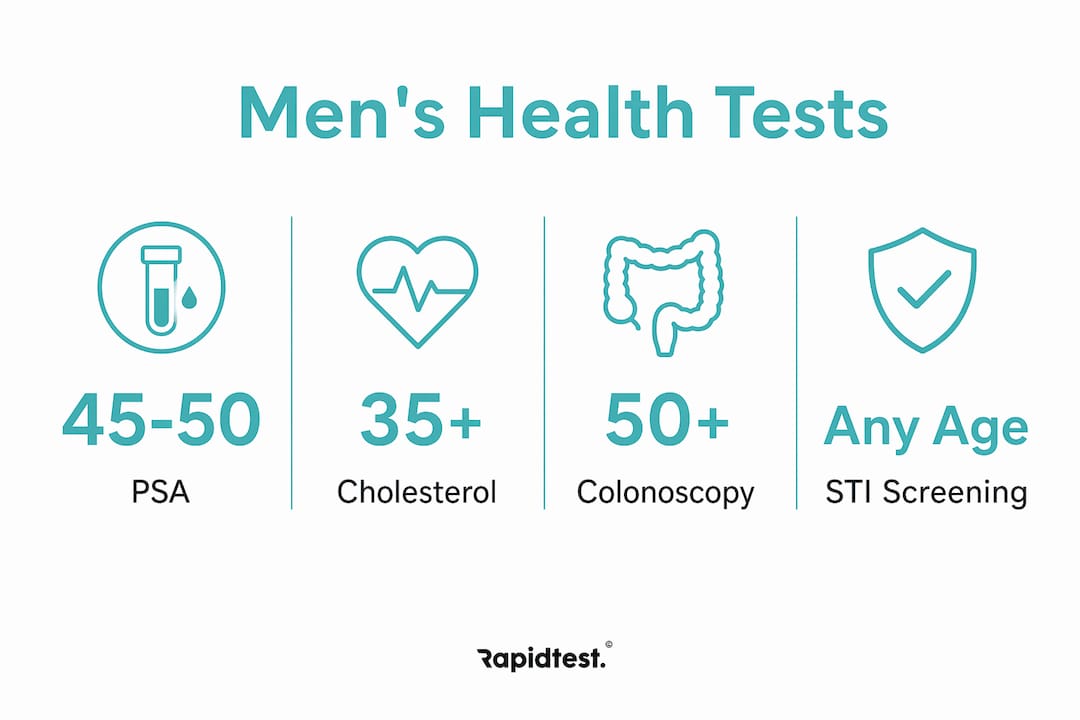
PSA test (prostate health). Prostate-specific antigen testing measures a protein in your blood that rises when the prostate is under stress. Prostate and colon cancer screenings are recommended to start between ages 45 and 50, but men with a family history or symptoms should consult a doctor earlier. Catching prostate cancer at stage one gives you a near-complete survival rate. Catching it at stage four does not.
-
Bowel cancer screening (FOB test). A faecal occult blood test detects hidden blood in your stool, which can be an early indicator of bowel cancer. Bowel cancer is the fourth most common cancer in the UK, and it is highly treatable when found early. You can do this test at home without any clinical appointment.
-
Cardiovascular markers. Blood pressure, cholesterol, and resting heart rate are the three numbers that define your cardiovascular risk. Many men carry hidden cardiovascular risks that only proactive testing can uncover, because symptoms often do not appear until a serious event occurs.
-
Testosterone and hormone levels. Low testosterone affects mood, energy, libido, and muscle mass. It is far more common in men over 40 than most realise, and low testosterone is directly linked to mood changes that are often misattributed to stress or ageing.
-
STI screening. Sexual health does not stop being relevant after 35. Regular STI screening is part of responsible health management at any age.
| Test | Recommended age | Key risk detected |
|---|---|---|
| PSA (prostate) | 45 to 50, earlier with risk factors | Prostate cancer |
| FOB (bowel) | 45 and above | Bowel cancer |
| Cholesterol and blood pressure | 35 and above | Cardiovascular disease |
| Testosterone panel | 40 and above | Hormonal imbalance |
| STI screening | Sexually active adults | Infections including HIV, chlamydia |
Pro Tip: You do not need to wait for a GP referral for most of these tests. At-home rapid testing kits for PSA, FOB, and STI screening give you results in 15 minutes and can be done privately in your own home. Check out Rapidtest’s men’s health screening guide for a full breakdown.

How home testing kits remove the barriers men face
The single biggest shift in men’s health screening over the past five years is the availability of accurate, affordable home testing. For men who cite inconvenience, embarrassment, or time as reasons to avoid testing, at-home kits remove all three objections at once.
Here is what makes home testing genuinely useful rather than just convenient:
- No appointment, no queue, no waiting room. You test when it suits you, whether that is a Tuesday morning or a Sunday evening.
- Results in 15 minutes. There is no week-long wait for anxiety to build. You know where you stand quickly, and you can act on that information.
- Complete privacy. For tests like PSA, FOB, or STI screening, many men find the privacy of home testing removes the awkwardness that stops them going to a clinic.
- A clear starting point. A home test is not a replacement for a GP. It is a first step. If your PSA result is elevated, you take that result to your doctor with context already established.
Rapidtest offers at-home health checks for PSA, FOB, and STI screening that are designed specifically for men who want to take control without the friction of traditional appointments. The kits are straightforward to use, and the results are clear.
Men who delay screenings increase their risk of chronic diseases including diabetes and heart disease. Home testing does not solve every barrier, but it removes enough of them to get men started. And getting started is the part that matters most.
Pro Tip: If you are unsure which test to begin with, start with PSA and FOB. These two cover the two most common male-specific cancers and can both be done at home in under 20 minutes. Read Rapidtest’s guide on rapid testing benefits to understand what each result means.
Lifestyle habits that work alongside regular screening
Testing tells you where you are. Lifestyle determines where you are heading. For men over 35, the choices you make around exercise, diet, sleep, and stress are not just wellness preferences. They are medical decisions.
The 35 and above age group represents a critical window where shifting to prevention through lifestyle can genuinely alter long-term health trajectories. Here is what the evidence supports:
- Exercise. Men are advised to complete 150 minutes of moderate aerobic activity weekly, plus muscle-strengthening exercise on at least two days per week. That is 30 minutes of brisk walking five days a week plus two gym sessions. It is achievable, and the cardiovascular and hormonal benefits are significant.
- Diet. A Mediterranean-style diet, built around vegetables, oily fish, wholegrains, olive oil, and legumes, reduces cardiovascular risk and supports prostate health. It is not a fad. It is one of the most studied dietary patterns in medicine.
- Sleep. Seven to nine hours of sleep per night is not a luxury. Diet and sleep are preventative medical interventions, not lifestyle choices. Poor sleep raises cortisol, disrupts testosterone production, and increases insulin resistance.
- Mental health. Suicide is the leading cause of death in men under 50, with men accounting for 75% of all suicides. That statistic demands more than a passing mention. Talking to someone, whether a friend, a counsellor, or a GP, is not a sign of weakness. It is the most direct form of self-care available.
- Stress management. Chronic stress raises blood pressure, suppresses immune function, and accelerates hormonal decline. Practices like Pilates, which builds strength and reduces stress simultaneously, are increasingly popular among men over 40 for exactly this reason.
Shifting your mindset from fixing illness to optimising health reframes prevention as something you do for yourself and your family, not something done to you by the medical system.
Key takeaways
Proactive screening during Men’s Health Awareness Month, combined with consistent lifestyle habits, gives men over 35 the best possible chance of catching serious conditions early and managing long-term health effectively.
| Point | Details |
|---|---|
| Testing saves lives | PSA, FOB, and cardiovascular checks detect serious conditions before symptoms appear. |
| Barriers are real but solvable | Stigma, fear, and inconvenience delay testing; home kits remove all three objections. |
| Start between 45 and 50 | Prostate and bowel cancer screenings are recommended from age 45, earlier with risk factors. |
| Lifestyle is medical care | 150 minutes of weekly exercise, Mediterranean diet, and 7 to 9 hours sleep reduce chronic disease risk. |
| Mental health is health | Men account for 75% of suicides; breaking stigma and seeking support is a health priority, not an afterthought. |
Why I think men’s health month deserves more than a social media post
I have spoken to a lot of men about health testing over the years, and the pattern is almost always the same. They know they should get checked. They intend to book something. And then life gets in the way, and another year passes. Men’s Health Awareness Month matters not because it teaches men something they do not know, but because it gives them a reason to act on what they already know they should do.
What frustrates me is the gap between awareness and action. Campaigns raise the conversation, but the friction of actually booking, attending, and waiting for results kills the momentum for too many men. That is why I genuinely believe home testing is not a compromise. It is a better starting point for a lot of men than a GP appointment they will cancel twice before attending.
The men who benefit most from this month are not the ones who already prioritise their health. They are the ones who are just clinging on to the idea that they are fine, when a simple PSA or FOB test could tell them something worth knowing. If you are reading this and you have been putting off a check, use this month as your prompt. Not because someone told you to. Because you are worth the 15 minutes it takes.
— Jack
Take control with Rapidtest’s men’s health MOT
Men’s Health Awareness Month is the right moment to stop meaning to get tested and actually do it. Rapidtest has launched a new men’s health MOT bundle that covers the screenings most relevant to men over 35, including PSA and FOB testing, all from home, with results in 15 minutes.
No queues. No awkward conversations. No waiting days for results. You get clear, accurate information about your health without rearranging your week. If your results flag anything worth discussing, you take them to your GP with a head start. Rapidtest also offers at-home STI testing kits and fertility testing for men who want a fuller picture of their health. Start with what matters most to you, and go from there.
FAQ
What is men’s health awareness month?
Men’s Health Awareness Month is an annual campaign, observed in June in the UK and internationally, focused on raising awareness of the health risks men face and encouraging preventative screening and lifestyle changes.
What age should men start prostate cancer screening?
Prostate cancer screening via a PSA test is recommended to start between ages 45 and 50, or earlier if you have a family history of prostate cancer or relevant symptoms.
Can I do men’s health tests at home?
Yes. Tests for PSA levels, bowel cancer (FOB), STIs, and testosterone can all be done at home using rapid testing kits, with results available in as little as 15 minutes and no GP appointment required.
Why do men avoid health screenings?
Men most commonly cite stigma around vulnerability, fear of a bad diagnosis, lack of awareness about which tests to get, and the perceived inconvenience of booking appointments as reasons for delaying health checks.
How does lifestyle affect men’s health after 35?
Diet, sleep, and exercise directly influence cardiovascular risk, testosterone levels, and cancer risk in men over 35. A Mediterranean-style diet, 150 minutes of weekly aerobic activity, and seven to nine hours of sleep per night are the three most evidence-backed habits for long-term health.