


Top rapid health screenings men over 40 can do at home
Getting a health screening when you’re a busy man over 40 shouldn’t feel like a part-time job. Between work, family, and everything else pulling at your time, booking a GP appointment, waiting weeks for a slot, then sitting in a waiting room for an hour is a real barrier. And for anything that feels personal or a little awkward, like STI testing or checking your PSA levels, that barrier gets even higher. Rapid home testing kits change that equation completely. You get results in minutes, in private, without a single awkward conversation.
Table of Contents
- Selection criteria for rapid home health screenings
- STI and STD rapid screening kits
- Male fertility rapid screening kits
- Prostate (PSA) and cancer screening kits
- Comparing rapid health screenings for different needs
- Our take: what men over 40 really need from rapid screenings
- Get started with reliable rapid health screening kits
- Frequently asked questions
Key Takeaways
| Point | Details |
|---|---|
| Check for regulations | Always select screening kits with CE, MHRA, or BSi marks and clinical validation. |
| Screening is not diagnosis | Rapid tests provide preliminary information, but abnormal results need medical follow-up. |
| Privacy and speed | At-home rapid kits offer quick, confidential results without clinic visits. |
| Comparison helps choose | Summary tables make it easier to match kits to your needs and priorities. |
Selection criteria for rapid home health screenings
Not all at-home test kits are created equal. Some are genuinely well-regulated and clinically validated. Others are little more than novelty gadgets that give you a warm feeling without much actual information. Knowing what separates a trustworthy kit from a questionable one is the first thing to sort out before you spend any money.
Here’s what to look for:
- Regulatory marks: CE, MHRA, and BSi marks are the gold standard in the UK and Europe. These show the kit has been independently assessed and meets quality benchmarks. Without at least one of these, walk away.
- Result speed: Most reputable rapid kits deliver results in 15 to 30 minutes. If a kit claims “rapid” but doesn’t commit to a timeframe, be skeptical.
- Clinical validation: This means the kit has been compared against established lab methods. It’s not enough to just be fast. The results need to be reliable too.
- Screening vs. diagnosis: Rapid kits screen for markers or indicators. They do not diagnose. A positive or abnormal result tells you to follow up with a healthcare provider, not that you definitely have a condition.
- Privacy and ease of use: Good kits come with clear instructions, discreet packaging, and everything you need to complete the test at home without specialist knowledge.
Some self-testing rapid tests available across Europe hold strong regulatory credentials and are worth comparing. And if you’re still figuring out where to start, our guide on privacy, speed, and health lays out the basics really well. For a broader breakdown of what makes a kit trustworthy, check out our guide on safe home test kits.
Pro Tip: Always check the product page or packaging for clinical validation data. Kits that have been compared to lab tests and passed are the ones worth your money. If that information isn’t visible, it’s a red flag.
With the key criteria in mind, let’s break down the most popular rapid screening kit categories men are using today.
STI and STD rapid screening kits
After exploring screening criteria, STI and STD kits stand out for their speed and privacy features. If you’ve ever avoided getting tested because the whole process felt too awkward or time-consuming, these kits solve exactly that problem.
Modern at-home STI kits let you screen for some of the most common infections without leaving your house:
- Chlamydia: One of the most common STIs in men and often completely symptomless. Rapid kits can screen in 15 to 30 minutes using a urine sample or swab.
- Gonorrhea: Often asymptomatic in its early stages. At-home kits offer early detection before things progress.
- HPV: Some HPV rapid screening kits are now available for home use, which is significant given how common HPV actually is in men over 40.
- HIV, syphilis, and hepatitis: Combination kits exist that screen for multiple infections in one go, which makes the process even more efficient.
The process itself is straightforward. Most kits involve a simple swab or urine sample. You follow the instructions, wait your 15 to 30 minutes, and read the result. That’s it. No appointment, no waiting room, no receptionist asking why you’re there.
“Testing regularly for STIs doesn’t mean something is wrong. It means you’re taking your health seriously. For men over 40, staying on top of this is just smart, proactive healthcare.”
One thing to be clear about: a rapid STI kit gives you a screening result, not a medical diagnosis. If a result comes back positive or unclear, the next step is always a follow-up with a healthcare provider or a lab confirmation test. But catching something early through a rapid screen puts you weeks ahead of where you’d be if you’d done nothing.
You can also browse a broader range of self-testing STI tests if you want to compare what’s available across different European markets. The variety has improved significantly in recent years, and regulated options are more accessible than ever.
Male fertility rapid screening kits
Now let’s look at how rapid fertility kits work and how they stack up against each other. This is an area where the technology has genuinely impressed, and where home screening can deliver real, actionable insight.
Male fertility kits primarily measure sperm motility, which is the ability of sperm to move effectively. This is one of the key indicators of male fertility and something that can be hard to assess without lab testing. Until recently.
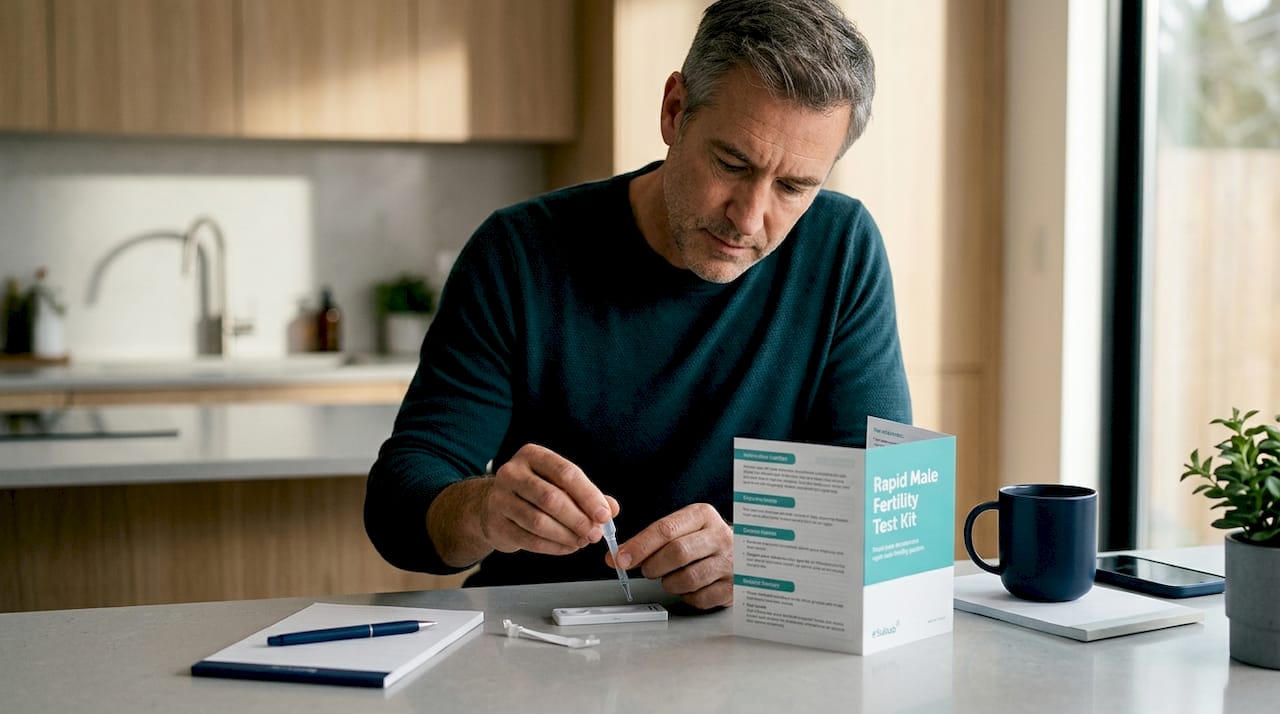
Devices like SwimCount have changed the game. SwimCount is CE certified by BSi and MHRA registered, delivers results in around 30 minutes, and is calibrated to the WHO International Standard for sperm assessment. That’s not marketing fluff. That’s genuine clinical credibility.
Pros of rapid fertility kits:
- Private and discreet
- Fast results (typically 30 minutes)
- No appointment needed
- Clinically validated options available
- Good first indicator before pursuing formal testing
Cons:
- Screening only, not diagnostic
- Does not measure all fertility markers (e.g., sperm count, morphology)
- A “normal” result doesn’t guarantee fertility
- Results can vary based on sample handling
| Feature | SwimCount | Generic brand kits |
|---|---|---|
| Result speed | 30 minutes | 15 to 60 minutes |
| CE certified | Yes (BSi) | Varies |
| MHRA registered | Yes | Rarely |
| WHO calibrated | Yes | Usually no |
| Clinical validation | Strong | Limited |
The difference between a clinically validated kit and a generic alternative is significant. If you want a result you can actually trust and potentially bring to a GP conversation, regulated kits win every time.
Pro Tip: Even if your rapid fertility result looks normal, if you’ve been trying to conceive for six months or more with no success, pursue formal testing. A rapid kit is a starting point, not the final word. Read more about home test accuracy to understand where the limits are.
You can explore a full range of fertility test kits through Rapidtest, and if you’re testing as a couple, there’s also really useful guidance on fertility testing for couples. For a broader European selection, take a look at self-testing fertility kits as well.
Prostate (PSA) and cancer screening kits
With fertility and STI solutions covered, cancer screening is another area where rapid kits provide important advantages and real limitations. PSA (prostate-specific antigen) testing is something every man over 40 should know about.
PSA is a protein produced by the prostate gland. Elevated PSA levels can indicate prostate inflammation, benign growth, or in some cases, prostate cancer. A rapid PSA test lets you check this marker at home using a small blood sample, usually from a fingerprick.
Here’s a quick comparison of what to expect from PSA kits versus FOB (fecal occult blood) kits, which screen for markers associated with bowel cancer:
| Kit type | Screening marker | Typical result speed | Regulatory status |
|---|---|---|---|
| PSA rapid test | Prostate-specific antigen | 10 to 15 minutes | CE marked (varies) |
| FOB rapid test | Blood in stool | 5 to 10 minutes | CE marked (varies) |
Key things to know about using these kits:
- PSA results fluctuate: Levels can be affected by exercise, recent sexual activity, or infection. Always follow instructions on timing and preparation.
- Elevated PSA is not a cancer diagnosis: It’s a signal that something may need attention.
- FOB tests are not bowel cancer diagnoses either: A positive FOB result means blood was detected in the stool, which can have many causes.
“A PSA rapid test is a screening and monitoring tool, not a definitive diagnosis. An abnormal result means it’s time to see your doctor, not time to panic.”
This is a point worth repeating because PSA at-home testing is specifically a screening and monitoring marker. Marketing that implies it can rule out cancer is misleading. Use it as an early alert system, then follow up appropriately.
The real value here is catching an elevated reading early enough to act. Many men over 40 avoid PSA testing entirely because organizing it feels complicated. A rapid home kit removes that friction entirely, and the benefits of rapid prostate testing for catching problems early are well worth understanding.
Comparing rapid health screenings for different needs
Summarizing the main types, let’s compare all rapid screening categories to help you choose what suits your needs best.
| Criteria | STI kits | Fertility kits | PSA/cancer kits |
|---|---|---|---|
| Result speed | 15 to 30 min | 30 min | 10 to 15 min |
| Privacy | Excellent | Excellent | Excellent |
| Regulatory options | CE/MHRA | CE/MHRA/BSi | CE marked |
| Clinical validation | Strong | Strong (top brands) | Moderate |
| Diagnostic? | No | No | No |
| Cost range | Low to moderate | Moderate | Low to moderate |
STI kits are best for you if:
- You want the fastest possible result with maximum privacy
- You’ve had unprotected sex and want peace of mind
- You test regularly as part of a proactive health routine
Fertility kits are best for you if:
- You and your partner are planning to conceive
- You want a credible first look before pursuing clinic-based testing
- You want a regulated, WHO-calibrated option
PSA and cancer screening kits are best for you if:
- You’re over 45 and have never had a PSA check
- You have a family history of prostate or bowel cancer
- You want to monitor known elevated levels between appointments
You can browse a full range of wellness screening kits across all three categories in one place. And if you want to compare what’s available on a broader European scale, this self-testing equipment overview gives a good picture.
Our take: what men over 40 really need from rapid screenings
Here’s the honest truth that doesn’t always make it into product descriptions: a lot of men skip health screening not because they don’t care, but because the whole system makes it too easy to put off. Booking a GP, explaining why you want a PSA test, feeling like you’re making a fuss over nothing. It adds up. Rapid home kits remove almost all of that friction.
But there’s something else going on that’s worth naming. The market for at-home health tests has grown fast, and not everything on the shelves deserves to be there. Some kits are vague about their regulatory status. Others imply diagnostic ability they simply don’t have. That gap between what a product implies and what it actually does is where men can fall through the cracks.
What “clinically validated” actually means in practice is that the kit has been tested against lab methods and shown comparable results within an accepted margin. It doesn’t mean perfect. It means reliable enough to be a useful first indicator. That’s genuinely valuable, as long as you know that’s what you’re getting.
The kits that matter are the ones that are honest about what they can and cannot do. They tell you clearly that a positive result requires follow-up. They don’t claim to diagnose anything. They position themselves as exactly what they are: a smart first step in a proactive health routine.
Our practical advice? Treat rapid screening as the beginning of a conversation with your health, not the end of it. Use it to get informed, not to self-diagnose. And if something looks off, don’t sit on it. That’s the whole point. For men over 40, the test benefits for men over 40 are real, but only when the kits are used with realistic expectations.
Get started with reliable rapid health screening kits
You now know what to look for, which categories matter most, and how to read a result without jumping to conclusions. The next step is finding kits that actually meet those standards.
At Rapidtest, we stock a curated range of regulated, clinically validated kits for STI screening, male fertility, PSA testing, and bowel cancer markers. Everything is designed to give you results in 15 minutes or less, delivered in discreet packaging, with no appointments and no awkward conversations. Whether you’re doing a routine check or following up on a concern, our wellness screening kits give you a trusted, private starting point. You can also explore specific options for fertility test kits and HPV rapid screening directly. Your health deserves more than a waiting list.
Frequently asked questions
Are rapid home screening kits accurate?
Most rapid home kits for STI, fertility, and PSA screening are clinically validated and calibrated to international standards, but results are intended for screening, not definitive diagnosis.
Can PSA rapid tests diagnose prostate cancer?
No. PSA at-home testing is a screening and monitoring marker only. Abnormal results require follow-up with a healthcare provider before any conclusions can be drawn.
What STIs can be screened rapidly at home?
Chlamydia, gonorrhea, HPV, and several others can be screened at home, with results often available in under 30 minutes using a simple swab or urine sample.
How do I know if a kit is regulated and reliable?
Look for CE, MHRA, or BSi marks and clinical validation data. This information should be clearly visible on the packaging or the product’s website before you buy.
Is privacy guaranteed with at-home rapid screening?
Yes. At-home kits are designed specifically for privacy. There are no appointments, no waiting rooms, and no laboratory visits required to get your results.