


Key STIs to test for: your at-home screening guide
Most sexually active adults know they should get tested. But knowing which key STIs to test for is a different question entirely, and it’s one a lot of people quietly skip over. Chlamydia and HIV come to mind first, but the full picture depends on how you have sex, how often, and with whom. Getting the wrong test, or an incomplete panel, can give you false reassurance. This guide cuts through the guesswork, breaking down the essential STI tests to consider, how personal risk factors shape your choices, and how at-home testing has made the whole process genuinely manageable.
Table of Contents
- Understanding the most common STIs to test for
- Factors that determine which STIs you should test for
- At-home STI testing: which infections can you screen for privately and easily?
- Navigating barriers and choosing the best test for your needs
- Comparing common STI testing panels and their coverage
- Why selecting the right STI tests goes beyond medical necessity
- Explore private at-home key STI test kits from RapidTest
- Frequently asked questions
Key Takeaways
| Point | Details |
|---|---|
| Key STIs to screen | Chlamydia, gonorrhoea, syphilis, and HIV are the most important infections to test for sexually active adults in the UK and Europe. |
| Personalized testing | Choose tests based on your sexual history, exposure sites, and risk factors for accurate detection. |
| At-home testing options | FDA-approved self-tests and self-collection kits enable private and convenient STI screening. |
| Access barriers | Cost, privacy, and consent laws impact testing access, making home testing a valuable alternative. |
| Test panel selection | Understanding different STI panels helps you select the best coverage for your needs and local guidelines. |
Understanding the most common STIs to test for
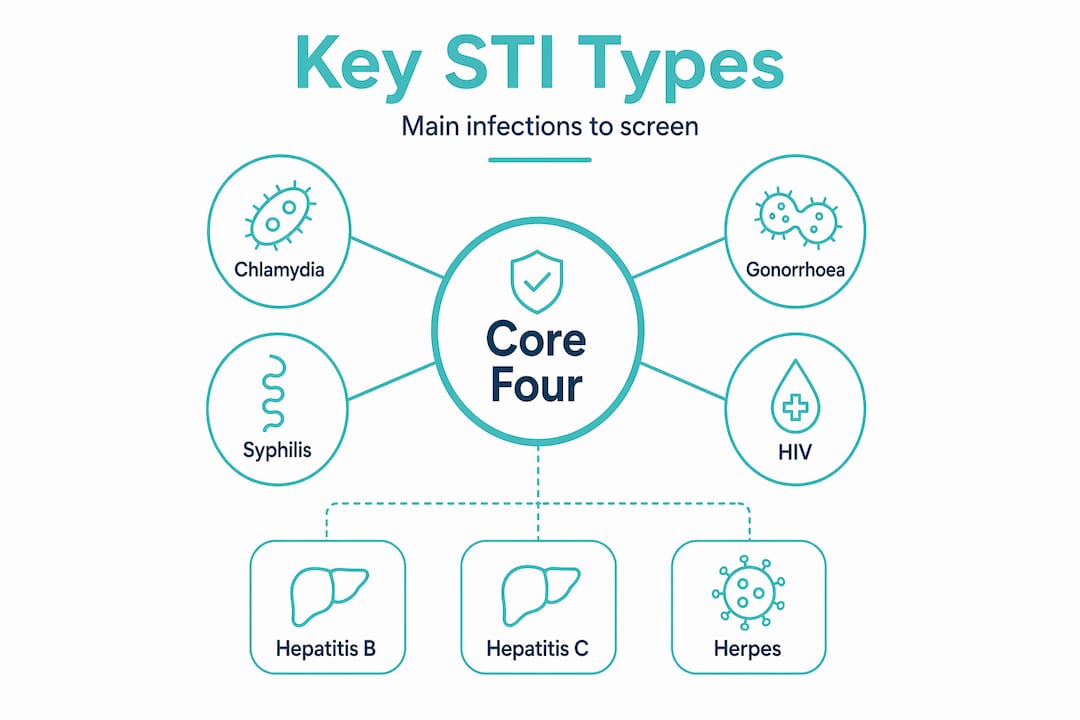
When it comes to STI screening recommendations, a handful of infections come up in every conversation, and for good reason. The most commonly included infections in screening for sexually active adults are chlamydia, gonorrhoea, syphilis, and HIV. These four infections account for a significant share of new diagnoses every year across the UK and Europe, yet many of them show no symptoms at all in early stages.
That last point is worth sitting with. You can carry chlamydia for months without any clue. Syphilis can cause a painless sore that disappears on its own, leading people to assume the problem has resolved. HIV can feel like a mild flu in the initial weeks and then go dormant. Relying on symptoms to decide whether to test is one of the most common and costly mistakes people make.
Here is why each of these infections deserves a place on your screening list:
- Chlamydia: The most commonly diagnosed STI in the UK among people under 25. Usually symptom-free. Left untreated, it can affect fertility.
- Gonorrhoea: Rapidly developing antibiotic resistance makes early detection urgent. Provisional diagnoses of infectious syphilis decreased but remain significant in England’s sexual health services, and gonorrhoea trends follow closely.
- Syphilis: Cases have surged across Europe over the past decade. It progresses through stages and can cause serious long-term damage if missed.
- HIV: Still one of the most significant public health concerns globally. Early detection enables treatment that keeps people healthy and prevents onward transmission.
Beyond these four, hepatitis B and C, herpes, and mycoplasma are worth considering depending on your situation. But the “core four” are the non-negotiables for most sexually active adults.
Sample types matter too. Depending on your sexual practices, a urine sample alone will not catch everything. Throat or rectal swabs may be needed if you engage in oral or anal sex.
Factors that determine which STIs you should test for
Here is where it gets personal. What you should be tested for depends on factors like age, sexual history, symptoms, and site of exposure, including oral, anal, and vaginal contact. That means two people with the exact same number of partners might need completely different testing panels.
Think about it this way: if you only ever have vaginal sex, a urine-based chlamydia and gonorrhoea test covers your main exposure sites. But if you regularly have oral or anal sex, you need throat and rectal swabs too. A urine sample in that case misses potential infections sitting in your throat or rectum entirely, which would show up on no test result at all.
A few other factors that shape your STI testing recommendations:
- Number of partners: More partners means higher cumulative risk. Annual testing is a minimum; three to six months is better if you have multiple partners.
- Condom use: Inconsistent or no condom use increases risk substantially, even with a small number of partners.
- Risk group membership: Men who have sex with men (MSM), trans women, and people who inject drugs have elevated risk for several infections and benefit from more frequent, broader panel testing.
- Travel history: STI trends vary by region. Travel to areas with higher prevalence of certain strains can shift your risk profile.
- Previous STI diagnosis: A past diagnosis is a predictor of future risk. Regular testing becomes non-negotiable.
Across Europe, integrated testing recommendations across HIV, hepatitis B and C, and STIs vary significantly between countries, which means you cannot assume your home country’s guidelines are complete. This is particularly relevant if you are living abroad or have partners from different countries.
Pro Tip: Before selecting a test kit, write down the sexual activities you have engaged in over the past six months and the body sites involved. Use that list to match your exposure to the appropriate sample types, not just the infection names.
For practical guidance on building a personal testing plan, home STI testing guidance can help you figure out exactly where to start. And if you want to understand how test panels group different infections together, STI screening panels explained is worth a read.
At-home STI testing: which infections can you screen for privately and easily?
Let’s be real. Not everyone wants to sit in a clinic waiting room. At-home testing has grown into a genuinely reliable option for most of the key STIs, and it is getting better every year.
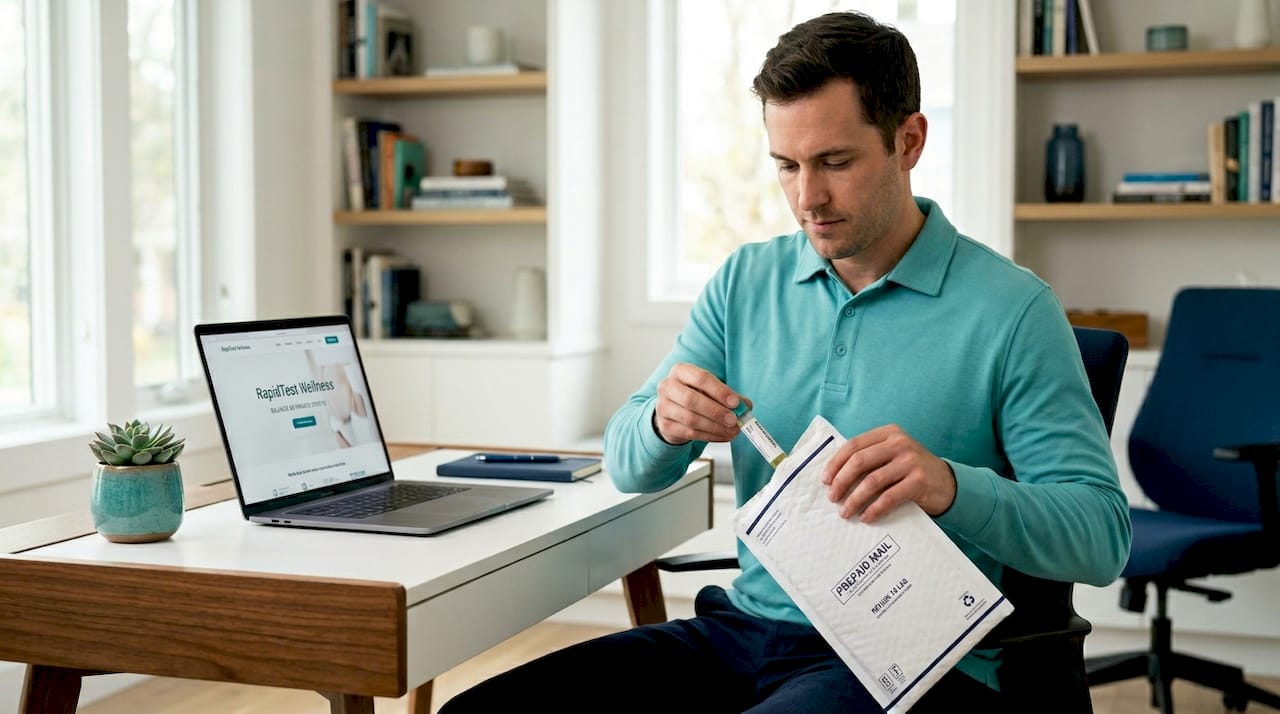
FDA-approved at-home self-tests exist for HIV and syphilis, with results in minutes using a finger-prick blood sample. Self-collection kits for chlamydia, gonorrhoea, and trichomoniasis use vaginal swabs, urine, or both, and get sent to an accredited lab. UK at-home test kits cover the four most common STIs and can include hepatitis and other infections, with accredited labs and confidential results.
Here is a quick comparison of what different at-home test types look like in practice:
| Test type | Infections covered | Sample needed | Result time |
|---|---|---|---|
| Rapid self-test | HIV, syphilis | Finger-prick blood | 15 minutes |
| Urine self-collection kit | Chlamydia, gonorrhoea | Urine | 2 to 5 days |
| Swab self-collection kit | Chlamydia, gonorrhoea, trichomonas | Vaginal/rectal/throat swab | 2 to 5 days |
| Expanded panel kit | HIV, syphilis, chlamydia, gonorrhoea, hepatitis B and C, herpes | Blood, urine, swab | 3 to 7 days |
A few things to keep in mind when using at-home kits:
- Read the instructions fully before starting. Invalid samples are one of the most common reasons for inconclusive results. An invalid result means retesting, which costs time and money.
- Avoid urinating for at least an hour before collecting a urine sample. It makes a real difference in sample quality.
- Store your sample correctly and post it promptly. Delays in transit can degrade sample integrity.
- Note the testing window for each infection. HIV tests, for example, need to be taken at least 28 days after potential exposure for an accurate result.
For step-by-step help, using at-home STI tests walks you through the process, and discreet urine sample collection covers one of the trickier parts of the process.
Pro Tip: If you are using a rapid self-test for HIV, time it so you can sit quietly for 15 minutes afterward. Having a plan for how you will respond to any result, positive or negative, before you test makes the experience far less stressful.
Navigating barriers and choosing the best test for your needs
Let’s talk about something that does not always make it into these guides: the practical reasons why people delay testing, even when they know they should.
Out-of-pocket costs and parental consent requirements remain barriers in many European countries, influencing where and how people test. For young adults especially, walking into a clinic and asking for an STI test can feel intimidating, judgmental, or simply too visible. At-home testing sidesteps that entirely.
Cost is the other big factor. NHS-funded testing kits are available in some parts of the UK for free, but availability varies by region, and coverage is often limited to basic infections. If you want a broader panel that includes herpes, hepatitis, or mycoplasma, you are likely looking at a private option.
Here is how to approach choosing home testing options without overspending or leaving gaps:
- Match your kit to your actual exposures. Do not pay for a 14-infection panel if your risk profile only requires a basic four-infection screen.
- Factor in testing frequency. If you need to test every three months, a lower-cost kit that covers your key risks is more sustainable than an expensive comprehensive panel you only use once.
- Check accreditation. UK labs processing home test samples should be accredited. If a kit’s website does not mention laboratory accreditation clearly, that is a red flag.
- Know when to go to a clinic. Home testing is excellent for routine screening, but if you have symptoms, a recent known exposure, or need treatment fast, a clinic visit is the right move.
Testing intervals should follow risk group guidelines, using kits that match anatomical exposure and infection priorities for the best outcomes. Translating that into plain language: test more often if your risk is higher, and make sure the kit you choose actually covers the sites where you could have an infection.
Comparing common STI testing panels and their coverage
Not all STI test panels are created equal. Here is a straightforward comparison of what different panel types typically cover:
| Panel type | Infections included | Best for |
|---|---|---|
| Basic panel | Chlamydia, gonorrhoea, syphilis, HIV | Routine annual check, lower-risk individuals |
| Standard panel | Basic + hepatitis B and C, trichomonas | Those with moderate risk or multiple partners |
| Comprehensive panel | Standard + herpes (HSV-1/2), mycoplasma, ureaplasma | Higher-risk individuals, MSM, international travelers |
| Site-specific add-ons | Throat or rectal swabs for gonorrhoea and chlamydia | Anyone having oral or anal sex |
UK at-home test kits vary, with basic panels covering chlamydia, gonorrhoea, HIV, and syphilis, and expanded panels also testing for hepatitis, herpes, and others.
A few things worth knowing when comparing panels:
- Herpes testing is often excluded from standard panels because a positive HSV-1 result is extremely common and not always sexually transmitted. Ask specifically if you want it included.
- Mycoplasma genitalium is becoming increasingly recognized as an important STI but is still absent from many basic panels. It is worth checking for if you have unexplained urethritis or pelvic inflammatory disease symptoms.
- NHS free kits typically cover chlamydia and gonorrhoea as a minimum, sometimes HIV. They rarely include the full panel you might want.
For a detailed breakdown of what each panel type includes and how to match one to your situation, STI screening panels explained is the right starting point.
Why selecting the right STI tests goes beyond medical necessity
Here is an uncomfortable truth that most sexual health content glosses over: the decision about which STIs to test for is as much a social and logistical decision as a medical one.
Think about it. Choosing which STIs to test for should be treated as a prevention-and-access decision, because costs and consent barriers can delay testing for months. Months of untreated chlamydia. Months of undiagnosed syphilis progressing silently. The clinical risk does not wait for the social barriers to be resolved.
There is another failure point that rarely gets discussed: invalid test results from poor sample collection. Operational failures in self-collection kits often come from sample quality issues requiring fast re-testing plans. In a clinic, a nurse recollects the sample on the spot. At home, an invalid result means ordering a new kit, waiting for delivery, and restarting the process. That is a multi-week delay if you are not prepared for it.
Our honest take is this: the best STI testing strategy is the one you will actually follow consistently, and that is almost always the one with the fewest barriers. If privacy matters to you, home testing wins. If cost is the main concern, mapping your risk accurately and choosing a targeted panel beats paying for infections you do not need to test for. And if you test at home, having a re-test plan in place before you start means an invalid result does not become a week-long delay in getting your answer.
Read through our safe at-home STI testing tips before you begin. A small amount of preparation removes almost all of the friction from the process.
Explore private at-home key STI test kits from RapidTest
Ready to stop putting it off? RapidTest makes private STI screening genuinely simple. No waiting rooms, no awkward conversations, no waiting weeks for an appointment.
Our at-home STI rapid test kits give you results in 15 minutes at home, with discreet shipping and clinically reliable accuracy. If you want to test for specific infections, the RapidTest syphilis testing kit and the RapidTest HIV testing kit each deliver 99.8% accuracy in under a quarter of an hour. Whether you need a focused test or a broader screen, we have a kit that fits your situation, and your privacy is protected every step of the way.
Frequently asked questions
What are the key STIs I should be tested for if I am sexually active?
Most sexually active adults should consider testing for chlamydia, gonorrhoea, syphilis, and HIV, with adjustments based on sexual practices and risk factors. The most commonly included infections in screening for sexually active adults are exactly these four.
Can I test for STIs at home in the UK and Europe?
Yes. FDA-approved at-home self-tests exist for HIV and syphilis, and self-collection kits for chlamydia, gonorrhoea, and trichomoniasis are widely available in the UK with accredited lab processing.
How often should I get tested for STIs?
It depends on your risk behavior. Men who have sex with men and those with multiple partners should test for syphilis, chlamydia, gonorrhoea, and HIV at least once a year, and more frequently based on risk.
What sample types do at-home STI tests require?
You may need blood, urine, or swabs from your vagina, throat, or rectum, depending on which infections are being tested and your sexual exposures. Rapid self-tests for HIV and syphilis use a finger-prick blood sample.
Are at-home STI test results reliable?
Yes, when collected correctly. Home STI kits use the same laboratory techniques as clinic tests, but invalid samples from poor collection can occur and require re-testing, so following instructions carefully is critical.