


How to collect a discreet urine sample for STI self-testing
Getting your sexual health checked privately sounds simple enough, right? But there’s one step that trips up a lot of men and quietly undermines the whole test: collecting the urine sample incorrectly. A small mistake like going to the bathroom too recently or grabbing midstream urine instead of the first few seconds of flow can turn an accurate test into a misleading one. This guide walks you through exactly what to do before, during, and after your sample collection so your results are as reliable as possible, all from the comfort of your own home.
Table of Contents
- What you need before you collect
- Step-by-step: How to collect a high-quality urine sample
- Troubleshooting and common mistakes to avoid
- What to expect after sending your sample
- Why the right collection method matters more than you think
- Discreet, accurate STI self-tests delivered to your door
- Frequently asked questions
Key Takeaways
| Point | Details |
|---|---|
| Use first-catch urine | Only the first 20-30 ml of your stream is best for STI self-testing accuracy. |
| Wait before collecting | Hold your urine for at least 1 hour (preferably 2) for reliable results. |
| Follow precise steps | Careful timing, clean collection, and proper labeling minimize results errors. |
| Avoid midstream errors | Midstream or recent urination increases your risk of a false negative result. |
| Post sample for privacy | Discreet postal kits protect your privacy and deliver fast answers at home. |
What you need before you collect
To start your self-test correctly, let’s first go over what you need and why these items matter.
The good news? You don’t need much. Home STI test kits are designed to be simple. But “simple” doesn’t mean “anything goes.” Getting the basics right before you even open your kit is what separates a trustworthy result from a wasted test.
Here’s what you’ll need:
- The home test kit itself, unopened and stored correctly (avoid extreme heat or humidity)
- The sample collection container provided in your kit (never substitute this with a random household container)
- Clean, dry hands (soap and water is fine, no need for gloves in most kits)
- A quiet bathroom and roughly five minutes of uninterrupted time
- Return packaging if your kit is a postal lab test
Before you do anything else, check that your kit is within its expiry date. It sounds obvious, but if you ordered one a while back and forgot about it, this matters. An expired kit may not detect DNA or bacteria reliably.
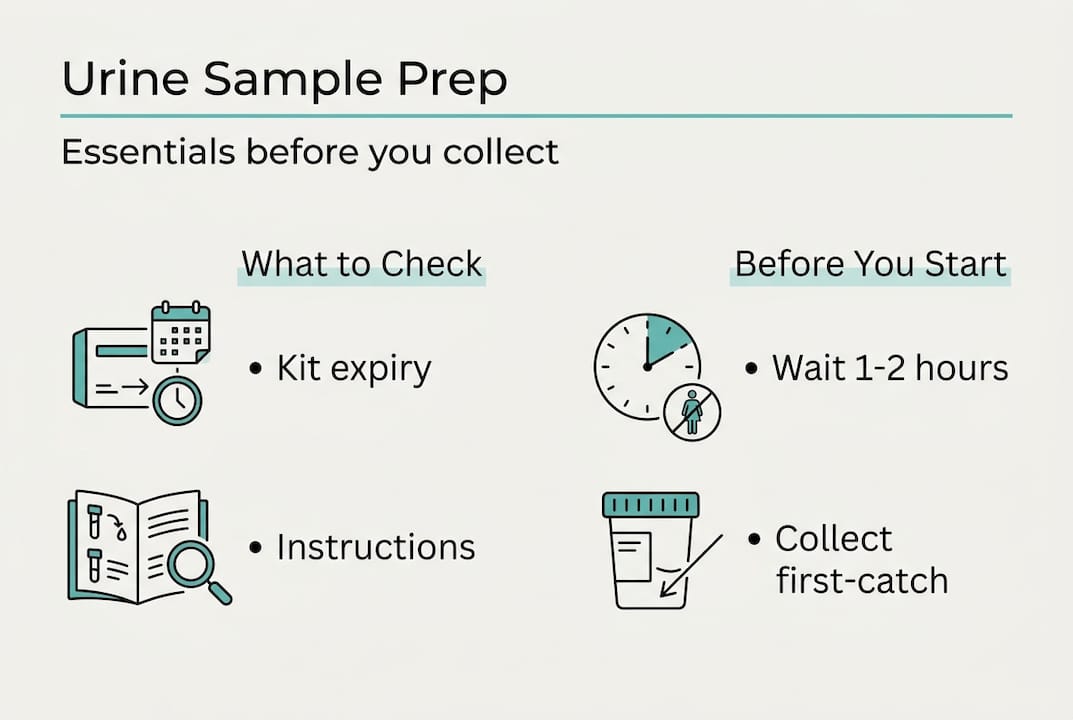
The single most important rule: don’t urinate for at least 1 hour before collecting. Ideally, hold it for 2 hours. This is not optional. According to Public Health Scotland’s urine kit guidance, first-catch urine for STI testing must be the initial 20 to 30 ml of the stream, collected after not urinating for at least 1 hour, ideally 2. That waiting period concentrates the bacteria and DNA in the urethra, which is exactly what NAAT tests (nucleic acid amplification tests, the gold standard for detecting chlamydia and gonorrhea) are designed to find.
| Preparation step | Why it matters |
|---|---|
| Wait 1 to 2 hours after last urination | Concentrates bacteria and DNA in the urethra |
| Use the kit’s provided container | Ensures no contamination from household residues |
| Wash and dry hands first | Prevents external contamination of sample |
| Check kit expiry date | Expired reagents reduce accuracy |
| Read kit instructions fully | Every kit has small but important differences |
You can also read more about screening for STIs at home to understand how different test types work together, or check out the full breakdown of types of STI tests if you’re unsure which test is right for your situation.
Pro Tip: Plan your test for first thing in the morning. You’ll naturally have held your urine for several hours overnight, making morning collection the easiest way to meet the 2-hour wait without thinking too hard about it.
Step-by-step: How to collect a high-quality urine sample
Once your equipment and timing are ready, here’s your foolproof step-by-step collection guide.
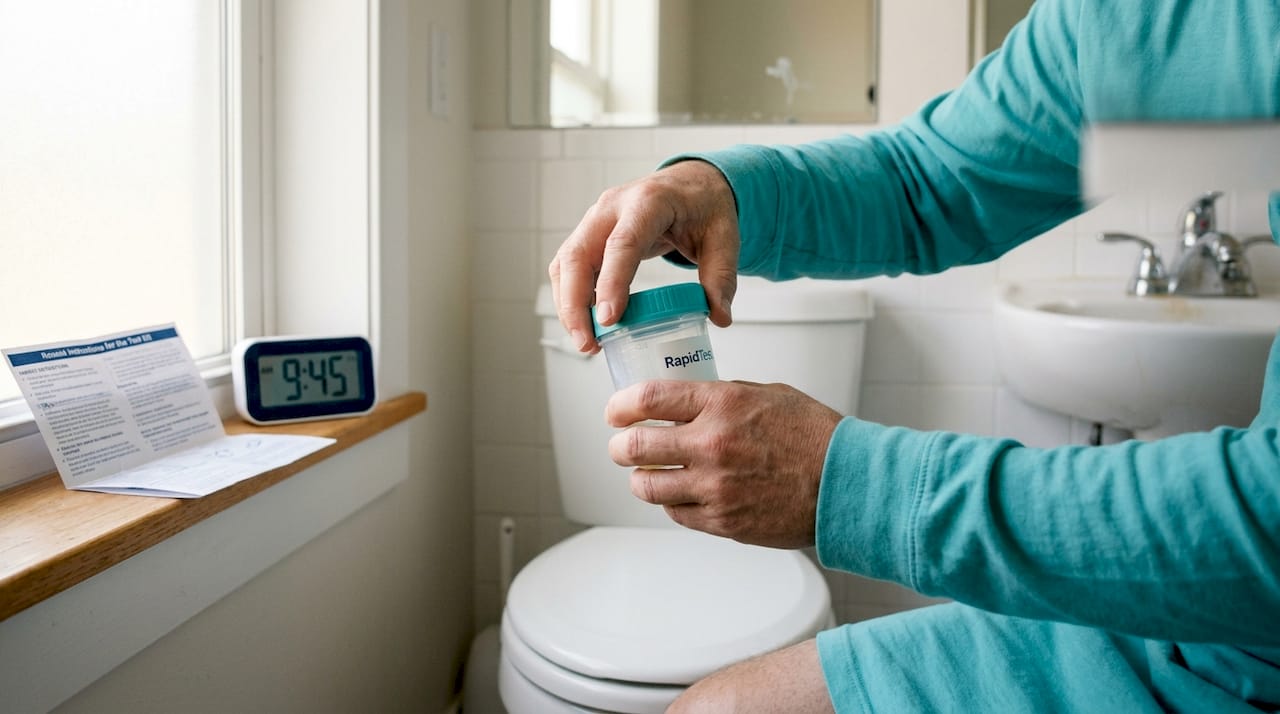
The word “first-catch” is key here. It refers to the very beginning of your urine stream, not the middle and not the end. That initial flow washes bacteria and DNA from the urethra into the container. If you let the first part go into the toilet and then try to collect, you’ve essentially rinsed away the evidence the test needs.
Here’s exactly what to do:
- Wash and dry your hands thoroughly. Any external contamination can interfere with results. Take 20 seconds with soap.
- Open the collection container from your kit. Don’t touch the inside of the lid or the container rim. Keep it clean.
- Position the container ready before you start urinating. This is where most people go wrong. If you start, then fumble to open the container, you’ve already missed the first-catch window.
- Begin urinating directly into the container. Capture the very first flow. You only need 20 to 30 ml, which is roughly the first 3 to 5 seconds of your stream.
- After collecting 20 to 30 ml, move the container away and finish urinating into the toilet. You don’t need a full bladder’s worth.
- Seal the container firmly. Most kits have a screw cap. Make sure it’s tight. Leaking samples are contaminated samples.
- Label the container if required by your kit. Some postal kits need a name, date, or test code on the tube.
- Follow your kit’s next steps for either immediate testing or sending the sample to the lab.
Important: NAAT urine tests are highly sensitive and specific when first-catch protocol is followed, with accuracy rates above 95 to 99%. Home kits match clinic accuracy if instructions are followed precisely. That “if” is doing a lot of heavy lifting.
The reason accuracy drops without first-catch is biology, not kit design. Chlamydia and gonorrhea bacteria concentrate in the urethra. When you pass the first part of your stream, you’re flushing that concentration into the container. Midstream urine, by contrast, has already cleared out much of the relevant bacteria. No amount of technology can compensate for a sample that simply doesn’t contain what the test is looking for.
It’s also worth checking out the full guide on at-home STI test accuracy to understand exactly why these steps translate into reliable results.
Pro Tip: If your bathroom lighting is poor or you’re rushing, you’re more likely to skip a step or contaminate the container. Give yourself a calm two to three minutes. Better results come from a relaxed, deliberate process, not a rushed one.
Troubleshooting and common mistakes to avoid
Even with a clear guide, mistakes can happen. Here’s how to recognize and fix them.
A lot of men collect a sample, follow most of the steps, and then wonder later whether they did it right. Let’s sort through the most common slip-ups so you know what actually matters.
Common mistakes and what to do about them:
- Urinating within an hour before testing: This is the biggest one. Diluted urine with lower bacterial concentration is less likely to trigger a positive result even when an infection is present. If this happened, wait a full 2 hours and repeat the test if you have another kit.
- Collecting midstream instead of first-catch: You’ve rinsed out the urethra before collecting. According to RCPath infectious disease guidelines, false negatives from midstream collection represent a real risk, with documented cases of missed gonorrhea due to incorrect sample technique.
- Touching the inside of the container: Skin bacteria can contaminate the sample and affect results. If this happens, use the backup container if your kit provides one, or order a replacement.
- Not collecting enough volume: Most kits require at least 20 ml. Less than that may not provide a sufficient sample for analysis.
- Storing the sample incorrectly before sending: If you have a postal kit, don’t leave the sample on a radiator or in a hot car. Room temperature and prompt postage within the kit’s guidelines are essential.
A word of caution: Home urine tests are excellent tools for screening when you have no symptoms and want private peace of mind. But they are not a substitute for clinical assessment if you have symptoms like pain, burning, unusual discharge, or sores. In those cases, visit a clinic where they can examine you, test multiple sites, and rule out conditions that a urine sample alone cannot detect.
If you’re weighing up your options, there’s a useful breakdown of STI test accuracy for men over 40 worth reading, as well as a comparison of at-home vs clinic testing that lays out when each approach makes the most sense.
What to expect after sending your sample
After collecting and sending your sample, here’s exactly what to expect next.
The process doesn’t end once you’ve sealed the container. What happens next depends on whether you’re using a rapid test at home or a postal kit sent to a lab.
Timelines:
- Rapid home tests: Results in 15 minutes. You read the test strip yourself using the kit’s guide.
- Postal lab kits: Typically 2 to 5 working days after the lab receives your sample. Results are sent securely, usually via email or an online portal.
Privacy is built into every step. Kits arrive in plain, unmarked packaging with no indication of what’s inside. Results come to you directly, with no letters going to your GP and nothing on your NHS records unless you choose to share them. That confidentiality is something many men over 40 specifically value when it comes to sexual health testing.
Home self-test vs clinic: quick comparison
| Factor | Home self-test | Clinic visit |
|---|---|---|
| Privacy | High: plain packaging, private results | Lower: face-to-face, records |
| Speed | 15 min (rapid) or 2 to 5 days (postal) | Same day, but with waiting times |
| Convenience | Test at home, any time | Appointment or walk-in required |
| Best for | Asymptomatic screening, routine checks | Symptoms present, multi-site testing |
| Accuracy | Matches clinic accuracy when instructions followed | Gold standard for complex cases |
According to Kaiser Permanente’s STI guidelines, home self-tests equal clinic tests when performed correctly, but clinics remain the right choice for symptomatic, multi-site, or complex cases.
What to do if you test positive:
- Don’t panic. A positive result means you can act quickly and get treated, which is far better than not knowing.
- Contact your GP or a sexual health clinic for a confirming test and treatment.
- Inform any recent partners so they can get tested too.
- Avoid sexual contact until treatment is complete.
For more detail on interpreting your results, check out the guide on reading STI test results or explore the full breakdown of advantages of home testing kits if you’re still weighing up whether home testing suits your lifestyle.
Why the right collection method matters more than you think
Here’s a perspective worth sitting with for a moment. Most failed home tests aren’t failed because the kit was cheap or the technology was poor. They fail because of a simple process mistake made in the first ten seconds of collection.
We hear a lot about test quality, brand comparisons, and lab certifications. And yes, those things matter. But the honest truth is that the limiting factor in home urine testing is almost always the human element, not the kit. First-catch collection done correctly can push your home test’s accuracy to over 95%. The same kit, used with poor timing or midstream collection, can miss an active infection entirely.
Men over 40 in particular tend to approach home testing with the right instincts: get it done, get the result, move on. That efficiency-first mindset is actually well-suited to home testing. The only risk is treating “quick” as “careless.” The entire protocol takes about five minutes. Two of those minutes are just washing your hands and reading the leaflet properly.
There’s also something worth saying about the privacy angle. For many men, the appeal of at-home test choices isn’t just convenience. It’s the ability to manage your own health without an audience. No waiting room. No receptionist. No conversation you weren’t ready to have. That’s a completely valid way to take care of yourself, and home testing is built for exactly that.
The point is simple: the test is only as good as the sample. Get the sample right, and everything else follows.
Discreet, accurate STI self-tests delivered to your door
If you’re ready to put accurate, discreet testing into action, consider these trusted home STI test options.
At Rapidtest, we designed our kits around one idea: health checks should be private, fast, and genuinely easy to use. No appointments. No awkward waiting rooms. No jargon.
Our at-home STI and STD testing kits deliver results in just 15 minutes and arrive in plain, discreet packaging. If you want to check specifically for syphilis, our syphilis at-home testing kit is 99.8% accurate and just as quick. For a broader rapid screen, the at-home STI rapid test gives you fast, reliable answers without the hassle of a clinic visit. Take control of your sexual health on your own terms, from your own home.
Frequently asked questions
Why must I collect the first part of my urine for STI testing?
The initial urine stream contains the highest concentration of bacteria and DNA from the urethra, which is exactly what tests for chlamydia and gonorrhea need to detect. According to Public Health Scotland’s guidance, first-catch urine for STI testing should be the initial 20 to 30 ml collected after not urinating for at least 1 hour.
What if I accidentally provide a midstream or small urine sample?
Midstream or insufficient volume increases the risk of a false negative result. The RCPath guidelines on genitourinary infections specifically note that midstream collection risks false negatives, so repeat the test if you’re unsure.
How accurate are at-home urine STI tests compared to clinic tests?
When you follow the instructions correctly, home tests perform on par with clinic-based testing. NAAT home test accuracy reaches 95 to 99% sensitivity and specificity when first-catch protocol is used, matching what a clinical lab would achieve.
Should I use a home test if I have symptoms like pain or discharge?
No. Home tests are best suited for asymptomatic screening. If you have pain, discharge, or any other symptoms, the Kaiser Permanente STI guidelines recommend clinic-based assessment for symptoms where multi-site testing and a physical examination can be carried out.
How long should I wait after last urinating before collecting my sample?
Wait at least 1 hour, and ideally 2 hours, after your last urination. Public Health Scotland’s urine kit guidance confirms this waiting period before sample collection is essential for concentrating the bacteria and DNA needed for an accurate result.