


Guide to home STI testing: choose safe, fast, and discreet options
Taking control of your sexual health has never been easier, but walking into a clinic still feels out of reach for a lot of people. Long wait times, packed waiting rooms, and the fear of running into someone you know are all very real barriers. Home STI testing has stepped up as a practical, private alternative, and the market is growing fast. But not all kits are created equal. Knowing what to look for, which tests cover what infections, and how often to retest is the difference between genuine peace of mind and false reassurance.
Table of Contents
- How to choose a home STI test kit: Key criteria
- Top home STI test kits: Pros, cons, and how they work
- Comparing home STI test kits: Which is best for your needs?
- Who should use home STI tests, and how often?
- The hidden pitfalls and power of home STI testing
- Ready to choose a reliable home STI test kit?
- Frequently asked questions
Key Takeaways
| Point | Details |
|---|---|
| Choose by criteria | Select home STI test kits based on accuracy, ease, privacy, and official approval for reliable results. |
| Check kit types | Compare swab, urine, and blood kits to find the best fit for your comfort and testing needs. |
| Confirm positives | Always have positive home test results checked in a clinic for diagnosis and treatment. |
| Consider equity | Availability and access to home STI testing may vary by age, location, and socioeconomic group. |
| Test regularly if at risk | Retest every 3-12 months depending on your risk level and personal health circumstances. |
How to choose a home STI test kit: Key criteria
To make a confident choice, start with the essential selection criteria.
Picking the right kit isn’t just about grabbing the first one you find online. You need something that matches your specific situation, your risk level, and the infections you’re most concerned about. There’s a real range out there, and the quality varies more than most people realize.
Here’s what actually matters when you’re evaluating a home STI test kit:
- Accuracy and clinical validation: Look for kits that are CE-marked or FDA-cleared. These have gone through proper validation and aren’t just selling you a false sense of security.
- Infections covered: Some kits only test for chlamydia and gonorrhea. Others include herpes, syphilis, HIV, and more. Match the kit to your actual exposure history.
- Speed of results: Most quality rapid tests give you results in 15 minutes. Lab-send kits take longer but may offer broader panels.
- Ease of use: Swab collection, urine samples, and finger-prick blood tests all require a different level of comfort. Some are genuinely straightforward; others take a bit more care.
- Privacy packaging: Discreet delivery matters. Check that the kit arrives in plain packaging with no obvious branding.
- Regulatory approval: Kits sold in the UK and EU should meet minimum regulatory standards. Always verify before buying.
Understanding the types of STI tests available is a smart first step. Different infections are detected through different biological markers, which is why a urine test alone can’t catch everything.
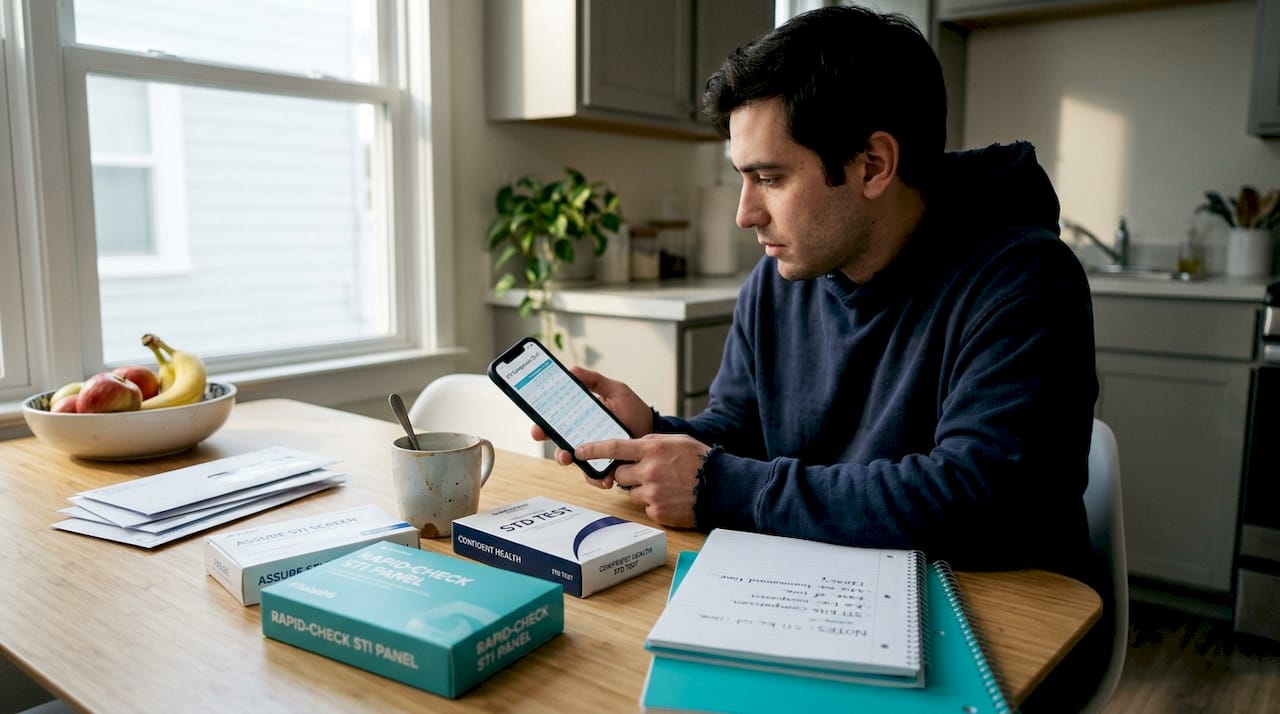
UK study data from over 6,000 home samples found chlamydia in 4.8% of samples and gonorrhea in 1%. But what’s often overlooked is the range of other infections detected: HSV1 at 22.4%, HSV2 at 13.6%, Mycoplasma hominis at 18.8%, and Ureaplasma at 29.6%. These numbers highlight just how many infections fly under the radar in people with no symptoms. The data also showed equity gaps, with higher testing uptake among younger, urban, and male populations, meaning a lot of people who could benefit from testing still aren’t engaging.
You can also learn more about the privacy benefits of at-home kits and why so many people are making the switch from clinic visits.
Pro Tip: If you’ve had multiple partners in the past year or had recent potential STI exposure, testing every three months is strongly recommended rather than waiting for symptoms to appear.
Top home STI test kits: Pros, cons, and how they work
Now that selection criteria are clear, let’s explore your main at-home STI kit options.
There are four main types of home STI tests you’ll encounter. Each has its strengths and its limitations, and knowing the differences helps you make the right call.
Urine tests
Best for detecting chlamydia and gonorrhea. These are the most common and easiest to use.
- Pros: Simple to collect, no invasive sampling, suitable for both men and women
- Cons: Can’t detect infections in the throat or rectum, limited to certain bacterial STIs
Swab tests (genital, anal, throat)
Used for gonorrhea, chlamydia, herpes, and sometimes HPV.
- Pros: More thorough detection across multiple infection sites, higher accuracy when done correctly
- Cons: Can feel uncomfortable, small risk of incorrect technique if you’re not careful
Finger-prick blood tests
Essential for HIV, syphilis, hepatitis B and C, and herpes antibody testing.
- Pros: Detects infections that live in the bloodstream, not just the urinary tract
- Cons: Some people find the lancet daunting, results depend on being outside the window period for the infection
Combination (multi-test) kits
These bundle urine, swab, and blood-prick components into one package for broader coverage.
- Pros: Most complete picture, great value for high-risk individuals
- Cons: More steps involved, slight learning curve
Here’s the basic workflow for most home kits:
- Order your kit online (delivered in plain, discreet packaging)
- Read the full instructions before you begin
- Collect your sample or samples (urine, swab, blood)
- Use the testing device or seal the sample for lab return
- Wait for your result, usually 15 minutes for rapid tests
- Log your result and follow up with a clinician if it’s positive
Research on home kit accuracy highlights that self-collection errors and missed anatomical sites are real concerns when compared with professional clinical sampling. A nurse collecting a swab from the right location will always outperform a rushed at-home attempt. That’s not a reason to skip home testing but it is a reason to take your time and follow the instructions exactly.
Learning how to get the most from using at-home STI tests safely and accurately can make a significant difference in your results.
For men specifically, the advantages of home testing kits are especially relevant, particularly for anyone who tends to avoid routine health appointments.
Pro Tip: Always read the full instructions before opening any sample collection components. Some kits have timing requirements for the sample that are easy to mess up if you’re improvising.
Comparing home STI test kits: Which is best for your needs?
After understanding each kit on its own, a side-by-side comparison helps sharpen the decision.
Not all kits serve the same purpose. Here’s a comparison of key features to help you figure out which option fits your situation best.
| Feature | Urine test | Swab test | Blood-prick test | Combo kit |
|---|---|---|---|---|
| Infections covered | Chlamydia, gonorrhea | Chlamydia, gonorrhea, herpes | HIV, syphilis, hepatitis | Multiple infections |
| Speed of results | 15 minutes | 15 minutes | 15 to 30 minutes | 15 to 30 minutes |
| Ease of use | Very easy | Moderate | Moderate | Moderate |
| Privacy | High | High | High | High |
| Best for | Routine check | Multi-site exposure | Blood-borne infections | High-risk individuals |
| Average cost (UK) | Low | Low to mid | Mid | Mid to high |
A few things worth noting when you look at this table:
- Combo kits are the best value if you’re testing across multiple risk categories or haven’t been tested in a while.
- Blood-prick tests are non-negotiable if you’re concerned about HIV or syphilis. Urine alone won’t pick those up.
- Swab placement matters. If you’ve had anal or oral sex, a genital urine test alone will miss potential infections at those sites.
UK home testing data found chlamydia at 4.8% and gonorrhea at 1% across thousands of samples, but far higher rates for viral infections like HSV1 and Ureaplasma. These figures underscore why broader panel testing often reveals more than people expect.
One important point: experts consistently recommend confirming positive results clinically before starting any treatment. A home test is a powerful first step but it’s not a diagnosis. Regular testing, annually for most people and every three months for higher-risk individuals, is the real goal.
You can also follow a structured approach by reading through a step-by-step guide to screening for STIs at home and understand the accuracy of STI self-tests in more detail.
Who should use home STI tests, and how often?
Knowing who benefits from home STI testing rounds out a smart, proactive health strategy.
Home STI testing isn’t just for people who think something is wrong. In fact, the majority of STIs are completely asymptomatic. You can carry and transmit an infection without ever feeling a thing. That’s exactly why regular testing matters even when you feel perfectly fine.
You’re a great candidate for home STI testing if you:
- Have started a new sexual relationship
- Have more than one partner or engage in non-monogamous relationships
- Haven’t been tested in the last 12 months and are sexually active
- Have had unprotected sex and are unsure of a partner’s status
- Feel too anxious or too busy to visit a sexual health clinic
- Live far from a clinic with limited appointment availability
- Have symptoms like unusual discharge, burning, or discomfort
How often should you test?
For most sexually active adults: once a year is a reasonable baseline. For people with multiple partners, recent unprotected sex, or a known exposure: every three months is the recommendation from most sexual health guidelines.
“Regular testing, even without symptoms, is one of the most effective ways to stay on top of your sexual health and protect your partners. Always confirm a positive result with a healthcare professional before drawing any conclusions.”
Equity gaps in testing are a real issue worth flagging. Home testing uptake tends to be higher in younger, urban, and male populations. Older adults, people in rural areas, and lower-income groups often fall through the cracks, either because they’re less likely to seek out testing or because accessing quality kits is harder. This is a systemic problem, and it means some of the people who would benefit most from home testing are the least likely to use it.
Getting comfortable with collecting urine samples is one of the most practical first steps for anyone starting their home testing routine.
The hidden pitfalls and power of home STI testing
Let’s be real: home STI testing has been a genuine breakthrough for millions of people who would never have walked into a clinic. The privacy, the speed, the lack of awkward conversations with a stranger in a white coat. It removes barriers that were genuinely keeping people from getting tested. That’s undeniably good.
But here’s what doesn’t get said enough. A negative result from a home test can create a false sense of security if you’ve tested too early, used the wrong kit for your exposure type, or collected your sample incorrectly. The window period for HIV, for example, means a test taken too soon after exposure will come back negative even if you’re infected. That’s not a kit failure. That’s a timing issue. But without proper guidance, people don’t always know that.
There’s also the equity problem that data keeps surfacing. As home testing becomes more mainstream, the people it’s reaching most are those who were probably already testing regularly or had easy access to other options. Older adults, people in rural communities, and lower-income individuals are still underserved. If the expansion of home testing doesn’t come with genuine outreach and affordability, it risks widening health gaps rather than closing them.
The smartest approach combines both worlds. Use home testing for the convenience, speed, and privacy it offers. Use safe use of test kits guidance to minimize errors. And stay connected to clinical care for follow-up, confirmation, and treatment when needed. Home testing works best as part of a complete health strategy, not as a replacement for medical support.
The power is real. So is the responsibility that comes with it.
Ready to choose a reliable home STI test kit?
You’ve got the information. Now it’s time to act on it.
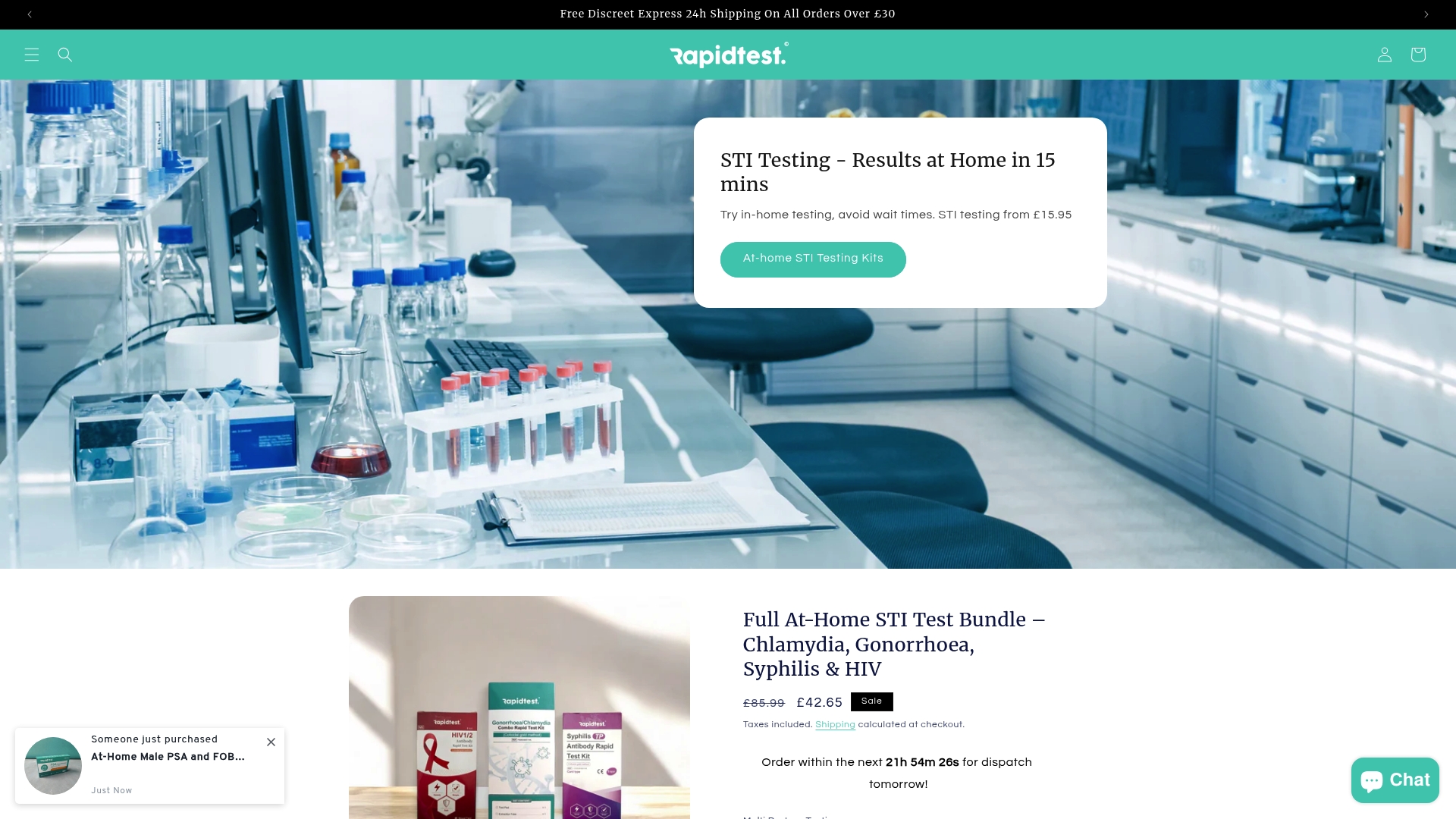
At Rapidtest, we make sexual health screening genuinely straightforward. No queues, no appointments, no awkward moments in a waiting room. Our home STI test kits deliver results in just 15 minutes, and every kit arrives in discreet, plain packaging so your privacy is protected from the moment you order. Whether you’re looking for a targeted test like our HIV at-home test kit or our syphilis test kit, or you want a broader panel for complete peace of mind, we have options that fit your needs and your budget. Testing regularly is one of the best things you can do for your health and the health of your partners.
Frequently asked questions
How accurate are home STI test kits?
Home STI tests are highly accurate when you follow the instructions carefully, but self-collection errors can affect results, particularly if the wrong site is sampled or technique is off. Always confirm positive results with a healthcare professional.
Do I need to see a doctor if I get a positive result?
Yes, absolutely. Always confirm positives clinically before taking any action. A home test identifies a potential issue; a doctor provides an actual diagnosis and the right treatment.
Are home STI tests available free in the UK?
Some NHS areas do offer free home testing kits, but geographic availability is limited and demand often exceeds supply. Private kits offer more reliable access on your own schedule.
Who benefits most from home STI testing?
Sexually active adults who want privacy, convenience, or who can’t easily access a clinic benefit most. However, equity gaps in uptake show that younger, urban, and male populations currently use home testing more than older or rural individuals, which is an access gap worth addressing.