


STI screening: your guide to proactive sexual health
Most people assume they only need an STI test when something feels wrong. That assumption is both incredibly common and genuinely dangerous. The truth is that annual STI and HIV testing is recommended for all sexually active people, even without a single symptom. Many of the most common infections, including chlamydia, gonorrhea, and even HIV in its early stages, produce no obvious signs at all. This guide breaks down what proactive screening actually looks like, who needs it, how often, and how to make it work in real life.
Table of Contents
- Why STI screening matters for sexual health
- Who should screen and how often? Risk-based guidelines and real-world scenarios
- Screening methods and practical barriers: What influences access?
- Integrating screening into a proactive sexual health plan
- What most adults miss about proactive STI screening
- Take control of your sexual health with rapid testing solutions
- Frequently asked questions
Key Takeaways
| Point | Details |
|---|---|
| Annual screening is essential | Testing at least yearly, even if symptom-free, helps prevent silent STI spread and keeps you healthier. |
| Screening frequency varies | High-risk groups such as MSM or those with new partners need more frequent tests, typically every 3-12 months. |
| Overcoming access barriers | Using self-testing options and advocating for reduced barriers ensures everyone can benefit from proactive STI screening. |
| Clinic and self-testing synergy | Combining clinic visits with at-home kits gives you privacy, flexibility, and better sexual health monitoring. |
| Men over 40 lead by example | Proactive screening helps normalize sexual health conversations and reduces stigma for all adults. |
Why STI screening matters for sexual health
Let’s be real: most of us were taught that testing was something you did after a scare. A new partner, a broken condom, a moment you regretted. But that reactive approach misses a huge part of the picture.
STIs spread silently. Chlamydia, for example, shows no symptoms in roughly 70 to 80 percent of women and at least 50 percent of men. Gonorrhea can be asymptomatic too. Someone can carry and transmit an infection for months or even years without knowing it. Screening stops that cycle before it starts.
Here is why regular testing matters beyond just your own health:
- You protect your partners. Knowing your status means you can make informed choices and have honest conversations before intimacy.
- You catch infections before complications arise. Untreated chlamydia can cause pelvic inflammatory disease and fertility issues. Untreated syphilis can affect the heart and nervous system over time.
- You support public health. Fewer untreated cases means fewer transmission chains in your community.
- You reduce anxiety. Regular testing replaces vague worry with actual knowledge. That peace of mind is genuinely valuable.
The UKHSA recommends annual STI and HIV tests for anyone with new or casual partners, even without symptoms. That is not a suggestion for edge cases. That is a standard recommendation for sexually active adults.
“Testing is the cornerstone of STI control, but many countries face practical access barriers that prevent people from getting the care they need.”
The ECDC’s finding is striking because it shows the problem is not just awareness. Systems and infrastructure are also failing people. Access to testing, whether at a clinic or through screening before a new partner, should be as routine as any other basic health check. Knowing when to test after unprotected sex is also a key part of staying ahead of the curve.
Who should screen and how often? Risk-based guidelines and real-world scenarios
Not everyone needs the same screening schedule. That is actually a sensible, evidence-based approach rather than a one-size-fits-all rule. Frequency should match your actual exposure and lifestyle, not just a general assumption.
Here is how the major health bodies break it down:
| Group | Recommended frequency |
|---|---|
| Sexually active adults with new/casual partners | At least once per year |
| Gay and bisexual men (GBM), low risk | Annually |
| GBM with condomless sex, new/casual partners | Every 3 months |
| Sex workers | Every 3 to 6 months |
| General population (no new partners) | Discuss with a clinician |
UKHSA guidance specifically notes that gay and bisexual men should test annually or every three months if they are having condomless sex with new or casual partners. That is a big difference from the once-a-year baseline, and it reflects genuine epidemiological differences in transmission risk.
The WHO also recommends targeted screening, with annual or 6-monthly testing for MSM and sex workers. These are not arbitrary numbers. They are based on observed infection rates, transmission dynamics, and the window periods for different infections.
For men over 40 specifically, there are a few things worth knowing:
- Your risk profile may have changed. Divorce, separation, or new relationships in later life can mean new exposures after years of monogamy.
- Symptoms are even less reliable with age. The immune response can mask or delay obvious signs of infection.
- Comorbidities matter. If you are managing other health conditions, an untreated STI can complicate the picture in ways that are harder to untangle.
- Stigma does not disappear with age. Men in their 40s and 50s often avoid testing because they assume it is for younger people. It is not.
It is also worth noting what the 2025 European guideline on chlamydia found about broad screening programs: intensified chlamydia screening across the general population does not reduce overall prevalence. That means blanket campaigns have limited effect. What works is risk-based screening, targeted at people with genuine exposure. Understanding your personal risk is the first step, and this screening panel guide is a solid place to start.
Pro Tip: If you are not sure which infections to screen for, think about your recent partners, whether condoms were used consistently, and whether any partners have been tested recently. That three-question check gives you a practical starting point for any conversation with a clinician or a self-testing decision.
Screening methods and practical barriers: What influences access?
Knowing you should test is one thing. Actually doing it is another. For many people across the UK and Europe, access to STI screening is not as straightforward as it should be.

Here is a comparison of your main options:
| Method | Pros | Cons |
|---|---|---|
| Sexual health clinic | Full panel, clinical support | Waiting times, travel, privacy concerns |
| GP appointment | Familiar setting | Limited STI panels, potentially awkward |
| Online/postal testing | Convenient, private | Slower results, requires lab processing |
| At-home rapid testing | Fast results, total privacy | Requires correct technique for accuracy |
The ECDC has identified key barriers that affect access across Europe: out-of-pocket costs for basic STI tests, privacy concerns that deter people from seeking care, and consent requirements that complicate access for people under 18. These are not fringe issues. They affect a significant portion of sexually active adults in ways that lead to delayed diagnosis and continued transmission.
There is also a practical reality for gay and bisexual men seeking services. Research on GBMSM service access shows that while in-person sexual health visits remain common for STI testing and accessing PrEP, unmet need remains high. Appointments are not always available when needed, and not everyone is comfortable walking into a clinic in their local area.
This is exactly where at-home testing closes the gap. At-home STI testing kits offer something clinics cannot always deliver: immediate access on your schedule, in your home, with no waiting room and no need to explain yourself to anyone. For anyone managing a busy life or dealing with privacy concerns, that matters enormously.
The practical benefits of self-testing include:
- No appointment needed. Test when it suits you, not when a slot is available.
- Complete privacy. Results stay between you and the test.
- Speed. Rapid tests deliver results in 15 minutes, not days.
- Reduced stigma. Without the public-facing aspect of a clinic visit, testing feels less charged.
If you are new to this, checking out how to screen for STIs at home gives you a clear walkthrough of the process. And if you are wondering about sample collection specifically, these sample collection tips make sure you get it right the first time.
Pro Tip: If cost is a concern, compare the price of a single at-home rapid test against the cost of a GP appointment or urgent care visit. For routine annual screening, at-home kits are often the more affordable option, especially when you factor in travel time and time off work.
Integrating screening into a proactive sexual health plan
So you know you should test, you know how often, and you know your options. Now let’s talk about how to make this a real, sustainable habit rather than something you remember only when you are anxious.
-
Set a calendar reminder. Pick a date (your birthday works well) and schedule your annual test. If your risk profile means you should test more frequently, set quarterly reminders. Treat it like a dental check or an eye exam.
-
Match the method to the moment. Use at-home rapid testing for routine annual or quarterly checks. Use a clinic if you have symptoms, a complex exposure history, or need a broader panel including blood-based tests like syphilis or hepatitis.
-
Include your partner. Proactive screening works best when both people in a relationship are tested. Normalizing the conversation removes the stigma and makes it easier to bring up in the future.
-
Know your baseline. Once you have a clean result, you have a reference point. Any future result makes more sense in context.
-
Stack it with other health checks. Men over 40 often have annual blood pressure checks or cholesterol panels. Adding STI screening to that routine makes sense, especially given that some conditions like syphilis can affect cardiovascular health.
Research confirms that for high-risk men, frequent testing is not just reactive but is a core part of prevention strategies. The same applies in a broader sense. Proactive screening is a prevention tool, not a diagnostic one. You test to stay well, not just to find out you are sick.
Pro Tip: If you have had three consecutive clean results on your regular screening schedule, that is a great sign. But do not let it make you complacent. Exposure risk can change with new partners or life circumstances, and the schedule should flex with those changes.
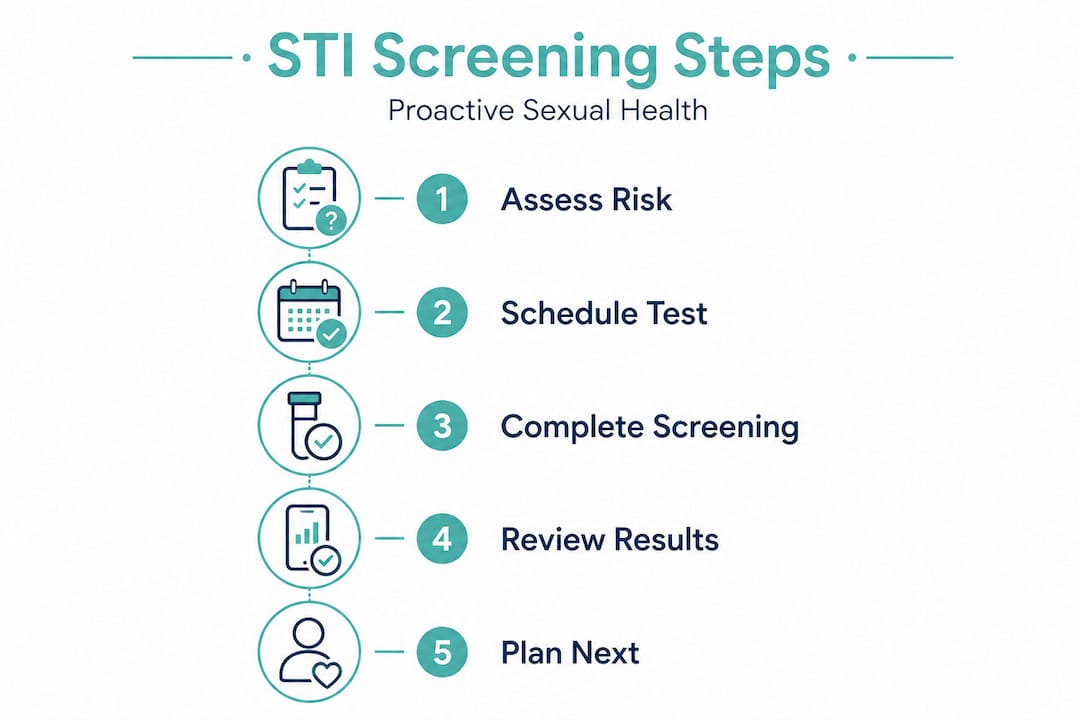
For a broader look at your options and resources, the STI testing blog covers everything from understanding different infections to choosing the right test for your situation. And if time is your main obstacle, this piece on STI testing for busy people is worth a read. You can also explore fast, private chlamydia and gonorrhea testing for targeted options.
What most adults miss about proactive STI screening
Here is the uncomfortable truth: most public health messaging about STIs still focuses on symptoms. “If something looks or feels wrong, get tested.” That framing is outdated and, frankly, a bit misleading.
The real insight from modern sexual health guidance is that symptoms are a poor indicator of infection status. The infections we worry about most are the ones that fly under the radar for months or years. By the time symptoms show up, if they ever do, transmission has often already happened and complications may have started.
There is also a subtler issue that does not get talked about enough. Even people who intellectually understand the value of proactive screening can feel held back by access gaps, stigma, or just the awkwardness of starting the conversation. That stigma is worth naming directly. STI testing is a normal health behavior, not a sign of recklessness or promiscuity. The more openly men over 40 treat it as routine, the more they model that norm for others, including younger men who are still forming their health habits.
We think making STI testing easier is about more than just convenience. It is about removing the friction that causes people to delay, avoid, or rationalize skipping a test. When testing is private, fast, and affordable, the excuses disappear. What is left is just the habit, and habits protect health in ways that single decisions never can.
Men in their 40s and 50s are also in a position to genuinely influence the people around them. Normalizing a conversation with a partner about getting tested does more good than any public health campaign. It is not a big dramatic moment. It is just a straightforward part of being in a relationship.
Take control of your sexual health with rapid testing solutions
If anything in this guide has resonated, the next step is simpler than you might think. You do not need a clinic appointment, a referral, or an awkward conversation to start screening proactively.
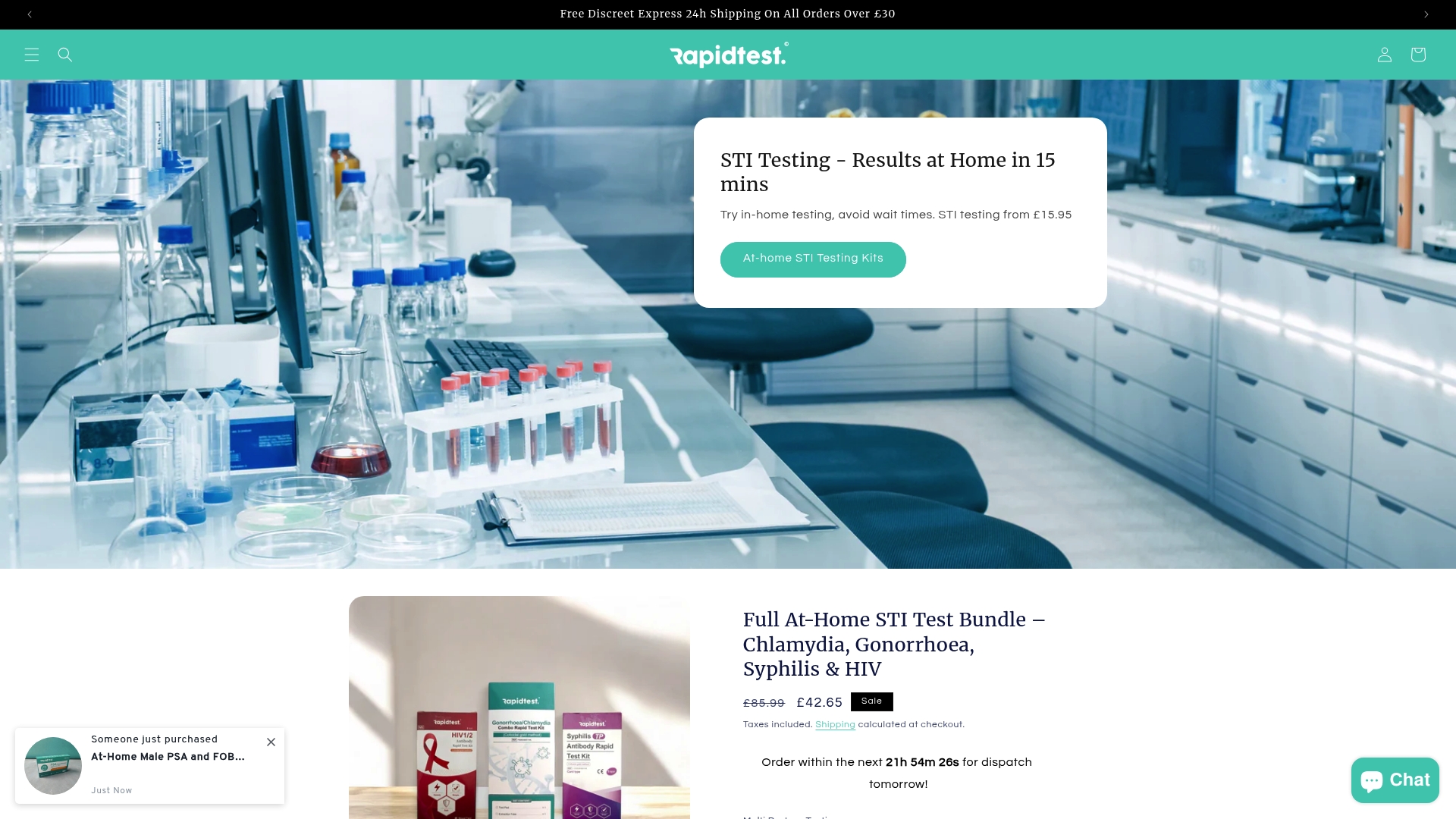
At RapidTest, we offer at-home rapid STI testing kits that give you results in 15 minutes. No queues, no waiting rooms, no judgment. Just straightforward, accurate screening you can do on your own schedule. Whether you are looking for an instant STI rapid test for a one-off check or want to build regular testing into your health routine, RapidTest has you covered. Proactive health care is not complicated when the right tools are within reach.
Frequently asked questions
How often should I get tested for STIs if I have new or casual partners?
Annual STI and HIV testing is the baseline recommendation, but gay and bisexual men having condomless sex with new or casual partners should test every three months.
Are at-home STI tests reliable for regular screening?
Yes, when used correctly, at-home rapid STI tests are a reliable and convenient option for routine screening, giving you results in 15 minutes without needing clinical support.
Does increasing chlamydia screening in the general population reduce infection rates?
No. The 2025 European chlamydia guideline found that intensified population-wide screening did not reduce overall chlamydia prevalence, which is why risk-based targeting for MSM and high-risk groups is the recommended approach.
What barriers can affect STI screening access in Europe?
The ECDC highlights that out-of-pocket costs, privacy concerns, consent requirements for those under 18, and infrequent policy updates are the main factors limiting access across European countries.
How can men over 40 play a role in normalizing STI screening?
By treating regular testing as a standard health habit rather than a reaction to risk, men over 40 can reduce stigma, encourage partners to test, and help shift the cultural conversation around sexual health in their communities.