


Essential sexual health checklists: your 2026 guide
Sexual health is far more than just avoiding infections. It covers your physical, emotional, mental, and social well-being, and having essential sexual health checklists in place is one of the most practical ways to stay on top of all of it. Yet most people only think about testing after something goes wrong. The truth is, a well-structured checklist helps you stay ahead: knowing when to test, what to ask, how to protect yourself, and when to loop in a partner. This guide gives you everything you need to build that checklist with confidence.
Table of Contents
- Key takeaways
- 1. What makes an essential sexual health checklist
- 2. Prevention and barrier methods
- 3. Sexual history: the questions your checklist must include
- 4. STI testing schedules and window periods
- 5. Cervical and reproductive health screening
- 6. Partner notification and treatment: closing the loop
- 7. Self-management vs clinical tools: what works for you
- My honest take on where most checklists fall short
- Test from home with Rapidtest
- FAQ
Key takeaways
| Point | Details |
|---|---|
| Go beyond just testing | A solid checklist covers prevention, history, rights, and partner management, not only STI results. |
| Timing is everything | Post-exposure testing should begin at 4 weeks, with a follow-up at 3 months for most infections. |
| Self-testing is legitimate | At-home rapid tests and self-collected samples are now endorsed options for many screening needs. |
| Partner management matters | Notifying and treating partners is a critical step that most personal checklists skip entirely. |
| Adapt your checklist to your risk | Frequency and scope of screening should match your personal risk profile, not a one-size-fits-all schedule. |
1. What makes an essential sexual health checklist
Not all checklists are created equal. A checklist that only asks “have you tested recently?” is barely scratching the surface.
The WHO defines sexual health as a state of physical, emotional, mental, and social well-being related to sexuality. That means a genuinely useful checklist must go well beyond infection status. It needs to account for safety, respect within relationships, access to services, and freedom from coercion or discrimination. Those are not soft extras. They are the foundation.
The CDC’s approach to structured sexual history-taking offers a practical framework for building your personal checklist. It covers five core areas: activities, partners, protection methods, past STI history, and pregnancy intentions. Getting clear on each of these before you even think about booking a test gives you a far more accurate picture of your actual risk and needs.
A good checklist also needs to be risk-adapted. Someone in a long-term monogamous relationship has different screening needs to someone with multiple partners or someone starting PrEP. Your checklist should reflect your life, not a generic template. Think of it as a living document you update as your circumstances change.
Pro Tip: Write the date of your last exposure and your last test result directly into your checklist. Time-stamping these dates helps you manage retesting windows accurately and avoid both false negatives and unnecessary repeat tests.
2. Prevention and barrier methods
Before you even get to testing, your checklist should start with prevention. This is where a lot of people skip ahead too quickly.
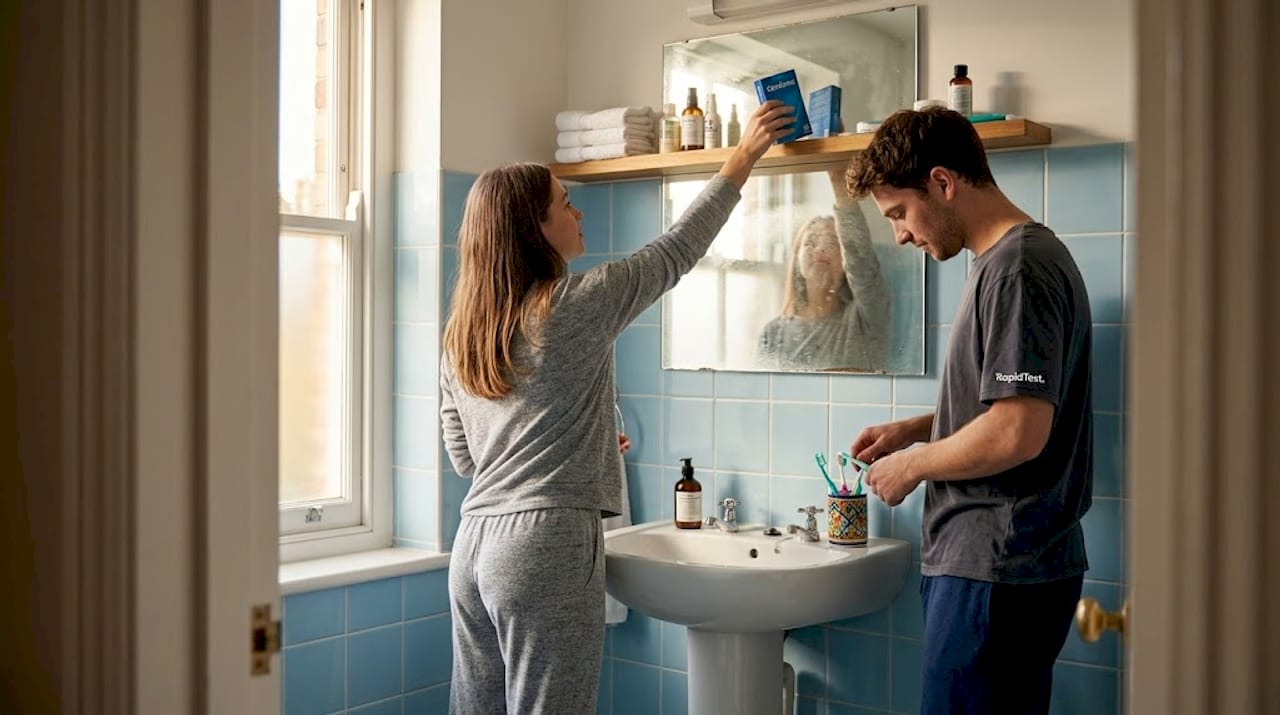
Consistent use of barrier methods remains the single most effective STI prevention strategy available without a prescription. Condoms, dental dams, and internal condoms all reduce transmission risk significantly when used correctly and consistently. Your checklist should ask: are you using them every time, with every partner, and using them correctly?
Alongside barriers, think about vaccination. HPV and hepatitis B vaccines are part of a thorough STI prevention checklist and are widely recommended for eligible adults. If you are not sure whether you have had them, that is worth checking with your GP.
PrEP (pre-exposure prophylaxis) is another prevention item for those at higher risk of HIV. If you are considering it or already using it, your checklist needs to include the required HIV testing schedule that comes with it. Missing HIV tests on PrEP can lead to serious safety risks, including inappropriate prescribing during acute infection.
3. Sexual history: the questions your checklist must include
Taking your own sexual history sounds awkward, but it is genuinely one of the most useful things you can do. It tells you which tests to prioritise and how urgently.
Your checklist should prompt you to answer the following:
- How many partners have you had in the past 3 to 12 months?
- What types of sexual activity are you engaging in (vaginal, anal, oral)?
- Are you using barrier methods consistently, sometimes, or not at all?
- Have you had any symptoms such as discharge, sores, pain, or unusual odour?
- Have you ever had an STI before, and if so, was it fully treated and confirmed cleared?
- Are you or your partner trying to conceive, or do you need contraception?
- Have you had any recent unprotected exposure with a new or casual partner?
These questions align closely with the CDC’s clinical guidance for sexual history-taking. You do not need a clinician to ask them. You just need to be honest with yourself.
Pro Tip: Review your sexual history answers every time you start a new relationship or have a significant change in your sexual behaviour. Your checklist needs to keep up with your life.
4. STI testing schedules and window periods
Knowing when to test is just as important as knowing what to test for. Testing too early after exposure can give you a false negative because of window periods.
Post-exposure testing should generally start at 4 weeks after the potential exposure, with a repeat test at 3 months for infections like HIV where the window period can extend. For chlamydia and gonorrhoea, results can often be accurate within 1 to 2 weeks. For syphilis, the window is typically 3 to 6 weeks.
Your testing schedule should also account for ongoing risk. The WHO and NHS recommend the following general intervals for people with active sexual lives:
- Every 3 months: HIV, gonorrhoea, chlamydia, syphilis if you have multiple partners or use PrEP
- Every 6 months: Full sexual health screen for those with moderate risk
- Annually: Minimum frequency for sexually active adults, including a review of vaccination status
For people using PrEP, quarterly HIV retesting is a clinical requirement, not just a recommendation. Missing a test cycle creates real safety gaps.
You can find a clear breakdown of which infections to test for based on your specific situation, which is a useful companion to your testing checklist.
5. Cervical and reproductive health screening
A complete reproductive health checklist looks beyond STIs. For people with a cervix, cervical cancer screening is a non-negotiable annual health item.
Updated guidance from ACOG in 2026 now supports patient-collected HPV testing as an option for average-risk individuals aged 30 to 65, with primary HPV screening recommended every 5 years. This is a significant shift. It means self-collected samples are now a clinically endorsed approach, not just a workaround.
Your reproductive health checklist should include:
- Cervical screening: Every 5 years via primary HPV test (or 3 years via smear for those aged 25 to 30 in England)
- Fertility awareness: Tracking cycle regularity, ovulation, and any symptoms of concern
- Contraception review: At least annually, or whenever your circumstances change
- Pregnancy-related STI screening: Certain infections such as Group B Strep and syphilis are routinely screened in pregnancy; check whether you are up to date
If you are thinking about fertility testing, exploring a fertility evaluation checklist can help you understand what assessments are relevant at different life stages.
6. Partner notification and treatment: closing the loop
Here is the part of the checklist most people quietly skip. Testing yourself and treating yourself is only half the job.
The WHO’s STI operational handbook makes it clear: partner notification and treatment completion are critical steps in breaking transmission chains. If you test positive and your partner does not get tested and treated, reinfection is almost inevitable.
Your checklist should include these steps:
- Tell any sexual partners from the past 3 to 6 months (timeframe depends on the infection)
- Encourage them to test, and where possible, confirm they have done so
- Avoid sex until both you and your partners have completed treatment
- Follow up with a test-of-cure where clinically indicated (gonorrhoea and syphilis typically require this)
- Note the date you completed treatment and the date of any follow-up test
This can feel like an uncomfortable conversation, but it is also a deeply respectful one. Understanding why testing before a new partner matters puts partner management in a much more positive light. It is not about blame. It is about care.
7. Self-management vs clinical tools: what works for you
Not every checklist item requires a clinic visit. Here is a practical comparison to help you decide where self-management fits.
| Checklist element | Self-managed | Clinical setting |
|---|---|---|
| Chlamydia and gonorrhoea testing | At-home rapid tests or postal kits | Swab and urine tests in clinic |
| HIV testing | At-home rapid blood spot tests | Lab confirmatory testing |
| HPV cervical screening | Self-collected samples (ACOG-endorsed) | Clinician-collected smear or colposcopy |
| Syphilis testing | At-home rapid tests available | Full serology panel in clinic |
| PrEP monitoring | Partial (symptom tracking) | HIV and renal function tests required |
| Fertility assessment | Ovulation and hormone strips at home | Full fertility workup with specialist |
| Treatment and prescriptions | Not applicable | Always requires clinical support |
Self-collected testing options have expanded significantly in recent years. The real challenges of STI diagnosis still exist at the edges, particularly around window periods and confirmatory testing. But for routine monitoring, at-home testing now covers a lot of ground effectively.
Pro Tip: If you are using at-home kits as part of your regular schedule, keep a simple log: date tested, which test, result, and any next steps. It turns a one-off test into an actual health record.
My honest take on where most checklists fall short
I have spent years reading sexual health guidance, working through clinical frameworks, and watching what actually gets used versus what just looks good on paper. And here is what I genuinely believe: most sexual health checklists are too passive.
They read like tick-box exercises. Test done. Condom used. Job finished. But the WHO’s rights-based framework asks something more demanding of us. Do your relationships feel safe? Do you have access to the care you need without shame? Are you free from coercion? Those questions do not fit neatly into a spreadsheet, but they belong on your checklist every bit as much as your last HIV test date.
The other thing I keep coming back to is timing. Most people underestimate how critical the window period conversation is. Testing too early gives false reassurance. Testing too late means you may have already passed something on. Getting the timing right is not a minor detail. It is the difference between a checklist that actually protects you and one that just makes you feel like you have done something.
And partner management? Genuinely underused. I understand why. It is uncomfortable. But the data is clear: without it, your personal checklist is incomplete. Treat it as an act of care, not a confrontation, and it becomes much easier to follow through.
Use your checklist as a living tool. Revisit it after new relationships, after exposure events, after life changes. The people who benefit most from these frameworks are the ones who never let them gather dust.
— Jack
Test from home with Rapidtest
Taking control of your sexual health checklist does not have to mean booking appointments or sitting in waiting rooms. Rapidtest makes it genuinely easy to integrate regular testing into your routine.
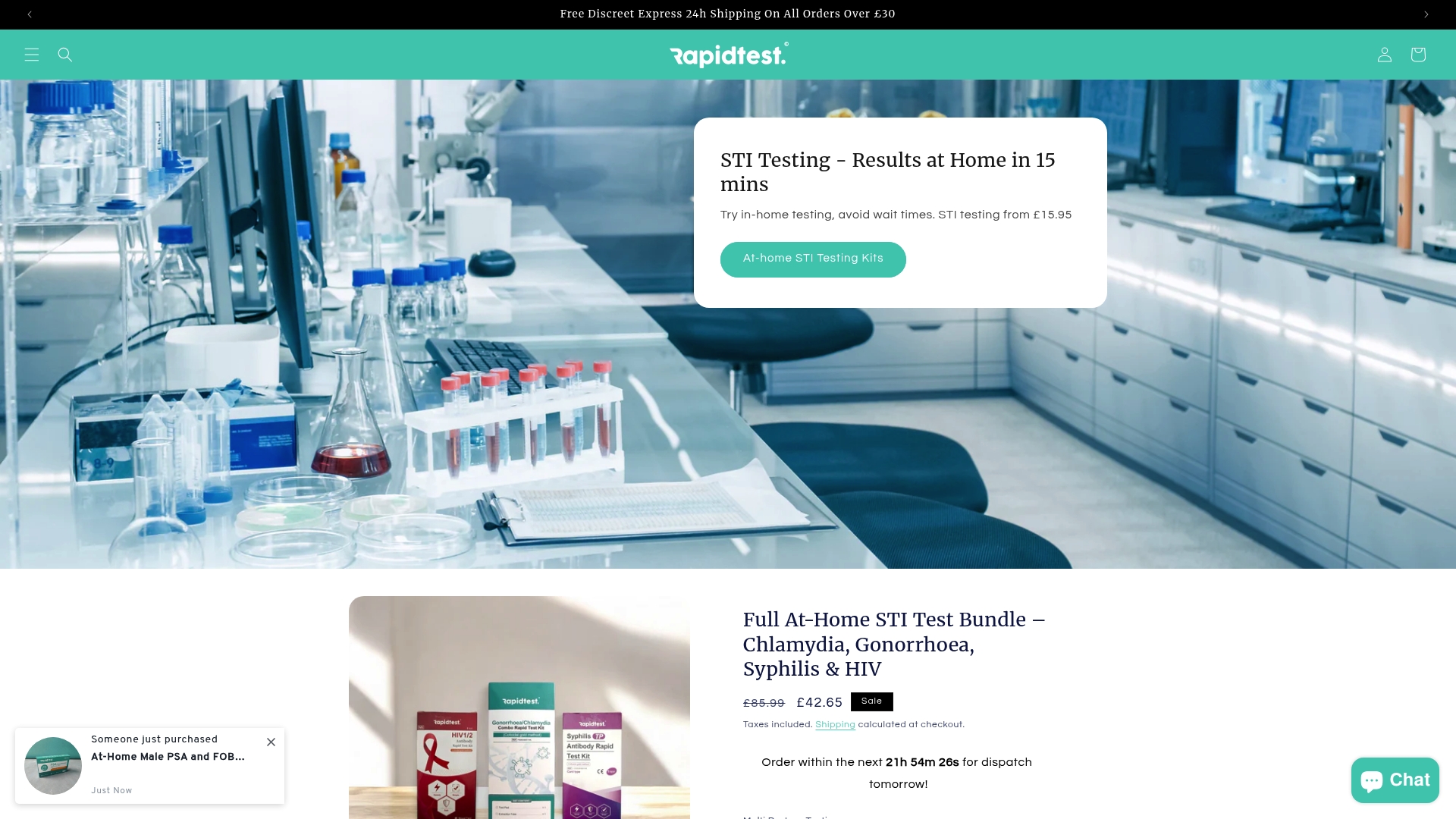
With Rapidtest’s at-home STI testing kits, you get results in 15 minutes, no lab visit, no queue, and no awkward conversations required. Whether you are following a 3-monthly schedule on PrEP, doing a pre-relationship screen, or just keeping on top of your annual check, Rapidtest has kits that fit. For those whose checklist includes cervical health, the HPV rapid test kit gives you a fast, private option at home. You can also browse the full STI testing guidance hub for advice on what to test for and when.
FAQ
What should an essential sexual health checklist include?
A thorough sexual health checklist covers STI prevention, regular testing schedules, sexual history review, reproductive health screening, and partner notification. The WHO recommends including safety, respect, and access to care as foundational elements alongside clinical testing.
How often should I get tested for STIs?
Most sexual health guidelines recommend testing every 3 months if you have multiple partners or use PrEP, every 6 months for moderate risk, and at least annually for all sexually active adults. Your frequency should reflect your personal risk profile.
Can I manage my sexual health checklist at home?
Yes, many checklist items including chlamydia, gonorrhoea, HIV, syphilis, and HPV screening can now be managed with at-home rapid tests or self-collected samples. Clinical support is still needed for treatment, PrEP monitoring, and confirmatory testing.
When should I test after a potential exposure?
Post-exposure testing should begin at around 4 weeks for most infections, with a follow-up at 3 months to account for HIV window periods. Testing earlier may produce inaccurate results depending on the infection involved.
Why does partner notification belong on my personal checklist?
Partner notification and treatment completion are part of the WHO’s STI prevention cascade and are critical to stopping reinfection. Without it, treating yourself alone leaves the transmission chain intact.