


Sexual Health Screening Tips for Adults Over 30
If you’re over 30 and sexually active, you might assume your STI risk is lower than it was in your twenties. That assumption is exactly why so many adults fall through the cracks. STI rates are rising among midlife adults, largely because most infections show zero symptoms. You feel fine, so you skip the test. But staying on top of sexual health screening tips isn’t about fear. It’s about being smart, proactive, and kind to yourself and the people you’re with.
Table of Contents
- Key Takeaways
- 1. Understand your personal risk level first
- 2. Know what the current guidelines actually say
- 3. Learn how to prepare for sexual health tests
- 4. Know which screenings matter most after 30
- 5. Take prevention seriously, not just testing
- 6. Talk to your partners without making it a big deal
- 7. Ask the right questions when you see a provider
- 8. Comparing clinical visits versus at-home testing
- 9. Build a screening schedule that actually fits your life
- My honest take on sexual health screening after 30
- Test from home with Rapidtest, no appointment needed
- FAQ
Key Takeaways
| Point | Details |
|---|---|
| Screening frequency matters | Most sexually active adults over 30 should test annually; higher-risk individuals should test every 3 to 6 months. |
| Silent infections are common | Many STIs cause no symptoms, so regular testing is the only reliable way to catch them. |
| Preparation improves accuracy | Knowing what to avoid before testing, like urinating before a urine sample, directly affects your results. |
| At-home kits are a real option | FDA-approved rapid test kits give accurate results in 15 minutes without a clinic visit. |
| Communication reduces risk | Talking openly with partners about testing history builds trust and reduces transmission risk for everyone. |
1. Understand your personal risk level first
Before you book a test or order a kit, take a moment to honestly assess your situation. How many sexual partners have you had in the past year? Do you consistently use barrier protection? Have you had a new partner recently?
These questions aren’t about judgment. They help you figure out the right testing frequency. Annual testing is recommended for most sexually active adults, with more frequent testing every 3 to 6 months for those with multiple or anonymous partners. Knowing your risk level is the foundation of any smart sexual health screening plan.
2. Know what the current guidelines actually say
Guidelines get updated, and the 2026 recommendations from the CDC reflect a better understanding of how STIs behave in adults over 30. One thing that often surprises people is this: STI panels are not standard in routine blood work or annual physicals. Your doctor checks your cholesterol, not your chlamydia, unless you ask.
That means you have to advocate for yourself. When you see your primary care provider, specifically request sexual health screening. Name the tests you want. This isn’t awkward. It’s responsible.
3. Learn how to prepare for sexual health tests
How you prepare before a test affects how accurate your results are. A few practical things to keep in mind:
- Urine tests: Avoid urinating for at least one hour before providing a urine sample to improve detection accuracy.
- Swab tests: Avoid douching, using vaginal medications, or having sex 24 to 48 hours before a cervical or vaginal swab.
- Blood tests: No special prep is usually needed, but confirm with your provider.
- At-home kits: Follow the exact instructions in your kit. Each test has its own collection method.
Pro Tip: Read the full instructions before you start collecting a sample, not halfway through. A small mistake in collection can lead to a false negative, which is the worst possible outcome.
Getting how to prepare for sexual health tests right the first time saves you from retesting and unnecessary anxiety.

4. Know which screenings matter most after 30
Not every test is right for every person, but there are a few that most sexually active adults over 30 should understand well.
HIV testing should be part of your routine. Annual testing is standard for most sexually active adults, and more frequent testing is recommended if you have elevated risk.
Cervical cancer screening has evolved significantly. Primary high-risk HPV testing every 5 years is now the preferred method for women aged 30 to 65, replacing the older model of Pap tests every 3 years as the default. This is a meaningful shift in how cervical health is managed.
For bacterial STIs, the standard panel typically covers:
- Chlamydia
- Gonorrhea
- Syphilis
- Trichomoniasis (often overlooked but very common)
Here’s a quick breakdown of what each test usually involves:
| STI | Test Method | Frequency |
|---|---|---|
| HIV | Blood test | Annually, or every 3 months on PrEP |
| Chlamydia / Gonorrhea | Urine or swab | Annually, or every 3 to 6 months (higher risk) |
| Syphilis | Blood test | Annually, or as recommended |
| HPV / Cervical cancer | HPV swab or Pap | Every 5 years (hrHPV preferred, ages 30 to 65) |
| Trichomoniasis | Urine or swab | When symptomatic or at regular screening |
Something worth knowing: patient-collected vaginal samples for HPV testing are now FDA-approved, making cervical cancer screening more accessible for people who face barriers to clinical visits.
5. Take prevention seriously, not just testing
Testing tells you where you stand. Prevention changes where you’re headed. Two tools that are worth knowing about if you’re not already familiar with them are PrEP and doxy-PEP.
HIV PrEP reduces infection risk by around 99% when taken as prescribed and works best when combined with comprehensive STI testing every 3 months. If you’re at elevated risk, this is a conversation worth having with your provider.
Doxy-PEP is newer but promising. Taking 200 mg of doxycycline within 72 hours of potential exposure reduces syphilis risk by 70% and gonorrhea risk by 50%. It’s not a substitute for regular screening, but it’s a real preventive tool for eligible individuals.
Vaccination also plays a role. The HPV vaccine is recommended up to age 45 for adults who weren’t vaccinated earlier. If you haven’t had it, ask.
6. Talk to your partners without making it a big deal
One of the most underrated sexual health screening tips is simply learning how to start the conversation. And yes, it can feel awkward at first. But discussing testing history openly builds real trust and keeps everyone safer.
A few approaches that work well in practice:
- Before a new relationship: “I get tested regularly. When was your last test?” This normalizes it immediately.
- With a current partner: “I want us both to feel comfortable. Can we get tested together?” Making it a shared thing removes the accusatory tone.
- If you feel nervous: Frame it around care, not suspicion. You’re looking out for them as much as yourself.
Pro Tip: Suggesting you both test together rather than asking a partner to go alone is one of the most effective ways to make the conversation feel like a team effort rather than a confrontation.
The goal is to make normalizing STI testing a normal part of how you approach intimacy, not a reaction to fear.
7. Ask the right questions when you see a provider
Knowing what questions to ask during screening can be the difference between a useful appointment and walking out with a basic blood panel that missed what you actually needed. Here’s a short list to bring with you:
- “Should I be tested for anything specific given my history?”
- “How often do you recommend I get screened based on my lifestyle?”
- “Is PrEP or doxy-PEP something I should consider?”
- “Are at-home tests accurate enough for my situation?”
- “Do my results get reported anywhere, or is this fully private?”
You are allowed to direct your own healthcare. Providers appreciate informed patients, and specific questions get specific answers.
8. Comparing clinical visits versus at-home testing
Both options have real value. The best choice depends on your lifestyle, privacy preferences, and the specific tests you need.
| Factor | Clinical visit | At-home testing kit |
|---|---|---|
| Privacy | Moderate | High |
| Convenience | Lower (scheduling, travel) | High (test from home) |
| Speed of results | Hours to days | 15 minutes |
| Test range | Broad | Growing, not always full panel |
| Cost | Varies by insurance | Fixed, often affordable |
| Follow-up support | Built-in | Requires self-direction |
FDA-approved at-home testing kits now provide rapid, accurate detection for chlamydia, gonorrhea, syphilis, and trichomoniasis. They’re particularly valuable for people who feel hesitant about visiting a clinic or who want regular testing without building it around appointments.
The ideal approach for many adults is both. Use at-home kits for frequent, routine checks. See a provider annually or when you need a broader panel, a physical exam, or clinical follow-up.
9. Build a screening schedule that actually fits your life
The best screening plan is one you actually stick to. If annual testing feels too infrequent for your situation, or if every 3 months feels overwhelming, here’s a practical framework:
- Once a year: Minimum for most sexually active adults over 30 with stable partnerships.
- Every 3 to 6 months: Recommended if you have multiple partners, anonymous partners, or are on PrEP.
- After any new partner: A reasonable personal rule, even outside standard guidelines.
- After any potential exposure: Don’t wait for your next scheduled test.
For people in midlife, it’s also worth knowing that menopause-related changes to vaginal tissue can increase susceptibility to some infections. This is rarely discussed, but it’s a reason why health screening for sexually active adults doesn’t become less relevant with age. It often becomes more relevant.
Scheduling your next test before you leave the clinic, or setting a reminder when you order a kit, removes the “I’ll do it eventually” problem. Make it routine, like a dental check. No drama required.
My honest take on sexual health screening after 30
I’ve seen a clear pattern over the years. The adults who struggle most with sexual health screening aren’t irresponsible. They’re busy, they feel fine, and somewhere along the way they absorbed the idea that testing is only for people who’ve “done something wrong.” That belief does more harm than almost anything else.
In my experience, the single biggest shift happens when people stop seeing testing as reactive and start treating it as maintenance. You don’t wait for a toothache to see the dentist. Sexual health is no different.
What I’ve also found is that at-home testing genuinely changes behavior for the better. When the barrier is removed, people test more often. They feel more in control. They have better conversations with partners because they have concrete information to share. The private, 15-minute option isn’t a shortcut. For many people, it’s the thing that gets them testing at all.
My honest recommendation: pick a frequency that reflects your actual life, not an ideal version of it. Set a reminder. And stop waiting until something feels wrong to check in on your own health.
— Jack
Test from home with Rapidtest, no appointment needed
If this article has you thinking it’s time to take action, Rapidtest makes it easier than you might expect.
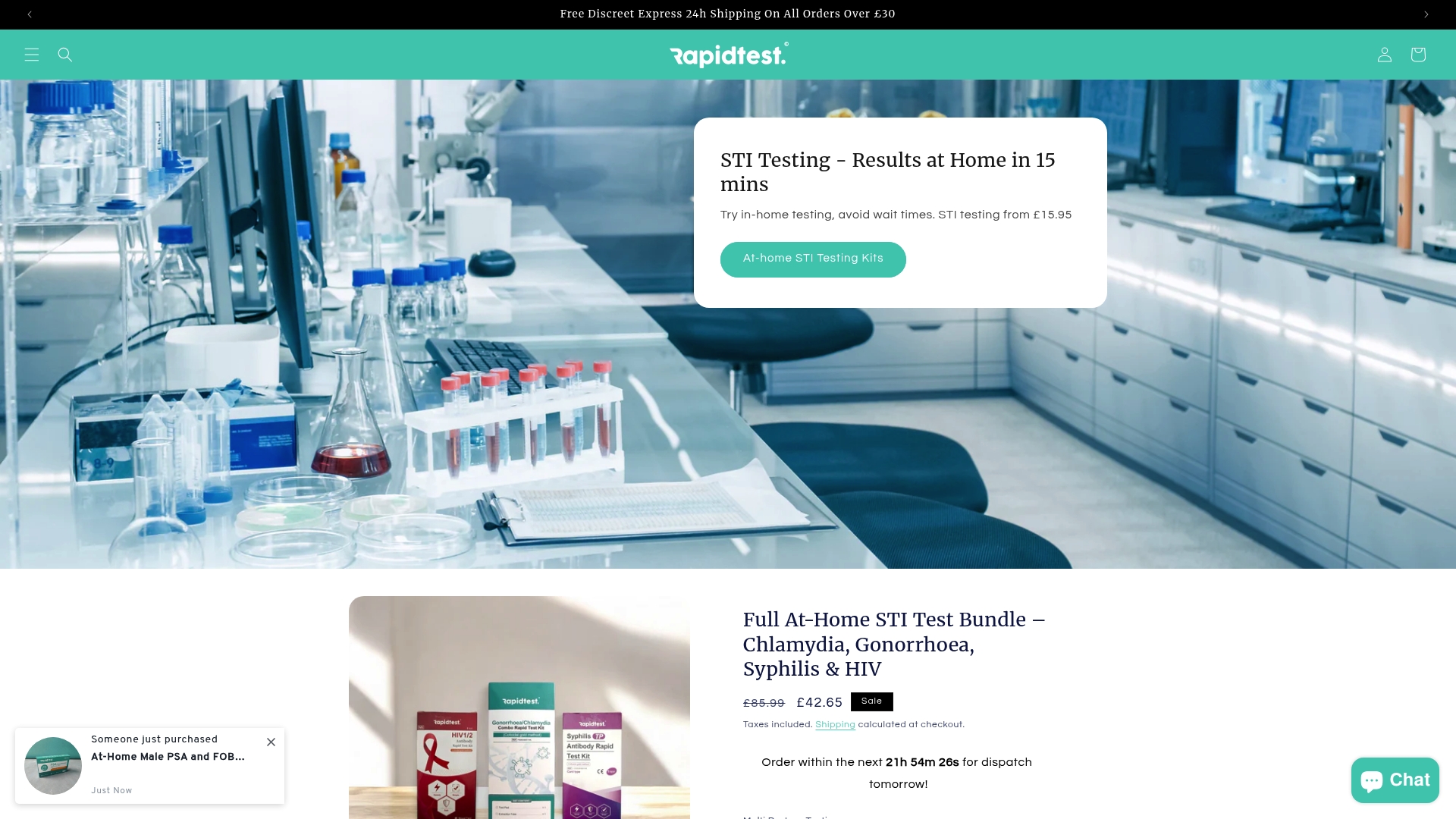
Rapidtest offers at-home STI test kits that deliver accurate results in 15 minutes. No clinic, no queue, no awkward waiting room. You collect your sample at home, follow the simple instructions, and get a clear result fast. Their STI screening kit collection covers the key infections most adults should be monitoring, including chlamydia, gonorrhea, syphilis, and more. For anyone who wants to make sexual health screening a regular habit without rearranging their schedule, this is a practical place to start.
FAQ
How often should adults over 30 get STI tested?
Most sexually active adults should test at least once a year. If you have multiple partners or anonymous partners, testing every 3 to 6 months is recommended based on current CDC guidance.
Will my doctor automatically test me for STIs at my annual physical?
No. STI testing is not included in standard bloodwork or routine physicals. You need to specifically request sexual health screening at your appointment.
Are at-home STI tests accurate?
Yes, FDA-approved at-home kits provide high accuracy for common STIs like chlamydia, gonorrhea, and syphilis. Follow-up with a provider is recommended if results are positive.
What is doxy-PEP and should I ask about it?
Doxy-PEP is doxycycline taken within 72 hours of potential STI exposure. It reduces syphilis and gonorrhea risk significantly and is worth discussing with your provider if you are at elevated risk.
How do I prepare for a sexual health screening test?
For urine-based tests, avoid urinating for at least an hour beforehand. For swabs, skip douching or vaginal products for 24 to 48 hours. Read your full kit instructions before starting collection to avoid errors that affect accuracy.