


Why home health tests matter for your wellbeing
Home health tests are diagnostic tools that let you assess key health markers quickly, privately, and accurately from your own home, without a GP appointment or a lab queue. The global home diagnostic market exceeded $5 billion in early 2026 and is projected to double within a decade. That growth is not a coincidence. It reflects a genuine shift in how people in the UK and Europe are taking charge of their own health. Understanding why home health tests matter is the first step toward using them well, and this guide covers everything you need to know.
Why home health tests matter for early disease detection
Early detection is the single biggest clinical argument for at-home testing. Catching a condition before symptoms appear gives you far more options than waiting until something feels wrong.
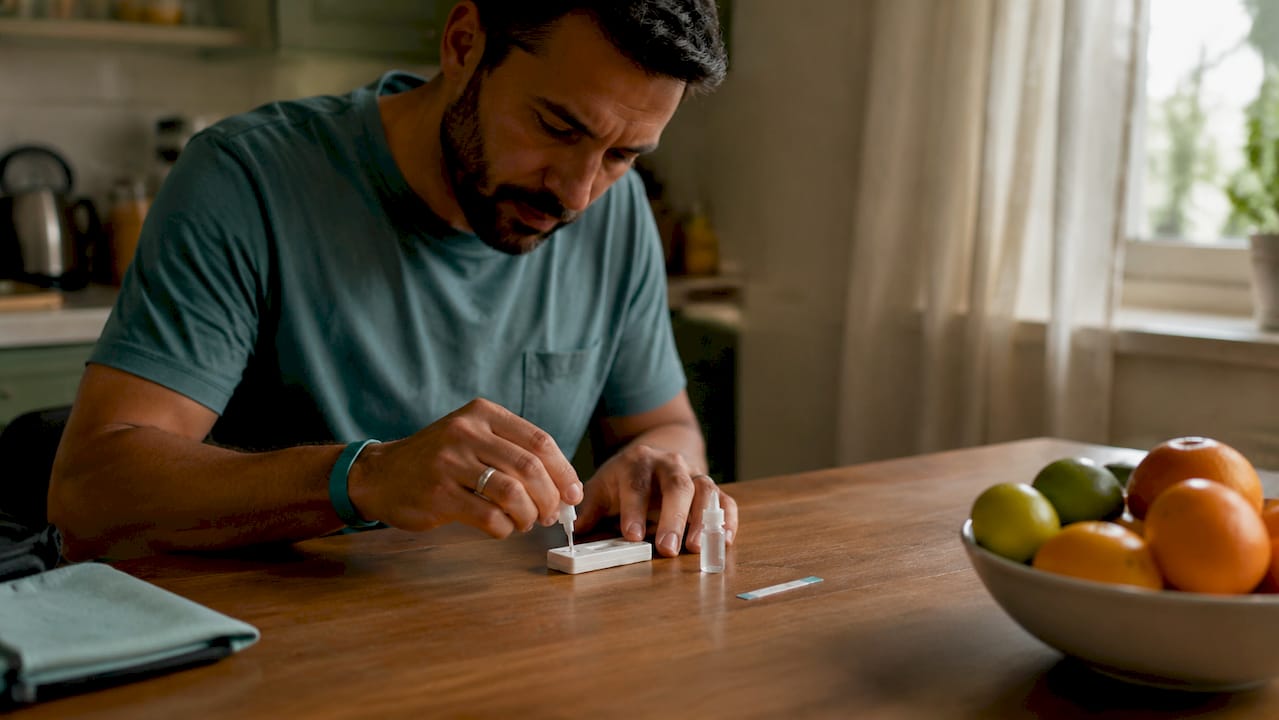
Point-of-care (POC) testing, the recognised clinical term for rapid tests conducted outside a laboratory, has demonstrated measurable public health benefits. Home testing availability has doubled testing rates for HIV among at-risk individuals. That is not a marginal improvement. It means thousands of people who would never have visited a clinic are now getting diagnosed and treated earlier.
The same logic applies to STIs more broadly. Syphilis cases increased by 80% in recent years, with reported STI infections totalling 2.2 million in 2024. Left undetected, syphilis can cause serious heart and neurological damage. Home screening makes it possible to catch the infection privately, before it progresses to that stage.
For chronic conditions, the benefits are just as compelling. POC testing supports improved health literacy and engagement for non-communicable diseases like diabetes and cardiovascular health. When people understand their own numbers, they make better decisions. Continuous glucose monitoring, for example, has transformed how people with diabetes manage their condition day to day.
- Identify elevated cholesterol or blood sugar before symptoms appear
- Screen for STIs like HIV and syphilis with complete privacy
- Monitor thyroid, liver, or kidney markers between GP visits
- Track hormone levels to understand fertility or hormonal health
- Detect early signs of prostate or bowel conditions with PSA and FOB tests
Pro Tip: Keep a simple log of your home test results over time and bring it to your next GP appointment. Trends matter more than single readings, and your doctor will find the context genuinely useful.
Home tests vs lab tests: what are the real differences?
Let’s be real. The most common concern people have about home testing is whether the results can actually be trusted. The honest answer is: it depends on the test, and it depends on how you use it.
| Feature | Home test | Lab test |
|---|---|---|
| Convenience | Test at home, any time | Requires clinic visit or appointment |
| Speed | Results in 15 minutes | Hours to days |
| Privacy | Completely private | Shared with healthcare system |
| Accuracy | High for validated tests | Gold standard for most markers |
| Clinical context | Self-interpreted | Reviewed by a professional |
| Cost | Generally lower | Higher, especially privately |
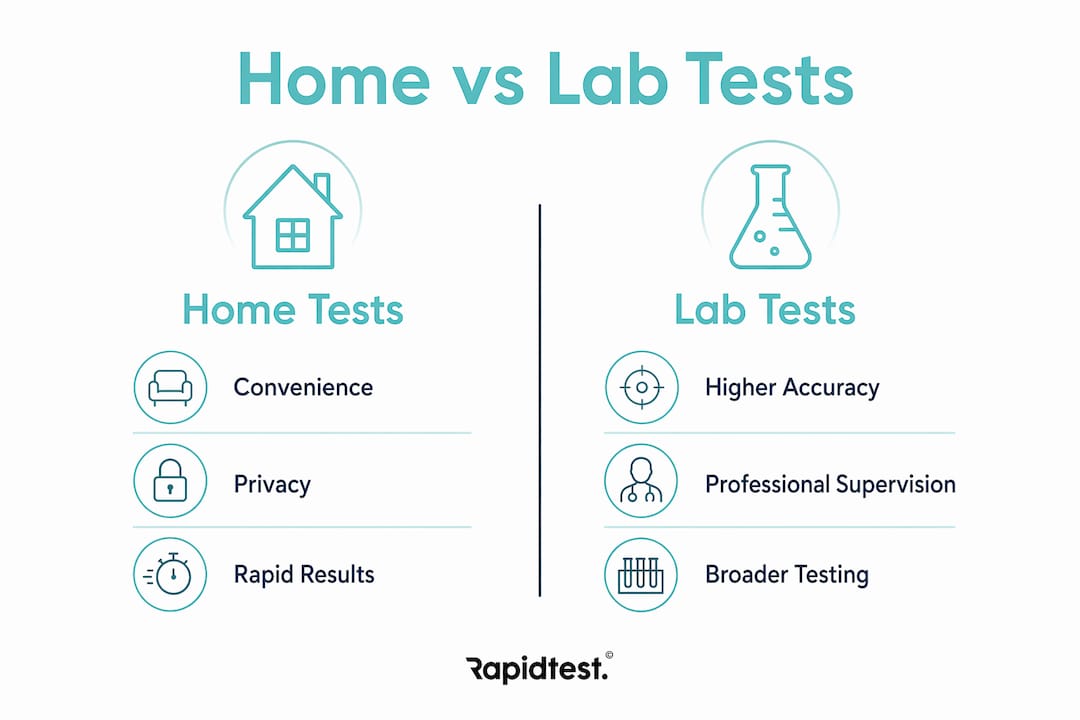
Convenience, privacy, and rapid results make home tests genuinely appealing, but accuracy varies and clinical guidance is necessary to avoid misuse or false reassurance. A validated home test from a reputable provider is highly reliable for the specific markers it measures. The limitation is not the test itself. It is the absence of a clinician to interpret the result in the context of your full health picture.
Many popular home tests lack adequate regulation, and some are sold primarily for profit without clear medical necessity. This is why choosing a test that has been properly validated matters enormously. Look for CE marking in the UK and Europe, and check whether the test has been independently evaluated. The home test validation process is more rigorous than many people realise, and understanding it helps you choose with confidence.
Pro Tip: If a result surprises you, do not panic and do not dismiss it. Book a follow-up with your GP and bring the test packaging so they can see exactly what was measured and how.
Which home health tests give you the most useful insights?
Modern home test kits provide multi-biomarker analysis covering heart, liver, kidney function, and vitamin levels, giving you a broad health overview in a single session. That breadth is one of the most underappreciated home health test advantages available today.
Here are the categories worth knowing about:
- STI testing. HIV, syphilis, chlamydia, and gonorrhoea tests are among the most widely used home kits. At-home STI testing kits have become increasingly important due to rising infection rates and privacy concerns. A positive result caught early is always better than a late diagnosis.
- Fertility testing. LH, HCG, and sperm motility tests allow couples to begin understanding their fertility picture without an initial referral. These tests do not replace a fertility clinic assessment, but they give you a starting point.
- Cancer risk markers. PSA tests screen for elevated prostate-specific antigen levels in men, while FOB (faecal occult blood) tests detect hidden blood in stool that may indicate bowel cancer. Both are non-invasive and take minutes.
- General health panels. Cholesterol, blood glucose, iron, and liver enzyme tests help you understand your baseline. Knowing your numbers before a problem develops is the whole point of preventive health.
- Hormone and nutrient testing. Thyroid function, vitamin D, and testosterone tests are particularly popular among people optimising their energy, mood, and long-term health.
The value of remote health monitoring lies in this breadth. You are not just checking one thing. You are building a picture of your health over time, which is far more useful than a single snapshot.
How to use home health tests effectively
Getting a result is only half the job. Using it well is what actually improves your health outcomes.
- Choose a validated test from a trusted provider. Not all kits are equal. Look for CE-marked products with published accuracy data. Rapidtest kits, for example, carry 99.8% accuracy ratings and are designed for straightforward home use.
- Follow the sample collection instructions exactly. Most errors in home testing come from incorrect sample collection, not from the test itself. Read the instructions before you open anything.
- Test at the right time. Some tests, like LH ovulation tests, are time-sensitive. Others, like fasting glucose, require you to avoid food beforehand. Timing affects accuracy significantly.
- Review your results promptly. Do not leave a result sitting unread. Most home tests have a defined reading window, and results can change in appearance after that window closes.
- Share results with a healthcare professional when relevant. Home tests complement but do not replace professional medical advice. A GP can interpret a result in the context of your medical history, medications, and symptoms in a way that no test kit can.
- Avoid over-testing. Testing obsessively for reassurance can create anxiety rather than resolve it. Use home tests as part of a planned health routine, not as a response to every worry.
If you want a structured approach, the at-home health check guide for men over 40 is a practical starting point that applies equally well to anyone building a home testing habit.
Key takeaways
Home health tests matter because they make early detection accessible, private, and fast, but their real value depends on choosing validated tests and acting on the results.
| Point | Details |
|---|---|
| Early detection saves outcomes | Catching conditions like HIV, syphilis, or elevated PSA early prevents serious complications. |
| Validation determines reliability | Choose CE-marked, independently evaluated tests to trust your results. |
| Results need clinical context | Share significant findings with a GP to get accurate interpretation and next steps. |
| Breadth of testing builds insight | Multi-marker panels give a far more useful health picture than single-marker tests. |
| Consistency matters more than frequency | Regular, planned testing over time reveals trends that single readings cannot. |
The case for taking home testing seriously
I have watched the home testing market grow from a niche curiosity into something genuinely significant, and I think most people still underestimate what it offers.
The argument I hear most often against home testing is that results are unreliable. That was a fair criticism five years ago. It is much less fair now. Validated POC tests from reputable providers are accurate for the markers they measure. The real risk is not inaccuracy. It is misinterpretation, and that is a solvable problem.
What strikes me most is how rapid home testing is helping people bypass physician shortages and manage health concerns without waiting months for an appointment. That matters enormously in the UK and Europe right now, where GP access is genuinely stretched. Home testing does not replace your doctor. It makes the time you do spend with your doctor far more productive.
Privacy is also a bigger driver than people admit publicly. Many individuals simply will not visit a clinic for an STI test, a fertility check, or a prostate screening. They will, however, do it at home. If the choice is between a private home test and no test at all, the home test wins every time.
My one caution: do not use home testing as a way to avoid healthcare entirely. Use it as a way to engage with your health more actively, and bring your results into the conversation with your GP. That combination is where the real value lies.
— Jack
Start testing at home with Rapidtest
Rapidtest makes it straightforward to take control of your health from home. Every kit delivers results in 15 minutes with no appointment, no queue, and no awkward conversation at a reception desk.
Whether you want to screen for STIs with the at-home STI rapid test kit, check your HIV status with a 99.8% accurate HIV kit, or monitor prostate health with an at-home PSA test, Rapidtest has a CE-marked, validated kit ready to use. All kits are designed for straightforward home use and come with clear instructions. Your health, your timeline, your privacy.
FAQ
Are home health tests reliable?
Validated, CE-marked home tests are highly reliable for the specific markers they measure. Accuracy depends on choosing a properly evaluated kit and following the sample collection instructions correctly.
How do home health tests help with early disease detection?
Home testing removes the barriers of appointments and waiting times, meaning people test sooner. HIV testing rates doubled when home options became available, which is a clear demonstration of how accessibility drives earlier diagnosis.
Can home test results replace a GP consultation?
No. Home tests complement but do not replace professional medical advice. Significant results should always be reviewed with a healthcare professional who can interpret them in the context of your full health history.
What home health tests are most useful for general wellness?
Cholesterol, blood glucose, PSA, FOB, vitamin D, and STI panels are among the most clinically useful tests for general health monitoring. Multi-marker kits that cover several biomarkers at once offer the broadest picture for the least effort.
How do I choose the right home health test?
Look for CE marking, published accuracy data, and clear instructions. The guide on choosing the right test walks through the key questions to ask before you buy.