


What is sample collection at home? A clear guide
Sample collection at home is defined as the process of obtaining biological specimens, such as blood, urine, or swabs, within your own home to enable medical testing without a clinic visit. The industry term for this is “home sample collection,” and it sits at the heart of modern self-diagnostics. Whether you use a self-collection kit posted to a CLIA-certified lab with results in 3 to 5 business days, or book a professional phlebotomist to visit your home for a 5 to 10 minute appointment, the goal is the same. You get the health answers you need without queuing, without awkward waiting rooms, and without rearranging your entire week.
What is sample collection at home and how does it work?
Home sample collection covers two distinct approaches: self-collection kits and professional phlebotomy home visits. Understanding the difference helps you pick the right option for your test type and comfort level.
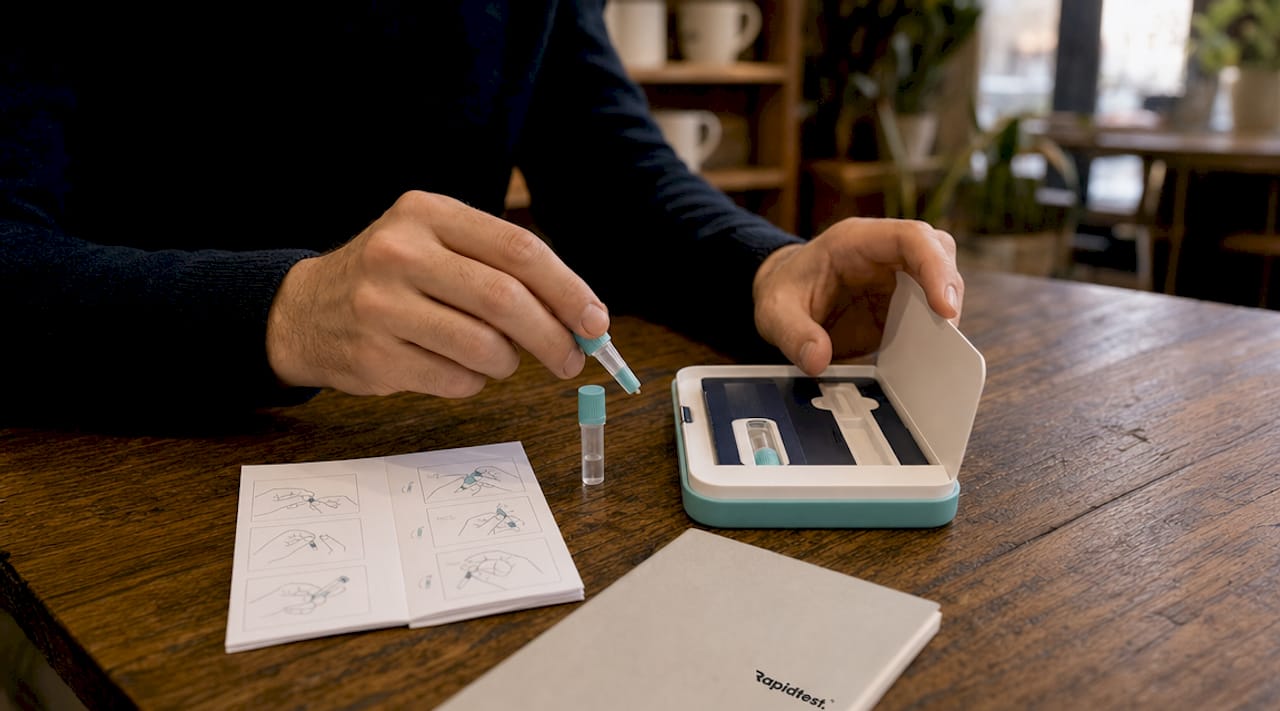
Self-collection kits are the most common route. You receive a kit by post containing everything you need: a lancet for finger-prick blood samples, swabs for throat or genital testing, or a sample pot for urine. You follow the home sample collection instructions step by step, seal your specimen in the prepaid return packaging, and post it to an accredited laboratory. Results typically arrive via a secure online portal within 3 to 5 business days.
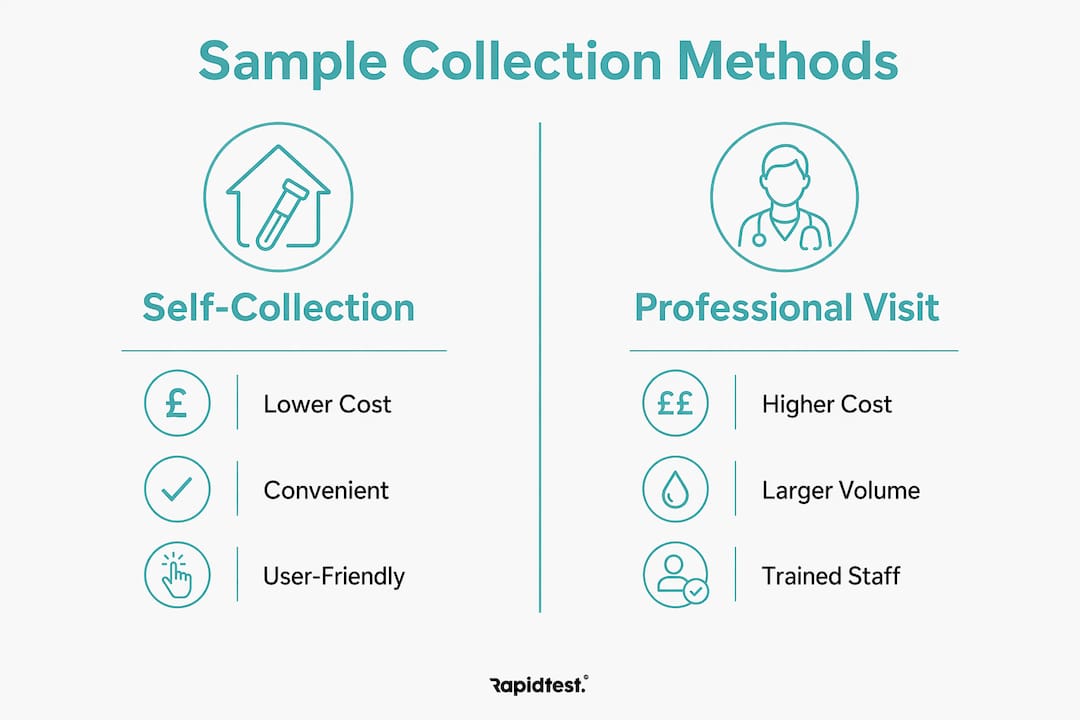
Professional phlebotomy home visits are the better option when larger blood volumes are needed, such as for comprehensive hormone panels or cholesterol testing. A trained phlebotomist comes to your door, performs the draw in 5 to 10 minutes, and takes the labelled sample directly to the lab. The sample chain of custody is tighter, and there is no risk of a poorly executed finger-prick invalidating your results.
Here is a quick comparison to help you decide:
| Feature | Self-collection kit | Professional phlebotomy visit |
|---|---|---|
| Cost | Lower | Higher |
| Convenience | Post kit at any time | Requires scheduling |
| Sample types | Finger-prick, swab, urine | Venous blood, full panels |
| Result turnaround | 3 to 5 business days | 3 to 5 business days |
| Best for | STI screening, fertility, rapid tests | Complex blood panels, high-volume draws |
Both methods transport samples securely using temperature-controlled, tamper-evident packaging. Reputable providers use biohazard-safe mailers and cold packs where required, so your specimen arrives at the lab in the same condition it left your home.
Pro Tip: If you are ordering a home testing kit for the first time, choose a provider that includes a prepaid return envelope and a tracking number. Knowing your sample has arrived at the lab removes a surprising amount of anxiety from the process.
How to collect samples at home properly
Getting the collection right is the single biggest factor in whether your result is accurate. The good news is that the home sample collection process is straightforward when you follow a few non-negotiable steps.
-
Prepare your space. Clear a clean, flat surface. Lay out all kit components before you start. Check the expiry date on every component, particularly swabs and reagent strips.
-
Wash your hands thoroughly. Clinical guidelines recommend washing with soap for 40 to 60 seconds, or using an alcohol-based sanitiser for 20 to 30 seconds. For blood draws, disinfect the puncture site with 70% alcohol or 0.5% chlorhexidine and allow it to dry fully before proceeding.
-
Warm your hand before a finger-prick. Warming the hand before lancing significantly improves blood flow to the fingertip. Run it under warm water for two minutes or rub your hands together briskly. A cold, poorly perfused finger produces a slow, inadequate sample that can clot before you fill the collection tube.
-
Invert collection tubes immediately. After filling a blood collection tube, invert it 8 to 10 times straight away. Skipping this step causes the sample to clot, which renders it invalid and means you will need to retest.
-
Handle swabs correctly. Insert the swab to the correct depth as shown in the instructions, rotate it the specified number of times, and place it directly into the transport medium. Avoid touching the swab tip with your fingers at any point.
-
Store and post promptly. Stool and swab samples degrade rapidly if exposed to heat or delayed posting. Keep them refrigerated between 2°C and 8°C and post them within 24 hours of collection, ideally the same day.
-
Label everything correctly. Labs require samples to carry at least two patient identifiers, typically your full name and date of birth, plus the collection date. A mismatch between your label and your registration details causes automatic rejection.
Pro Tip: If you need to fast before a blood test, fasting for 8 to 12 hours is the standard requirement for accurate cholesterol and glucose readings. Set an alarm the night before so you collect your sample first thing in the morning before eating or drinking anything other than water.
What conditions can home sample collection test for?
The range of health conditions you can screen for at home is broader than most people realise. Here is what the main sample types can detect:
- STI screening. Urine samples, genital swabs, and finger-prick blood tests cover HIV, syphilis, chlamydia, gonorrhoea, herpes, and hepatitis B and C. You can find a full step-by-step STI guide to understand exactly which sample type each infection requires.
- Fertility and hormone testing. Urine-based LH and HCG tests detect ovulation and pregnancy. Blood-based tests measure AMH, FSH, testosterone, and sperm function markers such as SP-10.
- General health monitoring. Finger-prick blood samples test cholesterol, HbA1c for diabetes risk, vitamin D, vitamin B12, ferritin, and thyroid function.
- Bowel and prostate cancer screening. Stool samples detect faecal occult blood (FOB), while a finger-prick blood test measures PSA levels for prostate cancer risk.
Rapid tests, such as those offered by Rapidtest, deliver results within 15 minutes at home with no lab required. Mailed kits take longer but cover a wider panel of markers. For any positive rapid result, clinical confirmation with a GP or sexual health clinic is the sensible next step.
How reliable are at-home samples compared to clinic samples?
This is the question most people have, and the answer is reassuring. Test accuracy depends not on where the sample is collected but on how strictly the collection, handling, storage, and laboratory protocols are followed. A correctly collected home sample processed by an accredited lab is diagnostically equivalent to one taken in a clinic.
The factors that actually affect accuracy are:
- Fasting compliance for blood panels
- Correct technique during collection
- Prompt posting and temperature control
- Accurate labelling
“Accuracy is linked to the sample chain of custody, temperature control, and fasting compliance, not the collection location.” Sunrise Diagnosis
Where home collection can fall short is user error. Someone who skips the hand-warming step, fails to invert their collection tube, or posts a swab sample three days late will get an unreliable result. This is not a flaw in the method. It is a flaw in the execution.
Choosing a reputable provider matters too. Transparent providers disclose test limitations clearly, offer access to licensed healthcare professionals for follow-up questions, and use secure, privacy-compliant results portals. If a provider does not offer those three things, look elsewhere. You can also read more about comparing home and lab tests to understand where each approach has the edge.
Key takeaways
Home sample collection is as accurate as clinic testing when you follow the correct preparation, handling, and posting steps without exception.
| Point | Details |
|---|---|
| Two main methods | Self-collection kits and professional phlebotomy visits each suit different test types and budgets. |
| Hygiene is non-negotiable | Wash hands for 40 to 60 seconds and disinfect puncture sites before every collection. |
| Technique affects results | Warming your hand and inverting blood tubes 8 to 10 times prevents clotting and invalid samples. |
| Post promptly | Swab and stool samples must be refrigerated and posted within 24 hours to avoid degradation. |
| Label accurately | Include your full name, date of birth, and collection date to prevent lab rejection. |
Why home collection is more than just a convenience
I have seen a lot of people put off health screening for months, sometimes years, simply because booking a GP appointment felt like too much effort. That is not laziness. That is the reality of modern life. What strikes me most about home sample collection is that it removes the friction that causes people to delay, and delay is where real health risks grow.
The one thing I would push back on is the idea that any home kit will do. The market has grown fast, and not every provider applies the same rigour to their instructions, their lab partnerships, or their results portals. I always tell people to look for UKCA-marked devices, clearly stated sensitivity and specificity figures, and a direct line to a healthcare professional if a result needs context. Cutting corners on kit quality to save a few pounds is a false economy when the result guides a health decision.
The other mistake I see regularly is people treating a negative rapid result as a full stop. A rapid test is a brilliant first screen, but if your risk exposure is high or your symptoms persist, a mailed panel test or a clinical visit adds an important layer of confidence. Use home collection as part of your health routine, not as a replacement for professional care when it is genuinely needed.
— Jack
Test at home today with Rapidtest
Rapidtest makes the home sample collection process as simple as it should be. The range covers STI rapid test kits for HIV, syphilis, chlamydia, and more, plus fertility testing kits for both men and women. Every kit is UKCA-marked, includes clear step-by-step instructions, and delivers results in 15 minutes at home. No queues, no appointments, no awkward conversations. If you want to know where to start, the syphilis home test and HIV home test are among the most popular, each with 99.8% accuracy. Private, fast, and genuinely affordable.
FAQ
What does sample collection at home actually involve?
Home sample collection is the process of gathering a biological specimen, such as blood, urine, or a swab, at home using a kit or with the help of a visiting phlebotomist, which is then sent to a certified lab or analysed on-site with a rapid test.
How accurate are home-collected samples?
Accuracy depends on correct collection technique, proper storage, and prompt posting rather than the location of collection. A properly handled home sample produces results equivalent to those from a clinical setting.
How do I collect a urine sample at home for an STI test?
You collect a urine sample by using the first-catch method, capturing the initial stream of urine in the provided pot, sealing it, and posting it in the prepaid packaging. A detailed walkthrough is available in this guide on collecting a urine sample for STI testing.
Do I need to fast before a home blood test?
Fasting for 8 to 12 hours is required for cholesterol, glucose, and certain hormone panels. Your kit instructions will specify whether fasting applies to your particular test.
How do I choose the right home testing kit?
Look for UKCA-marked devices with published sensitivity and specificity data, clear instructions, and access to professional support for interpreting results. This guide on choosing the right kit walks you through the key criteria.