


STI screening process at home: your UK guide
The STI screening process at home works like this: you order a kit, collect your samples (urine, a swab, or a finger-prick blood drop), post them to a lab, and get your results confidentially by text or secure portal, usually within 7–14 days. Some rapid self-tests, including those for HIV and syphilis, skip the lab entirely and give you a result at home in around 15 minutes. In the UK, you can access free kits through NHS-commissioned services like SH:24, or go private with options like Rapidtest for faster, discreet results.
One thing worth knowing before you start: most STIs have no symptoms at all. That means regular screening is the only reliable way to know your status, not waiting to feel unwell. Whether you’re testing for peace of mind, after a new partner, or as part of a routine check, at-home testing makes the whole process genuinely straightforward.
- Order your kit online via the NHS or a private provider, answering a short health questionnaire.
- Collect your samples at home using the swabs, urine pot, or lancet included in the kit.
- Post your samples back to the lab in the prepaid envelope provided.
- Receive your results by text or secure online portal, typically within about one to two weeks.
- Follow up with a sexual health clinic or GP if any result comes back positive.
How do you order an at-home STI testing kit in the UK?
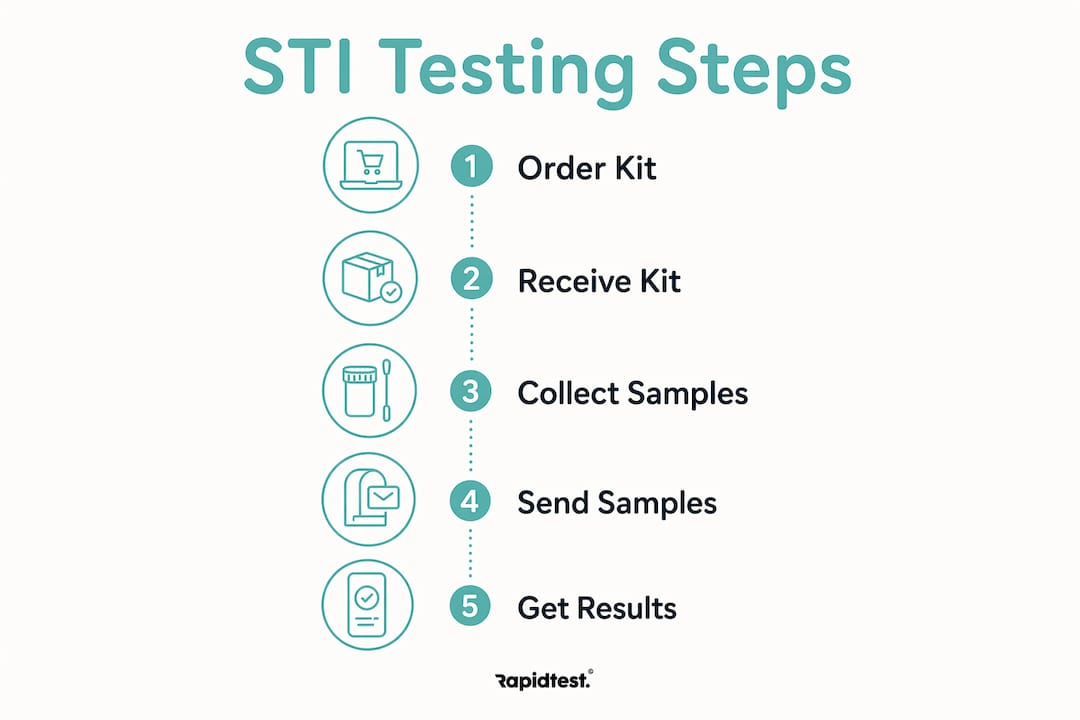
Getting your hands on a kit is simpler than most people expect. NHS-commissioned services like SH:24 let you order based on your sexual history, entering your postcode and details about recent partners to confirm eligibility and tailor exactly which tests your kit includes. Private providers like Rapidtest work similarly, with a short online consultation before checkout.
Here’s how the ordering process typically goes:
- Go to the provider’s website and select the STI test or bundle that fits your situation.
- Complete the health questionnaire, covering your recent sexual activity, symptoms (if any), and the types of sex you’ve had (vaginal, oral, anal). Be honest here. The kit you receive depends on what you tell them.
- Create an account or check out as a guest, depending on the provider. An account makes it easier to access your results later.
- Confirm your delivery address. Most providers offer discreet, plain packaging with no indication of the contents on the outside.
- Check your kit when it arrives. Make sure all the components are present and that nothing is past its use-by date before you begin.
Pro Tip: If you’ve had oral or anal sex recently, mention it during the questionnaire. Standard kits often cover genital samples only. Throat and rectal swabs require specific components, and you won’t get them unless you flag it.
How to correctly take your STI samples at home
Getting the sample right is the most important part of the whole process. A poorly collected sample can lead to an invalid result or, worse, a false negative. Take your time, read the instructions fully before you start, and follow them step by step.
- Wash your hands thoroughly before touching any of the kit components. This is the single easiest way to prevent contamination.
- Collect your urine sample (for chlamydia and gonorrhoea) first thing in the morning if possible, and don’t urinate for at least one hour beforehand. Fill the pot to the line indicated.
- Take your swab samples by following the specific instructions for each site. Genital swabs are usually self-inserted a short distance into the vagina or urethra. Throat and anal swabs require a firm but gentle rotation for the number of seconds specified.
- Perform the finger-prick blood test (for HIV and syphilis) by using the lancet on the side of your fingertip, not the pad. Squeeze gently from the base of the finger toward the tip to encourage blood flow, and fill the collection tube to the marked level.
- Seal each sample immediately in its individual container, label it if required, and place everything into the biohazard bag provided.
- Package and post your samples in the prepaid return envelope on the same day you collect them, or store them in a cool place (not the freezer) if posting the next morning.
What happens after you send your samples off?
Once your samples reach the lab, the process moves without any input from you. Here’s what goes on behind the scenes and what to expect.
Lab processing typically begins within one to two working days of the lab receiving your samples. Analysts test each sample using the method appropriate to the infection type: bacterial cultures or nucleic acid amplification tests (NAATs) for chlamydia and gonorrhoea, and serological assays for HIV and syphilis. Results are usually ready within 7–14 days of posting, and are delivered by text or secure portal.
- Results arrive by text or secure online portal. You won’t receive a letter through the post, and the message won’t identify the nature of the test to anyone else who might see your phone.
- Privacy protections are standard across both NHS and private services. Your data is handled under UK GDPR, and confidential result delivery is built into the process.
- If your sample is insufficient, the lab will notify you and send a replacement kit. This happens occasionally with blood samples if the volume collected was too low.
- If a result is unclear or borderline, you may be asked to retest. This is not the same as a positive result, so don’t panic if it happens.
Understanding your results and what to do next
Results come back as negative, positive, or inconclusive, usually within 7–14 days for lab-processed kits or about 15 minutes for rapid tests. Each one calls for a different response.
- Negative means no infection was detected in your sample at the time of testing. If you’ve had a recent exposure (within the past two to four weeks), there’s a chance the infection hasn’t yet reached detectable levels. Retesting after the window period is worth considering.
- Positive means the lab detected the infection. Contact a sexual health clinic or your GP as soon as possible. Most bacterial STIs like chlamydia and gonorrhoea are treated with a short course of antibiotics. HIV is managed with antiretroviral therapy, and syphilis with a course of penicillin injections.
- Inconclusive means the result couldn’t be confirmed either way. This usually requires a repeat test, and the provider will advise you on next steps.
If your result is positive, you’ll also need to think about partner notification. Sexual health clinics can help with this discreetly, either by contacting partners on your behalf or giving you the tools to do it yourself. Treatment is most effective when everyone involved gets tested and, if needed, treated at the same time.
Retesting after treatment is standard practice. Your clinician will usually recommend a follow-up test six to eight weeks later to confirm the infection has cleared.
Which infections do UK at-home STI kits test for?
Most at-home STI kits in the UK cover the four most common and clinically significant infections. Here’s what’s typically included and why each one requires a specific sample type.
- Chlamydia is detected via urine or a genital swab. It’s the most commonly diagnosed STI in the UK and is frequently asymptomatic, which is exactly why testing matters.
- Gonorrhoea also uses urine or a swab, and can additionally be tested from throat or rectal swabs if relevant. Antibiotic-resistant strains are increasing, making early detection particularly important.
- Syphilis requires a finger-prick blood sample. The test looks for antibodies, so there’s a window period of up to three months after exposure before a reliable result is possible.
- HIV is also detected via blood. Rapid self-tests for HIV can give a result at home in 15 minutes, though lab-based tests from mail-in kits are also available and equally reliable.
- Trichomoniasis is sometimes included in broader panels, detected via a vaginal swab. It’s less commonly tested for in standard NHS kits but may be included in private comprehensive panels.
Some infections, including herpes and HPV, are not routinely included in at-home kits. Herpes is typically diagnosed clinically during an active outbreak, and HPV screening in the UK is carried out through the cervical screening programme rather than STI testing.
When should you go to a clinic instead of testing at home?
At-home testing is genuinely useful for routine, asymptomatic screening. But there are situations where a clinic visit is the right call, and skipping it could mean missing something important.
Go to a sexual health clinic if you’re experiencing any of the following:
- Genital itching, burning, or soreness that doesn’t settle
- Unusual discharge (colour, smell, or volume outside your normal)
- Sores, ulcers, or lumps on or around the genitals
- Pain during sex or when urinating
- Swollen lymph nodes in the groin
These symptoms need a physical examination, not just a lab result. Symptomatic individuals should seek an in-person assessment because physical exams enable a comprehensive diagnosis and immediate treatment options that a postal kit simply cannot provide.
There are other scenarios worth flagging too:
- You’ve had a potential HIV exposure in the last 72 hours. You need PEP (post-exposure prophylaxis) urgently, not a test kit.
- You’re pregnant and concerned about an STI. Antenatal care includes specific screening, and your midwife or GP should be your first contact.
- You’ve already had a positive at-home result and need treatment. The kit has done its job. Now you need a clinician.
Tips for getting accurate results from your at-home STI test
The most common reason for an invalid result is not following the instructions. That’s it. Not following instructions precisely is the leading cause of false negatives and invalid samples in at-home STI testing, including errors from contamination and incorrect timing.
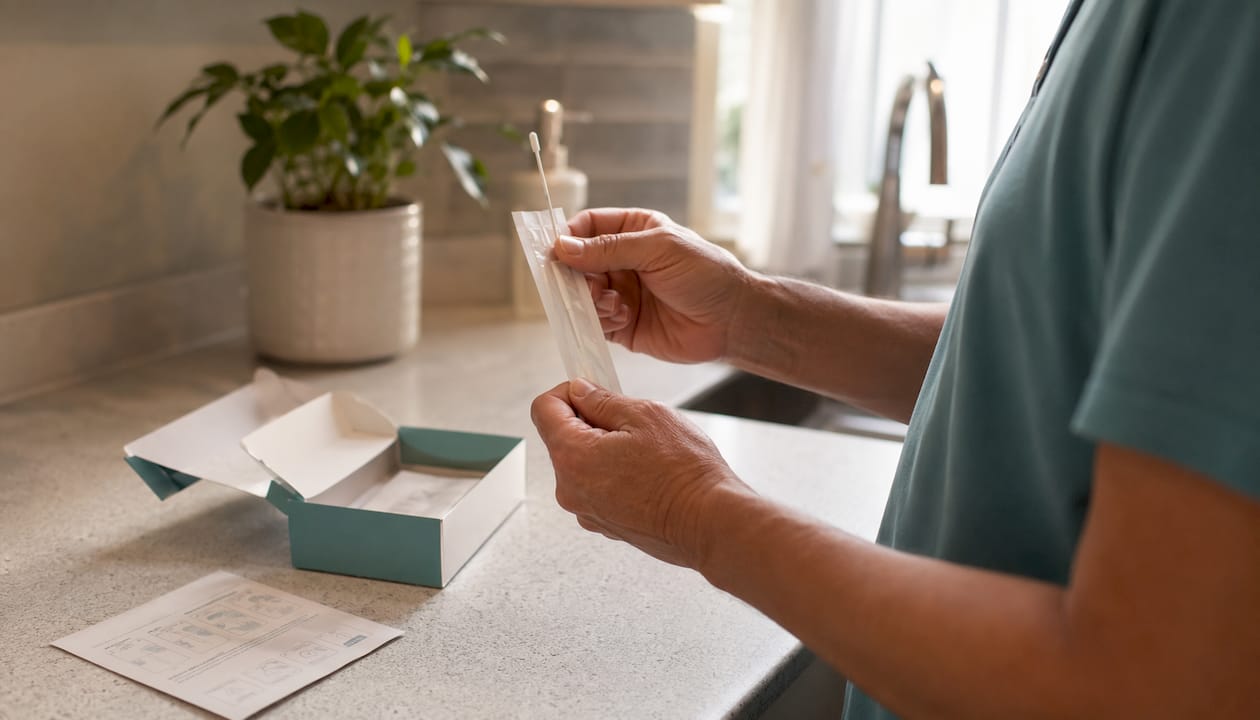
A few things make a real difference:
Pro Tip: Post your samples on the same day you collect them, ideally before the last collection time at your nearest post box. Samples left sitting for more than 24 hours, especially blood, can degrade and produce unreliable results.
Some other practical points worth keeping in mind:
- Don’t use a urine sample if you’ve urinated in the last hour. The concentration of bacteria or viral material will be too low.
- Store unused kits at room temperature, away from direct sunlight. Heat degrades the reagents.
- Check the expiry date on the kit before you start. An expired kit is not worth using.
- If you’re testing at home for the first time, take five minutes to lay out all the components before you begin so nothing gets missed or mixed up.
Rapidtest: results at home in 15 minutes
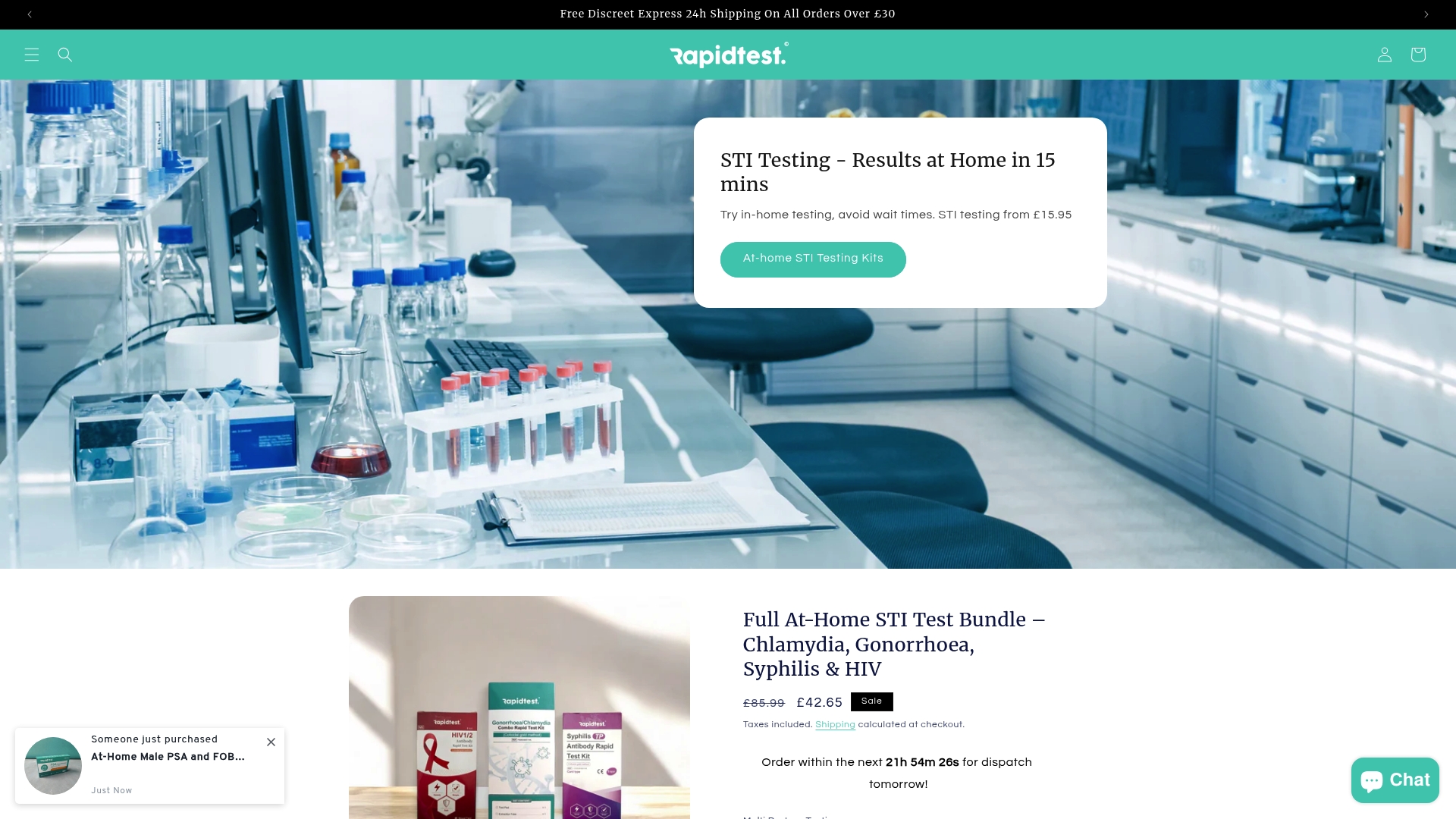
If you’d rather not wait a week for lab results, Rapidtest’s rapid STI kits give you a clear answer at home in 15 minutes, no appointment, no waiting room, and no awkward conversations. The HIV at-home test kit and syphilis at-home test kit both deliver 99.8% accuracy with a simple finger-prick blood sample. For a broader screen, the full STI rapid test range covers the infections that matter most, all from the comfort of home.
Key takeaways
At-home STI screening in the UK covers chlamydia, gonorrhoea, syphilis, and HIV via urine, swabs, or finger-prick blood, with lab results typically reported in 7–14 days or rapid results in about 15 minutes.
| Point | Details |
|---|---|
| Order a tailored kit | NHS and private services ask about your sexual history to send the right tests for your situation. |
| Sample collection is critical | Following instructions precisely is the most important factor in getting a valid, accurate result. |
| Results arrive confidentially | Results come by text or secure portal, protected under UK GDPR, with no identifying details visible. |
| Positive results need follow-up | A positive test requires a clinic or GP visit for treatment and partner notification. |
| Symptoms mean go to a clinic | Itching, discharge, or sores require a physical examination that no at-home kit can replace. |
FAQ
Can I do an STI check at home?
Yes. UK residents can access free NHS self-sampling kits or purchase private rapid tests. You collect urine, swabs, or a finger-prick blood sample at home and either post it to a lab or read the result yourself within 15 minutes.
How do at-home STI tests work?
You collect a sample using the components in the kit (urine, swab, or blood), then either mail it to a lab for analysis or use a rapid test device that reads the result at home. Lab-based results are typically reported within 7–14 days; rapid tests take about 15 minutes.
How can I test myself for an STI at home?
Order a kit from an NHS service or a private provider like Rapidtest, complete the health questionnaire, collect your samples following the included instructions, and return them by post or read the rapid result yourself. Accuracy depends on following the instructions correctly.
What is the process of STI screening?
STI screening involves ordering a kit suited to your sexual history, collecting the appropriate samples (urine for chlamydia and gonorrhoea, blood for HIV and syphilis), sending them to a lab or using a rapid test, and receiving your results confidentially. A positive result should always be followed up with a healthcare provider for treatment.