


How STI testing works from start to finish
Getting tested for STIs feels far more confusing than it needs to be. Most people either put it off because they’re not sure what to expect, or they fumble through the process not knowing if they’ve done it right. Understanding how STI testing works from start to finish takes away that uncertainty completely. This guide walks you through every stage: choosing where to test, collecting your sample, sending it off or reading it at home, and understanding your result. Whether you’re comparing NHS clinics, postal kits, or at-home rapid tests, you’ll know exactly what you’re walking into.
Table of Contents
- Key takeaways
- Your STI testing options explained
- The four types of STI sample collection
- The STI testing process step by step
- What makes a home test kit accurate?
- Choosing the right home STI test kit
- Jack’s take: what first-time testers get wrong
- Get results in 15 minutes with Rapidtest
- FAQ
Key takeaways
| Point | Details |
|---|---|
| Multiple testing routes exist | NHS clinics, postal kits, private clinics, and at-home rapid tests all serve different needs and budgets. |
| Sample type determines accuracy | Using the correct method (urine, blood, swab) at the right time is critical for a valid result. |
| Window periods matter | Testing too early after exposure can produce false negatives for most STIs. |
| Lab accreditation counts | UKAS or CPA-accredited labs process samples for both NHS and reputable private providers. |
| Rapid tests give results in 15 minutes | At-home rapid test kits bypass the lab entirely and give a clear result almost immediately. |
Your STI testing options explained
Before you can understand the STI testing procedure, you need to know which route you’re taking. There is no single “correct” option. Each has its place depending on your situation.
NHS sexual health clinics are free and thorough, but they come with waiting times. NHS clinics typically take 7 to 14 days to return results, which can feel like a long time when you’re anxious.
NHS postal kits are a popular middle ground. They’re still free, and results tend to come back in around 2 to 5 working days. Availability varies by area and demand can outstrip supply.
Private clinics are faster (usually 1 to 3 working days) and often cover a wider panel of infections, but costs can stack up quickly. A full sexual health screen at a private clinic can run to £150 or more.
At-home test kits, like those from Rapidtest, offer real convenience. You order, collect your sample at home, and get your result either in 15 minutes (for rapid tests) or within a few days if the sample is sent to a lab. Home test kits use the same NAAT techniques as clinic-based testing, so accuracy is comparable when samples are collected properly.
| Route | Typical cost | Result turnaround |
|---|---|---|
| NHS clinic | Free | 7 to 14 days |
| NHS postal kit | Free | 2 to 5 working days |
| Private clinic | £50 to £200+ | 1 to 3 working days |
| At-home rapid kit | £10 to £40 | 15 minutes |
| At-home lab-processed kit | £20 to £60 | 1 to 5 working days |
Worth noting for those in Europe: in 13 of 29 EU/EEA countries, out-of-pocket costs create real barriers to accessing sexual health testing. In 7 countries, minors also require parental consent to be tested. At-home test kits make a genuine difference here by removing both the cost and the bureaucratic friction.
Pro Tip: If you’re in the UK and want to start with the free NHS postal service, check your local sexual health charity or NHS website first. Stock can be limited, and home test kits from a private provider can often fill the gap without breaking the bank.
The four types of STI sample collection
Understanding how STI tests are done starts with knowing what kind of sample is needed. The infection you’re testing for determines the sample method, and getting this right has a big impact on your result.
Finger-prick blood tests
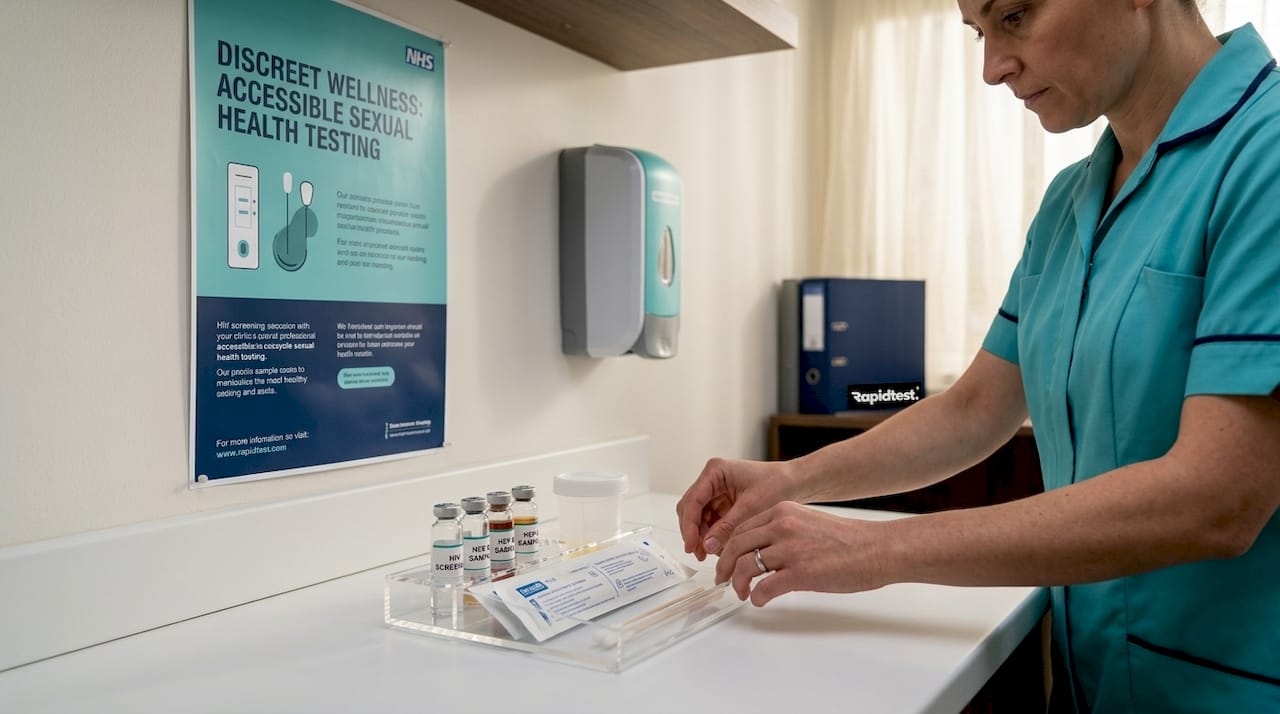
Used for HIV, syphilis, hepatitis B, and hepatitis C. You use a small lancet to prick the side of your fingertip and collect several drops of blood into a collection device or card. The most common mistake is squeezing the finger too hard. This introduces tissue fluid into the sample, which can affect the concentration and validity of results. Warm your hands beforehand to improve blood flow.
Urine samples
Used primarily for chlamydia and gonorrhoea. The key rule here is “first catch,” meaning the very first urine of the stream, not midstream. You also need to wait at least 1 to 2 hours after your last urination before providing a first-catch sample. This allows the concentration of bacteria or DNA in the urethra to build up enough for the test to detect it reliably.
Swab tests
Swabs are used for chlamydia, gonorrhoea, herpes, and a few other infections depending on the exposure site. This is where a lot of people miss something important. Site-specific swabs improve detection significantly, especially for oral or anal exposures that a urine sample alone will not pick up. A vaginal swab, a throat swab, and a rectal swab are technically three different samples, and some infections may only show up at one of those sites.
Some STIs require multi-site samples for accurate diagnosis, which many standard home kits do not include. If you’ve had oral or anal exposure specifically, check that your kit covers those sites or ask your provider.
Saliva and oral fluid tests
Certain rapid HIV tests use an oral fluid sample collected by swabbing the gum line. These are not as common in comprehensive panels but are used in specific rapid-detection contexts. They’re convenient and non-invasive, though they do have slightly different sensitivity profiles compared to blood-based tests.
Pro Tip: Read the sample collection instructions fully before you start, not during. Many errors happen because people realise halfway through that they’ve broken the sequence. A quick read-through beforehand takes two minutes and can save you an inaccurate result.
The STI testing process step by step
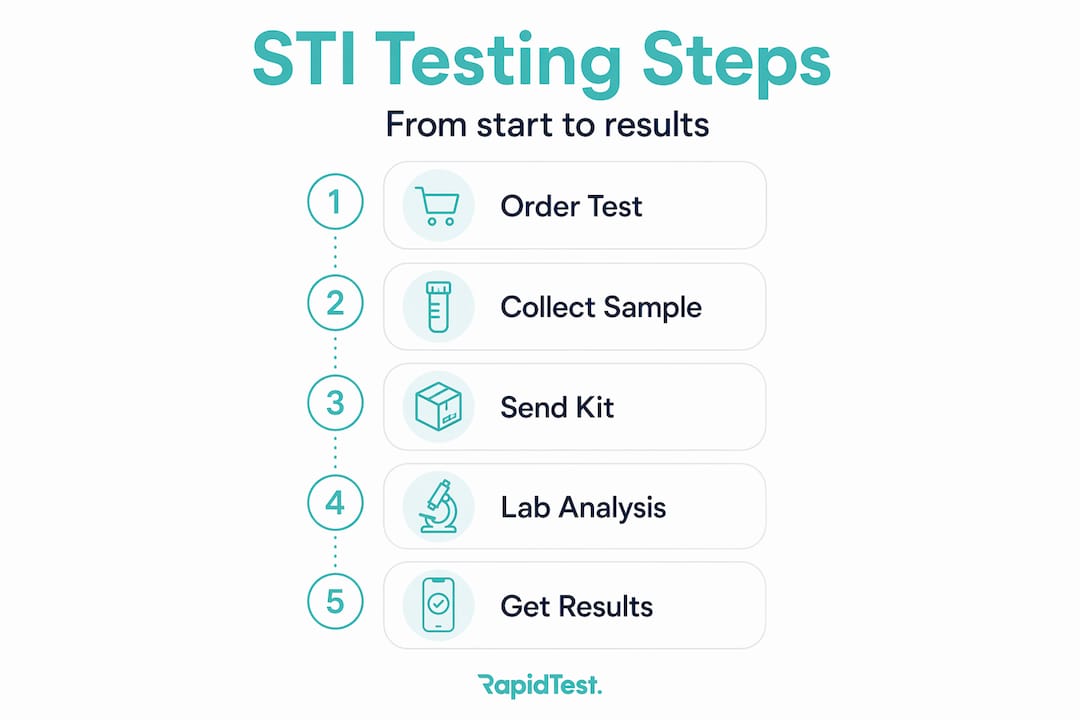
Now let’s walk through the full STI testing steps from beginning to end.
- Order your test or book your appointment. For home kits, this is a simple online order. For clinic visits, you’ll book a time slot and provide basic contact details. You will not typically need a GP referral for sexual health testing.
- Read the instructions before touching anything. Every test kit comes with specific preparation guidance. Some require fasting, most require you to avoid urinating for 1 to 2 hours before giving a urine sample.
- Collect your sample. Follow the instructions precisely. Use the collection device provided, collect only what is specified (right volume, right site), and close the container securely.
- Package and post (if lab-processed). Most postal kits come with a pre-paid return envelope and a biohazard bag for the sample tube. Post it on the same day as collection wherever possible.
- Wait for your results. Turnaround depends on the route. Rapid home tests take 15 minutes. Lab-processed home kits take 1 to 5 working days. Results are returned via text, email, or a secure online portal depending on the provider.
- Interpret your result. A negative result means no infection was detected within the test’s window period. A positive means the test detected evidence of infection and you should contact a sexual health clinic or GP. An inconclusive result typically means the sample was insufficient and you’ll need to retest.
| Result type | What it means | Next step |
|---|---|---|
| Negative | No infection detected | Retest if within window period |
| Positive | Infection detected | Contact a clinic for treatment |
| Inconclusive | Sample may have been insufficient | Retest with a fresh sample |
The window period is one of the most misunderstood parts of the whole process. Testing too early will not give you a reliable answer. The approximate window periods for common STIs are: chlamydia and gonorrhoea (around 2 weeks), HIV (4 weeks for 4th generation tests), and syphilis (3 to 4 weeks). If you test within these windows, a negative result may not be definitive. Most positive results lead to straightforward treatment options through your clinic or GP, so do not sit on a positive. Act on it.
Pro Tip: If you think you may have been exposed to HIV in the last 72 hours, contact a sexual health clinic immediately about PEP (post-exposure prophylaxis). An STI test is not the right first response in that specific window.
What makes a home test kit accurate?
Not all home kits are created equal. Here’s what to look for when evaluating quality.
- Lab accreditation: Any kit that processes samples in a lab should use a UKAS or CPA-accredited laboratory. This is the same standard used by NHS labs. Accreditation is not optional if you want reliable results.
- Test technology: For chlamydia and gonorrhoea, look for NAAT (nucleic acid amplification testing). For HIV and syphilis, antigen/antibody combination tests are the current standard. Older antibody-only tests have longer window periods and may miss very recent infections.
- Panel coverage: A bundle that screens for several infections at once is usually better value than buying individual tests separately. Look for panels that include chlamydia, gonorrhoea, HIV, syphilis, and hepatitis B at minimum.
- Sample collection ease: If the collection process is overly complicated, it increases the chance of user error. A good kit has clear, simple instructions with everything you need included.
- Rapid vs lab-processed: Rapid tests give results in 15 minutes without a lab. Lab-processed kits take longer but can cover a broader panel. Both have their place depending on what you need right now.
- Clinical support on positives: Reputable providers offer follow-up support if a result comes back positive. This might be a nurse callback, a results helpline, or signposting to treatment pathways.
You can find a clear breakdown of different types of STI tests and options to help you work out which panel suits your situation.
Choosing the right home STI test kit
Once you understand what makes a test reliable, the next step is matching that to your actual situation. Here are the most useful questions to work through.
Symptoms or screening? If you have symptoms (discharge, pain, unusual sores), you need a test sooner rather than later and should consider calling a clinic too. If this is routine screening, a home kit is very well suited to the job.
What’s your risk profile? Think about your recent sexual partners, whether protection was used, and any specific exposures. If you’ve had anal or oral sex, make sure your kit includes swabs for those sites or opt for a broader panel. A screening panel guide can help you understand what different panels actually cover.
How quickly do you need the result? If you need an answer today, a rapid test is the right call. If you can wait a few days and want comprehensive coverage, a lab-processed kit gives you more information in one go.
Is the provider trustworthy? Check for lab accreditation, read user reviews, and verify that the kit has CE marking or equivalent regulatory approval in your country. If a provider won’t state their accreditation clearly, that’s worth noting.
Pro Tip: Check how results are delivered before you order. If a positive result is delivered via a confusing online portal with no follow-up support, that’s a problem. The best providers make interpreting your result straightforward, with clear next steps included.
Jack’s take: what first-time testers get wrong
I’ve seen people delay testing for months because they built it up into something far more daunting than it is. In reality, collecting a urine sample or a finger-prick blood sample takes about five minutes at the kitchen table. The complexity is mostly in the imagination.
What I’ve noticed is that the biggest practical mistake isn’t anxiety. It’s ignoring the window period. Someone tests negative two days after potential exposure, breathes a sigh of relief, and moves on. That’s not how it works. I’d always say: test at the right time, not just at the first possible moment.
I’m also genuinely convinced that at-home testing has changed things for the better. Not just for convenience, but because home testing kits reduce stigma and increase uptake especially among younger people who might never walk into a clinic. There’s real value in being able to test privately, on your own terms, without taking half a day off work or sitting in a waiting room.
If you want a deeper look at interpreting what comes back, the guide to reading STI results is worth reading before you even open your kit. Knowing what to do with a result is just as important as getting one.
— Jack
Get results in 15 minutes with Rapidtest
If you want to skip the queue, skip the clinic, and skip the days of waiting, Rapidtest has you covered. Rapidtest’s at-home rapid STI test kits give you a clear, accurate result in just 15 minutes. No lab, no appointment, no awkward conversations at a reception desk.
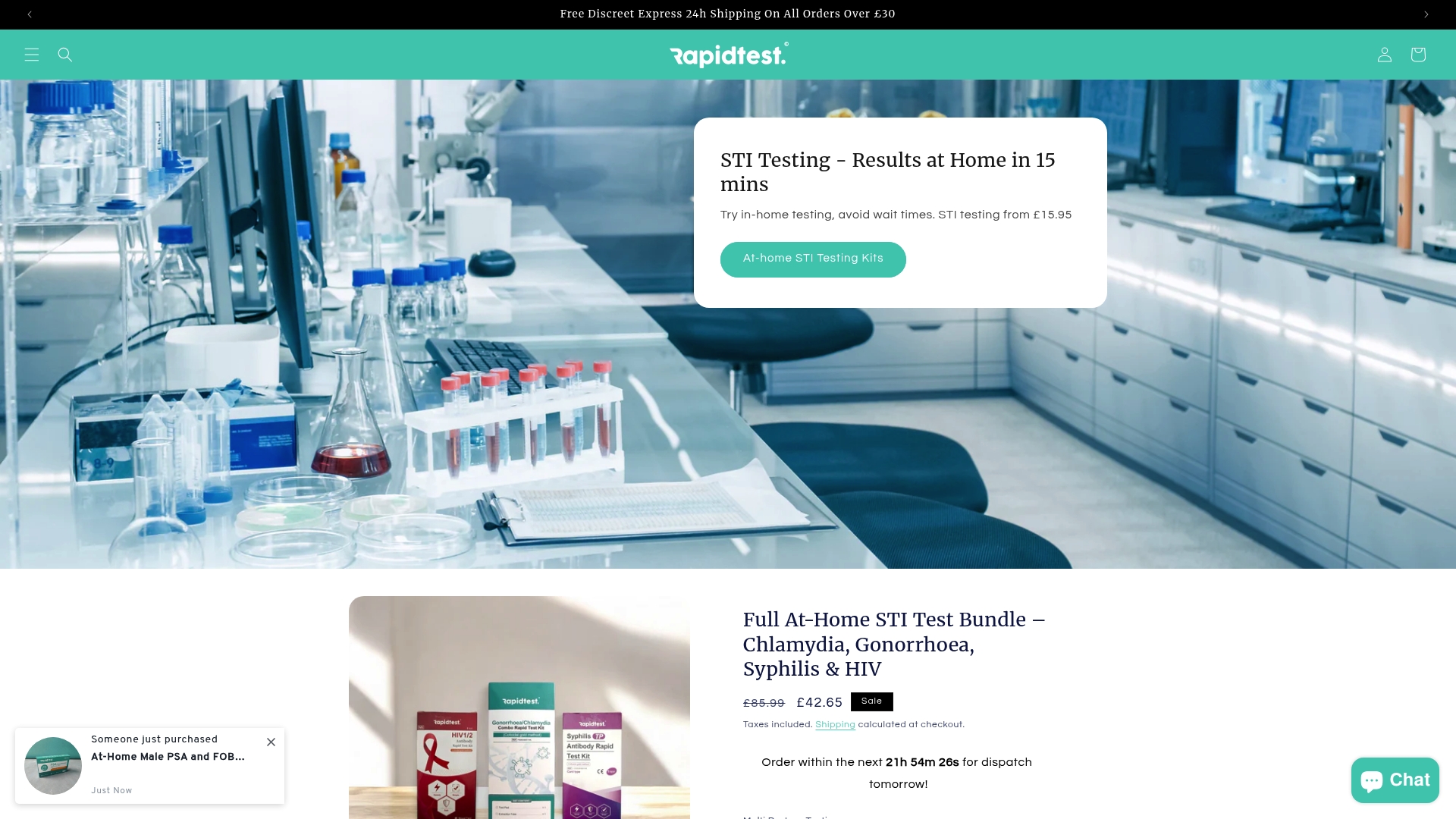
Every kit comes with clear instructions, everything you need to collect your sample, and results you can trust. Rapidtest covers the key STIs including HIV, chlamydia, gonorrhoea, syphilis, and more, with discreet packaging delivered straight to your door. For anyone who wants to take their sexual health seriously without making it into a production, this is the most practical option on the market. Browse the full range of home STI testing kits and find the panel that fits your situation.
FAQ
How long does STI testing take from start to finish?
It depends on the method. At-home rapid tests give results in 15 minutes. Lab-processed home kits take 1 to 5 working days. NHS clinic results typically take 7 to 14 days.
What samples are used in STI tests?
The most common sample types are urine, finger-prick blood, swabs (vaginal, throat, or rectal), and occasionally oral fluid. The infection being tested for determines which sample is needed.
Can home STI test kits be as accurate as clinic tests?
Yes, when samples are collected correctly. Reputable home kits use NAAT technology and UKAS-accredited labs, the same standard as NHS testing.
What does the window period mean in STI testing?
The window period is the time between infection and when a test can reliably detect it. Testing before the window closes can produce a false negative even if an infection is present.
What should I do if my result is positive?
Contact a sexual health clinic or your GP as soon as possible. Most STIs are straightforward to treat when caught early, and your provider can also advise on partner notification.