


Comprehensive sexual health screening: what's included?
Most people assume that getting tested for one STI means they’ve covered their bases. They haven’t. A single chlamydia test tells you about chlamydia. It tells you nothing about gonorrhoea, syphilis, HIV, or the handful of other infections that can be living in your body right now without a single symptom. That’s where comprehensive sexual health screening comes in. It’s the clinical term for a tailored, multi-infection sexual health assessment that checks for several conditions at once. This article breaks down which infections matter most, what a full screen actually includes, and how to choose the right testing approach for you.
Table of Contents
- Key takeaways
- Common STIs in the UK and Europe
- Single tests vs. full screening bundles
- What a 7-in-1 screening bundle actually checks
- Testing options: clinic, self-test, or at home
- Choosing the right screen for your situation
- My honest take on comprehensive screening
- Test from home with Rapidtest
- FAQ
Key takeaways
| Point | Details |
|---|---|
| Single tests are not enough | Testing for one STI leaves you blind to several others that are equally common and often symptomless. |
| Bundled screening saves time and worry | A 7-in-1 test panel checks for seven infections simultaneously, giving you a much clearer picture of your sexual health. |
| Most STIs show no symptoms | Many infections cause no symptoms yet can cause serious long-term harm if left untreated. |
| At-home testing is a real option | Self-collection kits allow you to test for multiple infections privately, without a clinic visit or waiting room. |
| Match your test to your risk | Frequency and panel choice should reflect your sexual history, partners, and practices, not just convenience. |
Common STIs in the UK and Europe
Before you decide which tests you need, it helps to know what you’re actually up against. The UK and much of Europe share similar patterns when it comes to sexually transmitted infections, and a few of them are far more common than most people expect.
Here are the infections most relevant to adults in the UK and Europe:
- Chlamydia is the most frequently diagnosed STI in the UK. It is often entirely symptomless, which is precisely why it spreads so easily and goes untreated for so long.
- Gonorrhoea has been rising steadily across Europe. Rates of antibiotic-resistant strains are increasing, making early detection more critical than ever.
- Syphilis saw a significant resurgence across England, with cases reaching a 50-year high in recent years. Left untreated, it can cause serious complications affecting the heart, brain, and nervous system.
- HIV remains a major public health priority. Universal screening for all adults is actively supported by clinical bodies, with more frequent testing recommended for those at higher risk.
- Herpes (HSV-1 and HSV-2) affects a large proportion of the adult population. Many carriers never know they have it.
- Trichomoniasis is frequently overlooked but genuinely common, particularly in women, and is rarely screened for unless specifically requested.
- Hepatitis B and C can be sexually transmitted and can cause chronic liver disease if undetected.
- Bacterial vaginosis is not technically an STI but is closely linked to sexual activity and can increase your vulnerability to other infections.
The single most important thing to understand about all of these? Most have no symptoms but can cause serious health problems if left untreated. That makes waiting for something to feel wrong a genuinely risky strategy.
Single tests vs. full screening bundles
This is where a lot of people get confused, and it’s worth being clear about the difference.
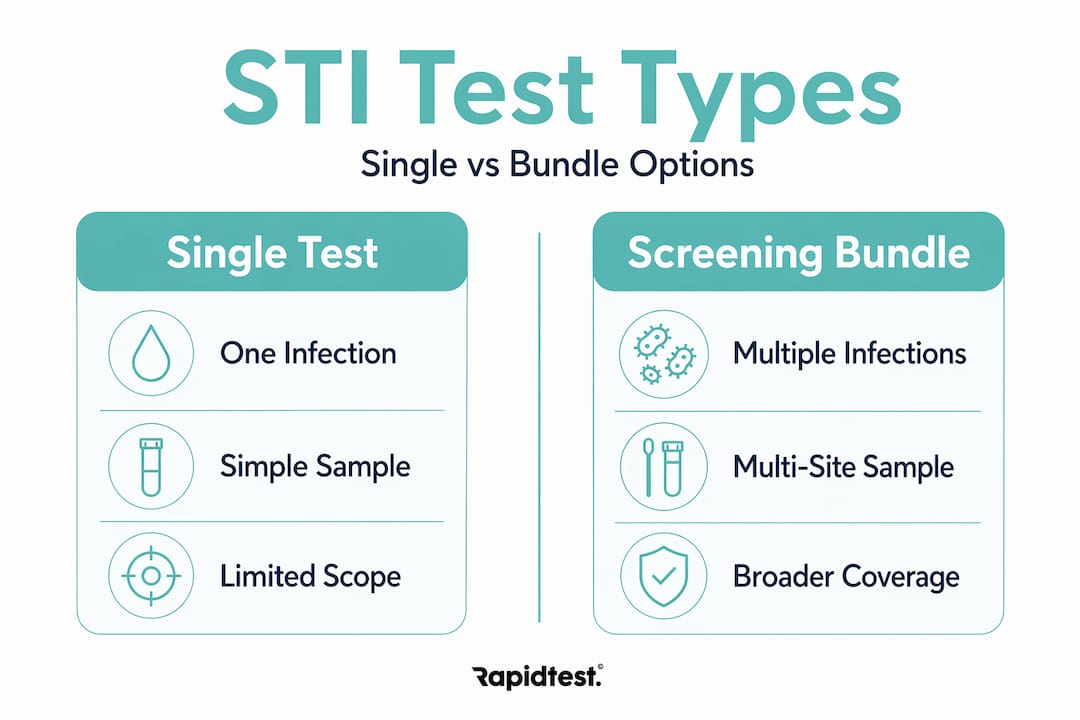
An individual STI test checks for one specific infection. You swab, you wee in a pot, you give blood. You find out if you have that infection. Nothing else. If you want to check for three separate infections, you need three separate tests, each potentially requiring a different sample type, a different turnaround time, and sometimes a different appointment.
A comprehensive screening bundle, by contrast, runs multiple tests from a single sample session. The table below shows how the two approaches compare.
| Factor | Single STI test | Comprehensive bundle |
|---|---|---|
| Infections covered | One | Seven or more |
| Sample types needed | Usually one | May combine urine, swab, blood |
| Cost efficiency | Higher per infection | Lower overall cost |
| Detection of hidden infections | Limited | Much broader |
| Convenience | Requires repeat tests | One process, multiple results |
| Suitable for asymptomatic screening | Only for that infection | Yes, across multiple infections |
The right screening is not about testing for everything possible. It is about matching the panel to your risk profile and the sites of potential exposure. That said, for most sexually active adults, a bundle that covers the most prevalent infections will give far better peace of mind than a single test ever can.
Pro Tip: If you’ve recently had a new sexual partner or multiple partners, a bundled panel is almost always the more appropriate choice. It removes the guesswork of trying to predict which infection you might need to test for.
What a 7-in-1 screening bundle actually checks
Rapidtest’s 7-in-1 bundle is designed to cover the infections most likely to affect sexually active adults in the UK and Europe. Here’s what it includes and why each one matters.
- Chlamydia: The most common bacterial STI. NAAT testing is the gold standard for detection and can pick up infections even from self-collected samples.
- Gonorrhoea: Often co-exists with chlamydia and is increasingly resistant to treatment. Early detection is key.
- Syphilis: Making a comeback across Europe. Blood testing is required and is included in the bundle.
- HIV: Universal screening is supported for all adults. The bundle includes HIV antibody testing, with more frequent screening recommended for higher-risk populations.
- Trichomoniasis: Commonly missed in standard clinic screens. Including it removes a significant blind spot.
- Hepatitis B: Sexually transmissible and vaccine-preventable. Testing identifies active or past infection.
- Hepatitis C: Less commonly transmitted sexually but important to screen for, particularly in certain higher-risk groups.
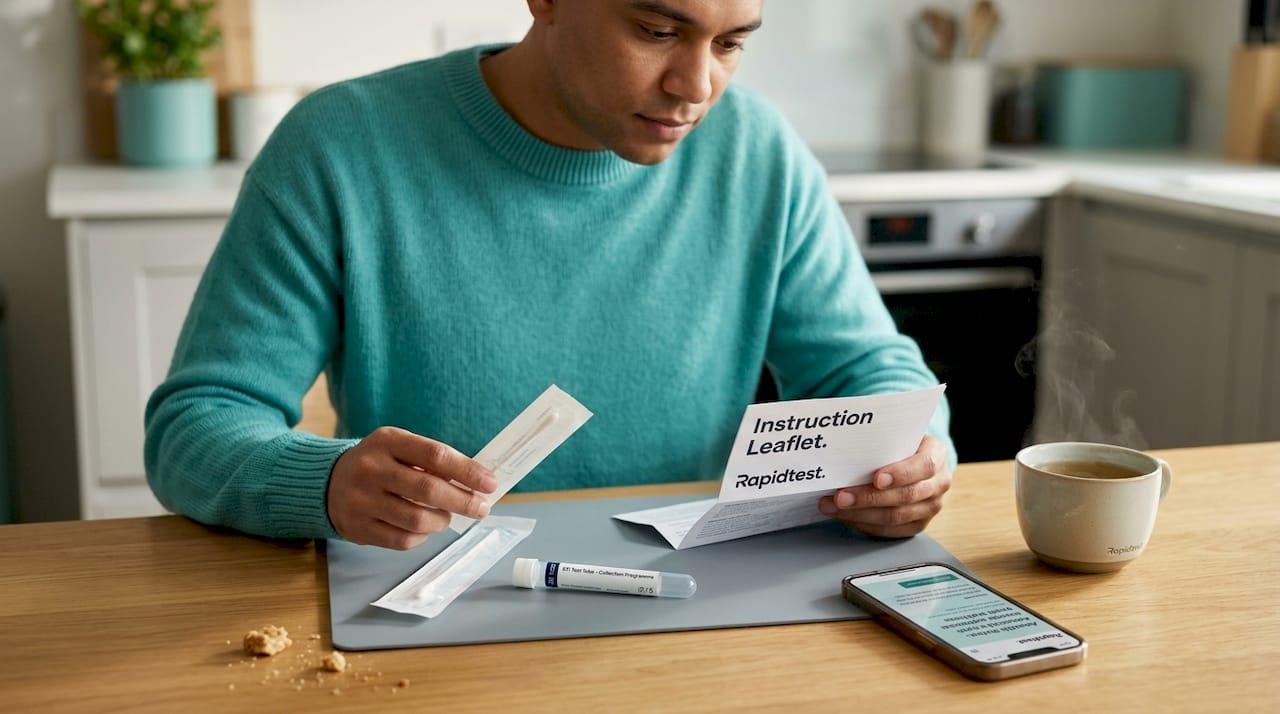
One thing worth knowing: multi-site sampling matters. If you’ve had oral or anal sex, infections like gonorrhoea can be present in the throat or rectum without showing up in a urine test. A genuinely thorough sexual health assessment considers which body sites may have been exposed.
Pro Tip: Don’t assume a urine sample covers everything. If oral or anal sex is part of your sexual activity, ask specifically about throat and rectal swabs. Many infections localise to these sites and are easily missed otherwise.
One more thing to flag: HPV. It’s one of the most common sexually transmitted infections in the world, and it’s not included in most bundled panels, including Rapidtest’s 7-in-1. HPV testing generally requires a cervical smear or a specialist referral. If you haven’t had an HPV vaccination or recent smear test, that’s worth following up separately. You can find a useful STI screening overview on the Rapidtest blog that covers what to test for based on your risk profile.
Testing options: clinic, self-test, or at home
Knowing you need a full screen is only half the decision. You also need to choose how you’ll actually do it. There are three main routes.
-
Clinic-based testing. You visit a sexual health clinic or GP, discuss your history with a clinician, and provide samples there. Clinicians will guide which tests are appropriate based on your sexual practices. Lab results typically take a few days to a week, and some clinics require a follow-up appointment for results.
-
FDA-cleared self-testing kits. These exist for a limited number of infections, primarily HIV and syphilis. They are useful for quick answers but do not cover the breadth of a full sexual health assessment. They suit people who need a fast result on a specific infection rather than a broad screen.
-
At-home sample collection with postal return. This is the most flexible option for a full sexual health check. You collect your own samples at home (urine, swabs, or blood spot depending on the kit), post them to a lab, and receive your results digitally. Patients can self-collect samples for many of the key infections, and this method offers genuine privacy without any of the awkwardness of a face-to-face appointment.
Rapidtest also offers rapid at-home kits that give results in 15 minutes, no post, no waiting, no clinic. That’s about as low-friction as sexual health testing gets. The step-by-step guide on the Rapidtest site walks you through the process clearly if you’re unsure where to start.
Choosing the right screen for your situation
Not everyone needs the same panel at the same frequency. Here’s how to think about what’s right for you.
- New or multiple partners. A full bundle test after any new partner is a reasonable baseline habit, not a sign of anything being wrong.
- Your sexual practices. If anal or oral sex is part of your activity, testing from the right anatomical sites is important. Urine alone won’t catch everything.
- Frequency. For most sexually active adults, once a year is a reasonable minimum. If you have multiple partners or don’t always use barrier methods, every three to six months is more appropriate.
- Age and life stage. Adults over 30 sometimes assume they’re lower risk, but that’s not necessarily true. The screening tips for adults over 30 on the Rapidtest blog are genuinely worth reading if that’s you.
- Cost and access. Costs vary and not everything is covered without cost. At-home bundles can often be more cost-effective than multiple individual clinic tests, especially for those without full NHS access to sexual health services.
The goal is to be proactive rather than reactive. Regular preventive sexual health exams catch problems before they become serious, and they make follow-up and partner notification far easier. Shared decision-making with a healthcare provider improves how you engage with results, so don’t skip that conversation if you have access to one.
My honest take on comprehensive screening
I’ve spoken to a lot of people who think they’re on top of their sexual health because they got tested once, two years ago. That single test result has become a kind of comfort blanket. And I get it. Testing can feel loaded, like asking a question you’re not sure you want the answer to.
But here’s what I’ve found to be true: the anxiety of not knowing is almost always worse than the result itself. In my experience, the people who feel most in control of their sexual health are the ones who test regularly and treat it as routine, the same way they would a dental check or an eye test.
What I’d push back on is the idea that a “proper” screen has to happen at a clinic. At-home bundled testing has come a long way. The accuracy is there. The convenience is real. And for most people, removing the barrier of making an appointment is the difference between testing and not testing.
If you’ve been putting it off, the 7-in-1 bundle is a good place to start. It covers what matters most. And once you’ve done it the first time, it stops feeling like a big deal.
— Jack
Test from home with Rapidtest
If this article has made you think it might be time to check in on your sexual health, Rapidtest makes it genuinely easy.
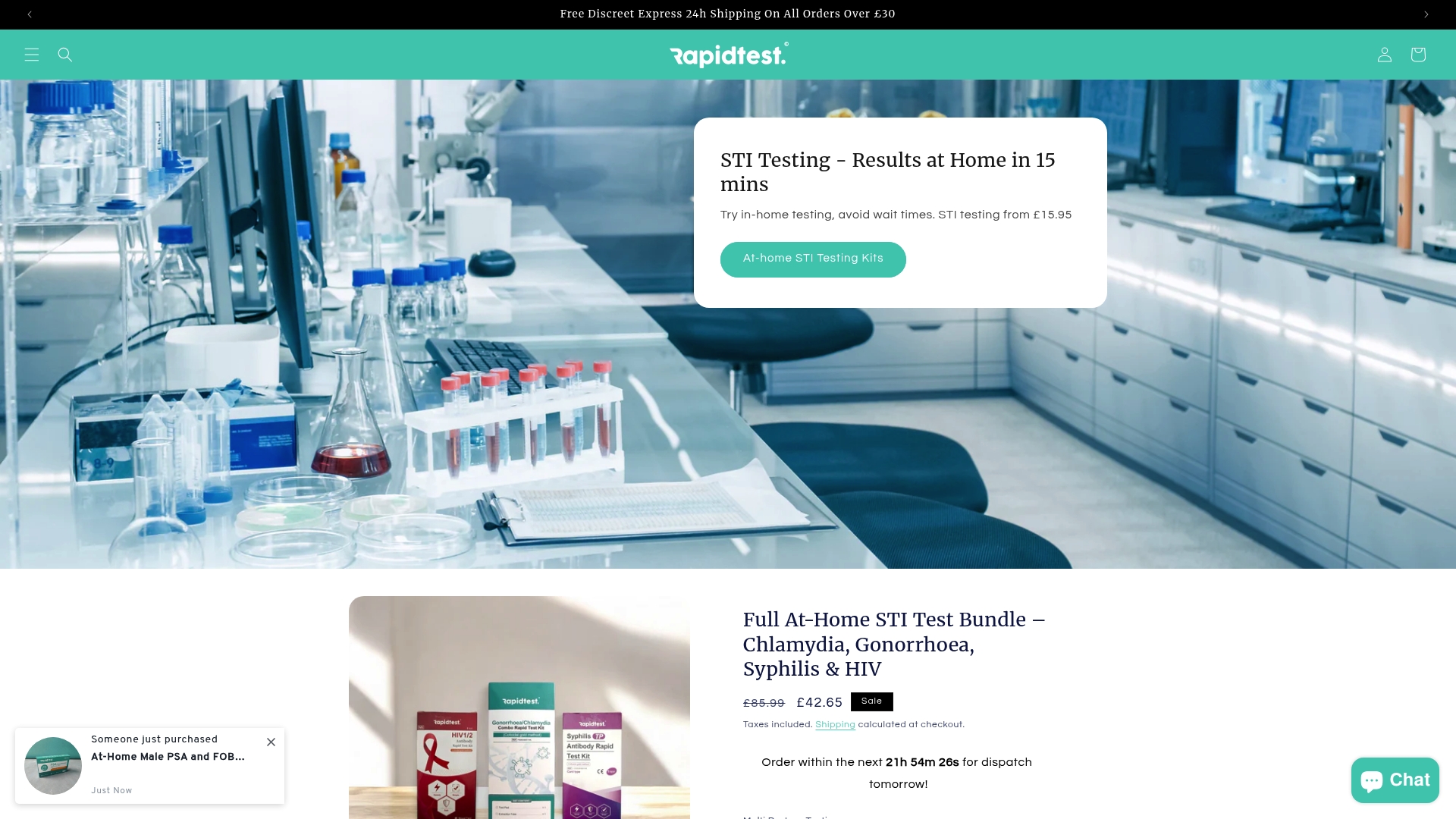
Rapidtest’s at-home STI testing bundles cover seven infections in one kit, with results ready in 15 minutes at home. No queues, no GP appointment, no awkward waiting room conversations. The kits are accurate, affordable, and discreet. Whether you want a quick one-off screen or you’re looking to build regular testing into your routine, there’s a kit to match. You can also browse Rapidtest’s rapid STI test kits if you need a fast result on a specific infection. Your sexual health is worth taking seriously. Rapidtest makes sure doing so doesn’t have to be difficult.
FAQ
What does a comprehensive sexual health screening include?
A full sexual health screen typically tests for several infections at once, including chlamydia, gonorrhoea, syphilis, HIV, trichomoniasis, and hepatitis B and C. Samples may include urine, swabs, and blood depending on the panel.
How often should I get a full sexual health check?
Most adults should screen at least once a year. If you have multiple partners or do not consistently use barrier methods, screening every three to six months is more appropriate.
Can I do a comprehensive STI screen at home?
Yes. At-home sample collection kits allow you to test for multiple infections from a single session at home, covering chlamydia, gonorrhoea, HIV, syphilis, and more, with results returned digitally.
Is HPV included in most screening bundles?
No. HPV is not typically included in multi-infection bundles and generally requires a cervical smear or separate specialist test. It’s worth addressing this separately if you haven’t had a recent smear or HPV vaccination.
How accurate are at-home STI tests?
NAAT testing, the gold standard for chlamydia and gonorrhoea, can be performed on self-collected samples with good accuracy, though correct sample collection technique matters for reliable results.