


Sore throat after oral sex: causes and treatment
A sore throat after oral sex is a symptom with several distinct causes, ranging from common viral infections to bacterial pharyngitis and oral sexually transmitted infections (STIs) such as gonorrhea and chlamydia. Understanding which cause is responsible matters because the treatments differ completely. The American Sexual Health Association (A.S.H.A.) confirms that oral STIs are transmissible through fellatio and other oral contact, yet most produce no symptoms at all. That makes a sore throat after oral sex easy to dismiss or misattribute. Getting the right answer starts with knowing what you are actually dealing with.
What common infections cause a sore throat after oral sex?
Throat pain after oral sex sits on a spectrum of causes, and most of them are not STIs. About 90% of sore throats are caused by viruses, including rhinovirus, influenza, and Epstein-Barr. That means the timing of your sore throat and your recent sexual activity may simply be coincidence.
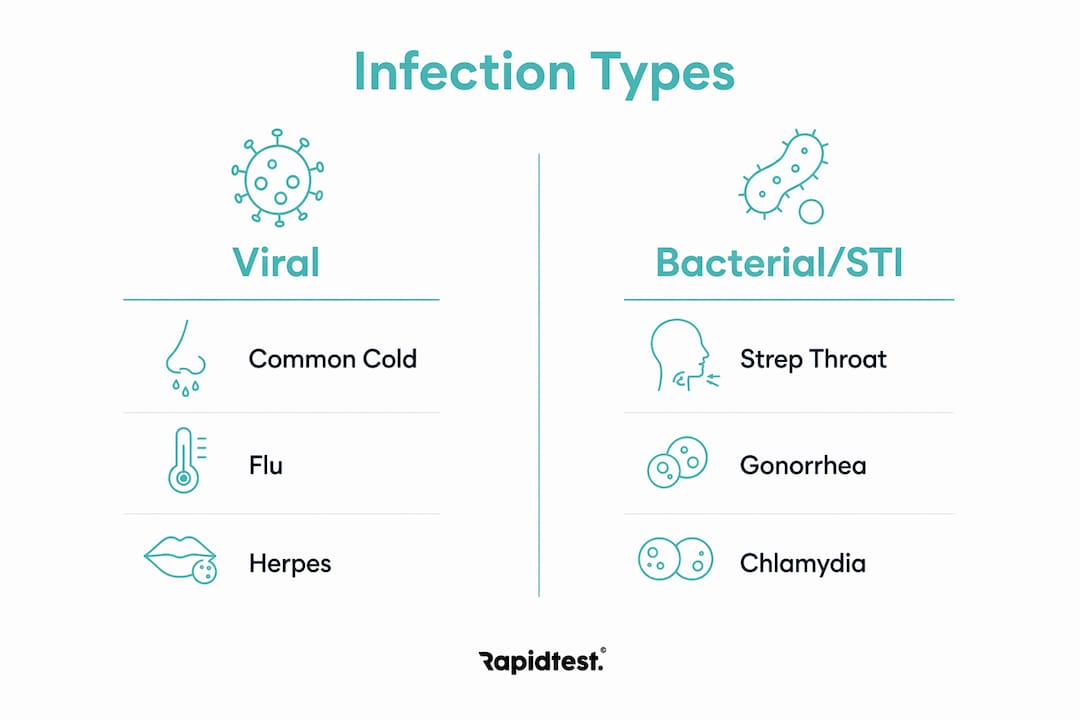
That said, bacterial and STI-related causes do occur and carry real consequences if left untreated. Here is a breakdown of the main culprits:
- Viral pharyngitis. The most common cause of any sore throat. Symptoms include a scratchy throat, mild fever, and runny nose. Antibiotics do not help and are not appropriate here.
- Bacterial pharyngitis (strep throat). Caused by group A Streptococcus. Symptoms include sudden severe throat pain, fever above 38°C, swollen tonsils, and no cough. Strep throat requires antibiotics to prevent complications such as rheumatic fever.
- Gonorrhea of the throat (pharyngeal gonorrhea). Transmitted through oral sex, particularly fellatio. Throat gonorrhea is symptomless in over 90% of cases, but when symptoms do appear, they closely resemble strep throat.
- Chlamydia of the throat. Less common than genital chlamydia but possible after oral sex. Like gonorrhea, it is usually asymptomatic and easy to miss without targeted testing.
- Human papillomavirus (HPV). Oral HPV can cause throat irritation and, in rare cases, oropharyngeal cancer over time. Most oral HPV infections clear on their own.
- Herpes simplex virus (HSV). HSV-1 and HSV-2 can both infect the throat after oral sex. Symptoms may include ulcers, fever, and swollen lymph nodes.
The key takeaway here is that symptoms alone cannot tell you which of these you have. Viral, bacterial, and STI-related sore throats can look almost identical from the outside.
How can you tell if your sore throat is an STI or something else?
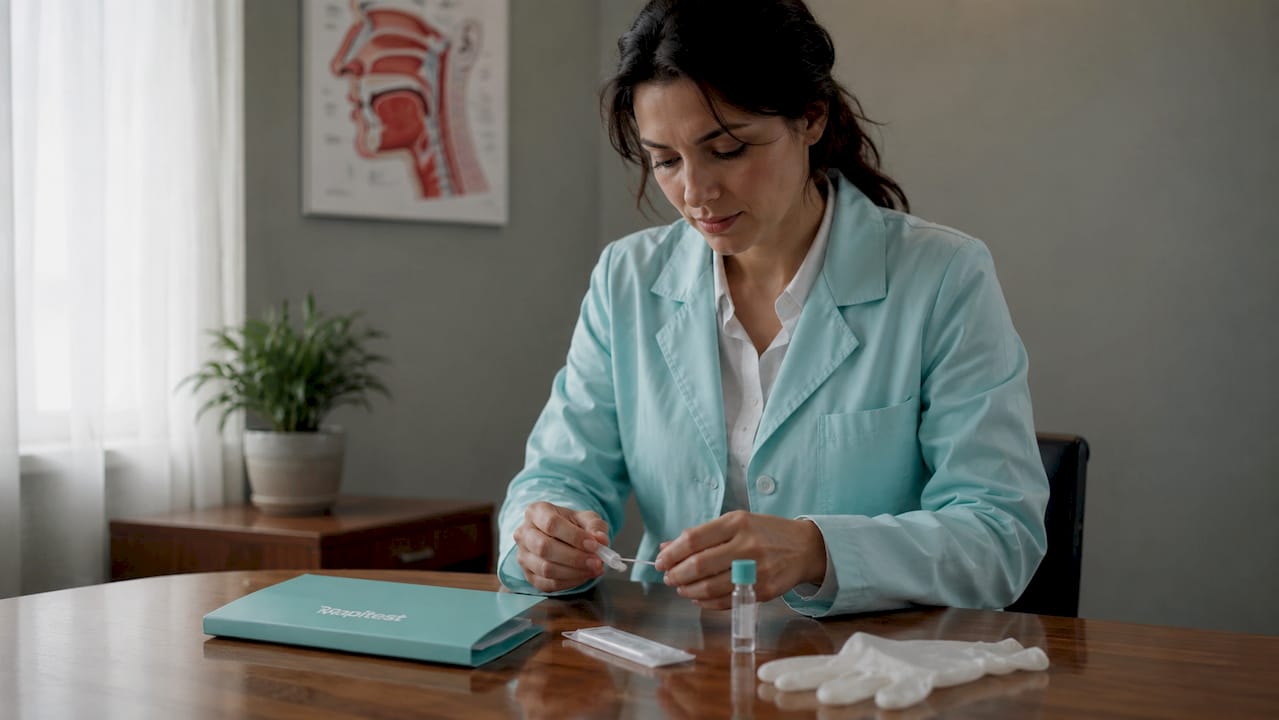
Symptom overlap is the central problem. Most oral STIs produce no symptoms, so the absence of a sore throat does not rule out infection. Equally, having a sore throat after oral sex does not confirm one.
There are some clinical clues worth knowing, though none are definitive without a test.
| Feature | Likely viral | Likely bacterial (strep) | Possible STI |
|---|---|---|---|
| Onset | Gradual | Sudden | Gradual or none |
| Cough present | Yes | Rarely | Rarely |
| Fever | Mild | High (38°C+) | Variable |
| Runny nose | Common | Uncommon | Uncommon |
| Swollen tonsils | Sometimes | Often, with white patches | Sometimes |
| Duration | 5–7 days | Improves with antibiotics | Persists without treatment |
Your sexual history is the most important factor a clinician uses to decide whether STI testing is needed. If you have had oral sex with a new or untested partner, or with someone known to have an STI, throat testing is appropriate regardless of symptoms.
Pro Tip: When you visit a GP or sexual health clinic, explicitly ask for a throat swab. Clinicians do not always test the throat unless you mention oral sex as a route of exposure. Your sexual history directly determines which sites get tested.
A.S.H.A. guidance is clear: symptoms alone cannot confirm an STI diagnosis. Risk assessment and site-specific testing are the only reliable path to an answer. If you are unsure whether you need testing, reading about asymptomatic STI transmission can help you weigh your risk more clearly.
What tests diagnose throat infections and oral STIs?
Accurate diagnosis depends on testing the right site with the right method. Here is how that works in practice:
-
Throat swab for NAAT. Nucleic acid amplification testing (NAAT) is the gold standard for detecting gonorrhea and chlamydia in the throat. NAAT has a sensitivity above 95% for oropharyngeal gonorrhea when a proper throat swab is collected. That level of accuracy makes it the most reliable option available.
-
Correct swabbing technique. The swab must contact the bilateral tonsils and the posterior pharyngeal wall. Cleveland Clinic Laboratories protocols specify this technique to ensure adequate sample collection for NAAT. A superficial swab of the front of the mouth will not give a reliable result.
-
Site-specific testing based on exposure. Urine tests and genital swabs will not detect a throat infection. Testing must target exposed sites based on the type of oral sex performed. If you gave oral sex, your throat is the exposed site. If you received it, your genitals are the primary site.
-
Rapid strep test or throat culture. For bacterial pharyngitis, a rapid antigen detection test (RADT) or throat culture identifies group A Streptococcus quickly. These are different tests from NAAT and serve a different purpose.
-
Visual examination. A clinician may examine your tonsils, lymph nodes, and throat for signs of infection. Visual findings guide clinical suspicion but cannot replace laboratory testing.
Being honest with your healthcare provider about your sexual activity is not optional. It directly determines which tests are ordered. You can also read about types of STI tests to understand what each method detects and how.
Treatment options for throat infections and oral STIs
Treatment depends entirely on the cause. Using the wrong treatment wastes time and, in the case of antibiotics, contributes to resistance.
Viral sore throats resolve on their own. Antibiotics are ineffective and should not be prescribed for viral pharyngitis. Symptom management is the appropriate approach:
- Drink plenty of fluids, particularly warm drinks such as honey and lemon tea.
- Gargle with warm salt water several times a day to reduce inflammation.
- Take over-the-counter pain relief such as paracetamol or ibuprofen as directed.
- Rest and avoid irritants such as cigarette smoke.
Bacterial pharyngitis (strep throat) requires a course of antibiotics, typically penicillin or amoxicillin. Strep throat symptoms improve within about a week with treatment. Completing the full course reduces the risk of complications and limits spread to others.
Pharyngeal gonorrhea requires a specific antibiotic regimen. Ceftriaxone is the recommended treatment for uncomplicated gonorrhea of the pharynx, followed by a test-of-cure at 7–14 days. Throat gonorrhea is harder to treat than genital gonorrhea, which is why the follow-up test matters. Chlamydia of the throat is typically treated with doxycycline or azithromycin.
Pro Tip: A sore throat that lasts beyond 5–7 days, causes severe pain, or makes swallowing difficult needs medical attention promptly. Persistent symptoms can indicate a serious infection that will not resolve without targeted treatment.
Misdiagnosing a viral throat infection as bacterial and taking unnecessary antibiotics is a real risk. Overuse of antibiotics for sore throats contributes to antibiotic resistance and does not speed recovery. Targeted testing is the only way to avoid this trap. Understanding what STI test results actually mean helps you act on them with confidence.
How can you prevent sore throats and STIs from oral sex?
Prevention is straightforward once you know the risks. No single measure eliminates all risk, but combining a few practical steps reduces it significantly.
- Use barrier methods. Condoms during fellatio and dental dams during cunnilingus reduce the transmission of gonorrhea, chlamydia, herpes, and HPV. They are not perfect barriers, but they are the most effective physical protection available.
- Test regularly. Routine STI testing is the most reliable way to catch asymptomatic infections before they spread. If you have multiple partners or a new partner, testing before new sexual contact is a sensible step.
- Know your partner’s status. Open conversation about recent STI testing is not awkward. It is responsible. Partners who test regularly and share results reduce risk for everyone involved.
- Avoid oral sex when symptomatic. If you or your partner has a visible cold sore, throat infection, or genital symptoms, oral sex increases the risk of transmission in both directions.
- Maintain good oral hygiene. Healthy gum tissue and no open sores in the mouth reduce the entry points for infection. Brush and floss regularly, and see a dentist if you have any mouth ulcers or bleeding gums.
- Get vaccinated. The HPV vaccine protects against the strains most associated with oropharyngeal cancer and genital warts. It is available on the NHS for eligible age groups and is worth discussing with your GP if you have not had it.
Understanding when to test after unprotected sex is equally useful, as timing affects whether a test will detect an infection accurately. You can also learn more about STI transmission routes to understand how infections spread beyond penetrative sex.
Key takeaways
A sore throat after oral sex is most often viral, but oral STIs such as gonorrhea and chlamydia require site-specific NAAT testing to rule out, as symptoms alone cannot distinguish between causes.
| Point | Details |
|---|---|
| Most sore throats are viral | Around 90% of throat infections are viral and resolve without antibiotics. |
| Oral STIs are usually symptomless | Gonorrhea and chlamydia in the throat often cause no symptoms at all. |
| NAAT is the most accurate test | Throat swab NAAT detects oropharyngeal gonorrhea with over 95% sensitivity. |
| Treatment depends on the cause | Viral infections need rest; bacterial and STI infections need specific antibiotics. |
| Persistent symptoms need medical review | A sore throat lasting beyond 5–7 days or causing swallowing difficulty requires evaluation. |
Let’s be real about sore throats and sexual health
People often assume that a sore throat after oral sex is either definitely an STI or definitely nothing to worry about. Both assumptions are wrong, and both lead to poor decisions.
What I see repeatedly is people either catastrophising and demanding antibiotics they do not need, or dismissing symptoms entirely because they feel fine. The reality sits in the middle. Most throat discomfort after oral sex is a run-of-the-mill viral infection. But the only way to know for certain is to consider your risk and, where appropriate, test.
The other thing worth saying plainly: there is no shame in asking for a throat swab at a sexual health clinic. Clinicians are not there to judge your choices. They are there to test the right sites based on your actual exposures. If you do not mention oral sex, they may not test your throat. That is not a failure of the system. It is just how site-specific testing works.
Proactive testing is not a sign that something has gone wrong. It is a sign that you are paying attention. The people who test regularly are the ones who catch infections early, treat them properly, and avoid passing them on. That is the whole point.
— Jack
Private STI testing with Rapidtest
If you are concerned about oral sex throat irritation or want to rule out an STI without the wait, Rapidtest makes that straightforward.
Rapidtest’s at-home STI testing kits deliver results in 15 minutes, with no appointment, no queue, and no awkward conversation. You collect your sample at home, follow the simple instructions, and get a clear result. If you want to understand your full exposure risk or check which tests suit your situation, the complete STI kit range covers the key infections. Private, fast, and affordable. That is what proactive sexual health looks like.
FAQ
Can you get an STI in your throat from oral sex?
Yes. Gonorrhea, chlamydia, herpes, and HPV can all infect the throat through oral sex. Most oral STIs cause no symptoms, so testing is the only reliable way to know.
Is a sore throat after oral sex always an STI?
No. Around 90% of sore throats are caused by viruses unrelated to sexual activity. The timing may be coincidental, but STI testing is appropriate if you have had oral sex with a new or untested partner.
What test detects gonorrhea in the throat?
A throat swab analysed by NAAT (nucleic acid amplification testing) is the recommended method. It has a sensitivity above 95% for oropharyngeal gonorrhea when the swab is collected correctly from the tonsils and posterior pharynx.
How long does a sore throat from an STI last without treatment?
Pharyngeal gonorrhea and chlamydia will not resolve without antibiotics. A sore throat lasting beyond 5–7 days, or one that worsens rather than improves, needs medical evaluation regardless of the suspected cause.
Should I tell my doctor about oral sex when I have a sore throat?
Yes. Your sexual history determines which sites get tested. Without that information, a clinician may only test for common bacterial or viral causes and miss an oral STI entirely.