


Can STI tests be wrong? What your results really mean
STI tests are defined as diagnostic tools that detect the presence of sexually transmitted infections through blood, urine, or swab samples. They are highly reliable, but no test is 100% accurate. False negatives are more common than false positives, and the most common causes are testing too early and poor sample collection. Understanding why errors in STI testing happen puts you in a much stronger position to act on your results with confidence.
Can STI tests be wrong? The short answer
Yes, STI tests can give false results, but the reasons are usually practical rather than technical. The two types of error are false negatives (the test misses an infection that is present) and false positives (the test flags an infection that is not there). Test sensitivity and specificity are the two measures that determine how often each type of error occurs. Sensitivity measures how well a test catches true infections. Specificity measures how well it avoids flagging people who are not infected.
A test with 99% sensitivity will still miss 1 in 100 infections. That sounds reassuring until you consider that millions of tests are carried out each year. For serious infections like HIV, laboratories use confirmatory tests precisely because no single test is perfect. The goal is not to find a perfect test. The goal is to understand what your result actually means given when and how you tested.
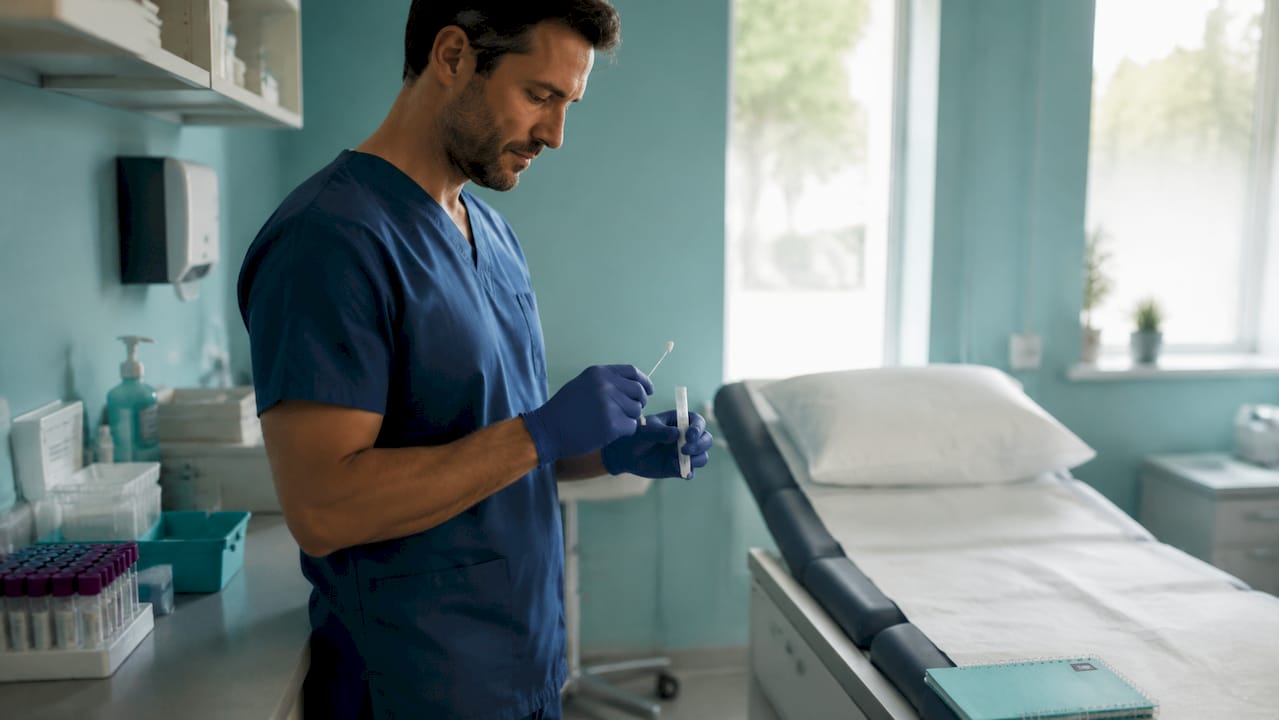
How do false negatives and false positives happen?
Several factors push a result in the wrong direction. The most common are:
- Testing during the window period. Every STI has a window period, the gap between exposure and when the infection becomes detectable. Testing before this window closes almost always produces a false negative.
- Poor sample collection. A urine sample that is too dilute, a swab taken from the wrong site, or a sample left too long before processing can all compromise results. Improper collection causes false negatives even when the test itself is technically sound.
- Wrong test type. NAAT (nucleic acid amplification tests) and PCR tests detect genetic material from the pathogen and are highly sensitive. Antibody tests detect your immune response, not the pathogen itself. Using an antibody test too early means your body has not yet produced enough antibodies to trigger a positive result.
- Cross-reactivity. Some antibody tests react to proteins from unrelated conditions, producing a false positive. This is particularly relevant for herpes antibody tests.
- Sample handling errors. Samples exposed to extreme temperatures or delayed in transit can degrade, reducing accuracy.
Pro Tip: If you are self-collecting a sample at home, follow the instructions exactly. The most common mistake is collecting a urine sample too soon after urinating last time. First-catch urine, the first few millilitres of the stream, is what most STI urine tests require. Read the urine sample guide before you start.
The type of test matters enormously. NAAT and PCR tests for chlamydia and gonorrhoea are far more sensitive than older culture-based methods. Antibody tests for HIV have improved significantly with fourth-generation technology, which detects both the p24 antigen and antibodies, shortening the window period considerably.
Why timing is the biggest factor in STI test accuracy
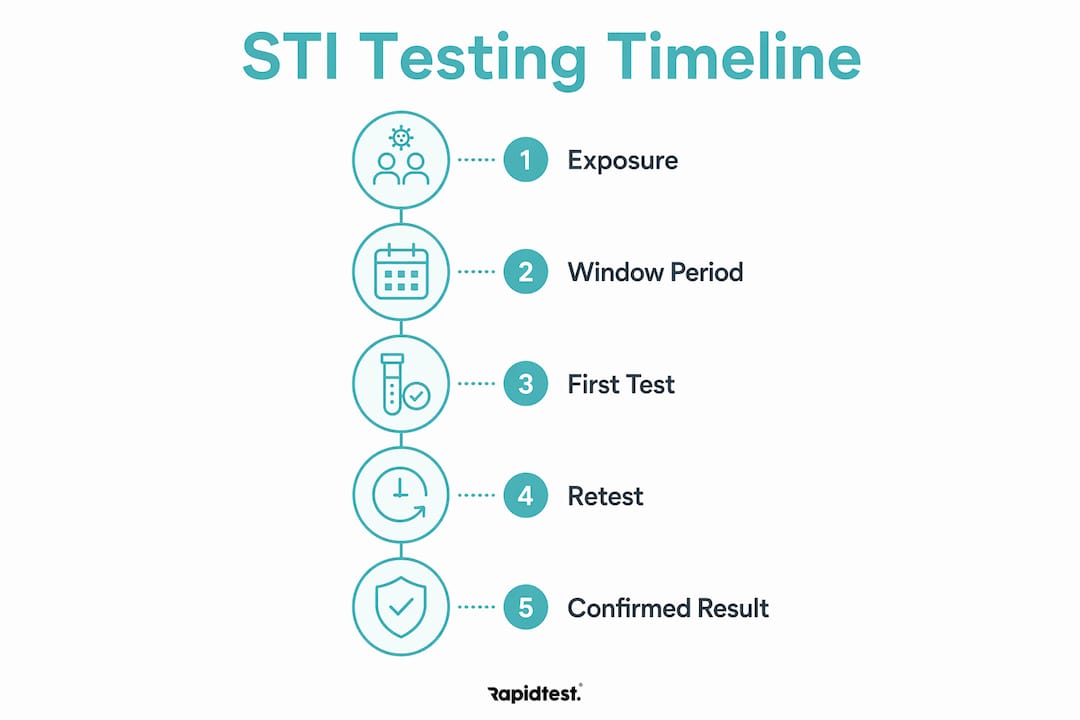
Testing too early is the leading cause of false negatives across all STI types. The window periods differ significantly by infection, which is why a single test date does not cover every possibility.
| STI | Typical window period | Recommended retest if negative |
|---|---|---|
| HIV (4th-gen test) | 4–6 weeks | Retest at 12 weeks for certainty |
| Chlamydia | 7–14 days | Retest if symptoms persist |
| Gonorrhoea | 7–14 days | Retest if symptoms persist |
| Syphilis | 3–6 weeks | Retest at 6 weeks and 3 months |
| Herpes (antibody) | 12–16 weeks | Confirm with a specialist |
| Hepatitis B | 6 weeks | Retest at 3 months |
| Hepatitis C | 8–11 weeks | Retest at 6 months if high risk |
The window period exists because most STI tests detect your immune response, not the infection itself. Your body needs time to produce enough antibodies for the test to pick up. This process is called seroconversion. Until seroconversion is complete, the test will return a negative result even if you are infected.
Pro Tip: Always note the date of your last potential exposure, not the date you noticed symptoms. Your window period starts from exposure. Rapidtest has a clear guide on understanding window periods if you want to work out exactly when to test.
Herpes antibody tests deserve a special mention. Blood tests for herpes antibodies carry a significant false positive rate, and a positive result should always be discussed with a healthcare professional before any conclusions are drawn. The 12–16 week window also means that a negative result shortly after exposure is not reliable.
Does where you test on your body affect the result?
Absolutely. A negative genital test does not rule out infection in the throat or rectum if those sites were exposed. Site-specific sampling is essential because gonorrhoea, chlamydia, and other infections can exist at one anatomical site without being present at another.
Standard STI panels often test urine or genital swabs only. If you have had oral or anal sex, those sites need their own swabs. A urine test will not detect a throat infection. This is one of the most common reasons people receive a negative result while still carrying an infection.
Other collection pitfalls include:
- Using the wrong swab site. Genital swabs for gonorrhoea need to be taken from the urethra or cervix, not just the external skin.
- Omitting infections from the panel. Standard panels may omit infections like Mycoplasma genitalium entirely. If you have symptoms and a negative standard panel, ask specifically about less common infections.
- At-home vs clinical collection. Clinical collection is generally more reliable because a trained professional takes the sample. At-home kits can match clinical accuracy when instructions are followed precisely, but the margin for error is higher with self-collection.
The real challenges of STI diagnosis go beyond the test itself. Knowing which sites to test, which infections to include, and when to test all affect whether your result reflects reality.
What should you do if your results seem wrong?
Getting a result that does not match your symptoms or your gut feeling is unsettling. Here is a clear path forward.
- Check your timing. Was your test within the window period for the infection you are concerned about? If yes, retest after the window closes. A negative result during the window period is not a clean bill of health.
- Review your sample collection. Did you follow the instructions correctly? A compromised sample is a common and fixable cause of a false negative. Retest with a fresh sample if you have any doubt.
- Consider what was included in your panel. Ambiguous results call for confirmatory testing and professional interpretation. Ask whether your panel covered all relevant sites and infections.
- Request a confirmatory test. For HIV, a reactive result on a screening test always requires a second, different test to confirm. For herpes, a positive antibody result should be followed up with a specialist.
- Speak to a healthcare professional. A GP or sexual health clinic can interpret your results in the context of your full history, symptoms, and risk factors. They can also recommend the right follow-up tests.
Testing should be viewed as a process, not a single event. One negative result at the right time, from the right site, using the right test, is highly reassuring. One result taken too early or from the wrong site tells you very little.
Key takeaways
STI tests are highly reliable, but false negatives are more common than false positives and are almost always caused by testing too early, testing the wrong site, or collecting the sample incorrectly.
| Point | Details |
|---|---|
| Timing drives most errors | Testing within the window period is the leading cause of false negatives across all STIs. |
| Site-specific testing matters | A negative genital result does not rule out throat or rectal infection if those sites were exposed. |
| Test type affects accuracy | NAAT and PCR tests are more sensitive than antibody tests, especially early after exposure. |
| Herpes tests need caution | Herpes antibody tests have a notable false positive rate and results should be confirmed with a professional. |
| Retesting resolves uncertainty | A second test after the window period closes, or a confirmatory test, is the most reliable way to resolve an unclear result. |
Let’s be real about STI test accuracy
I have spoken to a lot of people who received a negative result and assumed that settled the matter entirely. The test said negative, so they moved on. What they did not realise was that they had tested four days after a potential exposure, or that their panel did not include the infection they were actually worried about.
The technology behind modern STI tests is genuinely impressive. Fourth-generation HIV tests, NAAT testing for chlamydia and gonorrhoea, and PCR-based panels have transformed what is possible at home and in clinics. The weak link is almost never the test itself. It is the human factors: timing, site selection, sample quality, and panel coverage.
The most useful shift in thinking is to treat testing as an ongoing part of your health routine rather than a one-off response to anxiety. Regular screening, timed correctly after any potential exposure, and covering all relevant sites, gives you a picture of your health that a single rushed test never can. If a result surprises you, do not dismiss it and do not panic. Retest, check your timing, and talk to a professional. That combination resolves the vast majority of confusing results.
— Jack
At-home STI testing with Rapidtest
Rapidtest offers at-home STI testing kits that deliver results in 15 minutes, with no appointment, no queue, and no awkward conversations. Kits cover major infections including HIV and syphilis, with clear instructions designed to minimise collection errors.
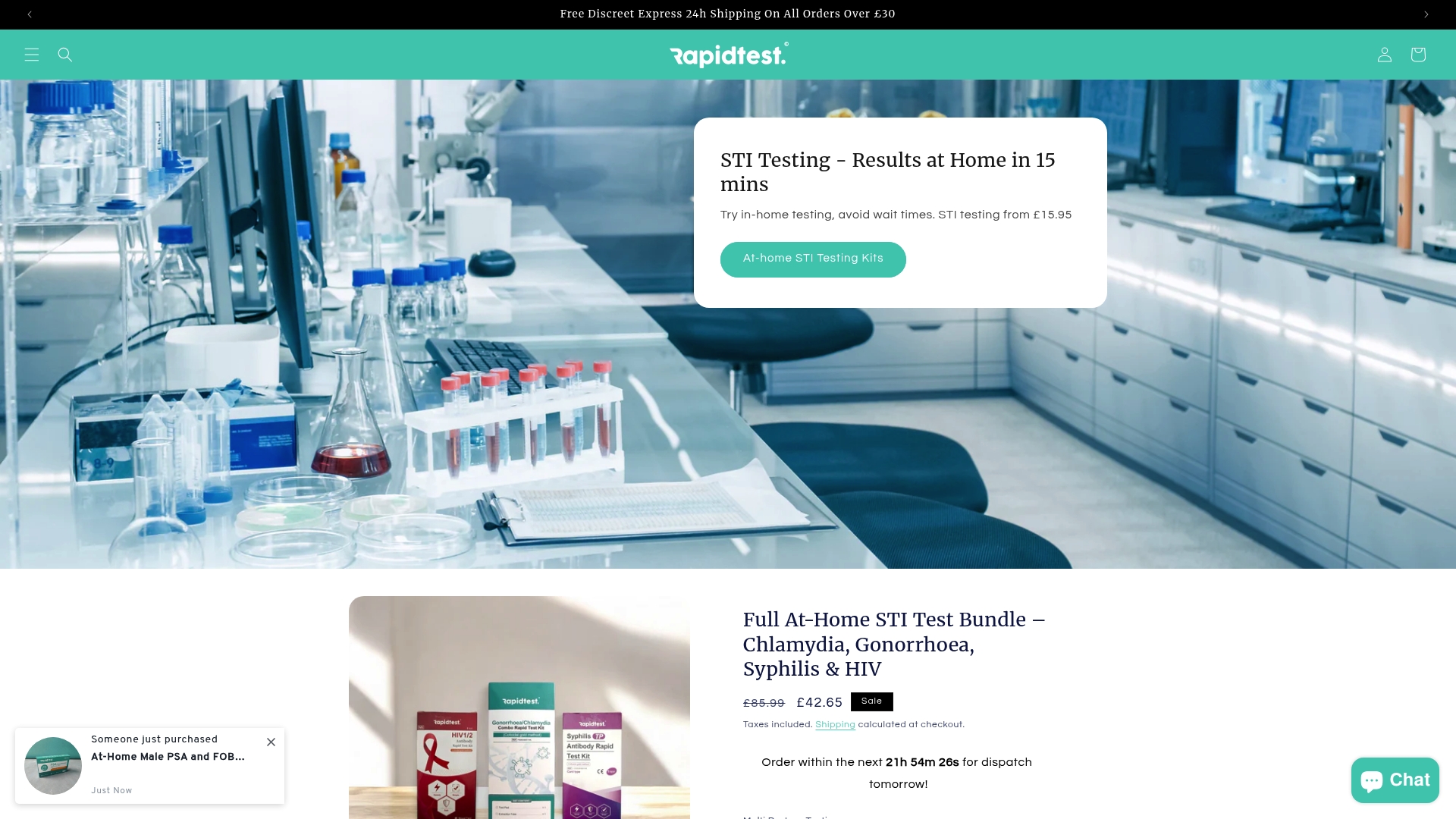
For people who want to test accurately from home, Rapidtest also offers a dedicated HIV home testing kit and a syphilis home testing kit, both rated at 99.8% accuracy. Pair any home test with the timing guidance in this article and you have a reliable, private, and practical way to stay on top of your sexual health.
FAQ
Can a negative STI test result be wrong?
Yes. A negative result can be wrong if you tested during the window period, used the wrong test type, or collected the sample incorrectly. Retesting after the window period closes gives a much more reliable result.
How reliable are STI tests overall?
Modern STI tests are highly reliable. A test with 99% sensitivity will miss 1 in 100 infections, which means the vast majority of results are accurate when the test is used correctly and at the right time.
What causes false negatives in STI tests?
The most common causes are testing too early before the window period closes, poor sample collection, and testing the wrong anatomical site. NAAT and PCR tests reduce false negatives compared to older antibody-based methods.
Can STI tests give false positives?
False positives do occur, particularly with herpes antibody tests, which carry a notable false positive rate. HIV screening tests that return a reactive result always require a confirmatory test before a diagnosis is made.
When should I retest after a negative STI result?
Retest after the full window period has passed from your last potential exposure. For HIV, that means retesting at 12 weeks for certainty. For chlamydia and gonorrhoea, 14 days is usually sufficient. For syphilis, retest at 6 weeks and again at 3 months.