


Yellow discharge and stis: what you need to know
Yellow vaginal discharge linked to a sexually transmitted infection (STI) is defined as abnormal genital discharge caused by pathogens including Trichomonas vaginalis, Chlamydia trachomatis, and Neisseria gonorrhoeae. These three infections are the primary STIs linked to yellow or yellow-green discharge, often accompanied by odour, itching, or pelvic discomfort. Recognising this symptom matters because untreated infections can lead to pelvic inflammatory disease and long-term fertility problems. The challenge is that yellow discharge also appears in non-STI conditions, which is exactly why knowing the difference is so important.
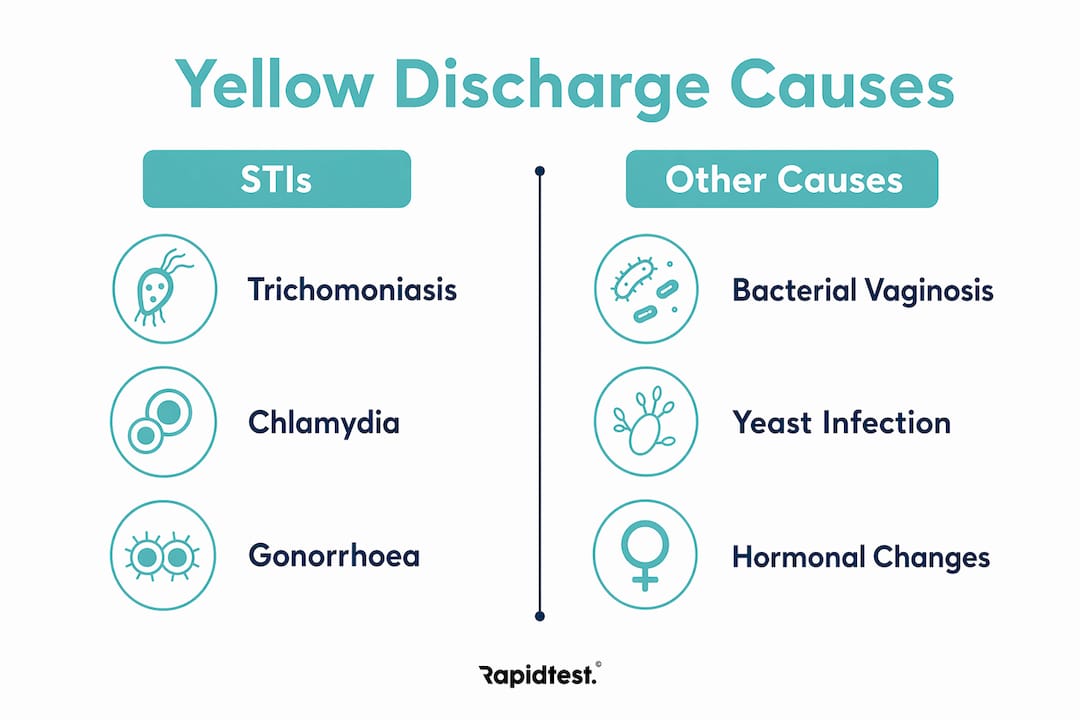
Which stis commonly cause yellow discharge?
Trichomoniasis, chlamydia, and gonorrhoea are the three infections most consistently associated with yellow vaginal discharge. Each presents slightly differently, and knowing those differences helps you have a more informed conversation with a healthcare provider or when using a testing kit.
Trichomoniasis
Trichomoniasis produces some of the most distinctive discharge of the three. The discharge is typically frothy, yellow-green in colour, and carries a strong fishy or musty odour. Genital itching and painful urination are common companions. What makes trichomoniasis particularly tricky is that symptoms can come and go even when the infection is still active. Feeling better for a few days does not mean you are clear.

Chlamydia and gonorrhoea
Chlamydia and gonorrhoea both produce yellow or greenish discharge, but they tend to be less frothy than trichomoniasis. Burning during urination, lower abdominal pain, and spotting between periods are common STI symptoms in women with these infections. The bigger problem is that many STIs are asymptomatic or produce only mild symptoms that appear days to weeks after exposure. You can carry chlamydia for months without any noticeable sign at all.
Here is a quick summary of what to watch for across all three:
- Trichomoniasis: frothy yellow-green discharge, strong odour, genital itching, painful urination
- Chlamydia: yellow or cloudy discharge, burning urination, pelvic pain, often no symptoms at all
- Gonorrhoea: yellow or green discharge, burning urination, pelvic pain, possible bleeding between periods
- All three: symptoms may be mild, intermittent, or entirely absent
Pro Tip: If you notice any combination of unusual discharge colour, odour, and discomfort after sexual contact, treat it as a reason to test rather than a reason to wait and see.
Yellow discharge STI vs. other causes: what is the difference?
Not every case of yellow vaginal discharge points to an STI. Normal discharge is typically clear to white, odourless or mildly scented, and varies in consistency throughout the menstrual cycle. Yellow discharge that sits on underwear can also appear darker due to drying on fabric, so colour alone is not always reliable as a diagnostic indicator. Odour, consistency, and accompanying symptoms give a much clearer picture.
The three most common causes of abnormal yellow discharge are trichomoniasis, bacterial vaginosis (BV), and yeast infections. They overlap in frustrating ways.
| Condition | Discharge Colour | Odour | Consistency | Other Symptoms |
|---|---|---|---|---|
| Trichomoniasis | Yellow-green | Strong, fishy | Frothy | Itching, burning urination |
| Bacterial Vaginosis | Grey or yellow | Fishy, stronger after sex | Thin, watery | Mild itching |
| Yeast Infection | White or pale yellow | Yeasty or mild | Thick, cottage cheese-like | Intense itching, soreness |
| Gonorrhoea | Yellow or green | Unpleasant | Thick | Pelvic pain, bleeding |
| Chlamydia | Yellow or cloudy | Mild or none | Variable | Often none |
The overlap is real and it matters. Self-diagnosis is genuinely risky because treatments differ significantly between yeast infections, BV, and STIs. Using an antifungal cream for what is actually gonorrhoea will not help and may delay proper treatment. The only way to know for certain is to test.
Pro Tip: If you have had a yeast infection before and this discharge feels different, trust that instinct. Different smell, different colour, or different timing after sex are all reasons to get a proper test rather than reaching for an over-the-counter remedy.
Why testing matters more than symptom-watching
Symptoms are an unreliable guide to what is actually happening. Regular STI screening is the only reliable way to detect infections that may have no symptoms and to protect reproductive health from complications. Waiting for symptoms to worsen before testing is one of the most common reasons infections go untreated for too long.
There is also a widespread misconception worth addressing. Many women assume that routine GP or gynaecology appointments automatically include STI screening. They do not. You often need to request specific tests explicitly, which means infections can fall through the cracks entirely.
Here is how testing typically works:
- Clinical swab test: A healthcare provider takes a swab from the vagina or cervix. This is the most accurate method for detecting trichomoniasis, chlamydia, and gonorrhoea.
- Urine test: Useful for chlamydia and gonorrhoea, though slightly less sensitive than a swab for some infections.
- Blood test: Used for HIV and syphilis, not typically for the discharge-causing infections listed here.
- At-home STI self-testing kits: These allow you to collect your own sample at home and get results quickly. Accuracy varies by kit and infection type, so check the self-testing kit details before purchasing.
Timing matters too. Testing too soon after exposure can produce a false negative because the infection has not yet reached detectable levels. Guidance on when to test after exposure varies by infection, but a general rule is to wait at least one to two weeks after potential exposure before testing for most bacterial STIs.
Prompt testing after discharge changes or high-risk sexual activity is the single most effective step you can take for your reproductive health.
Treatment options for yellow discharge stis
All three of the main STIs causing yellow discharge are treatable with antibiotics. The specific antibiotic depends on the infection, and completing the full course is non-negotiable.
- Trichomoniasis is treated with metronidazole or tinidazole, usually as a single dose or a short course. Your sexual partner must also be treated at the same time, or reinfection is almost certain.
- Chlamydia is typically treated with azithromycin (a single dose) or doxycycline (a seven-day course). Both are highly effective when taken correctly.
- Gonorrhoea now requires ceftriaxone by injection in most UK cases, due to increasing antibiotic resistance. This is one reason why accurate diagnosis matters so much. Treating gonorrhoea with the wrong antibiotic simply does not work.
A few things to keep in mind during and after treatment:
- Avoid sexual contact until you and any partners have completed treatment and symptoms have fully cleared
- Do not stop antibiotics early because symptoms improve. The infection may still be present
- STI symptoms can subside temporarily even when the infection persists, so symptom improvement is not confirmation of cure
- Untreated infections carry serious risks including pelvic inflammatory disease, chronic pelvic pain, and infertility
- Telling recent sexual partners is not easy, but it is the responsible step. Resources on talking to your partner about STI testing can make that conversation less daunting
For BV, which can mimic STI discharge, a telehealth provider can prescribe metronidazole or clindamycin without an in-person visit, which is worth knowing if you are waiting on test results and need guidance quickly.
Key takeaways
Yellow discharge linked to an STI requires accurate testing rather than symptom-based self-diagnosis, because trichomoniasis, chlamydia, and gonorrhoea each need different treatments to clear effectively.
| Point | Details |
|---|---|
| Three main culprits | Trichomoniasis, chlamydia, and gonorrhoea are the primary STIs causing yellow discharge. |
| Symptoms are unreliable | Many infections are asymptomatic or produce only mild signs, making testing the only reliable method. |
| Self-diagnosis is risky | Yeast infections, BV, and STIs overlap in appearance; the wrong treatment delays proper care. |
| Colour alone misleads | Discharge can appear yellow from drying on fabric; odour and consistency are more reliable indicators. |
| Complete your treatment | Symptoms may ease before infection clears, so finishing the full antibiotic course is non-negotiable. |
Let’s be real about yellow discharge
I have spoken to a lot of people who noticed something unusual, convinced themselves it was probably nothing, and waited weeks before doing anything about it. That delay is completely understandable. Nobody wants to sit in a waiting room and explain their symptoms to a stranger. But here is what I have come to believe: the anxiety of not knowing is almost always worse than the five minutes it takes to test.
The other thing worth saying plainly is that yellow discharge is one of those symptoms that gets dismissed far too easily. People assume it is a yeast infection, buy something from the chemist, and move on. Sometimes that works. But when it does not, the underlying infection keeps doing damage quietly. Chlamydia in particular is notorious for this. It can affect fertility before you ever realise it was there.
The conversation around sexual health still carries unnecessary stigma. Getting tested is not an admission of anything. It is just good sense, the same as checking your blood pressure or getting a mole looked at. Proactive testing, especially after any change in discharge, is not an overreaction. It is exactly the right call.
— Jack
Get answers at home, without the wait
If you have noticed a change in your discharge and want answers quickly, you do not need a GP appointment or a trip to a clinic.

Rapidtest offers at-home STI testing kits that deliver results in 15 minutes, with no queues, no awkward conversations, and no waiting rooms. You collect your sample at home, follow the simple instructions, and get a clear result. If you want to screen for specific infections including HIV, Rapidtest also offers a dedicated HIV home testing kit with 99.8% accuracy. Private, fast, and straightforward. That is what proactive health care looks like.
FAQ
Is yellow discharge always a sign of an STI?
No. Yellow discharge can result from bacterial vaginosis, yeast infections, or even normal hormonal changes. However, yellow discharge with odour or itching often signals infection and warrants testing to identify the cause accurately.
Can you have an STI with yellow discharge but no other symptoms?
Yes. Chlamydia and gonorrhoea are frequently asymptomatic, meaning yellow discharge may be the only noticeable sign, or there may be no symptoms at all. Asymptomatic STIs are common and can only be confirmed through testing.
How soon should you test if you notice yellow discharge?
Test as soon as you notice a change, particularly after unprotected sex or a new partner. For most bacterial STIs, waiting one to two weeks after potential exposure gives more accurate results, though testing sooner is still worthwhile.
Can yellow discharge go away on its own without treatment?
Symptoms may ease temporarily, but the infection typically persists without treatment. Trichomoniasis symptoms in particular can subside and return without the infection clearing. Always complete a full course of prescribed antibiotics.
Do regular health check-ups include STI testing?
Not automatically. Routine exams do not always include STI screening, and you may need to request specific tests explicitly. At-home testing kits are a practical way to screen without relying on a standard appointment to cover everything.