


How to talk about STI testing with your partner
Talking about STI testing is one of the most direct acts of care you can show a partner. It signals that you take both your health and theirs seriously, and it builds the kind of trust that makes relationships genuinely safer. The CDC recommends speaking with sexual partners before sex, asking about their last test date, and considering testing together. That framing matters. It turns what feels like an awkward confession into a shared plan. Organisations like Planned Parenthood and the American Sexual Health Association both confirm that open, nonjudgmental dialogue is the single most effective tool for reducing STI transmission and stigma.
How to talk about STI testing: starting the conversation
The hardest part is usually the first sentence. Most people worry they will come across as accusatory, paranoid, or presumptuous. The good news is that how you frame the conversation does most of the heavy lifting.
Lead with care, not suspicion. Phrases like “I get tested regularly and I’d love for us to do it together” or “I want us both to feel safe, so can we talk about testing?” centre the conversation on mutual wellbeing rather than doubt. Planned Parenthood advises that framing testing as proactive and routine, rather than reactive to suspicion, encourages partner cooperation. That shift in language genuinely changes how people receive the message.
Timing and setting matter more than most people realise. Choose a private, relaxed moment that is not immediately before or during sex. A walk, a quiet evening at home, or even a car journey can work well. These low-pressure environments give both of you space to think and respond without feeling cornered.
Here are some practical conversation starters worth keeping in your back pocket:
- “When did you last get tested? I had mine done in [month] and I’m happy to share my results.”
- “I think it would be good for both of us to get tested before we go further. What do you think?”
- “I’ve started treating STI testing like a regular health check. Would you be up for doing it together?”
- “I want to be honest with you about my sexual health. Can we talk about testing?”
Pro Tip: Keep your tone warm and matter-of-fact. If you treat the conversation as a big deal, your partner likely will too. The more casually confident you are, the easier it becomes for them to respond without defensiveness.
Allow space after you speak. You do not need to fill every silence. Give your partner time to process, ask questions, or share their own concerns. Listening is as much a part of this conversation as talking.
What types of STI tests should you discuss with your partner?
Understanding what testing actually involves helps you have a more informed and practical conversation. STI testing methods vary depending on which infections you are screening for and what sexual behaviours are relevant to your situation.
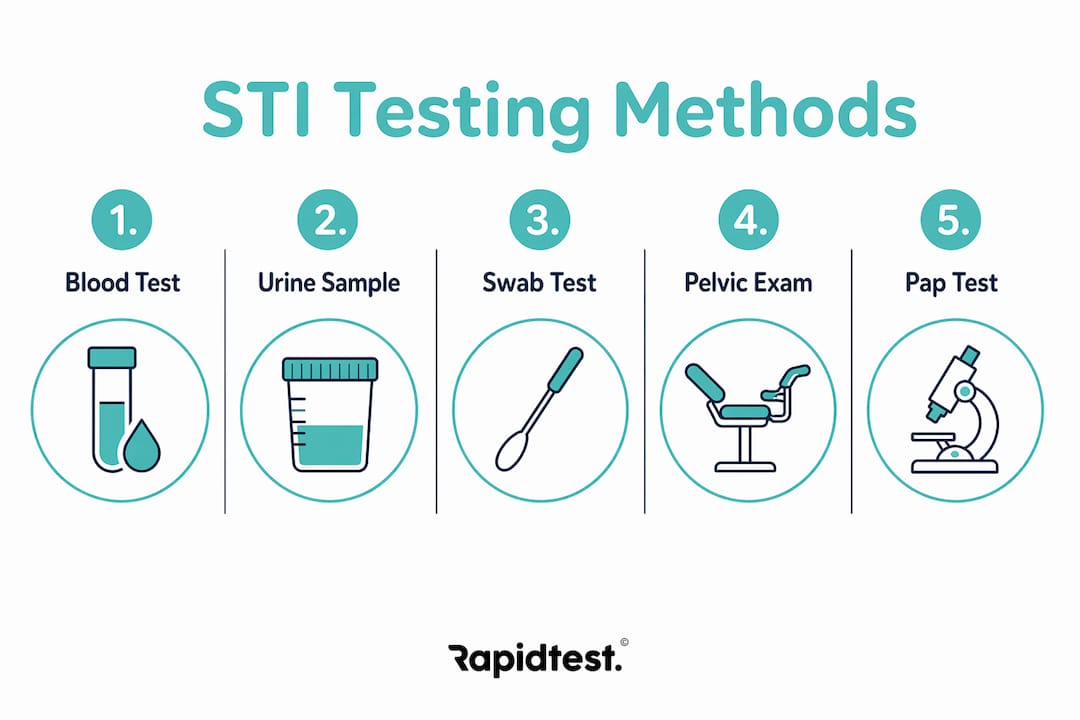
Blood tests screen for infections like HIV, syphilis, and herpes. Urine samples are commonly used for chlamydia and gonorrhoea. Swabs, taken from the vagina, throat, or rectum, are necessary when oral or anal sex is part of your sexual activity. This last point is worth emphasising: urine-only tests are insufficient for detecting infections at non-genital sites, so discussing your specific behaviours with a healthcare provider or partner is genuinely important, not just a formality.
One thing that surprises many people is that pelvic exams and Pap tests do not automatically include STI screening. You need to request specific tests based on your risk factors. This is worth raising with your partner so neither of you assumes a routine appointment covers everything.
| Testing method | What it screens for | Relevant sexual activity |
|---|---|---|
| Blood test | HIV, syphilis, herpes | Any sexual contact |
| Urine sample | Chlamydia, gonorrhoea | Vaginal or penile sex |
| Vaginal swab | Chlamydia, gonorrhoea, trichomonas | Vaginal sex |
| Throat swab | Gonorrhoea, chlamydia | Oral sex |
| Rectal swab | Gonorrhoea, chlamydia | Anal sex |
Testing frequency and type depend on your risk factors and relationship dynamics. Discussing how often you both plan to test, and agreeing on barrier methods in the meantime, turns a one-off conversation into an ongoing health plan.
Pro Tip: If you are unsure which tests apply to your situation, use a proactive sexual health guide to map out your risk factors before the conversation. Going in informed makes it far easier to answer your partner’s questions.
How to handle nerves, defensiveness, and stigma
Even the most well-intentioned conversation can hit a wall. Partners sometimes react with embarrassment, defensiveness, or outright refusal. Knowing how to respond without escalating things is a skill worth developing.
Many STIs are completely asymptomatic, meaning someone can carry and transmit an infection without any visible signs. Sharing this fact calmly and without blame reframes the conversation entirely. It shifts the focus from “I think you might have something” to “neither of us can know without testing, and that’s why it matters.”
Common emotional responses you might encounter include:
- Nervousness or anxiety about what results might reveal
- Embarrassment rooted in social stigma around STIs
- Defensiveness, especially if the conversation feels like an accusation
- Avoidance, where a partner changes the subject or dismisses the idea
For each of these, the most effective response is to stay calm, restate your care for them, and give them time. Saying “I’m not suggesting anything is wrong, I just want us both to feel confident” can defuse a lot of tension. If a partner refuses to engage at all, that is important information about how they approach shared health decisions, and it is worth reflecting on.
Disclosure of STI status is an ongoing health responsibility, not a one-time confession. Normalising this by making testing a regular part of your relationship, rather than a crisis response, removes much of the emotional charge. Couples who talk about testing regularly find it becomes as unremarkable as discussing contraception.
Should you use at-home tests or see a healthcare provider?
Both options have a place in a healthy testing routine, and knowing the difference helps you plan better conversations with your partner and your doctor.
Healthcare providers offer the most thorough screening. They can tailor testing to your specific risk profile, advise on frequency, and provide immediate support if results require follow-up. Open dialogue with your provider is particularly important when self-tests are part of your routine, because interpreting results correctly often requires clinical context.
At-home test kits, like those from Rapidtest, offer something different: privacy, speed, and convenience. You get results in 15 minutes without a queue or an appointment. This makes them genuinely useful for regular screening between clinic visits, or for couples who want to test together before becoming sexually active with each other.
| Option | Best for | Limitation |
|---|---|---|
| Healthcare provider | Comprehensive, tailored screening | Requires appointment, less private |
| At-home test kit | Quick, private, convenient | Positive results need follow-up with a professional |
| Self-collection kit | Discreet sample collection at home | Lab processing time varies |
At-home STI test kits are a starting point, not a final answer. If a result comes back positive, the next step is always a conversation with a healthcare professional to confirm the result and discuss treatment. Being clear about this with your partner avoids misunderstandings and keeps both of you on the same page about what the results actually mean.
Key takeaways
Open, respectful communication about STI testing is the most effective way to protect both your health and your relationship.
| Point | Details |
|---|---|
| Frame it as shared care | Lead with mutual wellbeing, not suspicion, to reduce defensiveness from the start. |
| Know your test types | Blood, urine, and swabs each screen for different infections; match the test to your behaviour. |
| Many STIs have no symptoms | Asymptomatic infections make regular testing necessary regardless of how either partner feels. |
| At-home kits complement clinic visits | Use rapid tests for convenience, but always follow up with a professional if results are positive. |
| Make it an ongoing conversation | Regular testing discussions normalise sexual health and build long-term trust in relationships. |
The conversation nobody taught us to have
I have spoken to a lot of people about this, and the pattern is almost always the same. They know testing matters. They just do not know how to bring it up without it feeling like an accusation or a crisis. And so the conversation never happens, and testing gets quietly dropped from the list of things they actually do.
What I have found, both personally and from the people who reach out to Rapidtest, is that the couples who talk about testing most easily are the ones who started early. Not because they had some special communication skill, but because they did it once, it went fine, and it stopped feeling like a big deal. The first conversation is always the hardest. After that, it becomes part of how you look after each other.
The other thing worth saying is this: if a partner reacts badly to a reasonable, caring request to discuss testing, that tells you something. Not necessarily something catastrophic, but something worth paying attention to. Mutual respect around health decisions is not a high bar. It is a basic one.
If you are not sure where to start, understanding what a positive result means before the conversation can help you feel more prepared and less anxious. Knowledge genuinely does make these conversations easier.
— Jack
Test together, worry less
If you and your partner are ready to take the next step, Rapidtest makes it straightforward.
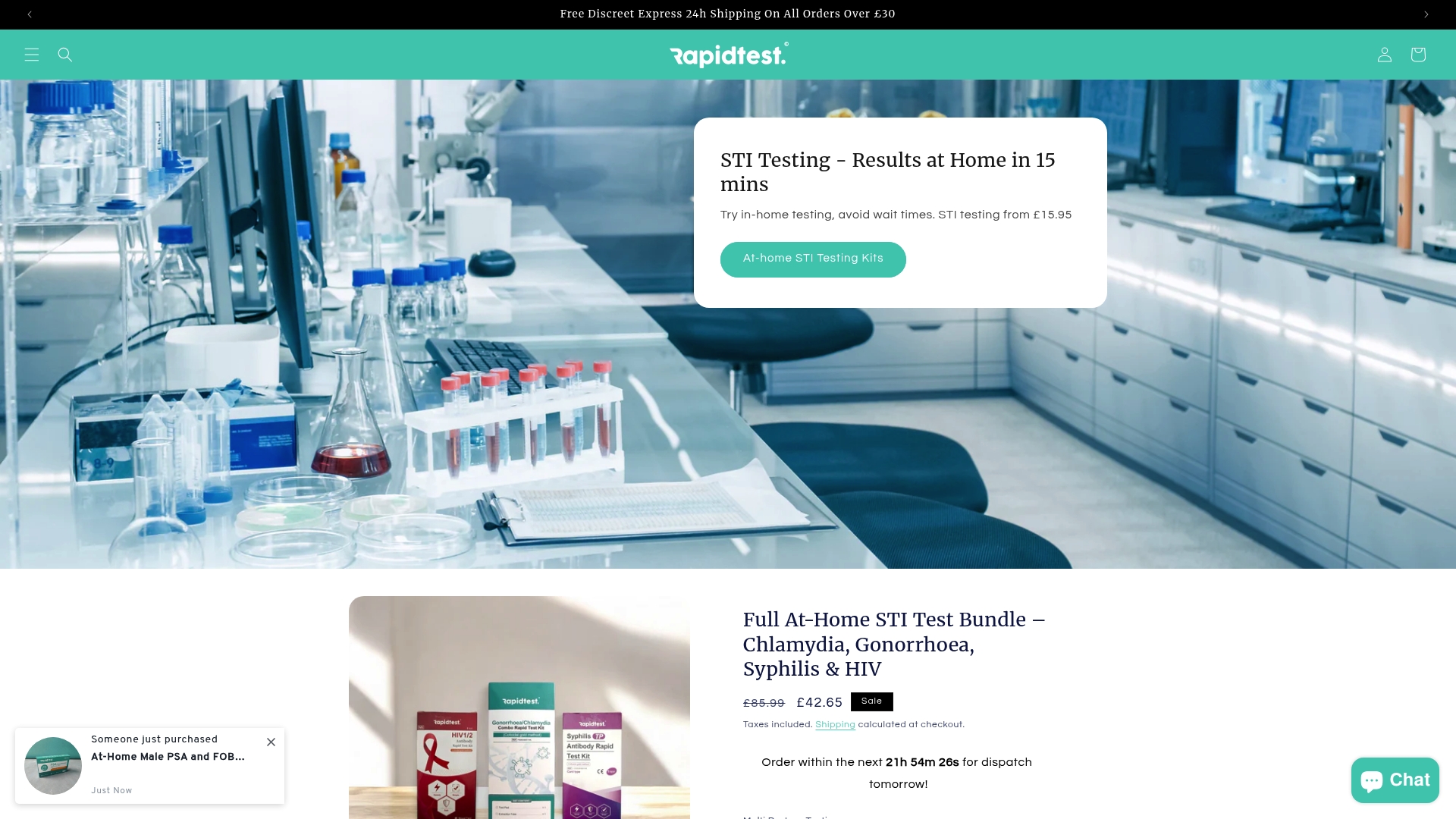
Rapidtest’s at-home STI testing kits deliver results in 15 minutes, with no appointment, no waiting room, and no awkward conversations with a receptionist. You collect your sample at home, follow the simple instructions, and know where you stand in the time it takes to have a cup of tea. Many couples use Rapidtest kits together as a way of making testing a shared, normal part of their relationship. If you want a faster, more private option alongside your regular clinic visits, Rapidtest’s rapid test kits are worth a look.
FAQ
How do I bring up STI testing without sounding accusatory?
Frame the conversation around shared health rather than suspicion. Saying “I get tested regularly and I’d like us to do it together” positions testing as a mutual habit rather than a response to distrust.
Do routine health checks include STI testing?
No. Pelvic exams and Pap tests do not automatically screen for STIs. You need to request specific tests based on your sexual behaviours and risk factors.
How often should couples discuss STI testing?
Testing frequency depends on your risk factors and relationship dynamics. Making it a regular conversation, rather than a one-off event, normalises the topic and keeps both partners informed.
Can at-home tests replace a clinic visit?
At-home kits are a convenient and private screening option, but positive results always require follow-up with a healthcare professional to confirm and arrange treatment.
What if my partner refuses to talk about testing?
Stay calm and restate your care for them without pressure. If they continue to refuse, that is a meaningful signal about how they approach shared health decisions, and it is worth considering what that means for the relationship.