


Burning when peeing but no STI: causes and relief
Dysuria, the medical term for painful urination, is a symptom rather than a diagnosis. Experiencing burning when peeing but no STI is more common than most people realise. The discomfort is real, but the cause is not always an infection or a sexually transmitted condition. Conditions like interstitial cystitis, urethral syndrome, and pelvic floor dysfunction all produce a burning sensation during urination without any bacterial or viral involvement. Understanding what is actually going on is not just reassuring. It is the first step toward getting the right help.
What causes burning when peeing but no STI?
Burning during urination without an STI points to irritation or inflammation that has nothing to do with a sexually transmitted infection. Several well-documented conditions sit behind this symptom, and knowing them helps you have a much more productive conversation with your GP.
Urethral syndrome
Urethral syndrome causes burning and irritation in the urethra without any detectable bacterial infection. It primarily affects women aged 30–50 and is closely linked to hormonal changes and pelvic floor tension. Treatment focuses on symptom relief and bladder relaxation rather than antibiotics, which means taking antibiotics for this condition achieves nothing and can cause harm.
Interstitial cystitis
Interstitial cystitis, also called painful bladder syndrome, is a chronic condition that produces frequent urination and bladder pain without any infection present. People with this condition can feel the urge to urinate 15–30 times a day, with persistent pressure and discomfort. Diagnosis typically requires cystoscopy to identify specific lesions, and treatment needs to be tailored to each person’s pattern of symptoms.
Pelvic floor dysfunction
Pelvic floor muscle hypertonicity is a surprisingly common and frequently missed cause of persistent urinary burning. When the pelvic floor muscles are too tight, they create pressure and irritation around the urethra and bladder. This explains why many people with ongoing burning symptoms do not respond to antibiotics at all. Muscle relaxation techniques and targeted physical therapy address the actual problem.
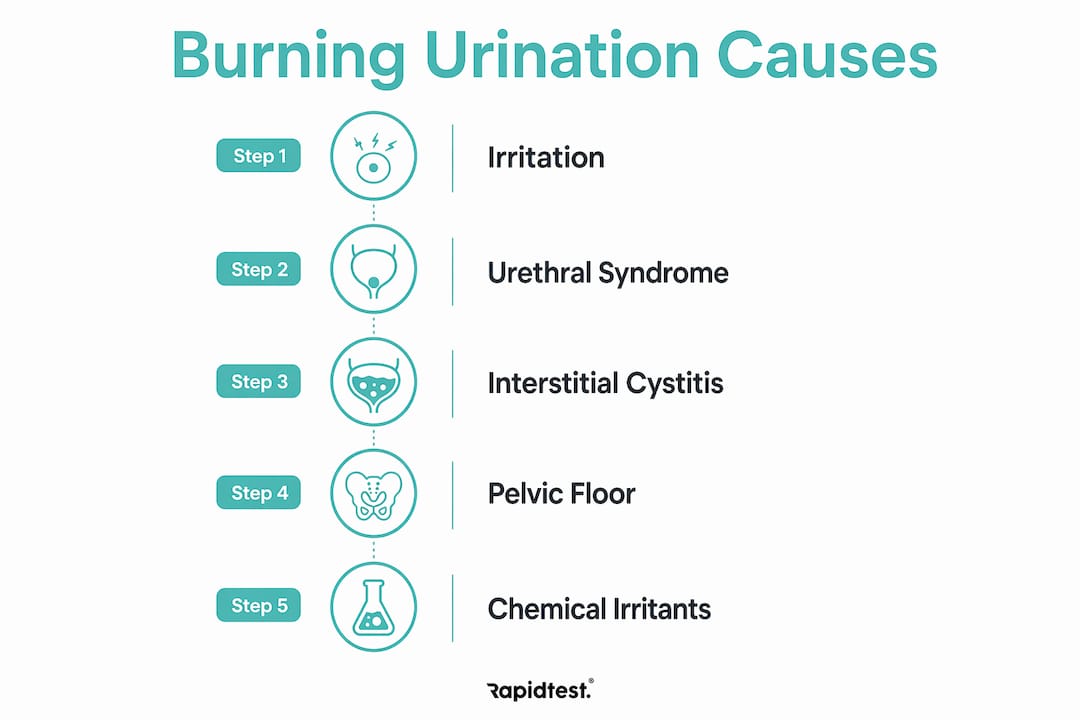
Chemical irritants and personal care products
Soaps, shower gels, bubble baths, spermicides, and even some laundry detergents can irritate the urethra and surrounding tissue. The irritation when peeing that follows is real inflammation, just not caused by an organism. Switching to fragrance-free, pH-neutral products often resolves the symptoms within days.
Other causes worth knowing
- Kidney or bladder stones can scrape the urinary tract and cause a sharp burning sensation during urination.
- Hormonal changes, particularly the drop in oestrogen during perimenopause and menopause, thin the urethral lining and increase sensitivity.
- Urethral stricture, a narrowing of the urethra, creates friction and discomfort with every void.
- Concentrated or acidic urine, often caused by dehydration or a diet high in caffeine and citrus, irritates the urethral lining directly.
Pro Tip: Keep a simple symptom diary for one week before your GP appointment. Note when the burning occurs, how long it lasts, and what products you have used. This single habit dramatically speeds up diagnosis.
How is burning urination without an STI diagnosed?
Accurate diagnosis of non-STI urinary burning requires more than a quick dipstick test. Standard dipstick urine tests can miss subtle inflammatory processes entirely, which is why persistent symptoms need a more thorough investigation.
Here is what a thorough diagnostic process typically looks like:
- Full symptom history. Your clinician will ask about the timing, location, and character of the pain. This matters more than most people expect.
- Urine culture. A mid-stream urine sample sent to a laboratory confirms or rules out bacterial infection far more reliably than a dipstick.
- Pain timing assessment. Pain at the start of urination suggests a urethral source. Pain at the end of urination points more toward the bladder. This single distinction helps clinicians narrow the diagnosis quickly.
- STI screening. Even when an STI seems unlikely, testing is the only reliable way to rule it out. Asymptomatic infections exist, and only testing can reliably exclude them.
- Imaging and cystoscopy. If urine tests come back clear and symptoms persist, your GP may refer you for a bladder ultrasound or cystoscopy to check for interstitial cystitis, stones, or structural issues.
One common diagnostic pitfall is being treated repeatedly for a urinary tract infection when no infection is actually present. Persistent symptoms with normal urine tests signal conditions like urethral syndrome or interstitial cystitis that need specialist management, not another course of antibiotics.
Pro Tip: Ask your GP specifically for a urine culture rather than just a dipstick. If your results keep coming back negative but symptoms continue, request a urology referral. You are entitled to push for answers.
What treatment options exist for non-STI urinary burning?
Treatment for urine burning with no infection depends entirely on the underlying cause. There is no single fix, but there are several well-evidenced approaches that genuinely help.
- Pain relief and bladder relaxants. Over-the-counter analgesics like paracetamol ease discomfort. Bladder antispasmodics prescribed by a GP reduce urgency and cramping in conditions like interstitial cystitis.
- Hormonal therapy. For people experiencing burning related to oestrogen deficiency, topical oestrogen applied locally to the vaginal and urethral area restores tissue health and reduces sensitivity. This is a targeted, low-risk treatment that many people are not offered quickly enough.
- Pelvic floor physical therapy. A specialist pelvic floor physiotherapist can identify and treat muscle hypertonicity directly. Muscle tension, not infection, often drives persistent urinary burning, and relaxation exercises address the root cause rather than masking it.
- Removing irritants. Stop using scented soaps, bath bombs, and spermicidal products around the genital area. Switch to plain water or a pH-balanced wash. This alone resolves symptoms for a meaningful proportion of people.
- Fluid intake adjustments. Drinking adequate water dilutes urine and reduces its acidity. Cutting back on caffeine, alcohol, and fizzy drinks removes common bladder irritants.
- Avoiding unnecessary antibiotics. Overuse of antibiotics harms the gut and urinary microbiome and provides no benefit when no infection is present. Taking antibiotics for a non-infectious cause delays the correct diagnosis and can make future infections harder to treat.
If symptoms persist despite these measures, a urology or urogynaecology referral is the right next step. Conditions like interstitial cystitis benefit from specialist-led, phenotype-directed treatment plans that go well beyond what a GP can offer in a standard appointment.
When should you see a doctor about burning when peeing?
Some symptoms need prompt medical attention, not a wait-and-see approach. Seek medical advice quickly if you experience any of the following:
- Fever or chills alongside burning urination, which may indicate a kidney infection requiring urgent treatment.
- Blood in your urine, which always warrants investigation regardless of other symptoms.
- Flank or lower back pain, which can signal a kidney stone or upper urinary tract involvement.
- Symptoms that persist for more than a week despite removing potential irritants and staying well hydrated.
- Recurrent episodes of burning that keep returning after negative infection tests.
Painful urination that affects daily life and is accompanied by any of the above signs requires professional evaluation. Early assessment reduces the risk of complications and gets you on the right treatment path faster. Do not let symptoms fall through the cracks simply because your urine test came back clear.
Checking your STI status is also a sensible early step. Clinicians emphasise that burning urination does not always equal infection, but ruling out an STI with a reliable test removes one major variable and helps your doctor focus on the real cause. You can check your STI symptoms against a clear reference list if you are unsure what you are dealing with.
Key takeaways
Non-STI urinary burning is caused by conditions like urethral syndrome, interstitial cystitis, pelvic floor dysfunction, or chemical irritants, and requires targeted diagnosis rather than repeated antibiotic courses.
| Point | Details |
|---|---|
| Dysuria is a symptom, not a diagnosis | Burning when peeing signals irritation or inflammation; the cause must be identified before treatment begins. |
| Non-infectious causes are common | Urethral syndrome, interstitial cystitis, and pelvic floor tension all produce burning without any infection present. |
| Dipstick tests have limits | A negative dipstick does not rule out all causes; urine culture and specialist referral may be needed. |
| Antibiotics are not always the answer | Taking antibiotics without a confirmed infection harms the microbiome and delays correct diagnosis. |
| Prompt assessment matters | Fever, blood in urine, or flank pain alongside burning urination requires urgent medical evaluation. |
Let’s be real about burning urination
I have seen a lot of people go round in circles with this symptom. They get a urine test, it comes back clear, and they are sent home with no answers. Some are given antibiotics anyway, just in case. That approach does not work, and it is frustrating to watch.
The thing most people do not realise is that the pelvic floor is involved in a huge number of unexplained urinary symptoms. Pelvic floor physiotherapy is still under-prescribed and under-discussed, yet it genuinely changes outcomes for people with urethral syndrome and interstitial cystitis. If your GP has not mentioned it, ask directly.
The other thing worth saying plainly: ruling out an STI early is not a sign of anything other than good sense. Asymptomatic infections exist, and knowing your status removes uncertainty so you and your doctor can focus on what is actually going on. Once an STI is off the table, the conversation about non-infectious causes becomes much more productive. Do not sit on symptoms hoping they resolve. Persistent discomfort when urinating deserves a proper answer.
— Jack
Rapidtest can help you rule out an STI quickly
If you are experiencing a burning sensation during urination and want to rule out an STI before pursuing other causes, Rapidtest makes that first step straightforward.

Rapidtest’s at-home STI testing kits deliver results in 15 minutes, with no GP appointment, no lab queue, and no awkward conversations. You test at home, get a clear result, and move forward with confidence. Once you know your STI status, you and your doctor have a much clearer picture of what is causing your symptoms. Rapidtest also offers a rapid STI test with the same fast turnaround if you want a second option. Private, affordable, and genuinely useful.
FAQ
What does burning when peeing but no STI mean?
It means irritation or inflammation is present in the urinary tract without a sexually transmitted infection being the cause. Common culprits include urethral syndrome, interstitial cystitis, pelvic floor dysfunction, and chemical irritants.
Can pelvic floor tension cause burning when urinating?
Yes. Pelvic floor muscle hypertonicity creates pressure around the urethra and bladder, producing burning and urgency without any infection. Targeted pelvic floor physiotherapy is an effective treatment.
Why does my urine burn if I have no infection?
Concentrated or acidic urine, hormonal changes, irritating personal care products, and structural conditions like urethral stricture all cause a burning sensation during urination without bacterial involvement.
When should I see a doctor for burning when peeing?
See a doctor promptly if burning is accompanied by fever, blood in your urine, or flank pain. Symptoms lasting more than a week or recurring after negative tests also warrant professional assessment.
Is it worth testing for STIs even if I think I do not have one?
Yes. Asymptomatic STIs exist and cannot be ruled out by symptoms alone. A reliable test removes uncertainty and allows your doctor to focus on non-infectious causes with confidence.