


Risks of undiagnosed STIs: what you need to know
Undiagnosed STIs can cause irreversible harm, including infertility, cancer, neurological damage from syphilis, and a significantly higher chance of acquiring HIV. According to WHO data), a very large number of curable STIs are acquired worldwide every day in people aged 15–49, and the majority have no symptoms at all. That last part is the real problem. You can feel completely fine and still be passing an infection on, or quietly developing complications that will take years to show up. Early detection through regular testing is the single most effective way to prevent those outcomes.
Irreversible vs reversible outcomes at a glance:
- Irreversible (if left too long): tubal scarring and infertility, HPV-related cancers, neurosyphilis, cardiovascular syphilis, chronic hepatitis-related liver disease
- Partially reversible: pelvic inflammatory disease (PID) caught early, epididymitis with prompt treatment, some syphilis-related nerve damage if treated in early latent stage
- Reversible with treatment: most bacterial STIs (chlamydia, gonorrhoea, syphilis in early stages), trichomoniasis, acute hepatitis B in adults
Pro Tip: If you want same-day awareness without a clinic appointment, an at-home rapid test can give you a result in 15 minutes. A positive result means you book a GP or sexual health clinic the same day for confirmation and treatment.
Statistic: WHO reports) that most curable STIs are asymptomatic—meaning the majority of people carrying a transmissible infection have no idea.
Table of Contents
- Why undiagnosed STIs are dangerous even when you feel fine
- Reproductive complications in people assigned female at birth
- Reproductive and urological complications in people assigned male at birth
- Long-term disease from viral STIs: HPV and hepatitis
- Syphilis: how untreated infection progresses through the body
- How undiagnosed STIs increase your risk of acquiring HIV
- Pregnancy and neonatal harms from undiagnosed STIs
- Antibiotic resistance and the wider public-health picture
- Why testing is the only way to know: test types, samples, and window periods
- What treatment can fix and what it cannot: timelines and follow-up
- Practical prevention: condoms, vaccination, and regular screening
- Realistic testing options in the UK: NHS, private, and at-home
- Key takeaways
- Why stigma is the real barrier to getting tested
- Rapidtest at-home STI kits: private, fast, and no appointment needed
- Useful sources and further reading
- FAQ
Why undiagnosed STIs are dangerous even when you feel fine
The core problem is biological. STIs do not need to cause symptoms to cause damage. Chlamydia, for example, can sit silently in the fallopian tubes for months, triggering a low-grade inflammatory response that gradually scars the tissue. By the time symptoms appear, if they ever do, the damage may already be done.
Three mechanisms drive most of the long-term harm:
- Persistent inflammation: even without obvious symptoms, the immune response to an undetected infection damages surrounding tissue over time
- Latency and reactivation: viral STIs like herpes and HPV can lie dormant, then reactivate or drive oncogenic (cancer-causing) changes years later
- Mucosal disruption: ulcerating STIs break down the body’s natural barrier, making it far easier for other infections, including HIV, to take hold
The asymptomatic carriage rate for chlamydia and gonorrhoea is striking. Most women with gonorrhoea have no symptoms at all, and the same is true for a large proportion of men. This silent presentation is precisely why routine screening matters so much, not testing only when something feels wrong.
Reproductive complications in people assigned female at birth
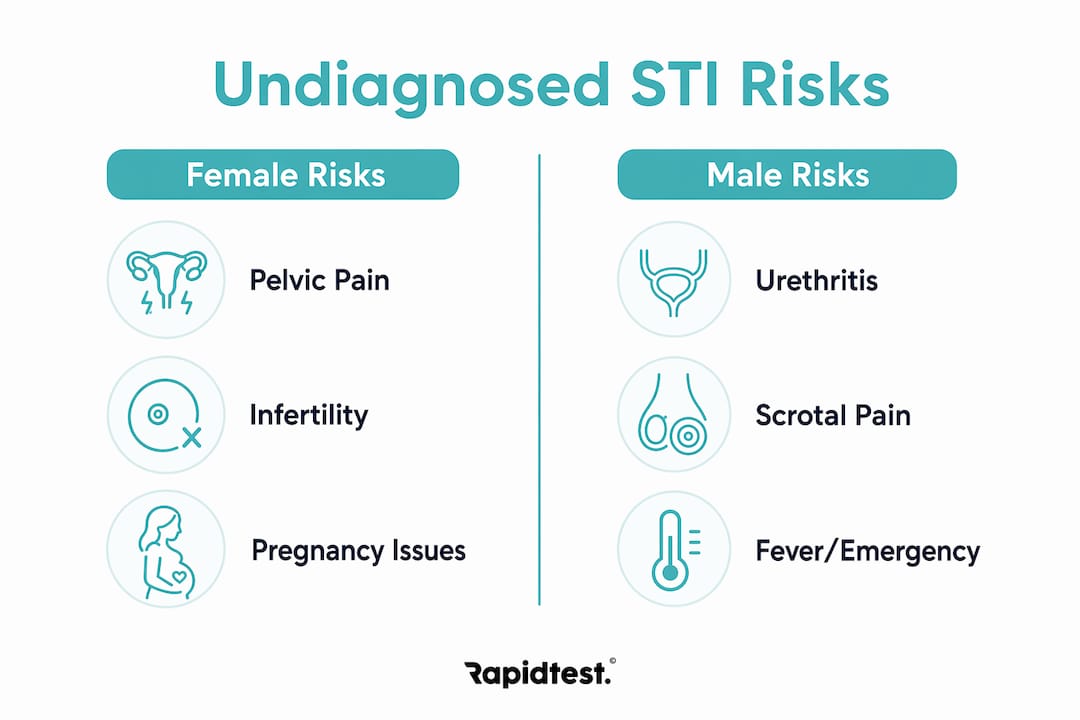
Untreated chlamydia and gonorrhoea are the leading causes of pelvic inflammatory disease (PID), a condition where infection spreads from the cervix into the uterus, fallopian tubes, and ovaries. Around 10–15% of untreated chlamydia cases progress to PID, and PID itself is one of the most common preventable causes of infertility.

| Complication | Common causes | Reversibility |
|---|---|---|
| Pelvic inflammatory disease (PID) | Chlamydia, gonorrhoea | Partially reversible if caught early |
| Tubal scarring / blocked tubes | Chlamydia, gonorrhoea | Irreversible |
| Infertility | Chlamydia, gonorrhoea | Often irreversible |
| Ectopic pregnancy | Chlamydia, gonorrhoea | Irreversible structural risk |
| Chronic pelvic pain | Chlamydia, gonorrhoea, PID sequelae | Partially reversible |
The difficulty is that PID itself is often silent or presents with only vague symptoms: mild lower abdominal discomfort, irregular bleeding, or pain during sex that is easy to dismiss. By the time a diagnosis is made, scarring may already have narrowed or blocked the fallopian tubes, raising the risk of ectopic pregnancy and reducing the chances of natural conception.
If you have had unprotected sex with a new or multiple partners and experience any pelvic discomfort, unusual discharge, or pain during sex, it is worth getting assessed rather than waiting to see if it passes.
Reproductive and urological complications in people assigned male at birth
Undiagnosed STIs do not only affect people with a uterus. In men, untreated chlamydia or gonorrhoea can travel from the urethra into the epididymis, the coiled tube that carries sperm from the testes. The resulting condition, epididymitis, causes pain and swelling and, if left untreated, can permanently damage sperm production.
Key male urological complications include:
- Epididymitis: scrotal pain, swelling, fever; treatable with antibiotics but can cause scarring if delayed
- Orchitis: inflammation of the testes, sometimes linked to untreated gonorrhoea; can reduce testosterone production and sperm quality
- Urethral stricture: scarring of the urethra from repeated or untreated gonorrhoea, causing long-term urinary problems
- Reduced sperm quality: even subclinical inflammation from chlamydia can affect sperm motility and DNA integrity
- Infertility: bilateral epididymal scarring can block sperm transport entirely
Pro Tip: Scrotal pain or swelling with fever is a medical emergency — go to A&E or an urgent care centre the same day. If you have been treated for an STI and are concerned about fertility, ask your GP for a semen analysis referral three to six months after completing treatment.

Long-term disease from viral STIs: HPV and hepatitis
Not all STI complications are bacterial and therefore curable. Viral STIs carry a different kind of risk: chronic infection that, over years or decades, can drive cancer or serious organ disease.
HPV is the primary STI linked to cancer. WHO identifies HPV as the main cause of cervical cancer, and the same virus drives anal, penile, vulval, vaginal, and oropharyngeal (throat) cancers. Most HPV infections clear on their own, but persistent high-risk strains, particularly HPV 16 and 18, can cause cellular changes that progress to cancer if undetected.
Key viral STI risks:
- HPV: cervical, anal, oropharyngeal, penile, vulval cancers; largely preventable with the HPV vaccine (offered on the NHS to adolescents and available to some adults)
- Hepatitis B: chronic infection can cause cirrhosis and hepatocellular carcinoma; hepatitis B results in a significant number of deaths worldwide) globally, mostly from cirrhosis and liver cancer
- Hepatitis C: transmitted sexually (particularly among men who have sex with men) and through blood; can cause chronic liver disease and cancer if untreated
- HSV-2 (genital herpes): no cure, but antiviral therapy reduces outbreaks and transmission risk; increases HIV susceptibility during active outbreaks
The HPV vaccine and hepatitis B vaccine are both highly effective preventive tools. If you have not had the HPV vaccine and are under 45, it is worth asking your GP whether you are eligible.
Syphilis: how untreated infection progresses through the body
Syphilis is one of the most serious STIs precisely because it is so easy to miss in its early stages and so damaging if left alone. Clinical evidence is clear: untreated syphilis can progress to neurosyphilis and cardiovascular disease, both of which are often irreversible.
The four stages and what each means:
- Primary: a painless sore (chancre) at the infection site; often unnoticed, heals on its own but infection remains
- Secondary: rash (including on palms and soles), flu-like symptoms, mucous membrane lesions; highly infectious
- Latent: no symptoms, but the bacterium Treponema pallidum remains in the body; early latent is still treatable
- Tertiary: gummas (tissue destruction), cardiovascular syphilis (aortic aneurysm), and neurosyphilis (meningitis, dementia, blindness, paralysis)
The timeline risk is real. Without treatment, syphilis can take 10–30 years to reach tertiary stage, but the damage it causes there is largely irreversible. A single course of penicillin in the primary or secondary stage prevents all of this. The window for full recovery closes gradually as the infection progresses through latency.
Syphilis cases in England have been rising for several years. If you have had unprotected sex, a syphilis blood test is a straightforward part of any full STI screen.
How undiagnosed STIs increase your risk of acquiring HIV
This connection is one of the most clinically significant and least talked about. Gonorrhoea, chlamydia, and herpes all increase both the risk of acquiring HIV and the risk of transmitting it if you are already HIV-positive.
The biological mechanisms are direct:
- Mucosal disruption: ulcerating STIs (herpes, syphilis) create open entry points for HIV
- Immune cell recruitment: inflammation from any STI draws CD4+ T-cells and macrophages, the exact cells HIV targets, to the genital mucosa
- Raised local viral shedding: in people living with HIV, co-infection with gonorrhoea or chlamydia increases HIV concentration in genital secretions, making transmission more likely even when systemic viral load is controlled
Statistic: Research cited by the American Society for Microbiology notes that a notable portion of incident HIV infections among men who have sex with men in the United States are attributed to gonorrhoea or chlamydia co-infection.
Treating and preventing other STIs is therefore also a meaningful HIV prevention strategy, not just a separate concern.
Pregnancy and neonatal harms from undiagnosed STIs
If you are pregnant, an undiagnosed STI carries risks that extend well beyond your own health. Infections that cause mild or no symptoms in a pregnant person can cause catastrophic outcomes for the baby.
The key perinatal risks include:
- Congenital syphilis: can cause stillbirth, bone deformities, neurological damage, and death in the newborn; entirely preventable with antenatal screening and treatment
- Neonatal herpes: HSV-2 transmitted during delivery can cause severe brain damage or death in newborns
- Neonatal conjunctivitis: gonorrhoea or chlamydia passed during birth can cause eye infection and, if untreated, blindness
- Premature birth and low birth weight: linked to untreated chlamydia, gonorrhoea, and bacterial vaginosis
- Stillbirth and miscarriage: associated with untreated syphilis and, to a lesser degree, other bacterial STIs
Pro Tip: The NHS routinely screens pregnant people for syphilis, HIV, and hepatitis B at the booking appointment. Chlamydia screening is offered to those under 25. If you have had a new partner since your last screen, ask your midwife for an additional test, even mid-pregnancy. It is a straightforward request and entirely routine.
Antibiotic resistance and the wider public-health picture
Antibiotic resistance is not just a future concern. It is already affecting how gonorrhoea is treated in the UK right now. Gonorrhoea has developed resistance to multiple antibiotic classes over the decades, and WHO data) confirms that treatment options are narrowing as resistance spreads.
The public-health consequences of undiagnosed and untreated STIs extend beyond individual harm:
- Resistance spread: each untreated gonorrhoea case is an opportunity for resistant strains to develop and be passed on
- Empirical treatment failure: when resistance is widespread, standard first-line antibiotics stop working, meaning more complex, expensive regimens are needed
- Surveillance gaps: asymptomatic, undiagnosed cases never enter surveillance data, making it harder for public health bodies to track and respond to outbreaks
- Healthcare costs: untreated STIs contribute to thousands of infertility cases annually and substantial long-term healthcare expenditure
Getting tested and treated promptly is not just about your own health. It reduces the pool of undetected infection circulating in sexual networks and slows the development of resistance.
Why testing is the only way to know: test types, samples, and window periods
Symptoms are an unreliable guide. Accurate molecular tests), specifically nucleic acid amplification tests (NAATs), are the gold standard for detecting asymptomatic infections. Here is how the main tests map to infections in the UK:
| Infection | Recommended test | Sample type | Typical window period |
|---|---|---|---|
| Chlamydia | NAAT | Urine, swab (genital, rectal, throat) | 2 weeks |
| Gonorrhoea | NAAT | Urine, swab (genital, rectal, throat) | 2 weeks |
| Syphilis | Serology (treponemal antibody) | Blood | 6 weeks (up to 12 for certainty) |
| HIV | 4th-generation antigen/antibody | Blood or fingerprick | 45 days (most; 90 days for certainty) |
| Hepatitis B | Surface antigen + antibody | Blood | 6 weeks |
| Hepatitis C | Antibody test | Blood | 8–11 weeks |
| HSV-2 | Serology or swab of active lesion | Blood or swab | Serology: 12 weeks |
| HPV | HPV DNA test (via cervical screening) | Cervical swab | N/A (part of NHS cervical screen) |
Who should be screened routinely:
- Anyone with a new sexual partner
- People with multiple partners, ideally every 3 months
- Pregnant people at the booking appointment
- Men who have sex with men (MSM): full screen every 3 months if sexually active
- Anyone who has had unprotected sex and is unsure of their partner’s status
Pro Tip: At-home rapid tests for chlamydia, gonorrhoea, syphilis, HIV, hepatitis B, hepatitis C, and HSV-2 are available without a clinic appointment. They are a practical first step, but if a result is positive, follow up with a sexual health clinic for confirmatory testing and treatment. You can find step-by-step guidance on using at-home kits correctly.
What treatment can fix and what it cannot: timelines and follow-up
Many bacterial STIs are fully curable with antibiotics, but the window for a complete recovery is not unlimited. The key principle from StatPearls clinical guidance is straightforward: the earlier treatment starts, the more damage is prevented.
Typical treatment timelines and what to expect:
- Chlamydia: single-dose azithromycin or a week of doxycycline; symptoms (if any) resolve within 1–2 weeks; test of cure not routinely needed unless symptoms persist or pregnancy
- Gonorrhoea: single-dose ceftriaxone injection; test of cure recommended at 2 weeks due to resistance concerns
- Syphilis (primary/secondary): single intramuscular penicillin injection; later stages require multiple doses over weeks
- HIV: antiretroviral therapy (ART) controls the virus but does not cure it; started promptly, it prevents progression and reduces transmission to near zero
- Hepatitis B: acute infection often clears in adults; chronic infection is managed with antivirals but not cured
- Herpes: antivirals (aciclovir, valaciclovir) reduce outbreak frequency and transmission risk; the virus remains lifelong
On fertility after STI complications: if you have been treated for PID or epididymitis and are concerned about fertility, ask your GP for a referral to a specialist. For people with a uterus, a hysterosalpingography (HSG) can assess tubal patency. For men, a semen analysis three to six months post-treatment gives a clearer picture of any lasting impact on sperm quality.
Pro Tip: Always treat partners at the same time. Reinfection from an untreated partner is one of the most common reasons treatment appears to fail. Sexual health clinics can issue partner notification letters discreetly, or you can use the NHS’s anonymous notification service.
Practical prevention: condoms, vaccination, and regular screening
Consistent condom use, HPV and hepatitis B vaccination, and regular screening are the three most effective tools for reducing STI risk. None of them are complicated, but combining all three makes a real difference.
Prevention steps you can take now:
- Condoms: reduce transmission of most STIs significantly; use for vaginal, anal, and oral sex, and with new or casual partners
- HPV vaccination: offered free on the NHS to young people; adults up to 45 may be eligible privately or through some sexual health clinics
- Hepatitis B vaccination: available free on the NHS for people at higher risk, including MSM, sex workers, and those with multiple partners
- Regular STI screening: every 3 months for MSM and those with multiple partners; annually for others with new partners; at every new relationship
- PrEP: pre-exposure prophylaxis for HIV is available free on the NHS for eligible people at higher risk
- Partner notification: if you test positive, informing recent partners allows them to get tested and treated before complications develop
Pro Tip: NHS sexual health clinics offer free, confidential testing and treatment, with no GP referral needed. If you prefer privacy or speed, at-home STI screening gives you results in 15 minutes without a waiting room. For partner notification, sexual health clinics can handle this anonymously on your behalf.
Realistic testing options in the UK: NHS, private, and at-home
Screening works. WHO guidance on STI screening is clear that targeted screening in higher-risk populations reduces severe outcomes, and the evidence from antenatal programmes shows that routine testing prevents neonatal harm. The barrier is usually access, not willingness.
Here are the main routes available in the UK:
- NHS sexual health clinics: free, confidential, full STI screens including treatment; no GP referral needed; waiting times vary by location and can be several days to weeks in busy areas
- GP surgery: can refer for STI testing; useful if you have symptoms or ongoing concerns; may feel less anonymous than a dedicated clinic
- Private sexual health clinics: faster appointments, broader test panels, results often within 24–48 hours; costs vary; Zest Clinic is one example of a private provider offering STI assessment and testing
- At-home rapid test kits: results in 15 minutes; no appointment, no waiting room, discreet packaging; cover chlamydia, gonorrhoea, syphilis, HIV, hepatitis B, hepatitis C, and HSV-2; positive results should always be followed up with a clinic for confirmation and treatment
Pro Tip: At-home testing is particularly useful for people who test regularly, those who feel anxious about clinic visits, or anyone who wants a quick answer after a potential exposure. Look for kits that use CE-marked lateral flow technology and come with clear instructions. Rapidtest’s home STI testing guide walks you through choosing and using a kit correctly.
Statistic: WHO recommends screening of asymptomatic STIs in selected priority populations and settings, recognising that most infections are missed without proactive testing.
Key takeaways
Undiagnosed STIs cause serious, sometimes permanent harm, but most outcomes are preventable with early testing and treatment.
| Point | Details |
|---|---|
| Most STIs have no symptoms | You can carry and transmit an infection for months without knowing; routine testing is the only reliable way to find out. |
| Delay causes irreversible damage | Untreated chlamydia and gonorrhoea can cause tubal scarring and infertility; syphilis can progress to neurological and cardiovascular disease. |
| Pregnancy screening is urgent | Undiagnosed STIs in pregnancy risk stillbirth, neonatal infection, and disability; NHS antenatal screening is routine but ask for additional tests if needed. |
| Prevention is straightforward | Condoms, HPV and hepatitis B vaccination, and regular screening reduce risk substantially for most people. |
| Rapidtest offers 15-minute at-home screening | Rapidtest’s at-home STI kits cover the major infections and give results in 15 minutes, with no appointment or waiting room needed. |
Why stigma is the real barrier to getting tested
Let’s be real: most people who skip STI testing do not do so because they think it is unimportant. They skip it because it feels awkward, embarrassing, or like an admission of something. That stigma is the single biggest driver of undiagnosed infections, and it is the thing that quietly turns a treatable condition into a lifelong complication.
What the evidence actually shows is that STIs are common, often asymptomatic, and entirely manageable when caught early. Providers consistently note that normalising testing and honest partner conversations convert an avoidable health risk into manageable care. Testing is not a sign that something has gone wrong. It is a sign that you are paying attention.
The people most likely to develop serious complications are not those who test frequently. They are those who wait for symptoms that may never come. If this article does one thing, it should be to make testing feel like the obvious, unremarkable choice it actually is.
Rapidtest at-home STI kits: private, fast, and no appointment needed
Waiting weeks for a clinic slot when you want an answer now is frustrating, and for many people it is the reason testing gets put off entirely. Rapidtest’s at-home STI testing kits give you a result in 15 minutes, delivered to your door in discreet packaging, with no GP referral, no waiting room, and no awkward conversations.

The kits cover chlamydia, gonorrhoea, syphilis, HIV, hepatitis B, hepatitis C, HSV-2, and HPV, with full instructions included. You collect your own sample at home and read the result yourself, the same way you would a pregnancy test.
A few things to be clear about: at-home rapid tests are an excellent first step for early detection, but a positive result should always be followed up with an NHS sexual health clinic or GP for confirmatory testing and treatment. If you have symptoms right now, such as unusual discharge, sores, or pelvic pain, go directly to a sexual health clinic or your GP rather than waiting for a home test result.
Ready to know where you stand? Order your kit and get your result today.
Useful sources and further reading
- WHO STI fact sheet) — global prevalence data, asymptomatic rates, and public health guidance on STI prevention and treatment
- WHO STI health topics page — overview of STI types, cancer links, and vaccination guidance
- WHO global STI screening guidance — recommendations on targeted screening in priority populations
- StatPearls / NCBI Bookshelf: Sexually Transmitted Infections — clinical reference covering diagnosis, treatment, complications, and prognosis
- American Society for Microbiology: dangers of undiagnosed STIs — accessible explainer on asymptomatic carriage, PID rates, and HIV co-infection risk
- NHS: sexually transmitted infections — UK-specific guidance on symptoms, testing, and where to get help
- Cleveland Clinic: STDs/STIs overview — patient-facing background on types, symptoms, and the importance of routine testing
- PubMed: impacts and consequences of STIs — peer-reviewed review of epidemiology, healthcare costs, and quality-of-life impact
FAQ
What happens if an STI goes undiagnosed for a long time?
Untreated STIs can cause permanent damage, including infertility from tubal scarring, neurological and cardiovascular complications from syphilis, and cancer from persistent HPV or chronic hepatitis. Many of these outcomes are irreversible once established, which is why early testing matters.
How do you know if you have an STI?
Most STIs cause no symptoms at all, so the only reliable way to know is to get tested. When symptoms do occur, they can include unusual discharge, sores or blisters, pelvic pain, or burning when urinating, but their absence does not mean you are clear.
What should you do if you think you have been exposed to an STI?
Get tested as soon as the relevant window period has passed (typically two weeks for chlamydia and gonorrhoea, 45 days for HIV). If you think you have been exposed to HIV recently, contact a sexual health clinic or A&E immediately for PEP (post-exposure prophylaxis).
Can someone with an STI live a normal life?
Yes. Most bacterial STIs are fully curable with antibiotics. Viral STIs like HIV and herpes are manageable with medication, and people on effective treatment live full, healthy lives. The key is early diagnosis and consistent follow-up care.
Can Rapidtest kits detect asymptomatic STIs?
Yes. Rapidtest’s at-home rapid test kits are designed to detect infections including chlamydia, gonorrhoea, syphilis, HIV, hepatitis B, hepatitis C, and HSV-2 whether or not you have symptoms. A positive result should always be confirmed with a clinical test before treatment begins.
This article is general health information, not medical advice. If you have symptoms or concerns about a specific situation, please contact an NHS sexual health clinic, your GP, or a qualified healthcare professional for guidance tailored to your circumstances.