


Randox Health vs at-home testing: what UK consumers need to know
Randox Health is a strong choice for comprehensive, clinician-reviewed health screening, but it is not the fastest or most private option if you need quick results at home. The service is clinic-led, uses venous blood draws by trained phlebotomists, and processes samples in UKAS-accredited in-house laboratories. That is genuinely impressive clinical infrastructure. The trade-off? You need to travel to one of around 30 UK and Ireland clinic locations, book an appointment, and wait for your results. If you want a discreet STI check, a fertility marker, or a PSA reading in 15 minutes without leaving your house, an at-home rapid kit from Rapidtest is the more practical route.
- Randox Health: clinic appointments, venous draws, up to ~150 biomarkers, results in as little as two hours in-clinic
- Rapidtest: at-home rapid kits, finger-prick or swab, results in 10–15 minutes, no lab return needed
- Key trust signal: Randox Clinical Laboratory Services holds UKAS accreditation (ISO 15189)
- Key drawback for at-home seekers: you must attend a clinic or use a postal Tasso+ device; no instant result at home
Table of Contents
- What is Randox Health and what does it offer in the UK?
- How does Randox Health compare to at-home rapid kits?
- How do you choose between Randox Health and an at-home kit?
- What happens when you book a Randox Health test?
- Does sample type really affect accuracy?
- When an at-home rapid kit from Rapidtest is the right call
- Key takeaways
- Discreet at-home health screening, results in 15 minutes
- Useful sources
- FAQ
What is Randox Health and what does it offer in the UK?
Randox Laboratories (company number NI015738) was founded in 1982 in Crumlin, Northern Ireland, by Peter FitzGerald. Today, it distributes diagnostic products internationally and is the UK’s largest PCR testing provider. Randox Health is its consumer-facing private health screening arm.
The core model is clinic-first. You book an appointment, attend in person, and a phlebotomist takes a venous blood draw. Samples are processed in Randox’s own laboratories in Liverpool, London, Holywood, and Antrim, which means the company controls quality end-to-end.
| Service type | Example product | Biomarkers | Approx. price |
|---|---|---|---|
| Flagship clinic panel | Everyman / Everywoman | ~150 | ~£295 |
| Signature annual programme | Signature Health Plan | Multiple panels | From ~£595 |
| Entry home kit | PSA / General Health | Small panel | From ~£69 |
| Home collection device | Tasso+ postal kit | Limited panel | Varies |
Randox also offers a limited range of home collection options via the Tasso+ device, which you use yourself and post back. Results are delivered digitally, sometimes with a follow-up consultation depending on the package.
How does Randox Health compare to at-home rapid kits?
The fundamental split in private health testing is between clinic-led providers with in-house labs and at-home options. Here is how the key dimensions stack up:
| Dimension | Randox Health (clinic) | Postal lab test | At-home rapid kit (Rapidtest) |
|---|---|---|---|
| Setting | Clinic appointment | Home collection, lab return | Home, no return needed |
| Sample method | Venous blood draw | Finger-prick or Tasso+ | Finger-prick or swab |
| Turnaround time | As little as 2 hours in-clinic | Typically 1–5 days | 10–15 minutes |
| Panel depth | Up to ~150 biomarkers | Moderate (varies by provider) | Focused (single marker or small panel) |
| Accuracy / confirmatory need | High; gold standard sample | Good; some re-collection risk | Screening-level; confirm positives |
| Price range | £69–£595+ | £30–£150 typically | Affordable single-kit pricing |
| Privacy & convenience | Clinic visit required | Discreet postal | Fully discreet, no postage |
| Clinician review | Often included | PDF report; add-on option | Not included; self-read result |
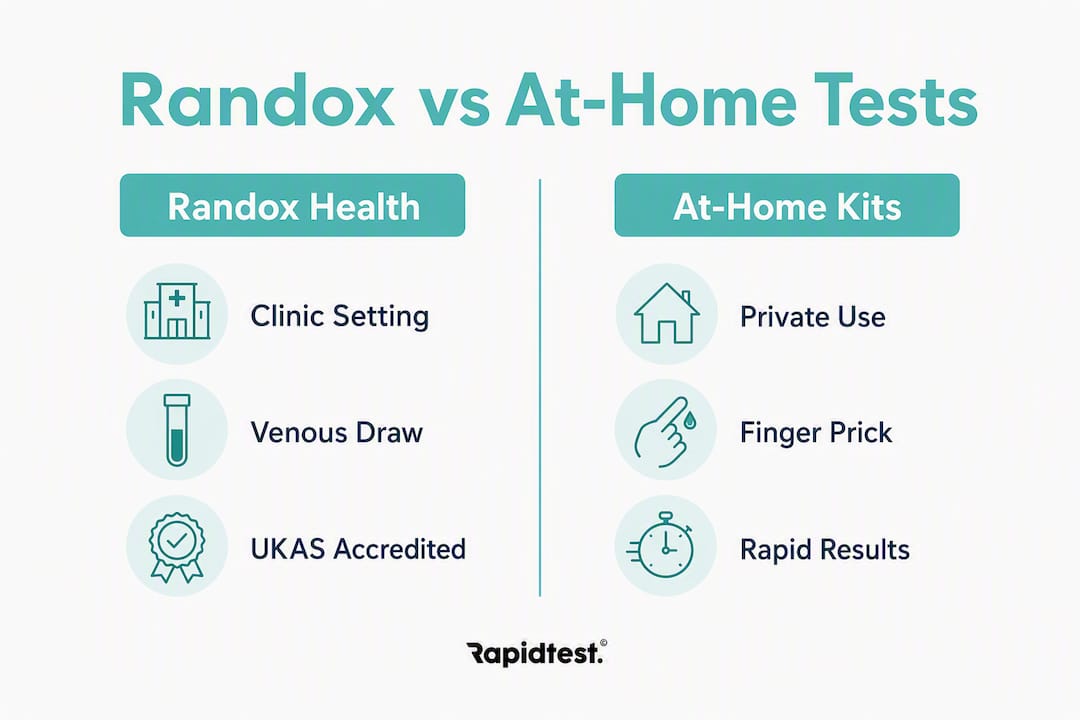
The differences that actually change your decision are turnaround time and convenience. If you need a result today, a clinic two-hour turnaround only helps if you can get there. If you are in London, Manchester, or Birmingham, that is realistic. If you are not near one of Randox’s ~30 locations, it is not.
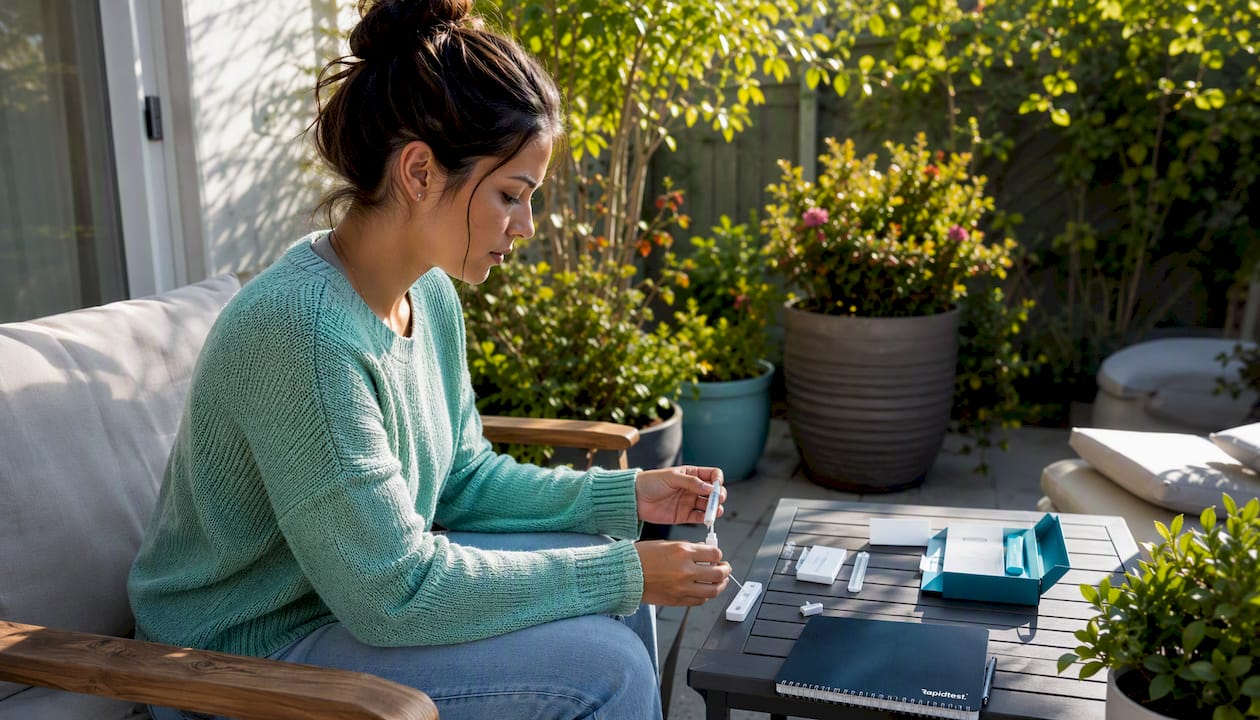
Pro Tip: Consider a hybrid approach: use a Randox clinic panel once a year to establish a comprehensive baseline across 100+ biomarkers, then track key markers like PSA or STI status with at-home rapid kits throughout the year. Market analysts recommend exactly this strategy for cost-effective, ongoing health monitoring.
How do you choose between Randox Health and an at-home kit?
Ask yourself these questions before you buy anything:
- Are you near a Randox clinic? With around 30 locations across the UK and Ireland, access is good in major cities but limited elsewhere. Check the clinic finder before assuming you can attend.
- How many biomarkers do you actually need? A comprehensive wellness MOT covering ~150 markers is genuinely useful for a full health picture. For a single STI check or a PSA reading, a focused rapid kit is more proportionate.
- Do you need a clinician to interpret your results? Clinic packages often include a 20–40 minute results consultation. Postal and rapid kits typically deliver a report or a self-read result without a doctor appointment unless you pay extra.
- How urgent is this? Randox’s in-clinic turnaround can be as little as two hours, but you still need to travel and book. A rapid kit gives you a result in 10–15 minutes at home.
- What is your budget? Home kits from Randox start at around £69 for small panels, while flagship clinic packages run to around £295 and signature programmes from around £595. Rapidtest kits sit at the affordable end for focused screening.
- How important is privacy? A clinic visit creates a booking record and requires you to be seen. An at-home kit, ordered online and delivered in discreet packaging, leaves a much smaller footprint. Read more on confidential home testing if that matters to you.
What happens when you book a Randox Health test?
Clinic pathway
| Step | What happens | Typical timing |
|---|---|---|
| 1. Book | Choose test, select clinic, pay online | Minutes |
| 2. Attend | Phlebotomist takes venous blood draw | 15–30 min appointment |
| 3. Lab processing | Sample processed in Randox’s own lab | As little as 2 hours |
| 4. Results | Digital report; consultation if included | Same day or next day |
| 5. Follow-up | GP consultation or retest if flagged | Varies by package |
Home collection (Tasso+ / postal)
You receive the Tasso+ device, collect your sample at home, and post it back. Turnaround is longer than an in-clinic visit because the sample must travel to the lab before processing begins. Results arrive digitally, usually with a written doctor-reviewed report rather than a live consultation. Some packages include a follow-up call if a result is flagged.
Does sample type really affect accuracy?
Yes, and it is worth understanding why before you choose. Venous draws are the clinical gold standard because they provide a larger blood volume and carry a lower risk of haemolysis (where red blood cells break down and corrupt the sample). That matters for complex panels covering dozens of biomarkers.
Finger-prick samples are more convenient but carry a higher risk of insufficient volume or sample degradation, particularly if the collection is rushed or the blood flow is poor. This can mean a re-collection request, which adds delay.
Key points on accuracy and when to confirm:
- Rapid lateral-flow kits are designed for screening, not diagnosis. They tell you whether a marker is likely present, not a definitive clinical verdict.
- Sensitivity and specificity vary by test. A high-sensitivity STI rapid test will catch most true positives; a lower-sensitivity one may miss some.
- If a rapid or at-home test returns a positive or borderline result for an STI, PSA, or FOB marker, the standard clinical pathway is to confirm with a venous draw at an accredited laboratory.
- For ongoing trend monitoring (tracking PSA over time, for example), rapid kits are practical and cost-effective between annual clinic panels. Learn more about turnaround times for men’s health markers.
When an at-home rapid kit from Rapidtest is the right call
For many people, the priority is speed, privacy, and not having to explain yourself to anyone. That is exactly where Rapidtest fits.
Rapidtest sells at-home rapid kits that deliver results in 10–15 minutes, with no sample return, no lab wait, and no appointment. The product range covers:
- STI screening: chlamydia, gonorrhoea, syphilis, HIV, Hep B, Hep C, HSV-2, and HPV. Results in 15 minutes from a finger-prick or swab. See the full STI testing kit range.
- Fertility and hormone testing: FSH, LH, HCG, and sperm concentration kits for men and women. Useful for couples tracking cycles or checking fertility markers before a GP appointment. Browse fertility testing kits.
- Men’s health screening: PSA rapid tests for prostate health and FOB kits for bowel cancer screening, both with results at home in 10–15 minutes.
The right use cases: you want immediate reassurance after a potential exposure; you are checking a marker before a GP appointment; you want to monitor a known condition without repeated clinic visits; or you simply value privacy above all else.
Key takeaways
Randox Health suits comprehensive, clinician-reviewed baseline testing; Rapidtest at-home rapid kits suit fast, private, focused screening with results in 10–15 minutes.
| Point | Details |
|---|---|
| Randox Health model | Clinic-led, venous draws, UKAS-accredited labs, up to ~150 biomarkers per panel |
| Turnaround time contrast | Randox in-clinic: as little as 2 hours; Rapidtest at-home: 10–15 minutes |
| Price range | Randox home kits from ~£69; clinic panels ~£295; Rapidtest kits at the affordable end for focused screening |
| When to confirm results | A positive or borderline rapid test result should be confirmed by venous draw at an accredited lab |
| Rapidtest recommendation | For fast, discreet STI, fertility, or men’s health screening at home, Rapidtest kits deliver results in 10–15 minutes with no lab return |
The honest trade-off most people overlook
There is a tendency to frame this as “clinic good, home kit inferior.” That is too simple. Randox Health’s venous draw and owned-lab model genuinely does produce more reliable results for complex panels, and the clinician consultation that comes with flagship packages has real value. If you have never had a comprehensive health screen, a Randox Everyman or Everywoman panel is a worthwhile investment.
But for the specific situations most people actually face, including a potential STI exposure, a quick PSA check before a GP appointment, or a fertility marker you want to track privately, a 10–15 minute at-home result is not a compromise. It is the appropriate tool. The mistake is using a clinic panel for routine monitoring when a rapid kit would do the job, or using a rapid kit alone when a positive result genuinely needs laboratory confirmation.
Privacy also matters more than the clinical literature tends to acknowledge. A clinic visit, however discreet, involves a booking, a face, and a record. For many people, that friction is the barrier that stops them testing at all. An at-home kit removes it entirely.
Discreet at-home health screening, results in 15 minutes
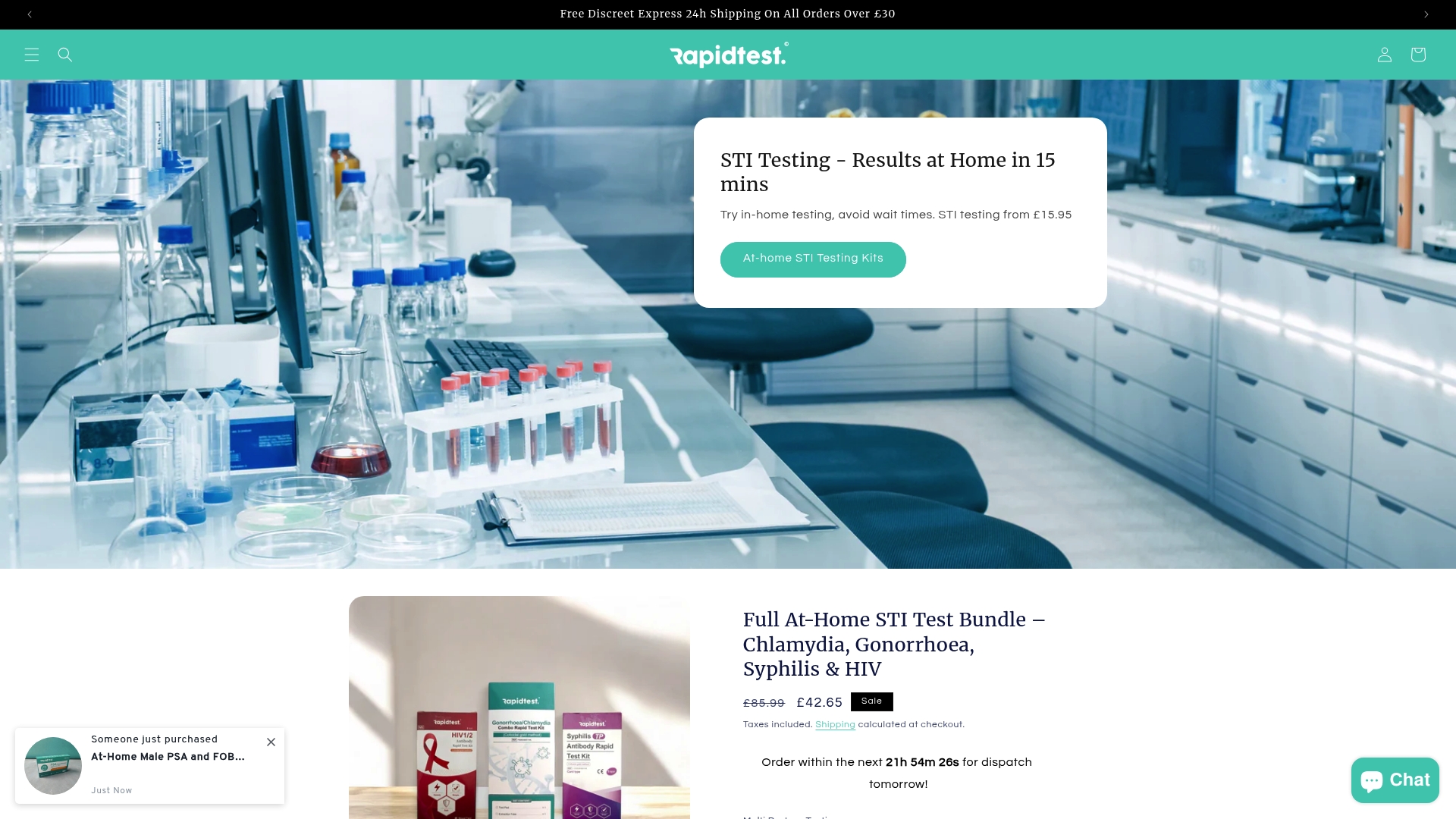
If speed and privacy are your priorities, Rapidtest gives you results at home in 10–15 minutes, with no lab return and no appointment. Every kit arrives in discreet packaging with full instructions included, so there is nothing to figure out and no one to explain yourself to. Whether you are checking for an STI, tracking a fertility marker, or monitoring your PSA, the process is straightforward: collect your sample, follow the instructions, read your result.
Browse the full range and order today at rapidtest.co.
Useful sources
When evaluating any private health testing provider, check these directly:
- GOV.UK company register: Randox Laboratories Limited (NI015738) — verify registration and registered office
- UKAS: ukas.com — search for a provider’s accreditation number and confirm ISO 15189 status
- Independent comparison: bloodtestguide.co.uk — clinic vs postal analysis for UK private testing
- Rapidtest product pages: rapidtest.co — at-home rapid kits for STI, fertility, and men’s health
- PRYM Wellness: at-home lab testing options — useful context on home phlebotomy and lab processing workflows
On any provider page, verify: does the company own its laboratory? What is the UKAS accreditation number? What sample type is required? What is the stated turnaround time? Is a clinician review included or an add-on?
This article is general information, not medical advice. Confirm current clinical guidance with your GP or a qualified healthcare professional for your own situation.
FAQ
Is Randox Health UKAS accredited?
Yes. Randox Clinical Laboratory Services holds UKAS accreditation to ISO 15189, with accredited laboratories in Liverpool, London, Holywood, and Antrim.
How long does a Randox Health test take?
In-clinic samples processed at a Randox laboratory can return results in as little as two hours. Postal or Tasso+ home collection adds transit time, typically extending the wait to one to several days.
When should I use an at-home rapid kit instead of a clinic test?
Use a rapid kit when you need a result quickly and privately, for example after a potential STI exposure, for a fertility marker check, or for a routine PSA reading. If the result is positive or borderline, follow up with a venous draw at an accredited laboratory.
How much does Randox Health cost?
Home kits start from around £69 for small panels. Flagship clinic packages such as Everyman and Everywoman are around £295, and signature annual programmes start from around £595.
Can Rapidtest kits replace a Randox clinic panel?
For focused, single-marker screening, yes. For a comprehensive baseline across ~150 biomarkers with clinician review, a clinic panel is more appropriate. Many people use both: a clinic panel annually and Rapidtest kits for ongoing monitoring throughout the year.