


What is test turnaround time? Fast results for men's health
Many men over 40 put off health testing simply because they don’t know how long it will take to get answers. Will it be days? Weeks? Do you need to book a clinic appointment and sit in a waiting room? That uncertainty alone is enough to make most guys kick the can down the road. But here’s the thing: knowing your test turnaround time upfront removes one of the biggest mental barriers to getting checked. In this article, we’ll break down what turnaround time actually means, how long common men’s health tests take, what slows results down, and why faster answers genuinely change health outcomes.
Table of Contents
- Defining test turnaround time: what does it really mean?
- Typical timelines: how quickly can you get your results?
- What affects test turnaround time? Factors to consider
- Why test turnaround time matters: health, privacy, and peace of mind
- The real story: what most men miss about test turnaround time
- Get rapid answers: private testing options for fast results
- Frequently asked questions
Key Takeaways
| Point | Details |
|---|---|
| Test turnaround defined | Turnaround time means how long you wait for results after sample collection. |
| At-home tests are fastest | Rapid at-home kits give results in 10 to 15 minutes for most STI and cancer checks. |
| Delays explained | Post, lab processing, and sometimes extra confirmation can slow results. |
| Faster results help anxiety | Quick answers reduce stress and empower you to take early action for your health. |
Defining test turnaround time: what does it really mean?
Now that you understand why quick answers are so important, let’s clarify what test turnaround time actually means.
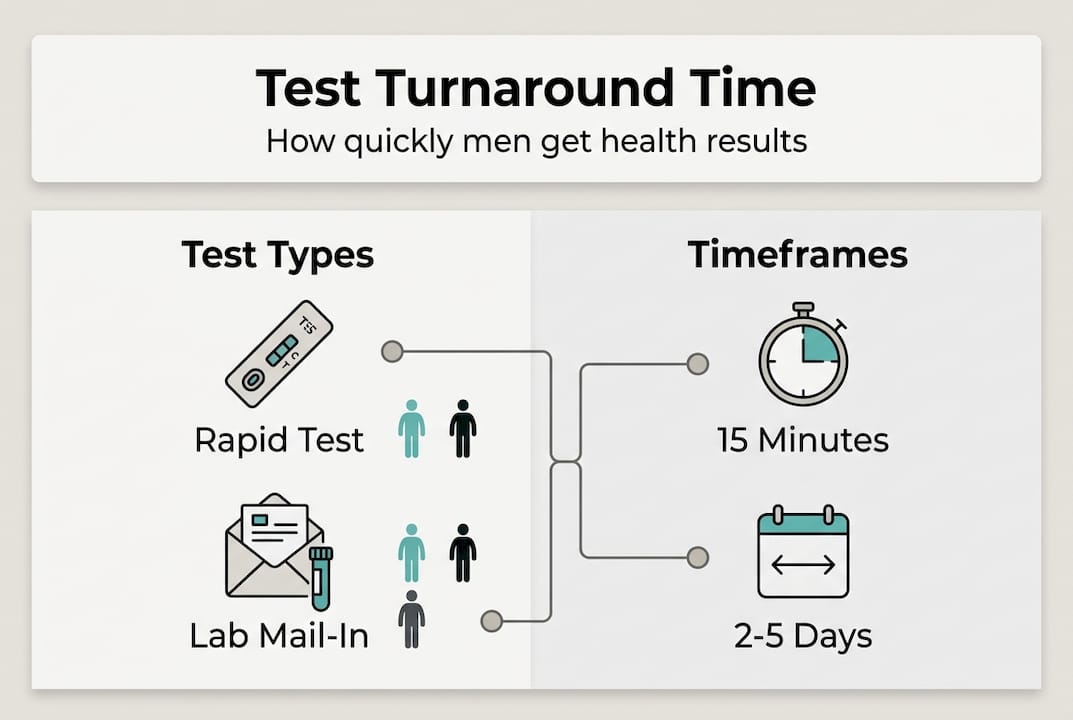
Test turnaround time is the period from sample collection to when the result is available. Simple as that. But in practice, it’s made up of three distinct stages that often get blurred together.
- Sample collection: This is when you provide the sample, whether that’s a swab, urine, blood drop, or stool sample.
- Processing: The sample is analyzed, either by a rapid test strip at home or by a laboratory.
- Result delivery: You receive your result, either by reading a test strip yourself or through an online portal or letter.
Where confusion creeps in is when people assume the clock starts ticking at the wrong point. Some men think turnaround time means how long it takes to book a test. Others assume it includes waiting for a GP referral. It doesn’t. Turnaround time is purely about sample to result.
Why does this matter so much for men over 40? Because health decisions rarely happen in a vacuum. If you’ve had a potential STI exposure, you need to know quickly so you can protect yourself and others. If you’re monitoring your PSA levels for prostate health, a faster result means faster peace of mind or faster action. Waiting two weeks for a result you could have had in 15 minutes isn’t just inconvenient. It’s a real barrier to proactive health management.
Another common misbelief is that faster tests are less reliable. We’ll address accuracy later, but speed and accuracy are not opposites in modern rapid testing.
Pro Tip: Before you order any test, check whether the result is delivered at home instantly or sent to a lab. Knowing this upfront means no surprises and far less anxiety while you wait.
Typical timelines: how quickly can you get your results?
Understanding what turnaround time means leads straight to the question: how long do these tests actually take?
The honest answer is: it depends entirely on the type of test and where you take it. Here’s a practical breakdown.
| Test type | At-home rapid | Mail-in lab | GP or clinic |
|---|---|---|---|
| STI (chlamydia, gonorrhoea) | 10 to 15 minutes | 2 to 5 days | 3 to 7 days |
| HIV | 15 to 20 minutes | 3 to 7 days | 5 to 10 days |
| PSA (prostate marker) | 10 minutes | 3 to 5 days | 7 to 14 days |
| FOB (bowel cancer marker) | 10 to 15 minutes | 3 to 5 days | 7 to 14 days |
| Fertility (sperm count) | 10 to 15 minutes | 3 to 5 days | 7 to 21 days |
As you can see, at-home rapid tests deliver results in as little as 10 to 15 minutes for many STIs and cancer screenings. That’s not a marketing claim. That’s just how lateral flow technology works when there’s no lab or logistics chain involved.
For context, here’s how the at-home testing process actually works:
- Order your kit online and receive it discreetly at home.
- Collect your sample using the simple instructions included.
- Apply the sample to the test strip or cassette.
- Wait 10 to 15 minutes.
- Read your result directly from the test.
For men who want to monitor their prostate health at home, a PSA rapid test follows the same simple process. No clinic. No waiting room. No awkward conversations.
The contrast with traditional routes is stark. A GP referral for a PSA test can take weeks from first appointment to result. At home, you can have that same answer in under 15 minutes on a Saturday morning.

What affects test turnaround time? Factors to consider
But why do turnaround times differ so much? The answer lies in several common but often overlooked factors.
| Factor | Impact on turnaround time |
|---|---|
| Test type (rapid vs. lab) | Biggest factor. Rapid tests skip the lab entirely |
| Testing location (home vs. clinic) | Home removes travel, waiting, and admin delays |
| Shipping and postage | Mail-in kits add 1 to 3 days each way |
| Lab backlog | Can add days during busy periods |
| Confirmatory testing needed | Some positive results require a second lab test |
Delays can be due to shipping, lab backlog, or the need for a confirmatory test. This is especially relevant for men who use mail-in kits or rely on NHS services during peak times.
At-home rapid tests sidestep most of these issues entirely. There’s no postage delay, no lab queue, and no waiting room. You collect your sample and read your result in the same sitting.
Here’s what typically slows results down in traditional testing routes:
- Booking a GP appointment (can take days or weeks)
- Travel time to a clinic or sexual health center
- Sample processing at a third-party lab
- Result communication via letter or portal
- Potential need for a follow-up confirmatory test
For men monitoring ongoing health markers like PSA or FOB levels, these delays can genuinely affect how quickly you act on a result. Even a COVID or flu combo test illustrates the point: a rapid home test gives you an answer in minutes, while waiting for a clinic appointment could mean days of uncertainty.
Pro Tip: Always check whether your chosen test is a standalone rapid result or whether a positive result triggers a lab confirmation step. Both are valid, but knowing in advance means you’re prepared for the full timeline.
Why test turnaround time matters: health, privacy, and peace of mind
Beyond speed alone, what does a quick turnaround time really mean for your life and health?
“Faster results mean earlier treatments, reduced anxiety, and more control over your health.”
That’s not just a feel-good statement. It reflects something real about how men engage with their health. When results take too long, many men disengage entirely. They convince themselves it’s probably fine. They push the worry to the back of their mind. And sometimes, conditions that were entirely treatable get a head start.
Here’s what a fast turnaround time actually delivers for you:
- Earlier treatment: Catching an STI, elevated PSA, or positive FOB result early gives you more options and better outcomes.
- Reduced anxiety: Waiting is stressful. A 15-minute result closes the loop quickly instead of letting worry build for days.
- Better decision-making: You can act on accurate information rather than assumptions.
- Complete privacy: At-home tests mean no waiting rooms, no receptionists, and no one else involved in your result.
- Routine habit formation: When testing is fast and easy, men are far more likely to do it regularly.
The private test benefits go beyond convenience. For men over 40 who are already managing busy lives, removing the friction of clinic visits makes a genuine difference to whether they test at all. And testing is always better than not testing.
Speed also matters in specific health scenarios. If you’ve had a potential exposure to an STI, knowing quickly means you can seek treatment before symptoms develop or before passing anything on. That’s not just good for you. It’s good for everyone around you.
The real story: what most men miss about test turnaround time
Here’s something most articles won’t tell you: the biggest barrier to men’s health testing isn’t cost, embarrassment, or even access. It’s the belief that getting tested is going to eat up half a day.
We’ve seen this play out repeatedly. Men who are genuinely concerned about their health still delay because they imagine a long, complicated process involving appointments, waiting rooms, and results that arrive by post two weeks later. That mental picture is outdated, but it’s sticky.
At-home rapid testing has fundamentally changed what’s possible. When you know chlamydia testing timing can be resolved in 15 minutes at home, the decision to test becomes almost effortless. The same applies to PSA screening, fertility checks, and bowel cancer markers.
The real shift isn’t just in speed. It’s in who controls the process. When you’re in charge of your own testing timeline, you’re far more likely to act. Routine health checks stop feeling like a chore and start feeling like something you actually do. That behavioral shift is what saves lives. Speed isn’t just about results. It’s about removing every excuse not to take action.
Get rapid answers: private testing options for fast results
If you’re ready to experience fast, private answers for yourself, here are your next steps.
At Rapidtest, we’ve built our entire range around one idea: your health results should never have to wait. Whether you’re checking for STIs, monitoring your prostate, or screening for bowel cancer markers, our kits are designed for real life.
Explore our STI rapid test kits for results in 15 minutes at home. Check your rapid prostate health tests for PSA screening without a clinic visit. Or browse our fertility testing kits if you’re looking at family planning. No queues, no doctors, no waiting. Just clear answers, fast.
Frequently asked questions
What does test turnaround time mean for medical tests?
Test turnaround time is the period from collecting your sample to when you receive your results. It does not include booking time or travel to a clinic.
How long does it take to get results from an at-home STI test?
Most rapid at-home STI tests show results in 10 to 15 minutes after sample collection, with no lab or postage involved.
What factors could delay my test results?
Shipping times, lab backlogs, and sometimes the need for a confirmatory test may cause delays, particularly with mail-in or clinic-based testing routes.
Are rapid test results as accurate as lab-based tests?
Most modern rapid tests are highly accurate, but follow-up with your doctor may be advised if you receive a positive result that requires confirmation.
Recommended
- At-Home Mens PSA Test Kits - Results in 15 minutes – RapidTest
- Men’s 35+ Full Health MOT Bundle - Results at home in 10 Minutes for E – RapidTest
- At-Home Male PSA and FOB Testing Kits - Results in 15 minutes, no lab – RapidTest
- FSH Menopause Rapid Test Kit – At-Home Hormone Level Check | RapidTest.co
- Men’s Hormone Support - Stamina - Vitality - Energy - Global Healing – Oxyhealth