


Bloating after eating: causes, fixes, and relief
Bloating after eating is the uncomfortable sensation of fullness, swelling, or tightness in the abdomen caused by excess gas or disrupted digestion. Clinically, it falls under the umbrella of functional gastrointestinal symptoms, a category that includes conditions like irritable bowel syndrome (IBS). Bloating affects 10–25% of the general population, and the good news is that most cases are preventable through simple behavioural changes rather than medication. Recognising your own symptom patterns is the first step toward real, lasting relief.
What causes bloating after eating?
Bloating after eating has several distinct causes, and knowing which one applies to you changes everything about how you manage it.
The most common culprit is swallowed air. Eating quickly, talking while eating, chewing gum, or drinking through straws all push air into your digestive tract. That air has to go somewhere, and it usually ends up causing pressure and discomfort in your abdomen.

Fermentable carbohydrates, known as FODMAPs, are another major driver. Foods high in FODMAPs pass through the small intestine largely undigested, then get fermented by bacteria in the large intestine. That fermentation produces gas. For people with IBS, a low-FODMAP diet improves symptoms in 75% of cases. That is a significant success rate for a dietary change alone.
Food intolerances also play a big role. Lactose intolerance and fructose malabsorption both cause the gut to struggle with digestion, leading to gas and bloating. Gut motility problems, such as constipation, slow the transit of food and allow more time for fermentation. Improving bowel regularity directly reduces gas build-up and abdominal distension.
Finally, stress affects digestion more than most people realise. The gut-brain axis means your emotional state directly influences how your gut moves and how sensitive it feels. Stress and eating environment markedly influence bloating by altering digestion speed and gut sensitivity.
- Eating too fast or talking while eating
- Chewing gum or using straws
- High-FODMAP foods like onions, garlic, wheat, and legumes
- Lactose or fructose intolerance
- Constipation and slow gut motility
- Stress and anxiety affecting the gut-brain axis
Pro Tip: If you notice bloating only on certain days with the same foods, stress is likely a factor. The same meal can cause bloating on a stressful day but not on a calm one.
What does the timing of your bloating tell you?
The timing of your symptoms is one of the most useful diagnostic tools you have. Symptom timing provides clear clues about where in the digestive tract the problem originates.
-
Bloating within minutes of eating. This points to upper gastrointestinal issues. Low stomach acid or insufficient digestive enzymes mean food is not broken down properly before it moves further along. You may also notice belching or a feeling of food sitting heavily in your stomach.
-
Bloating one to two hours after eating. This delay suggests fermentation is happening in the large intestine. Bacterial overgrowth, also known as SIBO (small intestinal bacterial overgrowth), is a common cause. A stomach bacteria test can help identify whether bacterial imbalance is contributing to your symptoms.
-
Bloating that builds progressively through the day. This pattern is strongly linked to constipation or a high cumulative load of fermentable foods. Each meal adds to the total gas production, and by evening the discomfort peaks.
-
Bloating that varies with stress levels. If your symptoms are worse on difficult days at work or during anxious periods, the gut-brain connection is the likely driver. The gut becomes more reactive under stress, amplifying symptoms from foods that would otherwise be fine.
Tracking your timing alongside what you ate and how you felt emotionally gives you a much clearer picture than food diaries alone. Most people focus only on what they ate. The when and the how matter just as much.
Which foods cause bloating after meals?
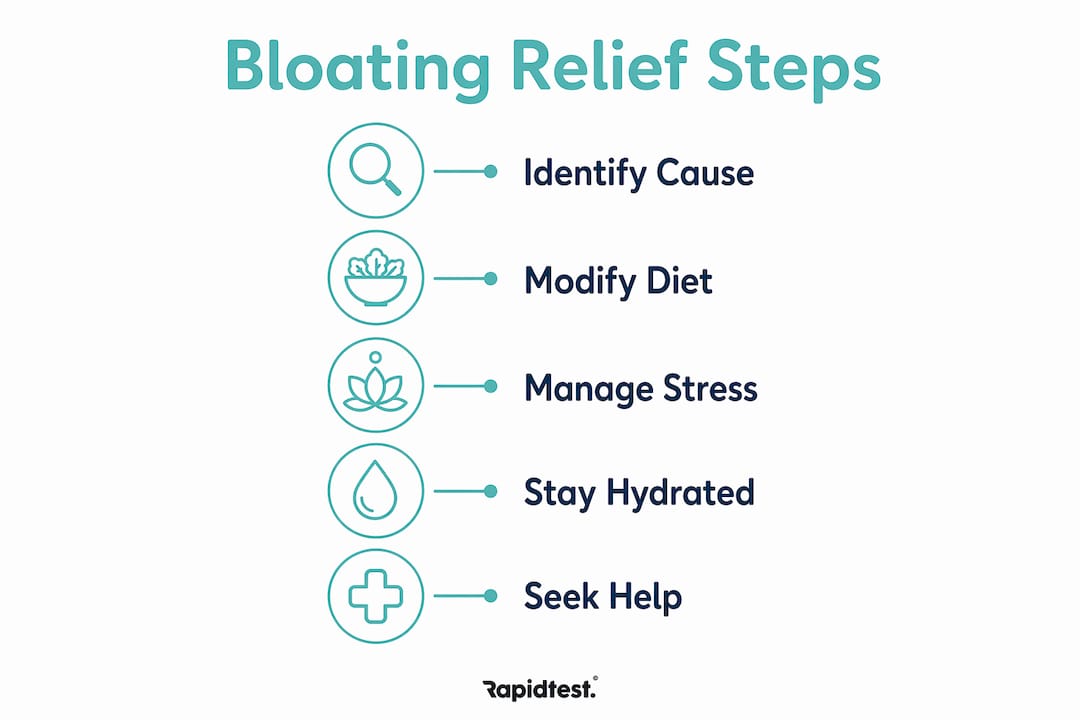
High-FODMAP foods are the most consistent dietary triggers for post-meal bloating. The key offenders include wheat, onions, garlic, leeks, legumes (beans, lentils, chickpeas), apples, pears, and certain dairy products. These foods are not inherently bad. They simply ferment rapidly in the gut, producing gas as a byproduct.
One concept that catches many people off guard is FODMAP stacking. FODMAP stacking occurs when multiple individually tolerable foods combine across a meal or a day to push the total fermentable load beyond your personal threshold. A small amount of garlic at lunch, a handful of chickpeas in the afternoon, and an apple in the evening might each feel fine alone. Together, they tip you over the edge.
| Food category | Common examples | Why they cause bloating |
|---|---|---|
| Alliums | Onions, garlic, leeks | High in fructans, rapidly fermented |
| Legumes | Beans, lentils, chickpeas | Contain oligosaccharides that resist digestion |
| Wheat products | Bread, pasta, cereals | Fructans and gluten sensitivity in some people |
| Certain fruits | Apples, pears, mangoes | High fructose content overwhelms absorption |
| Dairy | Milk, soft cheese, ice cream | Lactose intolerance causes fermentation |
Portion size matters too. Even low-FODMAP foods can cause bloating when eaten in large quantities. Sensitive guts respond to volume as well as content.
- Introduce high-fibre foods gradually. Sudden large increases in fibre cause excessive fermentation and gas. Increase your intake by small amounts each week.
- Keep a food and symptom diary for two weeks before cutting anything out. You may find the problem is not a single food but a combination.
- Consider working with a registered dietitian before starting a low-FODMAP elimination diet. Many people unnecessarily restrict entire food groups based on misunderstood causes.
Pro Tip: Try a digestive health guide to understand which supplements and dietary adjustments have the strongest evidence behind them before making changes.
How to reduce bloating: practical steps that actually work
Changing how you eat often matters as much as changing what you eat. Eating slowly, chewing each bite 20–30 times, and taking at least 20 minutes per meal significantly reduces post-meal bloating. Slower eating means less swallowed air and better mechanical breakdown of food before it reaches the stomach.
Eating habits to adopt
- Sit down to eat. Eating on the go increases the speed of consumption and the amount of air swallowed.
- Avoid fizzy drinks, gum, and straws. All three introduce excess air into the digestive tract.
- Eat smaller, more frequent meals if large portions consistently cause discomfort.
- Chew with your mouth closed. It sounds basic, but it reduces the air intake per bite considerably.
Stress and the meal environment
A brief 30-second calming breathing exercise before meals primes the digestive system and reduces stress-related bloating. This works because the parasympathetic nervous system, often called “rest and digest,” needs to be active for digestion to function well. Eating while anxious or distracted keeps the body in a stressed state, which slows gut motility and increases sensitivity.
Hydration, fibre, and movement
Drinking enough water throughout the day supports bowel regularity and reduces constipation-related bloating. Aim for consistent hydration rather than large amounts at mealtimes, which can dilute digestive enzymes. Gentle exercise after eating, such as a 10-minute walk, aids gut motility and helps move gas through the system. Abdominal massage in a clockwise direction can also relieve trapped gas and ease discomfort.
When to see a doctor
Bloating that is frequent, persistent, or accompanied by red flag symptoms such as unexplained weight loss, blood in your stool, or severe pain requires medical attention. These symptoms can indicate conditions that need proper investigation, including bowel cancer. If you notice any of these signs, do not wait. The NHS recommends prompt review for anyone with persistent or worsening bloating alongside other symptoms. You can also read about H. pylori symptoms as a bacterial infection of the stomach lining is a common and often overlooked cause of persistent upper abdominal discomfort.
Pro Tip: If bloating is your only symptom and it responds to dietary changes, it is very likely functional. If it persists despite changes, a GP visit is the right next step.
Key takeaways
Bloating after eating is almost always traceable to a specific cause, and identifying the pattern of your symptoms is the most direct route to effective relief.
| Point | Details |
|---|---|
| Timing reveals the cause | Immediate bloating suggests upper GI issues; delayed bloating points to fermentation or bacterial overgrowth. |
| FODMAP stacking is underestimated | Safe foods eaten together across the day can cumulatively trigger bloating beyond your personal threshold. |
| Eating behaviour matters | Chewing 20–30 times per bite and taking 20 minutes per meal reduces swallowed air and improves digestion. |
| Stress is a direct trigger | The gut-brain axis means the same meal can cause bloating on a stressful day but not on a calm one. |
| Red flag symptoms need review | Persistent bloating with weight loss, blood in stool, or severe pain requires prompt medical consultation. |
Let’s be real about bloating
Here is something I have come to believe after years of reading the research and talking to people about their digestive health: the single biggest mistake people make with bloating is treating it as a food problem when it is actually a whole-body problem.
Most articles hand you a list of foods to avoid. Cut out garlic. Ditch the beans. Go gluten-free. And for some people, that helps. But I have seen too many cases where someone eliminates half their diet, still feels awful, and then concludes their gut is just broken. It is not broken. The root cause was never identified properly.
What I find genuinely useful is paying attention to the pattern rather than the plate. Did the bloating start within minutes or hours? Was it a stressful day? Had you been sitting at a desk all afternoon without moving? These details tell you far more than a food diary alone. Bloating is a communication from the gut that requires identifying root causes, not masking symptoms.
The gut-brain connection is real and it is underappreciated. I have seen people manage their bloating almost entirely through stress reduction and meal environment changes, without touching their diet at all. That is not a fluke. That is the gut-brain axis doing exactly what the research says it does.
My honest advice: track timing and context for two weeks before changing a single food. You will learn more from that exercise than from any elimination diet. And if symptoms persist or worsen, get checked. A home bowel screening test is a low-barrier way to rule out something more serious without waiting for a GP appointment.
— Jack
Checking in on your gut health with Rapidtest
Persistent or unexplained digestive symptoms deserve more than a wait-and-see approach.
Rapidtest offers at-home health screening kits that give you results in 15 minutes, with no queues, no appointments, and no awkward conversations. If you are concerned about symptoms beyond bloating, such as bowel changes or other signs that something might be off, Rapidtest’s at-home health testing kits let you check in on your health privately and quickly. Knowing what is going on is always better than guessing. Take a look at the full range at Rapidtest and find the kit that fits your situation.
FAQ
What is the most common cause of bloating after eating?
Swallowed air and fermentable carbohydrates (FODMAPs) are the most common causes. Eating quickly, food intolerances, and gut motility issues also contribute significantly.
How quickly should bloating appear after eating?
Bloating within minutes of eating suggests upper digestive issues such as low stomach acid. Delayed bloating one to two hours after eating typically indicates fermentation or bacterial overgrowth in the large intestine.
Can stress cause bloating after meals?
Yes. The gut-brain axis means stress directly affects digestion speed and gut sensitivity. The same meal can cause bloating on a stressful day but not on a relaxed one.
When should I see a doctor about bloating?
See a doctor if bloating is frequent, persistent, or accompanied by red flag symptoms such as unexplained weight loss, blood in your stool, or severe abdominal pain.
Does a low-FODMAP diet actually help with bloating?
A low-FODMAP diet improves symptoms in 75% of people with IBS. It works best when guided by a registered dietitian to avoid unnecessary food restriction.