


Itching after sex: causes, remedies, and when to act
Post-coital irritation, the clinical term for itching after sex, is defined as genital discomfort occurring in the hours following sexual activity. It is more common than most people realise. Around 75% of women experience at least one yeast infection in their lifetime, and yeast infections are just one of several triggers behind that familiar post-sex itch. Friction, allergic reactions, hormonal shifts, and sexually transmitted infections all play a role. Knowing which one is causing your discomfort is the fastest route to relief.
What causes itching after sex? Common triggers explained
Post-coital irritation has several distinct causes, and identifying the right one matters. Treating a yeast infection when the real culprit is a latex allergy will not help. The main triggers fall into four broad categories.
Friction and lack of lubrication
Physical friction is the most straightforward cause. When natural lubrication is insufficient, the skin of the vulva and vaginal walls rubs against itself and against a partner, creating microtears. Hormonal fluctuations during the menstrual cycle reduce oestrogen levels, which directly reduces vaginal moisture. Those microtears are initially painless but produce a delayed itching sensation as the skin begins to repair itself.

Allergic reactions and contact dermatitis
Contact dermatitis from scented soaps, detergents, or dyes in feminine hygiene products is a frequently overlooked cause of vaginal itching. The reaction requires removal of the irritant to resolve fully. Latex condoms, flavoured lubricants, and spermicidal gels are also common culprits. Switching to non-latex condoms and fragrance-free products often clears the problem within days.
Infections: yeast, bacterial vaginosis, and STIs
Sexual activity alters vaginal pH and the microbiome, creating conditions that favour fungal or bacterial overgrowth. A yeast infection produces thick, white discharge alongside itching. Bacterial vaginosis tends to cause a thin, greyish discharge with a distinct odour. STIs including chlamydia, gonorrhoea, and trichomoniasis can all produce genital itching, sometimes without any other obvious symptoms. Checking the full list of STI symptoms helps you spot patterns you might otherwise dismiss.
Hormonal influences and vaginal dryness
Oestrogen fluctuations do not only happen during the menstrual cycle. Perimenopause, breastfeeding, and certain hormonal contraceptives all reduce vaginal moisture. The result is itchy skin after sexual activity that has nothing to do with infection or allergy. This type of irritation responds well to water-based lubricants and, in some cases, topical oestrogen prescribed by a GP.
- Friction or dryness: burning or rawness immediately after sex, no discharge
- Allergic reaction: redness, swelling, or a rash appearing within minutes to hours
- Yeast infection: thick white discharge, intense itching, no strong odour
- Bacterial vaginosis: thin grey or white discharge, fishy smell, mild itching
- STI: variable symptoms, may include sores, unusual discharge, or pain
Pro Tip: Switch to a water-based, fragrance-free lubricant before assuming an infection is present. Many cases of post-sex itching resolve within 48 hours once friction is addressed.
How do you tell irritation apart from infection?
Symptom pattern is the clearest guide. Friction-based irritation and contact dermatitis tend to appear quickly, within minutes to an hour of sex, and fade within a day or two. Infection-related itching builds more slowly and persists.
Here are the key distinctions to watch for:
- Duration. Irritation from friction or an allergen typically clears within 24–48 hours. Itching that lasts longer than a week points toward infection or a persistent allergen.
- Discharge. Healthy discharge is clear or white and odourless. Thick, clumpy, or discoloured discharge alongside itching suggests a yeast infection or bacterial vaginosis.
- Sores or lesions. Blisters, ulcers, or open sores anywhere on the genitals are a red flag for herpes or another STI. Do not wait to get these assessed.
- Pain with urination. A burning sensation when you urinate alongside genital itching can indicate a urinary tract infection or an STI. The causes of burning when peeing are worth understanding before drawing conclusions.
- Recurrence. If the itching returns every time you have sex, an upper vaginal yeast infection may be sitting asymptomatically in the upper vagina and getting displaced downward during intercourse. This pattern often requires a 12-week maintenance antifungal course rather than a single treatment.
Medical guidance advises seeking professional evaluation if genital itching is severe, lasts more than one week, or comes with discharge, sores, or pain. That is a sensible threshold to keep in mind.
Effective remedies and prevention strategies
Most cases of post-sex irritation are preventable. The right approach depends on the cause, but several strategies work across multiple triggers.
Reduce friction and support natural moisture
Use a water-based lubricant every time, not just when things feel dry. Silicone-based lubricants last longer but are incompatible with silicone sex toys. Avoid oil-based products inside the vagina as they disrupt pH balance. Standard management consistently recommends increasing lubrication as the first step for friction-related itching.
Remove potential allergens
Patch testing new skincare or intimate hygiene products before use is a habit worth building. Patch testing skincare products before committing to them reduces the risk of contact dermatitis significantly. Swap scented soaps for plain, unperfumed alternatives. Wash underwear with a non-biological detergent and rinse thoroughly.
- Switch to non-latex condoms if you suspect a latex sensitivity
- Avoid douching, which strips the vagina of protective bacteria
- Wear breathable, cotton underwear after sex to reduce moisture build-up
- Shower with plain water rather than soap on the vulva immediately after sex
- Maintain vaginal microbiome health through a balanced diet and, where appropriate, a probiotic containing Lactobacillus strains
Treat infections properly
Antifungal treatments for yeast infections are available over the counter, but recurrent infections need a longer course. Medical treatments depend on diagnosis and may include antifungal, antibacterial, or antiviral agents tailored to the specific infection identified by testing. Self-treating repeatedly without a confirmed diagnosis delays resolution and can mask a more serious condition.
| Cause | First-line approach | When to escalate |
|---|---|---|
| Friction or dryness | Water-based lubricant | No improvement after 48 hours |
| Contact dermatitis | Remove irritant, plain water wash | Rash spreads or worsens |
| Yeast infection | Over-the-counter antifungal | Recurrence within 2 months |
| Bacterial vaginosis | GP-prescribed antibiotics | Symptoms persist after treatment |
| STI-related itching | STI test, then targeted treatment | Any sores, pain, or systemic symptoms |
Pro Tip: Routine barrier protection and vaginal microbiome support together reduce the risk of recurrent post-sex itching caused by pH shifts during intercourse. Both steps matter.
When should you see a healthcare professional?
Some symptoms cannot wait. Seek medical advice promptly if you notice any of the following:
- Itching that has not improved after one week
- Unusual discharge that is discoloured, clumpy, or has a strong odour
- Sores, blisters, or ulcers on the genitals or surrounding skin
- Pain during sex or when urinating
- Swelling, redness, or a rash that spreads beyond the genital area
- Fever alongside genital symptoms
A GP or sexual health clinic will typically carry out a pelvic examination and take swabs to identify the cause. Diagnostic procedures for infection-related itching include STI testing, pH testing, and microscopy of discharge samples. Results guide treatment precisely.
If an STI is identified, your partner needs to be tested and treated at the same time. Treating only one person leads to reinfection. Knowing how to talk about STI testing with a partner makes that conversation easier than it sounds. If you are unsure about timing, guidance on when to test after unprotected sex sets out the recommended windows for each infection.
Key takeaways
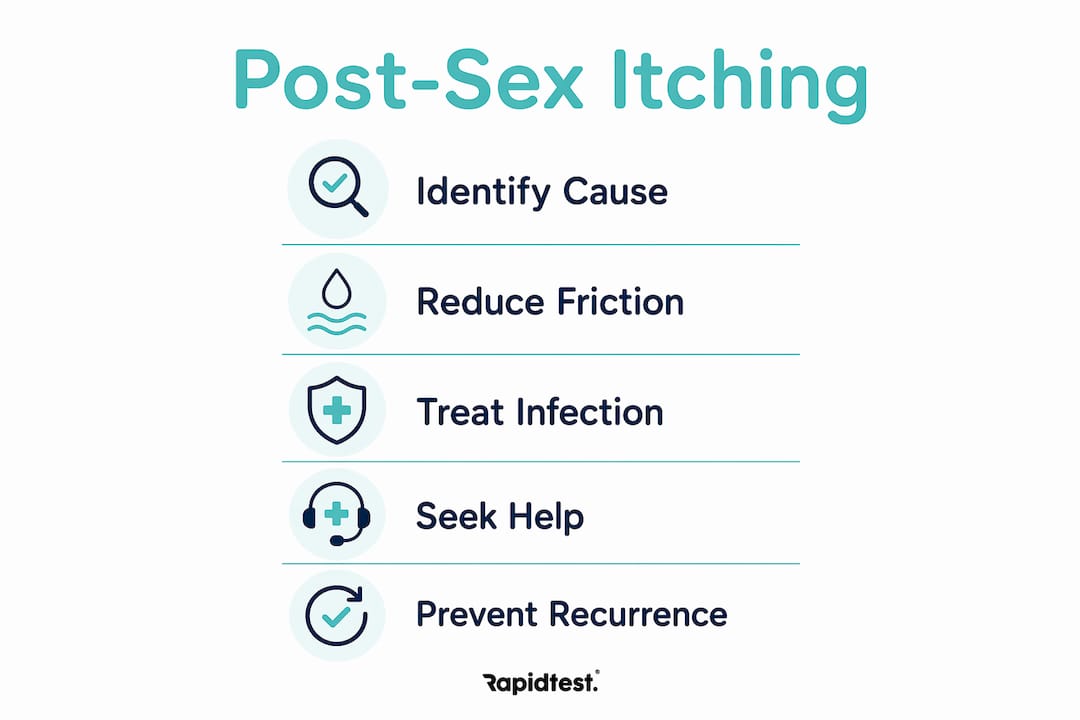
Post-coital irritation is most effectively resolved by identifying the specific cause first, whether friction, allergy, or infection, and then applying the appropriate targeted treatment.
| Point | Details |
|---|---|
| Identify the cause first | Friction, allergy, and infection each require a different response. Treating the wrong cause delays relief. |
| Lubrication prevents most friction cases | A water-based, fragrance-free lubricant used consistently reduces the most common trigger. |
| Recurrent itching needs investigation | Itching that returns after every sexual encounter may indicate an undertreated upper vaginal yeast infection. |
| Seek help after one week | Medical guidance recommends professional evaluation if itching is severe, lasts more than a week, or comes with discharge or sores. |
| Partner testing matters | If an STI is the cause, both partners need treatment simultaneously to prevent reinfection. |
Let’s be real about what gets missed
People almost always assume the worst when they notice itching after sex. They go straight to “it must be an STI” or, at the other end, dismiss it entirely as “just friction.” Both responses miss the middle ground where most cases actually sit.
What I see overlooked most often is contact dermatitis. Patients frequently misattribute all vaginal itching to yeast infections, overlooking contact dermatitis caused by environmental triggers entirely. A scented shower gel used the morning of sex, a new brand of condom, a laundry detergent change. These things matter and they are easy to miss because the connection to sex feels indirect.
The other thing that falls through the cracks is recurrent yeast infection. Many people treat it once with an over-the-counter cream, feel better, and then wonder why it comes back a month later. An upper vaginal yeast infection can sit quietly with no symptoms until intercourse displaces it. A single short course of antifungal treatment does not always reach it. That is a conversation worth having with a GP rather than cycling through pharmacy treatments indefinitely.
My honest advice: keep a simple log. Note what products you used, whether you used a condom, where in your cycle you are, and how long the itching lasts. Two or three entries often reveal a pattern that makes the cause obvious. That information is also genuinely useful if you do end up seeing a doctor.
— Jack
Rapidtest at-home STI kits for post-sex peace of mind
If your itching has lasted more than a few days, or you have noticed unusual discharge alongside it, ruling out an STI is a sensible next step.

Rapidtest at-home STI testing kits give you results in 15 minutes, at home, with no appointment and no waiting room. You do not need to explain yourself to anyone. If you want a broader picture of your sexual health, the rapid STI test range covers the infections most commonly linked to post-sex genital symptoms. Getting clarity quickly means you can act on the right information rather than guessing.
FAQ
What is the most common cause of itching after sex?
Friction from insufficient lubrication is the most common physical cause. Yeast infections, which affect around 75% of women at least once in their lifetime, are the most common infection-related cause.
Can a condom cause itching after sex?
Yes. Latex condoms and spermicidal coatings are both known allergens. Switching to non-latex condoms and uncoated alternatives usually resolves the reaction within a few days.
How long should post-sex itching last before I worry?
Irritation from friction or an allergen typically clears within 24–48 hours. Itching that persists beyond one week, or that comes with discharge, sores, or pain, warrants professional evaluation.
Can sex change my vaginal pH and cause itching?
Yes. Sexual activity alters vaginal pH and the microbiome, which can encourage fungal or bacterial overgrowth. Using barrier protection and supporting vaginal microbiome health reduces this risk.
Do I need to test my partner if I have an infection?
If an STI is identified as the cause of your itching, your partner needs to be tested and treated at the same time. Treating only one person leads to reinfection.