


How long after sex should I test?
The correct answer to how long after sex should I test depends entirely on what you are testing for. For pregnancy, the reliable window is 10 to 14 days after unprotected sex, or from the day of your missed period. For STIs, the wait is longer. Chlamydia and gonorrhoea need at least two weeks; HIV requires four to twelve weeks for a dependable result. Testing too early is the single most common mistake people make, and it leads to false negatives that create a false sense of security. This guide gives you the exact timelines, explains the biology behind them, and tells you what to do if your first result is not clear.
How long after sex should I test for pregnancy or an STI?
The short answer is: not straight away. Your body needs time to produce detectable levels of hormones or antibodies before any test can pick them up. Testing on the morning after, or even a few days later, will almost always give you a misleading result.
For pregnancy, the key hormone is human chorionic gonadotrophin, or hCG. Your body only starts producing hCG after a fertilised egg implants in the uterine wall. That implantation happens 6 to 12 days after fertilisation, not after sex itself. Before implantation, there is simply no hCG to detect.
For STIs, the delay is about your immune system. After exposure to an infection, your body takes time to produce the antibodies or antigens that tests look for. This delay is called the window period, and it varies by infection. STI window periods range from 2 to 12 weeks depending on the specific infection being tested.
The NHS recommends waiting at least 21 days after unprotected sex before taking a pregnancy test if you are unsure of your cycle dates. That figure accounts for variability in ovulation timing and gives hCG enough time to reach detectable levels.
What happens in your body between sex and a positive test?
Understanding the biology makes the waiting period feel less arbitrary. Sperm can survive up to five days inside the female reproductive tract. Fertilisation can therefore happen several days after the original act of intercourse, depending on when ovulation occurs.
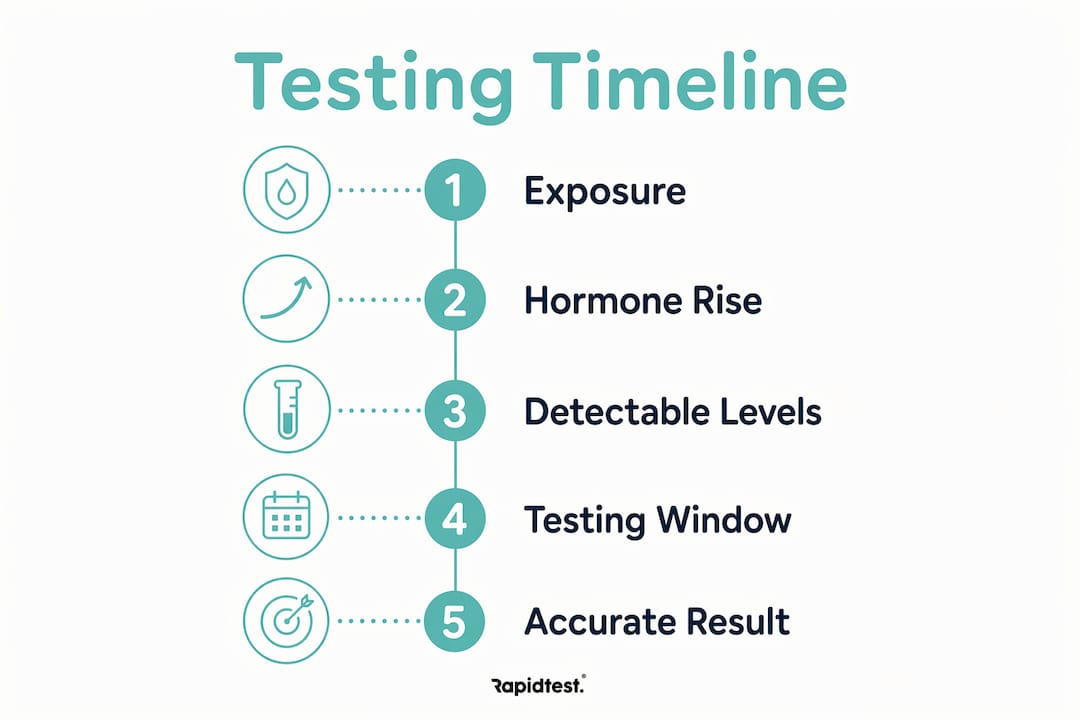
Once fertilisation happens, the embryo travels to the uterus and implants. Only then does hCG production begin. hCG levels double roughly every 48 hours in early pregnancy, but they start from a very low baseline. A test taken too early simply cannot detect those early, low levels.
For STIs, the timeline looks like this:
- Chlamydia and gonorrhoea: reliable results from around two weeks after exposure
- Syphilis: accurate results from two to four weeks, with a confirmatory test recommended at twelve weeks
- HIV: 4th generation HIV tests detect both antibodies and the p24 antigen, becoming accurate around four weeks post-exposure; a follow-up at twelve weeks is still recommended for certainty
- Herpes: window periods vary widely; a swab during an active outbreak is the most reliable method
Testing before these windows close does not rule out infection. It just means the test cannot see it yet.
Which pregnancy test should you use, and when?
Not all pregnancy tests are equal. Choosing the right one, and using it at the right time, makes a real difference to your result.
| Test type | When to use | Accuracy |
|---|---|---|
| Standard home test | From day of missed period | 99% accurate from missed period |
| Early detection test | 10–14 days after unprotected sex | Lower accuracy before missed period |
| Laboratory blood test | From around 10 days post-ovulation | Most sensitive; detects lower hCG levels |
The 99% accuracy figure you see on most test packaging applies only from the day of your missed period. Testing earlier than that, even with an early detection kit, reduces accuracy because hCG levels may still be too low to register. That is not a flaw in the test. It is simply biology.
Pro Tip: Use your first urine of the morning for any home pregnancy test. First morning urine contains the highest concentration of hCG, which gives the test the best possible chance of detecting a pregnancy early.
If your period is late but your test reads negative, do not assume you are in the clear. Retesting 48 to 72 hours after a negative result is standard advice when menstruation is delayed. hCG levels rise over time, so a test that misses it on Tuesday may catch it on Thursday.
For people with irregular cycles, the best time to take a fertility test at home can shift significantly. Tracking ovulation with an LH test kit helps you calculate a more accurate testing window.
When and how to test for common STIs after sex
The testing timeline after intercourse for STIs depends on which infection you are concerned about. Testing too early is not just unhelpful. It can actively mislead you.
Here is a practical breakdown of when to test:
- Two weeks after exposure: test for chlamydia and gonorrhoea. These are the most common bacterial STIs in the UK, and home swab or urine tests are reliable from this point.
- Four weeks after exposure: test for HIV using a 4th generation test. This is the earliest point at which a negative result carries real weight.
- Six weeks after exposure: retest for syphilis if your initial result was negative and you remain concerned.
- Twelve weeks after exposure: the definitive window for HIV, syphilis, and hepatitis B and C. A negative result at this point is considered conclusive.
Home test kits, clinic tests, and rapid tests all work within these windows. The method matters less than the timing. Rapidtest’s at-home STI testing kits deliver results in 15 minutes without a clinic visit, which makes it easier to test at the right time rather than waiting for an appointment.
If you develop symptoms before the window period closes, such as unusual discharge, sores, or burning when urinating, see a healthcare professional straight away. Symptoms do not wait for window periods. Treatment should not either.
Understanding what a test window period means in practice helps you interpret any result you get, whether it is positive, negative, or inconclusive.
What to do if your result is unclear or unexpected
A negative result is not always the end of the story. False negatives happen when you test before your body has produced enough hCG or antibodies to trigger the test. They are common, and they are almost always caused by testing too early.
- Check your timing first. If you tested before the recommended window, the result is not reliable. Wait and retest.
- Retest after 48 to 72 hours if your period has not arrived and your pregnancy test was negative. Ovulation timing variability means hCG may simply not have peaked yet.
- Seek a blood test if home tests remain negative but your period is significantly late. A blood test detects lower hCG levels than a urine test.
- Repeat STI tests at the twelve-week mark if your initial result was negative but you remain concerned about HIV or syphilis.
- Contact a GP or sexual health clinic if you receive a positive result for any STI. A positive home test is a starting point, not a diagnosis. A clinician will confirm the result and discuss treatment.
Pro Tip: Avoid drinking large amounts of water before a pregnancy test. Excess fluid dilutes your urine and lowers hCG concentration, which increases the chance of a false negative. Test first thing in the morning before drinking anything.
False positives on pregnancy tests are rare but possible. They can occur after a very early pregnancy loss, known as a chemical pregnancy, or in people taking certain fertility medications. If you are unsure about a positive result, a follow-up blood test will confirm it.
Key takeaways
Waiting for the right testing window is the single most reliable way to get an accurate result after unprotected sex.
| Point | Details |
|---|---|
| Pregnancy test timing | Test 10–14 days after unprotected sex, or from the day of your missed period. |
| STI window periods | Chlamydia and gonorrhoea need two weeks; HIV needs four to twelve weeks for a reliable result. |
| First morning urine | Always use your first urine of the day for the highest hCG concentration. |
| Retest if negative | If your period is late and the test is negative, retest after 48–72 hours. |
| Symptoms override timelines | If symptoms appear before the window closes, see a healthcare professional immediately. |
Let’s be real about testing timing
People ask me all the time whether they can test the day after unprotected sex. The honest answer is no, and I understand why that is frustrating. Anxiety does not follow a biological schedule.
The thing I have noticed is that most people who get a confusing result tested too early, not because the test was faulty, but because they did not know the window period existed. That is not their fault. The packaging on many home tests is not clear enough about when “early” is actually too early.
My practical advice is this: mark the date of unprotected sex in your phone. Count forward ten days for a pregnancy test, or two weeks for a chlamydia or gonorrhoea test. Set a reminder. That small habit removes the guesswork entirely.
The other thing worth saying is that a negative result before the window closes is not reassurance. It is just an incomplete picture. Waiting feels uncomfortable, but it is the only way to get information you can actually trust. Testing at the right time is not about being cautious. It is about being accurate.
— Jack
At-home testing kits that work when the timing is right
Knowing when to test is half the job. Having a reliable kit ready is the other half.
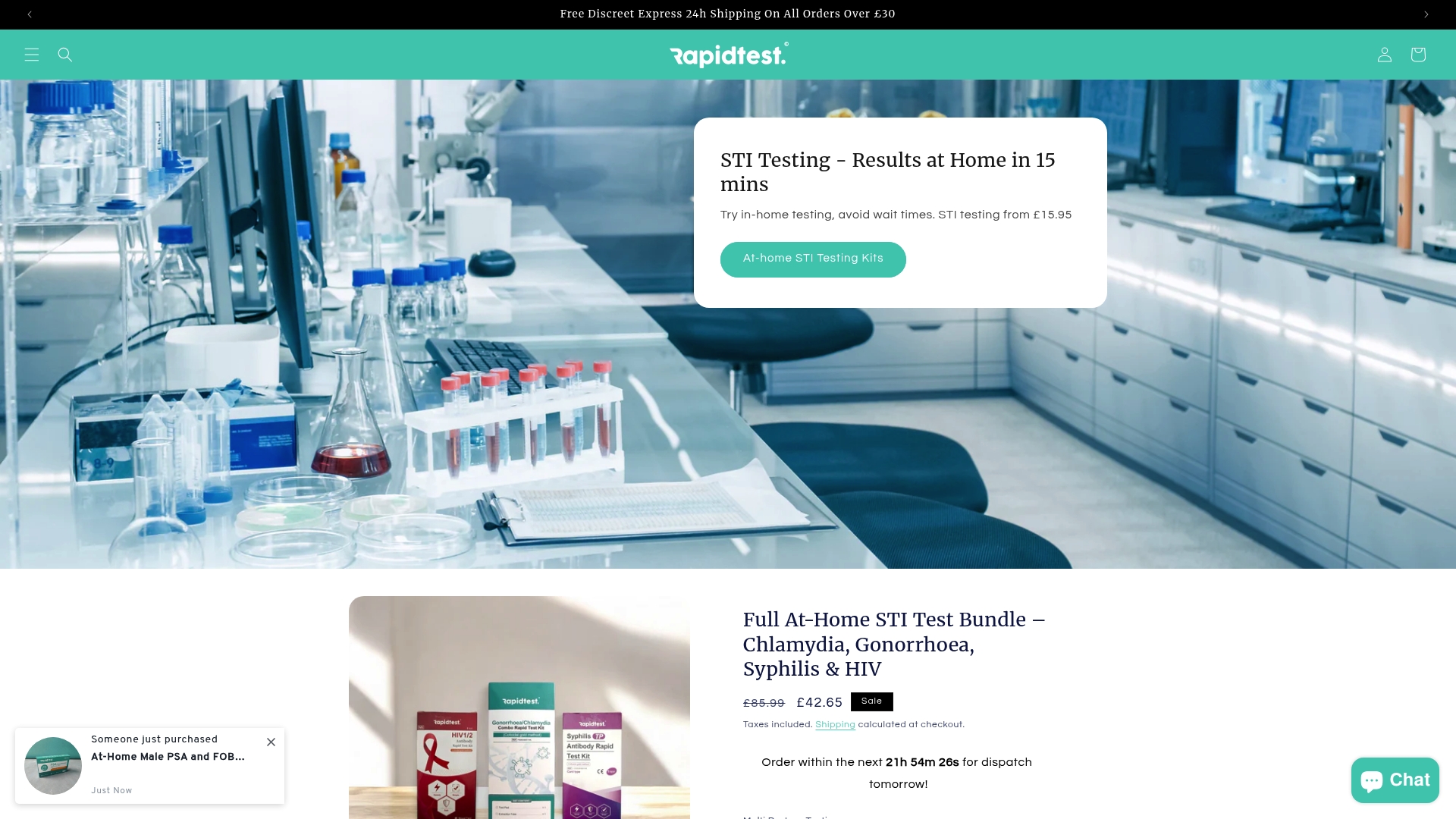
Rapidtest offers at-home STI rapid test kits that give you results in 15 minutes, with no appointment, no queue, and no awkward conversation at a clinic. For pregnancy and fertility testing, the at-home fertility test range covers hCG, LH, and SP-10 testing for both men and women. Every kit is designed to be used at home, at the right time, with results you can trust.
FAQ
How soon after sex can I take a pregnancy test?
The earliest reliable window is 10 to 14 days after unprotected sex. Testing before this point risks a false negative because hCG levels may not yet be high enough to detect.
Can I test for STIs straight after unprotected sex?
No. STI tests require a window period to be accurate. Chlamydia and gonorrhoea tests are reliable from two weeks; HIV tests are accurate from four weeks, with a confirmatory test at twelve weeks.
What if my pregnancy test is negative but my period is late?
Retest after 48 to 72 hours. Late ovulation can delay hCG production, meaning a test taken a few days later may give a different result.
Is first morning urine really necessary for a pregnancy test?
Yes, for early testing. First morning urine contains the highest concentration of hCG, which improves the sensitivity of the test before your missed period.
What does a window period mean for STI testing?
A window period is the time between exposure to an infection and when a test can reliably detect it. Testing inside the window period can produce a false negative even if infection is present.