


Why screen for STIs in 2026: what you need to know
STI screening in 2026 is the practice of testing for sexually transmitted infections even when you feel completely fine, and it is one of the most important things you can do for your health and your partner’s. Many people assume that no symptoms means no problem. That assumption is wrong, and it costs people their health every year. This article covers why many STIs are silent, what the current screening recommendations look like, how new prevention tools like doxycycline post-exposure prophylaxis fit into the picture, and how to actually get tested without the hassle.
Why screen for STIs in 2026 if you feel fine?
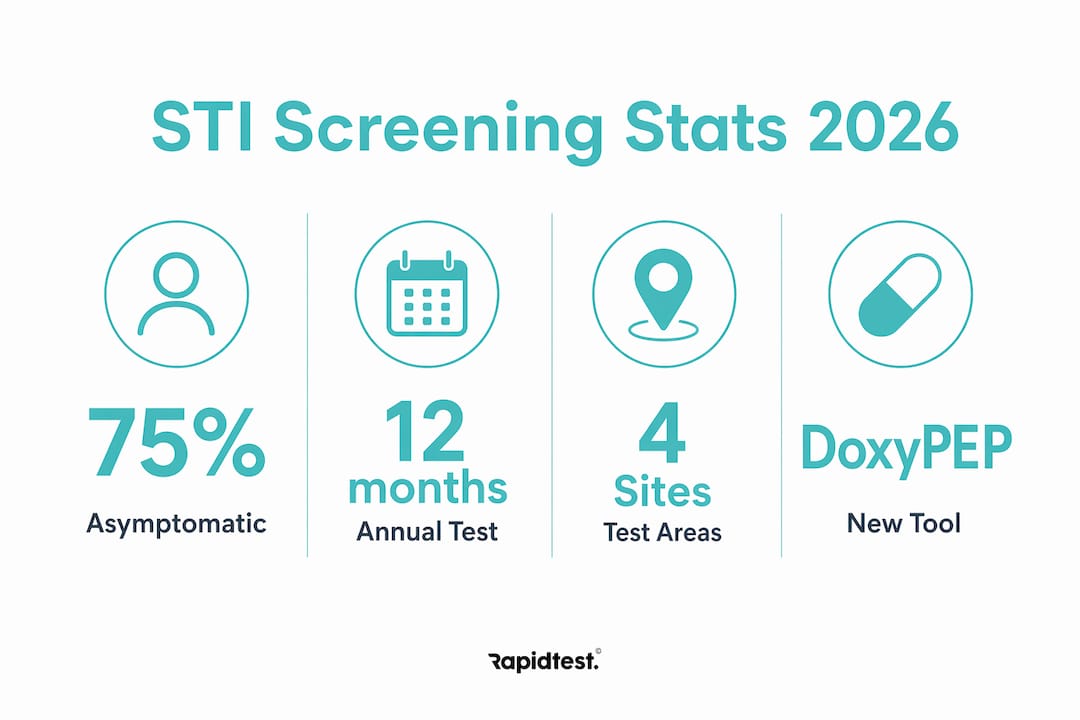
The single biggest reason to screen is that most STIs produce no symptoms at all. Chlamydia, gonorrhoea, and syphilis are all frequently asymptomatic, meaning you can carry and transmit them without ever knowing. The CDC confirms that many STIs show no signs yet continue to cause internal damage and spread to partners. Feeling healthy is simply not a reliable indicator of infection status.
This is not a fringe concern. Clinical practice consistently shows that symptom-based self-assessment is one of the most common reasons infections go undetected and untreated. When people wait for a rash, discharge, or pain before seeking a test, a large proportion of infections fall through the cracks entirely. The result is ongoing transmission within communities and long-term health consequences for individuals who had no idea anything was wrong.
Think of STI screening the way you would think about a blood pressure check. You do not wait to feel dizzy before measuring it. STI testing should be viewed as preventive health, the same way cancer screenings are, because the logic is identical: catch it early, treat it effectively, avoid the serious complications that come from leaving it alone.
- Chlamydia is asymptomatic in roughly 70% of women and 50% of men
- Gonorrhoea frequently causes no symptoms in the throat or rectum, the two sites most often missed
- Early syphilis can present as a painless sore that heals on its own, giving a false sense of resolution
- HIV can remain asymptomatic for years while still being transmissible
Pro Tip: If you have had a new sexual partner in the past year, that alone is a reasonable reason to get tested, regardless of whether you have any symptoms.
What do the 2026 screening recommendations actually say?
The current approach from both the CDC and WHO is risk-based and personalised, not a blanket rule for everyone. The CDC advises tailored testing based on your age, sexual history, number of partners, and the specific sexual practices you engage in. There is no single schedule that fits every person, which is actually good news. It means your screening plan can be built around your real life.
Here is a practical overview of general recommendations:
| Group | Recommended frequency |
|---|---|
| Sexually active adults with new or multiple partners | At least annually for chlamydia, gonorrhoea, syphilis, and HIV |
| Men who have sex with men (MSM) | Every 3 to 6 months for syphilis, gonorrhoea, chlamydia, and HIV |
| Pregnant individuals | Early in pregnancy for syphilis, HIV, hepatitis B, and chlamydia |
| Individuals with a single long-term partner | Discuss with a clinician based on history and risk factors |
One detail that many people miss is the importance of testing the right anatomical sites. A urine test alone will not detect gonorrhoea in the throat or rectum. If you engage in oral or anal sex, throat and rectal swabs are part of a complete screen. Screening sites should match your actual sexual practices, not just the most convenient sample to collect.
Pro Tip: When speaking to a clinician or using an at-home kit, be specific about the types of sex you have. This is not oversharing. It is the information needed to make sure you are tested in the right places.
How is doxyPEP changing STI prevention in 2026?
One of the most significant developments in sexual health this year is the WHO’s first formal recommendation on doxycycline post-exposure prophylaxis, commonly called doxyPEP. In May 2026, WHO recommended doxyPEP for MSM and transgender women as a way to reduce bacterial STIs, specifically syphilis and chlamydia, after potential exposure. This is a meaningful step forward for groups who face disproportionately high rates of infection.
DoxyPEP involves taking a single dose of doxycycline within 72 hours of unprotected sex. Studies included in the WHO guidance show it can significantly reduce the risk of syphilis and chlamydia in eligible individuals. That is a genuine advance in prevention, and it sits alongside rather than replacing regular screening.
There are important caveats, though:
- DoxyPEP does not protect against HIV, gonorrhoea, or viral STIs like herpes and HPV
- Widespread use raises concerns about antimicrobial resistance, particularly for gonorrhoea
- Programmes using doxyPEP include eligibility prioritisation and resistance monitoring to preserve its effectiveness
- It is intended for individuals with a recent or recurrent STI history, not as a universal measure
The takeaway here is that doxyPEP is a powerful addition to the prevention toolkit, but it makes regular screening more important, not less. You still need to know your status across the full range of infections, and monitoring for resistance requires ongoing testing data.
What are your practical options for getting tested in 2026?
Getting tested has never been more accessible, and there is no longer a single path that works for everyone. Here are the main routes available to you right now:
-
GP or sexual health clinic. Your GP can refer you or you can self-refer to a local sexual health clinic. These services are confidential, and many offer free testing. Waiting times vary, but specialist clinics often have same-day or next-day appointments.
-
Community testing services. Pharmacies, university health centres, and outreach programmes in many areas offer walk-in or postal testing kits. These are particularly useful if you want to avoid a formal clinical setting.
-
Postal self-sampling kits. Many NHS services and private providers offer kits you order online, collect your own samples at home, and post back to a lab. Results come by text or secure online portal within a few days.
-
At-home rapid test kits. FDA-approved self-tests for HIV, syphilis, gonorrhoea, and chlamydia are now widely available. Rapidtest’s at-home kits deliver results in 15 minutes, with no appointment, no queue, and no lab visit needed. This is the fastest way to get clarity on your status from the privacy of your own home.
-
Telehealth consultations. If you want professional guidance on which tests to take without visiting a clinic, a telehealth appointment lets you discuss your risk profile and get a tailored recommendation.
Pro Tip: If you are nervous about testing, start with an at-home kit. Getting your first result in a familiar environment removes a lot of the anxiety, and it gives you the information you need to take the next step with confidence.
What are the real benefits of early detection?
Early detection through regular sexual health screenings is not just about treating an infection. It is about preventing a cascade of consequences that become much harder to manage the longer they go unaddressed.
Untreated chlamydia and gonorrhoea are two of the leading preventable causes of pelvic inflammatory disease (PID) and infertility in women. Untreated STIs can lead to serious reproductive complications if not identified promptly. For men, untreated gonorrhoea and chlamydia can cause epididymitis, a painful inflammation that can affect fertility. These are not rare outcomes. They are well-documented consequences of infections that are entirely treatable when caught early.
Beyond the physical, there is a real psychological benefit to knowing your status. Uncertainty is its own kind of burden. Many people carry low-level anxiety about their sexual health without ever acting on it. Regular, risk-based screening replaces that uncertainty with knowledge, and knowledge gives you the ability to act. That shift from passive worry to informed decision-making matters enormously for mental wellbeing.
There is also the question of your partners. Knowing your status early means you can inform partners, reduce transmission, and make decisions together. That is not just responsible. It is genuinely caring.
“Testing identifies silent infections and is essential for protecting yourself and your partners.” — ASHA (American Sexual Health Association)
Key takeaways
Regular STI screening is the most reliable way to protect your health and your partners’ health, because most infections produce no symptoms and cannot be detected through self-assessment alone.
| Point | Details |
|---|---|
| Most STIs are asymptomatic | You cannot rely on symptoms to know your status; testing is the only way to find out. |
| Screening should be personalised | The CDC recommends tailoring tests and frequency to your sexual history and practices. |
| DoxyPEP is new but not a replacement | WHO’s 2026 doxyPEP guidance helps prevent some bacterial STIs but does not replace full screening. |
| Early detection prevents serious harm | Untreated chlamydia and gonorrhoea can cause infertility and PID if not caught promptly. |
| At-home testing makes it easy | Rapid test kits deliver results in 15 minutes, removing the barriers of queues and appointments. |
The honest truth about STI screening in 2026
I have spent a lot of time thinking about why people still avoid STI testing when the case for it is so clear. Stigma is part of it, no question. But I think the bigger issue is that most people have quietly convinced themselves that they would know if something was wrong. That belief is understandable, and it is also the exact thing that allows infections to spread silently for months or years.
What gives me genuine optimism in 2026 is the combination of better tools and shifting attitudes. DoxyPEP is a real advance. At-home rapid testing has removed the logistical and emotional barriers that stopped people from acting. And there is a growing cultural acceptance that getting tested is simply part of being a sexually active adult, not a sign that something has gone wrong.
My honest advice is this: stop waiting for a reason to test. Build it into your routine the way you would a dental check-up. If you have had a new partner, test. If it has been over a year, test. If you are unsure, test. The benefits of early detection far outweigh the five minutes it takes to do something about it.
— Jack
Test from home with Rapidtest in 15 minutes
If this article has prompted you to take action, Rapidtest makes it straightforward. You do not need a doctor’s appointment, a trip to a clinic, or an awkward conversation. Rapidtest’s at-home STI rapid test kits cover the key infections, deliver accurate results in 15 minutes, and arrive in discreet packaging. If you want to start with a specific infection, the syphilis rapid test kit is 99.8% accurate and just as quick.
Proactive sexual health does not have to be complicated. Rapidtest exists to make it as easy as possible, so you can get the clarity you need and get on with your life.
FAQ
Why should I get tested if I have no symptoms?
Most STIs are asymptomatic but still contagious and damaging. Testing is the only reliable way to know your status and protect both yourself and your partners.
How often should I get an STI test in 2026?
The CDC recommends at least annual testing for sexually active adults with new or multiple partners, and every three to six months for higher-risk groups such as MSM. Frequency should be based on your personal risk profile.
Does doxyPEP mean I no longer need to screen regularly?
No. DoxyPEP reduces the risk of some bacterial STIs but does not cover HIV, gonorrhoea, or viral infections. Ongoing screening remains essential alongside any prevention strategy.
What infections should I test for?
At minimum, sexually active adults should consider testing for chlamydia, gonorrhoea, syphilis, and HIV. Your clinician or a guide to key STIs can help you decide which additional tests are relevant based on your history.
Are at-home STI tests accurate enough to rely on?
Yes. FDA-approved rapid tests for HIV, syphilis, chlamydia, and gonorrhoea are clinically validated and widely used. Rapidtest’s syphilis kit, for example, carries 99.8% accuracy, making it a dependable option for private screening.