
Vitamin D home testing kit: your complete UK guide
What is a vitamin D home testing kit and how does it work?
A vitamin D home testing kit lets you check your vitamin D status from home, without booking a GP appointment or sitting in a waiting room. You collect a small blood sample yourself using a simple finger-prick lancet, then post it to a regulated UK laboratory for analysis.
The lab measures your level of 25-hydroxyvitamin D, written as 25(OH)D, which healthcare professionals regard as the gold standard biomarker for vitamin D status. It reflects everything your body has absorbed from sunlight, food, and supplements combined, giving a genuinely complete picture. Results are typically delivered digitally within a few days of the lab receiving your sample.
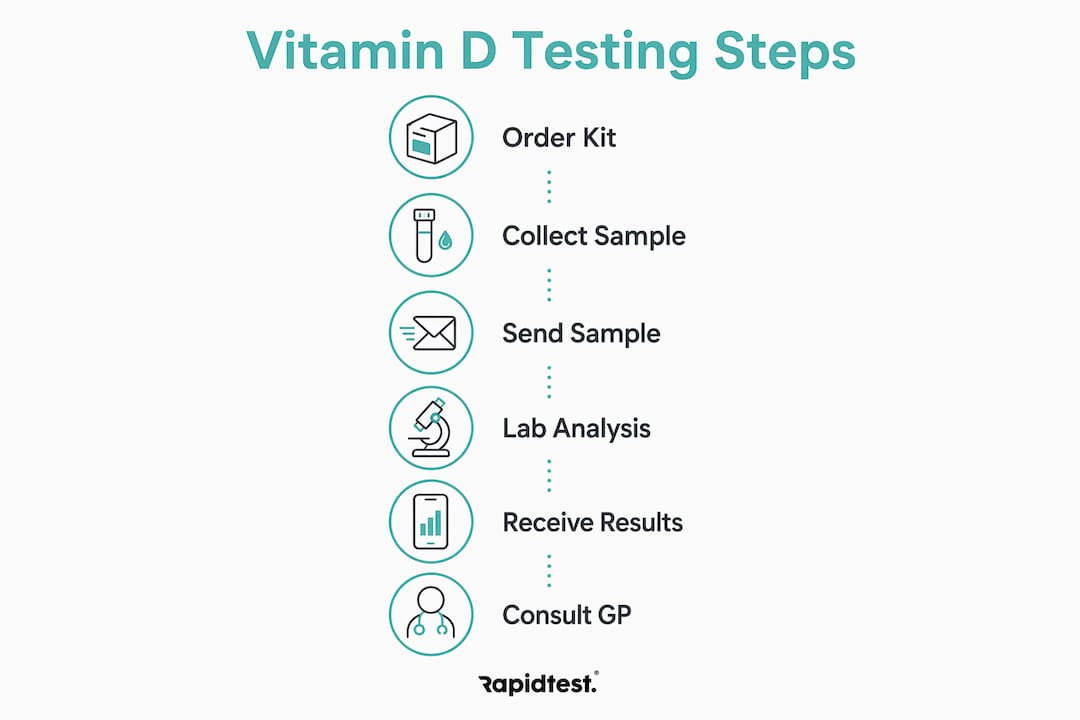
Here is what the process looks like from start to finish:
- Order your kit online or from a pharmacy and receive it by post
- Prick your fingertip with the lancet provided and collect a few drops of blood onto the sample card
- Seal and post the sample in the prepaid envelope to the partner laboratory
- Receive your results via email or an online portal, usually within 2–5 days
- Review the report, which should explain your result in plain language alongside reference ranges
CQC-regulated UK labs process these samples, which means the analysis meets the same safety and quality standards applied to NHS testing. That accreditation is what separates a reliable kit from a cheap, unverified alternative.

Where can you buy a vitamin D test kit in the UK?
Several reputable providers offer at-home vitamin D tests in the UK, ranging from pharmacy staples to specialist health brands. Prices and services vary, so knowing what each offers helps you choose well.
Popular UK providers:
- BioCare offers a postal vitamin D test that analyses 25(OH)D levels via an accredited laboratory. BioCare is a well-established UK nutrition brand, and its test comes with educational guidance on interpreting your result.
- Boots stocks vitamin D blood test kits both in-store and online, making it one of the most accessible options for people who prefer buying from a familiar high-street name.
- London Health Company provides a postal finger-prick test with results delivered online, typically aimed at people who want a straightforward, no-fuss service.
What to look for when comparing kits:
- Confirmation that samples are processed in a CQC-regulated UK laboratory
- Clear reference ranges and plain-language result explanations in the report
- A prepaid return envelope included in the kit price
- Access to follow-up support, such as a nutritionist consultation or GP referral option
Kits are available through pharmacy chains, specialist health retailers, and directly from brand websites. Always check for CQC accreditation before purchasing, as not every kit sold online meets UK regulatory standards.

How to interpret your vitamin D test results accurately
Your result will be expressed as a measurement of 25-hydroxyvitamin D in nanomoles per litre (nmol/L). The 25(OH)D biomarker gives both you and any healthcare professional a clear baseline for personalised health planning.
Most quality test reports categorise results into four bands:
- Deficient: levels low enough to cause symptoms and require prompt action
- Insufficient: below the optimal range but not severely depleted
- Optimal: the healthy target range for most adults
- Potentially toxic: levels that may indicate excessive supplementation
Age, skin tone, and underlying health conditions can all affect what an optimal reading looks like for you personally. A well-written test report contextualises your result by these factors rather than just handing you a raw number.
Pro Tip: Share your result with your GP or a registered nutritionist before making any changes to your supplement dose. A number without context can lead to over-supplementation, which carries its own health risks.
“High-quality home test reports that contextualise results by demographic factors empower users with actionable understanding rather than raw data alone.” — NHS Heywood, Middleton and Rochdale guidance on vitamin D information
Retesting too soon is a common mistake. Because vitamin D metabolism is slow, wait 3–4 months between tests to allow any supplementation or lifestyle changes to show up properly in your blood levels.
Signs that suggest you might need a vitamin D deficiency test
Vitamin D deficiency often hides in plain sight. The symptoms are easy to dismiss as tiredness or getting older, which is exactly why testing matters even when you feel mostly fine.
Common signs worth paying attention to:
- Persistent fatigue that does not improve with rest
- Bone or joint pain, particularly in the lower back, hips, or legs
- Muscle weakness or aching, especially after light activity
- Frequent colds or infections, suggesting a weakened immune response
- Low mood or a general sense of flatness, particularly through winter months
Certain groups face a higher risk of deficiency regardless of symptoms. People with darker skin tones, those who spend most of their time indoors, older adults, and anyone who covers most of their skin for cultural or medical reasons are all more likely to have low levels. The NHS recommends that everyone in the UK consider a vitamin D supplement during autumn and winter, precisely because UK sunlight is too weak for the body to produce adequate amounts for around half the year.
Testing removes the guesswork. Symptoms alone are not enough to confirm deficiency, and a home vitamin D test gives you the actual data to act on.
What to do after you get your results
Getting your result is only the first step. What you do next is what actually makes a difference to your health.
- If your levels are deficient or insufficient: speak to your GP or a registered nutritionist. They can advise on the right supplement dose for your situation, which varies considerably depending on how low your levels are.
- If your levels are optimal: no immediate action is needed, but continue with whatever habits are keeping your levels healthy and retest in 3–4 months if you have recently changed your routine.
- If your levels are potentially toxic: stop any current supplementation and consult a healthcare professional promptly.
Some test providers include access to online GP consultations or nutritionist advice as part of their service, which is worth factoring into your choice of kit. For broader energy and vitality guidance after testing, specialist wellness resources can help you translate your result into practical lifestyle changes. Dietary adjustments, such as eating more oily fish, eggs, and fortified foods, can support supplementation but rarely replace it for people with genuinely low levels.
Avoid the temptation to self-prescribe high-dose supplements based on your result alone. Vitamin D toxicity, though uncommon, is a real risk when people supplement aggressively without professional guidance.
Key takeaways
A vitamin D home testing kit using a finger-prick blood sample and CQC-regulated UK lab analysis is the most convenient and reliable way to check your vitamin D status without a clinic visit.
| Point | Details |
|---|---|
| Gold standard biomarker | Kits measuring 25-hydroxyvitamin D give the most accurate and clinically meaningful result. |
| Retest timing | Wait 3–4 months between tests to allow supplementation or lifestyle changes to show in your levels. |
| CQC accreditation matters | Only buy kits processed by CQC-regulated UK laboratories to trust your result. |
| Symptoms are not enough | Fatigue, bone pain, and low mood can all indicate deficiency, but testing confirms it. |
| Always follow up | Share results with a GP or nutritionist before adjusting your supplement dose. |
FAQ
Can I test my vitamin D levels at home?
Yes. A vitamin D home testing kit uses a finger-prick blood sample posted to a CQC-regulated UK lab, which analyses your 25-hydroxyvitamin D levels and returns results digitally within a few days.
Does Boots do vitamin D tests?
Boots stocks vitamin D blood test kits both in-store and online, making it one of the most accessible options on the UK high street.
What are five signs of vitamin D deficiency?
The most common signs are persistent fatigue, bone or joint pain, muscle weakness, frequent infections, and low mood, particularly during autumn and winter months.
How often should I retest my vitamin D levels?
Retest every 3–4 months after making changes to your supplementation or lifestyle, as vitamin D metabolism is slow and more frequent testing can produce misleading results.
Are at-home vitamin D tests as accurate as clinic tests?
Kits that use CQC-regulated UK laboratories and measure the 25(OH)D biomarker are considered clinically reliable. The key is choosing a kit with proper accreditation rather than an unverified rapid test.
Rapidtest makes proactive health screening straightforward. Whether you are curious about your vitamin D status or tracking your levels over time, at-home wellness test kits from Rapidtest let you get real answers without the wait.