


STI self-testing advantages: your complete guide
Getting tested for an STI is one of the most sensible things you can do for your health. But let’s be real: between packed GP waiting rooms, awkward conversations, and the sheer logistics of booking a clinic appointment, it is easy to keep putting it off. That is exactly where the STI self-testing advantages become genuinely life-changing. At-home STI testing, the standard term used by sexual health professionals for self-collected rapid tests, has grown into a trusted, accurate way to stay on top of your sexual health without any of the usual hassle. Privacy, speed, and real accuracy. Here is what you need to know.
Table of Contents
- Key takeaways
- How STI self-testing works
- Privacy, convenience, and access
- Speed and what it actually changes
- What to keep in mind
- Choosing the right kit
- My take on why this matters
- Test at home with Rapidtest
- FAQ
Key takeaways
| Point | Details |
|---|---|
| Privacy is the biggest draw | Testing at home removes the need for clinic visits, keeping your results entirely confidential. |
| Rapid results in 15 minutes | Some kits deliver accurate results faster than a GP appointment even gets started. |
| Accuracy is high when used correctly | Home tests reach over 90% sensitivity when instructions are followed carefully. |
| Not a replacement for symptomatic care | If you have symptoms, you still need a clinical examination alongside any home test. |
| Follow-up matters after a positive result | A positive test needs a clinical visit for treatment, counselling, and partner notification. |
How STI self-testing works
The term “at-home STI testing” covers two distinct types of kit, and it is worth knowing the difference before you buy.
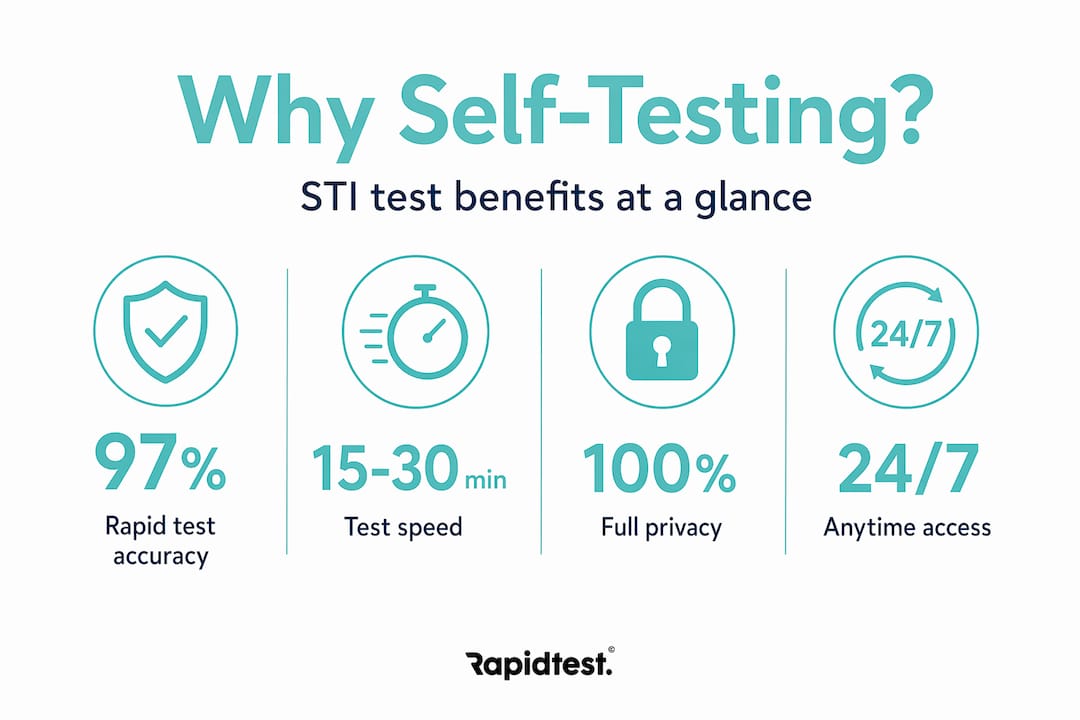
Rapid result kits give you a result at home, usually within 15 to 30 minutes. You collect your own sample, apply it to the testing device, and read the result yourself. No waiting, no posting anything off, no third party involved.
Lab-send kits ask you to collect a sample and post it to a laboratory. Results typically come back within a few days via a secure online portal. These tend to cover a broader range of infections, but they do not have the same speed advantage.
Both types use straightforward sample collection methods. Depending on the infection being tested, you might use:
- A urine sample (commonly used for chlamydia and gonorrhoea)
- An oral or genital swab
- A small finger-prick blood sample (for HIV and syphilis)
The infections most commonly covered include chlamydia, gonorrhoea, HIV, and syphilis. Some bundled kits test for several at once, which makes them particularly useful for routine screening.
Pro Tip: Read the full instructions before you open the packaging. The most common reason for inaccurate results is skipping steps or misreading the timing window.
Accuracy across properly conducted at-home tests is genuinely impressive. Rapid tests show 97% accuracy for key infections, and when you follow the instructions closely, you can trust what you see. For a practical walkthrough, Rapidtest has a step-by-step testing guide that takes all the guesswork out of the process.
Privacy, convenience, and access
These are the three reasons most people switch to at-home testing and never look back.
Privacy that actually means something
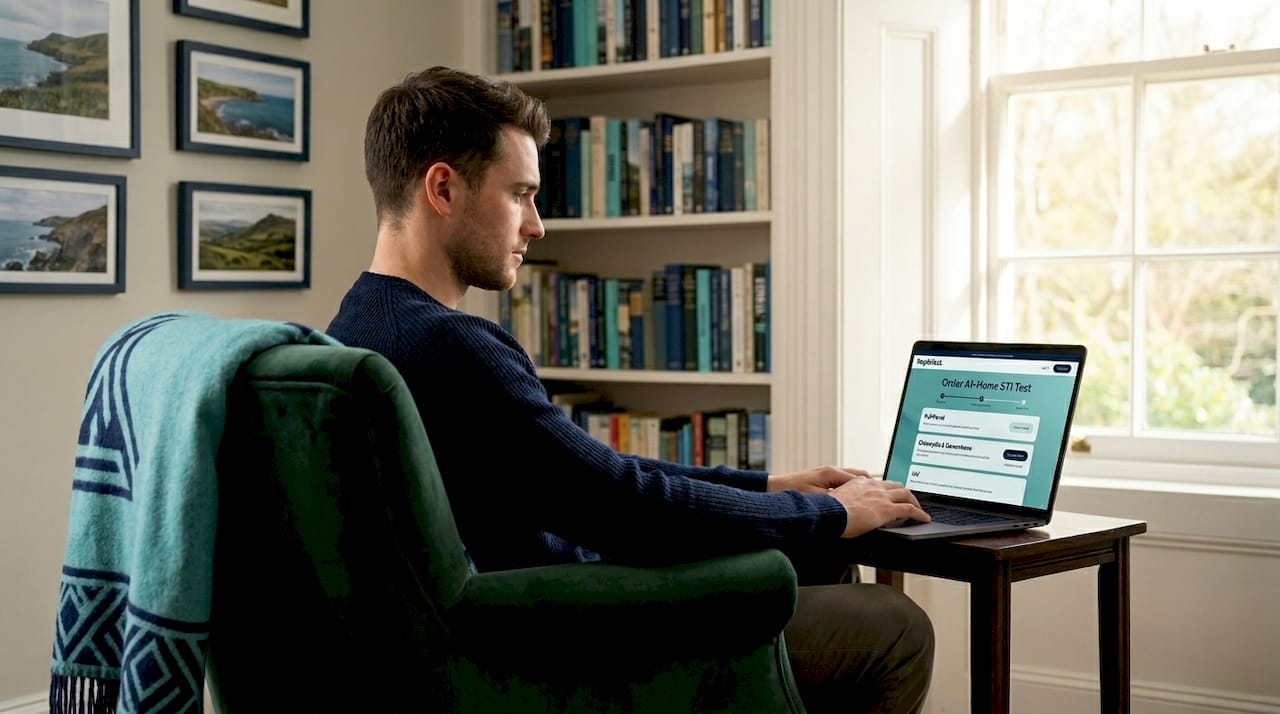
When you test at home, nobody else is involved. There is no receptionist logging your visit, no nurse reading your notes, no risk of running into someone you know in a waiting room. Your results are yours alone.
This matters more than it might sound. Stigma and logistical friction are two of the main reasons people avoid STI testing altogether. Remove those barriers, and testing rates go up. In fact, self-collection programmes increased screening uptake by nine percentage points among previously underscreened groups, with one in six participants testing positive. People who would never have walked into a clinic were testing because the process was private and simple.
Pro Tip: If you are ordering a kit online, look for discreet packaging. Rapidtest ships all kits in plain, unmarked packaging with no indication of the contents.
Convenience that fits your life
Testing at home means testing on your terms. Early morning before work. Sunday evening. Whenever suits you. There is no appointment to book, no half-day off required, and no waiting list to navigate.
Here is a quick comparison of home testing versus clinic testing across the factors that matter most:
| Factor | At-home testing | Clinic testing |
|---|---|---|
| Privacy | High. Results stay with you. | Moderate. Staff have access to records. |
| Speed of results | 15 to 30 minutes (rapid kits) | Often 3 to 7 days |
| Appointment needed | No | Usually yes |
| Cost | Fixed kit price | Variable. May include consultation fees. |
| Best for | Routine screening | Symptomatic individuals |
| Comfort level | High. Test in your own space. | Can feel clinical and stressful. |
Accessibility for everyone
Not everyone lives near a sexual health clinic. Not everyone has the flexibility to take time off work. Patients report greater comfort using self-sampling methods, describing them as easier and far less invasive than clinical examinations. For people in rural areas, those with mobility challenges, or anyone who finds clinical environments anxiety-inducing, home testing is not just convenient. It is genuinely accessible in a way that clinics often are not.
Speed and what it actually changes
Let us talk about the speed advantage specifically, because it does more than just save you time.
When you use a rapid at-home kit, you get your result in minutes. Not days. Not after a phone call from a nurse. Minutes. That speed has real consequences for your health:
- Earlier treatment starts: Catching an infection early means treating it before it causes complications. Untreated chlamydia, for instance, can lead to pelvic inflammatory disease or fertility problems if left too long.
- Faster partner notification: If your result is positive, you can notify a partner the same day rather than waiting a week for a lab result to come back.
- Reduced anxiety: The waiting period between a clinic test and getting results is one of the most stressful parts of the process. Fifteen minutes is far easier to manage.
- Better antibiotic stewardship: Rapid testing reduces unnecessary antibiotic use by enabling targeted treatment only when an infection is actually confirmed.
- Repeat testing without friction: When testing is fast and private, people do it more often. Routine screening catches infections earlier across the board.
Community-based testing with self-collection has shown real public health impact too, capturing hard-to-reach populations and helping break transmission chains in ways that clinic-only models simply cannot.
What to keep in mind
At-home testing is excellent for routine screening. But there are some honest limitations worth knowing about.
- Accuracy depends entirely on correct use. Improper sample collection significantly reduces accuracy. If you rush the process or skip a step, you may get a false result. Take your time and follow every instruction.
- Symptoms mean you need a clinical exam. At-home tests are not the right tool if you are already experiencing symptoms such as discharge, pain, or sores. Symptomatic individuals need a clinical examination for accurate diagnosis and appropriate care.
- A positive result requires a follow-up visit. Testing at home does not provide treatment. If your result comes back positive, you will need to visit a clinic or speak with a GP for a prescription and partner notification advice.
- Factor in the total cost. The kit itself is affordable, but follow-up costs after a positive result can include clinic visits or prescriptions. That is still likely cheaper than missing an infection, but it is worth being aware of upfront.
- Not every infection is covered by every kit. Some infections, such as herpes or certain strains of HPV, require more specialised sampling or clinical evaluation. Check exactly what your chosen kit tests for before purchasing.
Choosing the right kit
With so many options available, picking the right one does not need to feel overwhelming. Here is what to look for:
- CE marking or regulatory approval: In the UK, look for kits with CE marking or UKCA certification. This confirms the test has met safety and performance standards.
- Clear, detailed instructions: A good kit comes with simple, unambiguous instructions. If the instructions feel confusing before you even start, look for another product.
- Coverage that matches your needs: Decide whether you want to test for a single infection or a bundle. Bundled kits covering chlamydia, gonorrhoea, HIV, and syphilis together offer the best value for routine screening.
- Support for your results: Some providers, including Rapidtest, pair their kits with access to telehealth services so you can discuss results with a professional if you need guidance.
Once your result comes in, Rapidtest’s guide to reading your results explains exactly what a positive or negative outcome means and what to do next.
My take on why this matters
I have watched the conversation around sexual health shift dramatically over the past decade. When I look at the research and speak with people about their experiences, one thing stands out consistently: the barrier to testing has never really been about the test itself. It has always been about what testing represents emotionally.
Walking into a clinic triggers something for people. Stigma is still very real. The worry about being judged, even subconsciously, is enough to make someone delay testing for months. Sometimes for years. And those delays have consequences.
What I find genuinely exciting about at-home testing is not just the convenience, though that matters. It is the way removing friction changes behaviour. When testing is private, quick, and on your own terms, people actually do it. Regularly. And regular testing is what catches infections before they become serious problems.
I do want to be clear, though: convenience should not become an excuse to skip clinical care when symptoms are present or when a result comes back positive. The two things work together. Home testing for routine screening, clinical care for treatment and follow-up. Get that balance right and you have a genuinely powerful approach to staying healthy.
At-home testing will not suit every single situation, but for the vast majority of routine screening? It is the most practical, private, and accessible option available right now.
— Jack
Test at home with Rapidtest
Rapidtest exists to make proactive health care genuinely easy. No queues, no appointments, no awkward waiting rooms. Just clear results, at home, in 15 minutes.
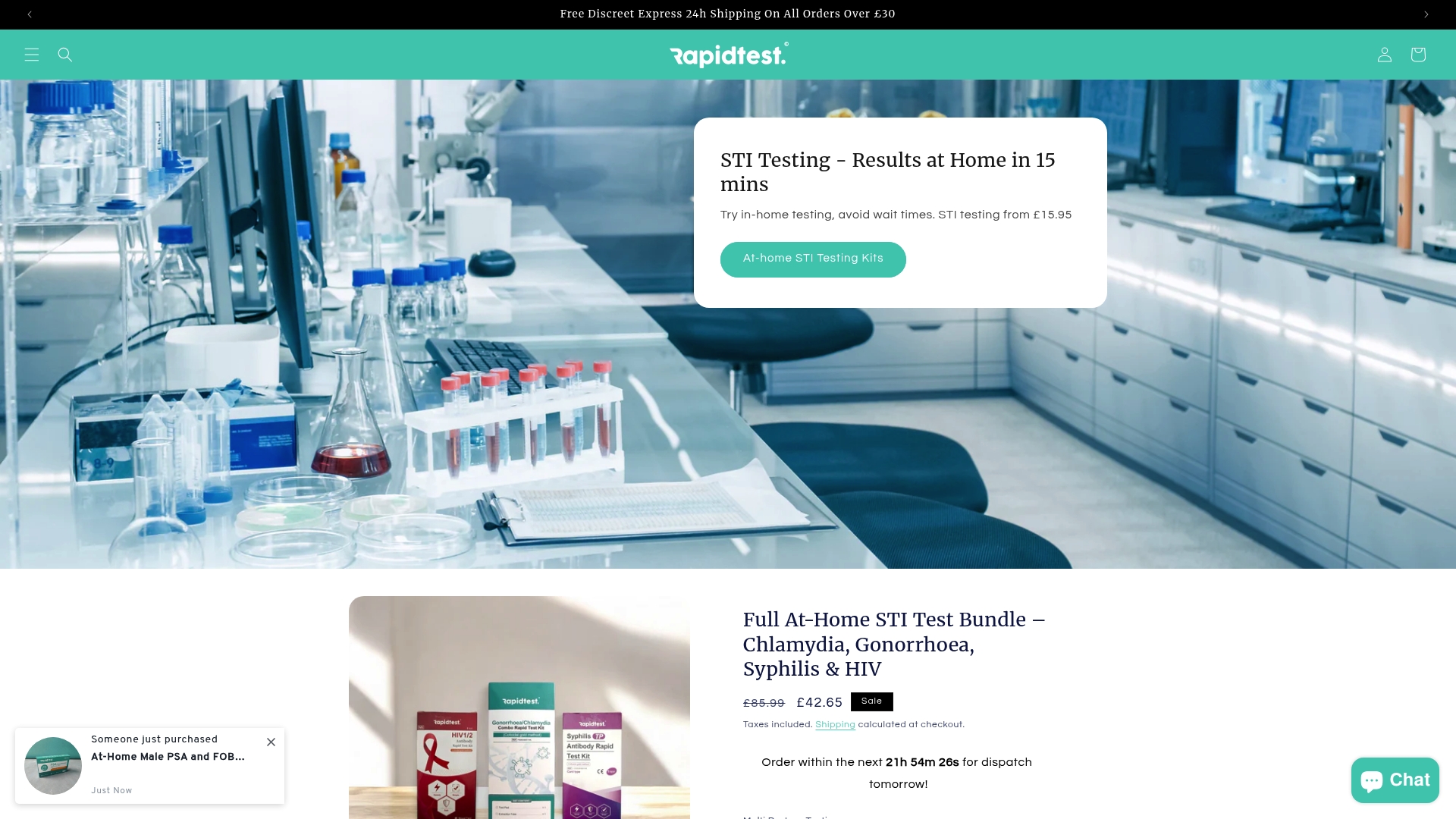
Whether you are looking for a single test or a bundled kit covering multiple infections, Rapidtest has you covered. Every kit is CE-marked, simple to use, and arrives in discreet packaging. The full STI testing kit range covers chlamydia, gonorrhoea, HIV, syphilis, and more. If you are looking for something specific, the comprehensive STI testing kits give you maximum coverage with minimum effort. Your health, your pace, your privacy.
FAQ
What are the main STI self-testing advantages?
The primary advantages are privacy, convenience, and speed. At-home tests remove the need for clinic appointments, deliver results in as little as 15 minutes, and allow testing in a comfortable, private setting.
How accurate are at-home STI tests?
Home screening tests achieve sensitivity over 90% and specificity above 99% when used correctly. Accuracy depends heavily on following the sample collection instructions carefully.
Can I use a home STI test if I have symptoms?
No. If you are experiencing symptoms such as unusual discharge, pain, or sores, you need a clinical examination. Home tests are best suited for routine screening, not for diagnosing symptomatic infections.
What should I do if my home test is positive?
A positive result means you should contact a GP or sexual health clinic promptly for treatment and partner notification. Follow-up clinical care is essential after any positive self-test result.
Which infections can at-home kits test for?
Most rapid home kits cover chlamydia, gonorrhoea, HIV, and syphilis. Bundled kits test for several infections at once, making them ideal for routine sexual health screening.