


UK No Lab STI Testing: When 2–45 Days Makes Results Unreliable
Yes, a reliable no lab STI test is possible, but the word “no lab” hides two very different things. The safest route is self-sampling: you collect a swab, urine or blood sample at home and post it to an accredited laboratory. Instant lateral-flow kits that skip the lab entirely can be useful too, but they come with real limits. If you have symptoms or an unclear result, a clinic visit beats any home test.
TL;DR:
- No lab self-testing provides instant results but is less accurate than lab-processed self-sampling, which is recommended for comprehensive screening.
- Most reliable at-home screening kits test for chlamydia, gonorrhea, HIV, syphilis, and hepatitis, with detection windows ranging from two weeks to three months.
- Testing too early after exposure increases false negatives; waiting the recommended period is crucial for accurate results.
- Symptomatic individuals should seek clinical assessment rather than rely on rapid or home tests, especially for active infections.
- Always verify product markings and support options before purchasing, and follow sample registration and labeling instructions carefully to prevent delays.
Table of Contents
- What ‘no lab’ or ‘at-home’ testing actually means
- Which infections can a no lab kit screen for?
- How timing affects whether your result means anything
- Choosing between a rapid test, self-sampling and a clinic
- A short checklist before you buy a no lab test
- What we provide and how to get support
- Why this balance of privacy, speed and safety matters
- Rapidtest: discreet rapid kits and where to start
- FAQ
- Sources
What ‘no lab’ or ‘at-home’ testing actually means
Let’s clear up the confusion first, because the marketing around this stuff is messy. There are two genuinely different products hiding under the same “at-home” label.
Self-testing means you do everything yourself, at home, with no lab involved. You take the sample, run it through a device, and read the result in minutes. Self-sampling means you collect your own sample at home, then post it to a laboratory, where trained staff process it properly and send your result back, usually through a secure online portal.
- Self-testing: instant results, processed entirely by you, no laboratory step.
- Self-sampling: you collect urine, a vaginal, rectal or throat swab, or a finger-prick blood sample, then mail it off for lab analysis.
- UK sexual health services overwhelmingly favour the second route for anything beyond quick reassurance.
That last point matters. Guidance-aligned testing leans on accredited labs because they catch things a 15-minute window simply cannot.
Which infections can a no lab kit screen for?
Home kits, whether self-test or self-sample, typically cover a familiar shortlist of infections. Knowing what’s realistically included helps you spot a dodgy product before you buy one.
- Chlamydia and gonorrhoea, usually via urine or a swab, often bundled together in a basic panel.
- HIV, tested through antibody or antigen detection from a finger-prick blood sample.
- Syphilis, also screened from a blood sample, sometimes included only in fuller panels.
- Hepatitis B and C, where the provider offers broader screening rather than a basic STI check.
A basic panel usually covers chlamydia and gonorrhoea. A fuller panel adds HIV, syphilis and sometimes hepatitis, which suits anyone with multiple partners or a higher-risk history.
What you should steer clear of is anything testing for commensal organisms or marketed as a broad “microbiome” panel. BASHH guidance is blunt about this: testing for organisms like Mycoplasma hominis or Ureaplasma species, which are commonly present and not thought to cause harm, tends to produce false positives, needless worry and antibiotic use you didn’t need. More tests on the label doesn’t mean a better test.
How timing affects whether your result means anything

Here’s the bit people skip, and it’s the one that causes the most unnecessary panic or false reassurance: window periods.
Every infection has a gap between exposure and the point where a test can reliably detect it. Test too early, and a negative result tells you nothing useful.
According to the self-screening kit selection flowchart from Sexual Health Sheffield, chlamydia and gonorrhoea typically become detectable after about a couple of weeks, some HIV blood tests need around six weeks, and syphilis can take several weeks to show up. That’s a huge spread, and it’s exactly why a single home test taken three days after a risky encounter provides very little information.
- Chlamydia and gonorrhoea: wait roughly two weeks before testing.
- HIV: some blood-based tests need around 45 days for an accurate result.
- Syphilis: allow up to three months for reliable detection.
There’s also a difference in raw accuracy between test types. Laboratory NAAT (nucleic acid amplification testing) used in self-sampling pathways tends to be more sensitive than lateral-flow rapid tests, which are quicker but more prone to missing a low-level infection. Practically, that means: wait out the window period, follow the instructions precisely, and if your kit asks you to register or label your sample, do it before you post anything. Skipping that step is one of the main reasons labs reject samples outright, as NHS specimen collection guidance points out, which just means a delay and a repeat test.
Choosing between a rapid test, self-sampling and a clinic
Your situation should decide your route, not whichever kit shows up first in a search.
- If you’re asymptomatic and testing routinely, annual screening is the general guideline, rising to every three months if you’re in a higher-risk group, such as PrEP users or people with multiple partners, according to BASHH’s 2023 summary guidance.
- If you have symptoms such as discharge, sores, pain or unusual bleeding, book a clinic or GP assessment rather than leaning on a home test, which isn’t built for diagnosing active symptoms.
- If you get a positive result from any home test, treat it as a starting point, not a diagnosis. Arrange clinical follow-up for confirmation, treatment and partner notification.
Self-sampling kits are designed primarily for people without symptoms who want routine, confidential screening. The same BASHH guidance is clear that anyone with symptoms should go straight to a clinical assessment instead of waiting on a postal result.
A short checklist before you buy a no lab test
A bit of label-reading saves you a lot of grief later. Before you add a kit to your basket, run through this.
- Check it states a clear clinical purpose rather than vague “peace of mind” language.
- Look for CE or UKCA marking, which signals the product has met recognised performance standards.
- Confirm there’s a transparent pathway for your sample, whether that’s instant results or a named accredited lab.
- Make sure there’s clinical support on offer if your result comes back positive, not just a results page and silence.
Red flags are just as telling. Be wary of accuracy claims with no numbers behind them, “microbiome” panels that test for organisms nobody treats, or any provider that’s unclear about where your sample actually goes.
Pro Tip: Register your kit the moment it arrives, keep any paperwork or reference codes, and follow the return instructions to the letter, since an unregistered or mislabelled sample is one of the most common reasons results get delayed.
What we provide and how to get support
We built our kits around the basics people actually need: clear instructions, a defined result window, and a clinical purpose rather than a vague promise. Our STI kits arrive in discreet packaging and come with straightforward steps to follow from box to result.
- Our step-by-step testing guide walks through collecting urine, swabs and blood correctly.
- Our guide to the at-home screening process explains when home testing fits and how results reach you.
- Our symptom checklist helps you recognise when a clinic visit is the better call.
Why this balance of privacy, speed and safety matters
Rapid tests earn their place for routine, no-symptom checks when you want privacy and speed. Symptoms, recent high-risk exposure or a confusing result deserve proper clinical attention instead. Stick with accredited routes and guidance-backed timing, and you’ll get an answer you can actually trust.
— Jack
Rapidtest: discreet rapid kits and where to start
We designed our at-home STI kits for exactly the moment this article is about: wanting an answer without a clinic queue or an awkward conversation. Results are provided rapidly, packaging is discreet, and kits ship within the UK.
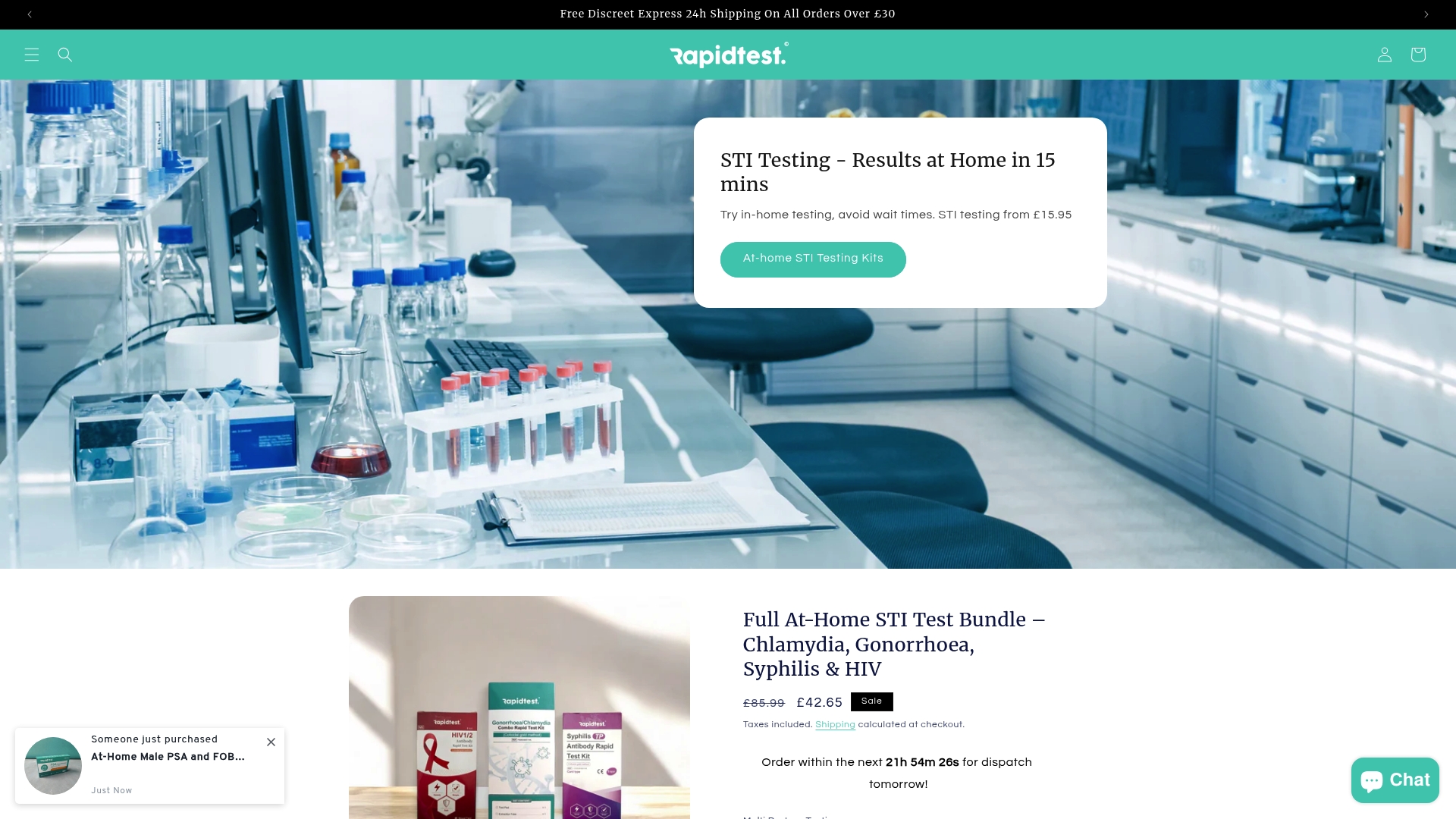
- Our STI & STD test kits cover the infections most people want checked routinely.
- Our private multi-test STI kits are available for purchase online; current prices are on our pricing page.
- If you have symptoms, a recent high-risk exposure, or a result you’re unsure about, lab-processed self-sampling or a clinic visit is still the safer call, and we’d rather you went there than relied on us alone.
Browse the full range on our test kit collection and order whenever suits you, no appointment needed.
This article is general information, not a substitute for advice from a qualified doctor. Consult a qualified healthcare professional about your own circumstances before acting on anything here.
FAQ
Does the NHS offer free home STI testing kits?
Many NHS sexual health services provide free postal self-sampling kits to eligible people, with discreet packaging and online result portals, according to NHS guidance on syphilis testing. Availability and eligibility vary by local service, so check your nearest sexual health clinic’s website for current options.
Do Boots do chlamydia tests?
High street pharmacies sometimes stock or sell chlamydia self-test and self-sampling kits, though ranges and availability change regularly. For a guideline-aligned result, a self-sampling kit sent to an accredited laboratory remains the more reliable route than an instant pharmacy test.
Is there an at-home syphilis test kit available?
Yes, syphilis can be screened at home through a finger-prick blood sample, usually as part of a fuller STI panel rather than a standalone test. Bear in mind the window period runs up to three months, so testing too soon after exposure can give a falsely reassuring result, per the Sexual Health Sheffield flowchart.
Do some STDs not show up on tests?
Every STI test has a window period during which an infection may be present but not yet detectable, which is why testing too early can produce a false negative. Symptoms, reinfection risk or an unclear result are all good reasons to seek a clinical assessment rather than relying on a single home test result.
Sources
- Self‑screening kit selection flowchart (Sexual Health Sheffield)
- BASHH patient information leaflet: more is not always better