


At-home health monitoring tips: your 2026 guide
At-home health monitoring is the regular self-measurement of key health indicators, including blood pressure, blood glucose, cholesterol, and sleep quality, using clinically validated devices and consistent technique. Done properly, it gives you a real-time picture of your health between GP visits, and the WHO recognises individuals as active agents in their own healthcare through self-monitoring and diagnostics. The best at-home health monitoring tips are not about tracking everything obsessively. They are about choosing the right metrics, using the right tools, and knowing what the numbers actually mean.
1. What are the essential health metrics to monitor at home?
Effective home health tracking starts with knowing which numbers matter most. Not every metric deserves daily attention, but several have strong clinical relevance for general wellness and condition-specific management.
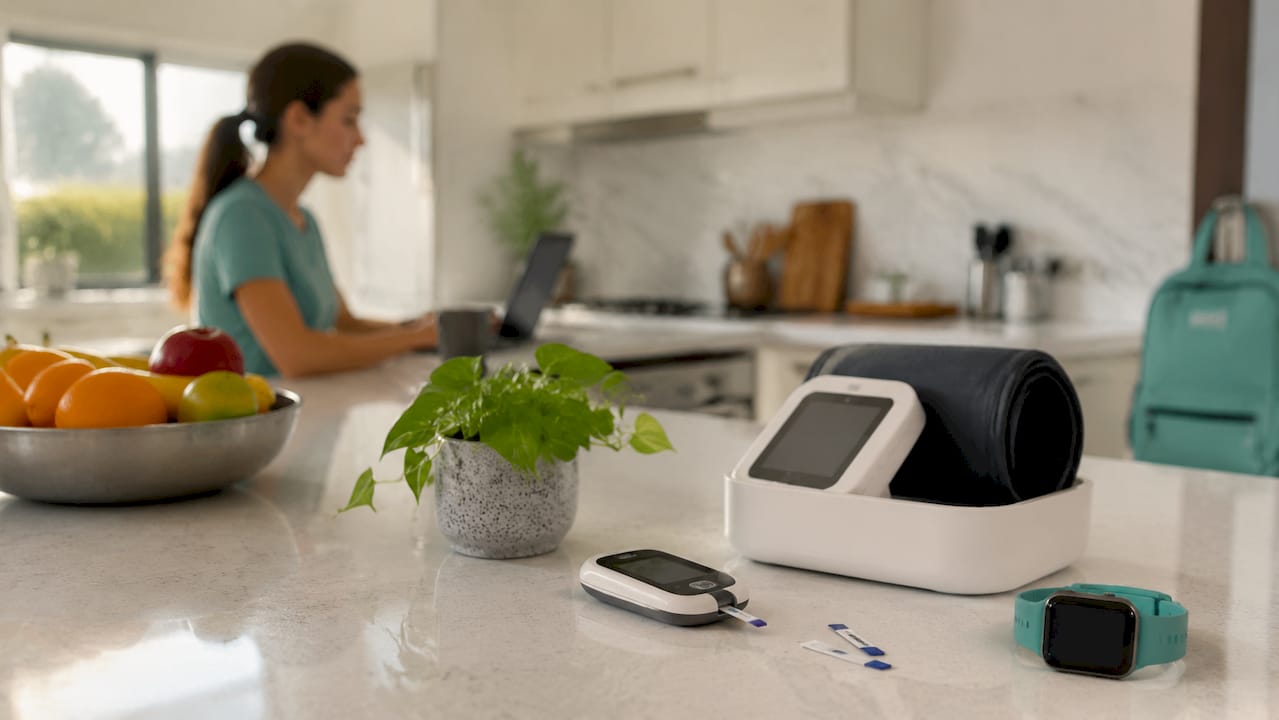
Blood pressure is the most widely recommended metric for home monitoring. A normal reading is 120/80 mmHg; stage 1 hypertension begins at 130/80. Tracking this regularly helps you spot upward trends before they become a problem.
Blood glucose and HbA1c are critical for anyone managing or at risk of diabetes. Diabetics benefit from daily glucose checks, while HbA1c tests quarterly give a three-month average. Home HbA1c kits are generally within 0.5% accuracy of lab results, which is close enough to track meaningful trends.
Cholesterol should be tested every four to six months if your levels are elevated. Home cholesterol monitors carry a ±5 to 10% margin of error, so use them for trend tracking rather than single-point diagnosis.
Sleep quality and stress round out the picture. Wearables like Fitbit, Garmin, and Apple Watch capture resting heart rate, sleep stages, and heart rate variability. These numbers contextualise your other readings in ways a single blood pressure check cannot.
| Metric | Recommended frequency | Normal range |
|---|---|---|
| Blood pressure | Daily or twice daily (hypertensive) | Below 120/80 mmHg |
| Blood glucose | Daily (diabetics) | 70 to 99 mg/dL fasting |
| HbA1c | Every 3 months | Below 5.7% (non-diabetic) |
| Cholesterol | Every 4 to 6 months | Total below 5 mmol/L |
| Resting heart rate | Daily via wearable | 60 to 100 bpm |
2. Which health monitoring devices are worth buying?
The best health monitoring devices combine clinical validation with genuine ease of use. A device that sits in a drawer because it is fiddly is worse than no device at all.
Blood pressure monitors: Upper arm cuffs consistently outperform wrist monitors for accuracy. Look for devices validated by the British and Irish Hypertension Society (BIHS) or the European Society of Hypertension. Omron and Microlife both produce BIHS-validated models at accessible price points.
Glucose monitors: For diabetics, continuous glucose monitors (CGMs) like the Abbott FreeStyle Libre offer real-time readings without finger pricks. For occasional screening, standard glucometers from Accu-Chek or OneTouch are reliable and affordable.
Pulse oximeters: Useful for monitoring blood oxygen saturation, particularly for those with respiratory conditions. CE-marked devices from Beurer or Nonin are worth the modest extra cost over unvalidated alternatives.
Fitness trackers and smartwatches: Devices like the Apple Watch Series 9, Garmin Venu 3, and Fitbit Charge 6 track heart rate, sleep, and activity continuously. They do not replace clinical-grade devices, but they add valuable context to your daily health checks.
Pro Tip: Always check that any blood pressure monitor you buy carries a recognised validation mark. CE certification alone is not sufficient. Look specifically for BIHS or ESH validation, which confirms the device has been tested against clinical standards.
Device maintenance matters too. Calibrate glucose meters using control solutions, replace blood pressure cuff tubing if it shows wear, and keep sensors clean. A poorly maintained device produces unreliable data, which is more dangerous than no data at all. You can read more about choosing the right test to match devices to your specific needs.
3. How to perform daily health checks properly
Reliable results come from consistent technique, not just consistent effort. Small errors in preparation or timing can skew readings significantly.
For blood pressure:
- Sit quietly for five minutes before measuring. Do not drink caffeine or exercise in the 30 minutes prior.
- Sit with your back supported, feet flat on the floor, and your arm resting at heart height.
- Place the cuff on your bare upper arm, not over clothing.
- Take two readings one to two minutes apart and average them. This accounts for natural variation.
- Measure at the same time each day, ideally morning and evening.
This matters because white coat syndrome can artificially inflate clinical readings by 10 to 15 points. Home readings, taken correctly, are often more representative of your true baseline.
For blood glucose:
Test fasting glucose first thing in the morning before eating or drinking anything other than water. Post-meal readings should be taken two hours after the first bite. Wash your hands before testing to avoid contamination affecting the result.
For sleep and stress tracking:
Wear your device consistently, including on rest days. Log your subjective feelings alongside the data. If your Garmin says you slept eight hours but you feel exhausted, that mismatch is worth noting and investigating.
Pro Tip: Use a simple notebook or an app like Apple Health to log every reading with the date and time. Patterns only become visible over weeks, not days. A single high reading means very little. A consistent upward trend means a great deal.
4. How to integrate and analyse your health data effectively
Collecting data is only half the work. The real value of self-monitoring health techniques comes from spotting patterns across metrics over time.
Platforms like Apple Health and Google Fit consolidate data from multiple devices into a single view. Centralising your data in one place makes it far easier to detect correlations, such as poor sleep driving elevated blood pressure the following morning, or high stress scores preceding glucose spikes.
The Quantified Self movement frames this approach well: the goal is tracking trends over time, not reacting to individual readings. A single elevated cholesterol result is not a crisis. Six months of rising readings is a conversation to have with your GP.
Here is what to look for when reviewing your data:
- Correlations between metrics: Does your resting heart rate rise on days you sleep fewer than six hours? Does your blood pressure trend upward during stressful work periods?
- Seasonal patterns: Many people see blood pressure rise in winter. Knowing this helps you distinguish a genuine change from a predictable fluctuation.
- Subjective versus objective mismatches: If your data looks fine but you feel consistently unwell, that gap deserves attention.
- Privacy: Apps like Apple Health store data locally on your device by default. Third-party apps vary widely. Check the privacy policy of any app before connecting your health data. Rapidtest’s privacy guidance for home testing covers this in more detail.
“Emotional and subjective feelings should be tracked alongside objective data to contextualise results and highlight mismatches prompting further evaluation.” Build personalised health monitoring with consumer tech
5. Warning signs in home monitoring that need urgent attention
Some readings are not just trends to watch. They are signals to act on immediately. Knowing the thresholds is one of the most practical at-home health monitoring tips you can carry.
Seek urgent medical attention if you observe any of the following:
- Blood pressure above 180/120 mmHg. This is a hypertensive crisis and requires emergency care, especially if accompanied by chest pain, shortness of breath, or vision changes.
- Blood glucose below 70 mg/dL or above 300 mg/dL. Both extremes carry serious short-term risks. Below 70 indicates hypoglycaemia; above 300 may signal diabetic ketoacidosis.
- Ketones above 3.0 mmol/L with diabetes symptoms. This combination requires immediate medical review.
- Resting heart rate consistently above 100 or below 50 bpm alongside dizziness or chest tightness. These combinations point to arrhythmia or other cardiac issues that need professional assessment.
- Abnormal urine colour persisting over 24 hours, or sudden unexplained weight changes of more than two kilograms in 48 hours.
Your home monitoring data is genuinely useful in these situations. Bring your logged readings to any GP or A&E appointment. A week of blood pressure logs tells a clinician far more than a single reading taken in a consulting room.
Key takeaways
Consistent, accurate home health monitoring requires validated devices, correct technique, and systematic data review to turn raw numbers into meaningful personal health insights.
| Point | Details |
|---|---|
| Start with the right metrics | Track blood pressure, glucose, cholesterol, and sleep as your core daily health checks. |
| Use validated devices | Choose BIHS or ESH-validated monitors and CE-marked devices to avoid unreliable readings. |
| Technique determines accuracy | Rest for five minutes before blood pressure checks and always average two readings. |
| Analyse trends, not single readings | Use Apple Health or Google Fit to spot patterns across weeks and months. |
| Know your emergency thresholds | Blood pressure above 180/120 or glucose below 70 mg/dL requires immediate medical attention. |
Why simplicity is the secret to sustainable health monitoring
I have seen people set up elaborate home monitoring systems, tracking twelve metrics daily, only to abandon the whole thing within a fortnight because it felt like a part-time job. That is not a failure of willpower. It is a design problem.
The best practice for home health monitoring is to start with two or three metrics that genuinely reflect your personal health goals. If you have a family history of heart disease, blood pressure and resting heart rate are your anchors. If you are managing weight or metabolic health, glucose and sleep quality matter most. Pick your focus, build the habit, and expand only when the routine feels effortless.
I also think people underestimate how much subjective data matters. Your device might show a perfectly normal heart rate, but if you have felt exhausted and foggy for three weeks, that feeling is data too. The most useful monitoring combines what your devices tell you with what your body is telling you. When those two things disagree, that is when you pay attention.
Experts caution against over-monitoring causing anxiety, and I think that warning is real. Numbers can become a source of stress rather than reassurance if you check them compulsively. Set a rhythm, review your trends weekly, and remember that the goal is to feel more in control of your health, not more anxious about it.
— Jack
Test smarter with Rapidtest
Rapidtest makes proactive health care genuinely straightforward. Alongside your daily monitoring routine, regular screening for conditions like STIs, prostate health, and fertility gives you a fuller picture of your overall wellbeing. Rapidtest’s kits deliver results at home in 15 minutes, with no queues, no GP appointment, and no awkward conversations. Whether you are looking at an at-home STI test or an early prostate screening kit, Rapidtest gives you the confidence of knowing, quickly and privately. Because staying on top of your health should not require a waiting room.
FAQ
What is the most important metric to monitor at home?
Blood pressure is the single most clinically relevant metric for most adults. A reading above 130/80 mmHg indicates stage 1 hypertension, and consistent home monitoring is more accurate than a single clinical reading due to white coat syndrome.
How accurate are home health monitoring devices?
Accuracy varies by device type. Home HbA1c tests are typically within 0.5% of lab results, while cholesterol monitors carry a ±5 to 10% margin. Always choose devices with recognised validation marks for the most reliable readings.
How often should I check my blood pressure at home?
If you have been diagnosed with hypertension, check twice daily, morning and evening. For general wellness monitoring, once daily at a consistent time gives a reliable baseline over time.
Can home monitoring replace GP visits?
Home monitoring complements but does not replace professional care. It helps you spot trends and communicate more effectively with your doctor, but clinical diagnosis and treatment decisions require qualified medical assessment.
How do I read and interpret my home test results?
Log every reading with the date and time, then look for patterns over weeks rather than reacting to individual numbers. Rapidtest’s guide on reading home test results walks you through interpreting results with confidence.