


What is a self-collection kit? Your guide to HPV testing
What is a self-collection kit?
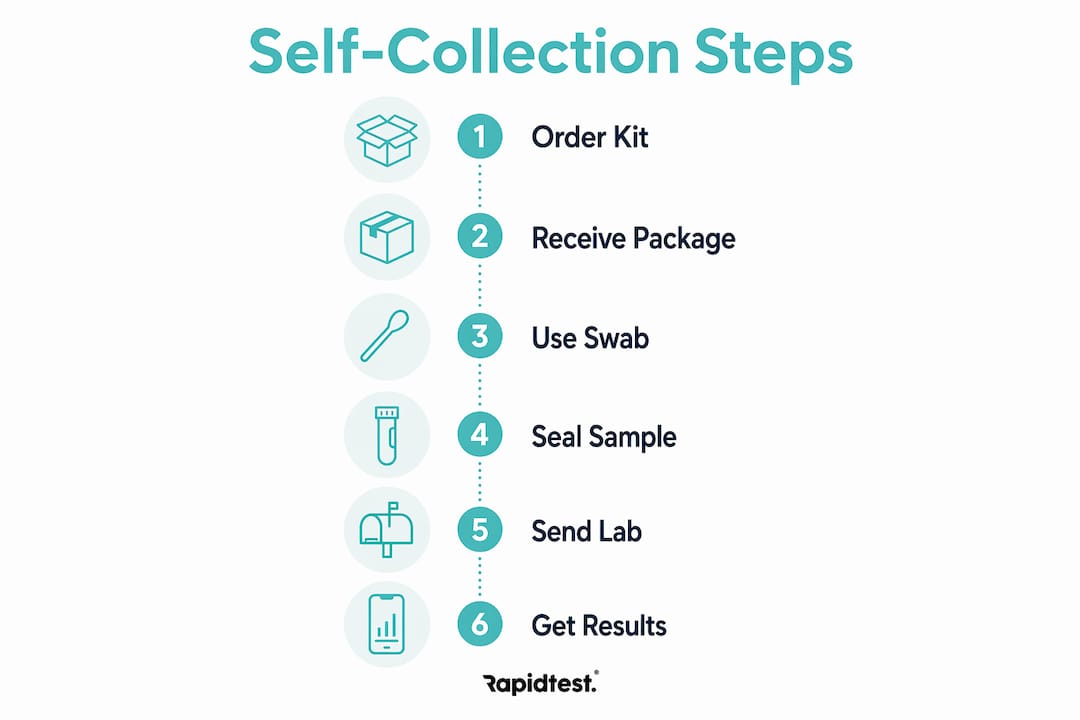
A self-collection kit is a medical device package that lets you collect your own biological sample privately at home, then send it to a professional laboratory for testing. No appointment. No waiting room. No awkward conversation with a stranger.
For cervical and HPV screening specifically, the kit typically contains a thin vaginal swab. You collect the sample yourself, seal it in the provided container, and post it to the lab. The WHO frames self-collection as part of its broader self-care framework: evidence-based health interventions that work fully or partially outside formal health services.
What a typical self-collection kit includes:
- A sterile swab (vaginal, oral, or rectal, depending on the test)
- A sealed transport tube or container
- A pre-paid return envelope or postal bag
- A request form to complete before sending
- Step-by-step instructions in plain language
One thing worth knowing: a sampling kit is not a self-test. The kit collects your sample. The diagnosis happens later, in a lab, by trained professionals.
How self-collection kits work for cervical screening
The process is simpler than most people expect. For HPV and cervical screening, you use a thin swab to collect a sample from inside your vagina. Crucially, you do not need to reach the cervix. That is one of the biggest misconceptions people have, and it puts a lot of people off unnecessarily.
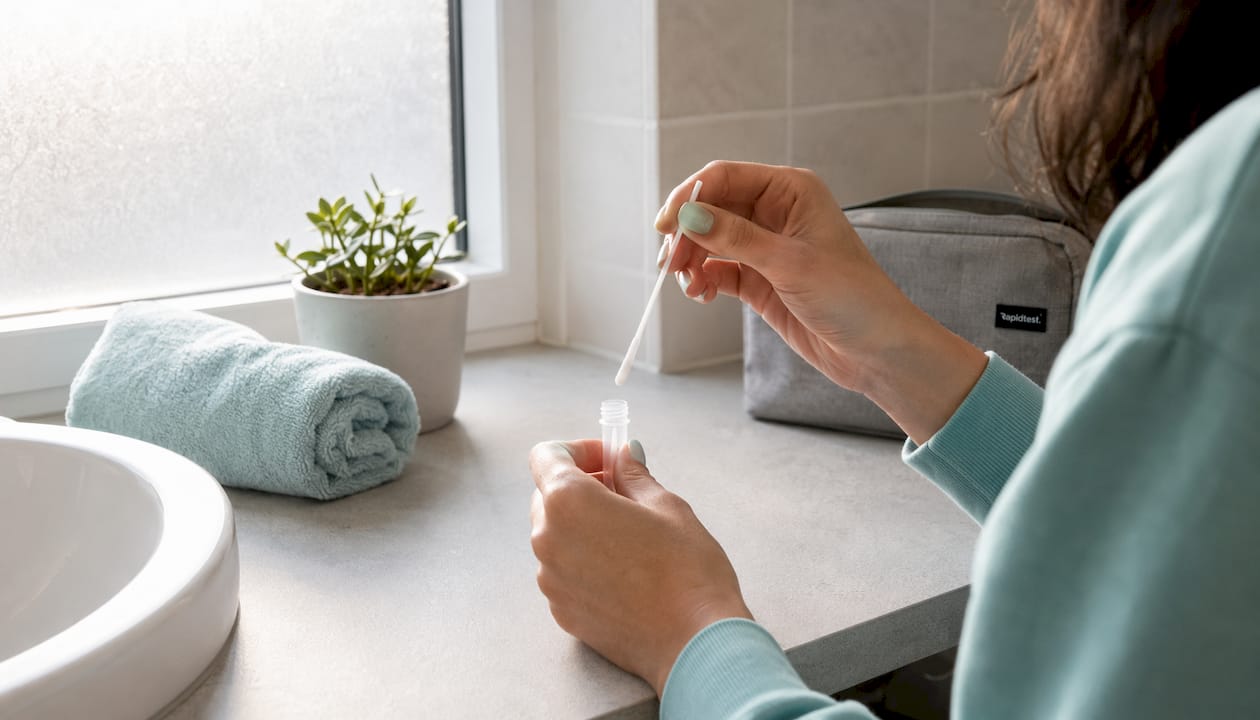
Once collected, the swab goes into a sealed tube and is posted to the laboratory. There, scientists test the sample for human papillomavirus (HPV), the infection responsible for almost all cervical cancers.
How it differs from a clinician-collected test:
- A clinician uses a speculum and a small brush to take a sample directly from the cervix
- Self-collection uses a vaginal swab, no speculum required
- Both methods detect HPV; neither is painful when done correctly
- The lab process after sample receipt is identical for both
This distinction matters if you have been putting off your screening. You can screen for STIs at home using the same postal sample principle, and the experience is much the same.
Who can use a self-collection kit?
Self-collection is not just for people who dislike clinical settings, though it certainly helps them. BASHH guidance and NHS frameworks highlight several groups who benefit most.
You are likely eligible if you:
- Are due for your routine cervical screening (typically at regular intervals recommended by health authorities in the UK)
- Have been putting off a smear test due to anxiety, discomfort, or past trauma
- Have difficulty accessing a GP or sexual health clinic
- Are from a community that faces barriers to traditional healthcare settings
- Are overdue for screening and want to catch up without waiting for an appointment
Self-collection is particularly valuable for underserved populations. The WHO notes that self-care interventions are key to expanding health reach beyond traditional facilities, and cervical screening is a clear example of where that matters. If you are unsure whether a kit is right for your situation, your GP can advise.

Are self-collected samples as accurate as clinician-collected ones?
Yes, for HPV detection. Multiple studies confirm that self-collected vaginal swabs are clinically equivalent to clinician-collected samples when it comes to detecting HPV. Both WHO and BASHH support this position.
“Both tests are safe and accurate at detecting HPV, the common infection that causes almost all cervical cancers.” — Australian Government Department of Health, reflecting the same clinical evidence base used by UK screening programmes.
There are a few nuances. Accuracy depends on following the instructions correctly. A contaminated swab or one used on the wrong area can invalidate the result. Menstruation does not typically affect the accuracy of a vaginal self-collection sample, provided you follow the kit’s instructions carefully. The key variable is user technique, not the method itself.
Accessible healthcare is improving partly because of this equivalency. As healthcare access continues to evolve, self-collection sits at the centre of that shift.
How to use a self-collection kit correctly
Getting the sample right is everything. A well-collected sample gives you a reliable result. A poorly collected one means the lab cannot test it, and you are back to square one.
Step-by-step for a vaginal swab:
- Wash your hands thoroughly before opening the kit
- Check the packaging is intact and the kit has not expired
- Remove the swab without touching the tip
- Insert the swab into your vagina and rotate it gently for 10–30 seconds
- Place the swab immediately into the sealed transport tube
- Complete the request form in black ink
- Seal everything in the return envelope and post it promptly
Pro Tip: The most common mistake is touching the swab tip before use. Even brief contact with your fingers can contaminate the sample. Open the swab packet carefully and handle only the handle end.
BASHH guidance stresses that clear, accessible instructions are central to whether self-collection programmes actually work. If anything in your kit’s instructions is unclear, contact the provider before you start rather than guessing.
UK regulations and official guidance on self-collection kits
Not all kits are equal. In the UK, a self-collection kit must be CE-marked to be legally sold and used, confirming it meets the regulatory safety and quality standards monitored by the NHS.
Before using any kit, check:
- The packaging is sealed and undamaged
- The kit has not passed its expiry date
- The CE mark is visible on the packaging
- The kit comes with a clear instruction leaflet
- There is a prepaid return method included
BASHH and the NHS both recommend using kits from authorised providers only. Kits purchased from unverified sources may not meet UK standards, which puts both your safety and your results at risk. The NHS innovation guidance on in vitro diagnostics sets out the framework that all legitimate kits must comply with. If you are ordering online, look for a UK-registered provider and check that the product listing references CE approval explicitly.
Rapidtest offers private at-home testing without the wait
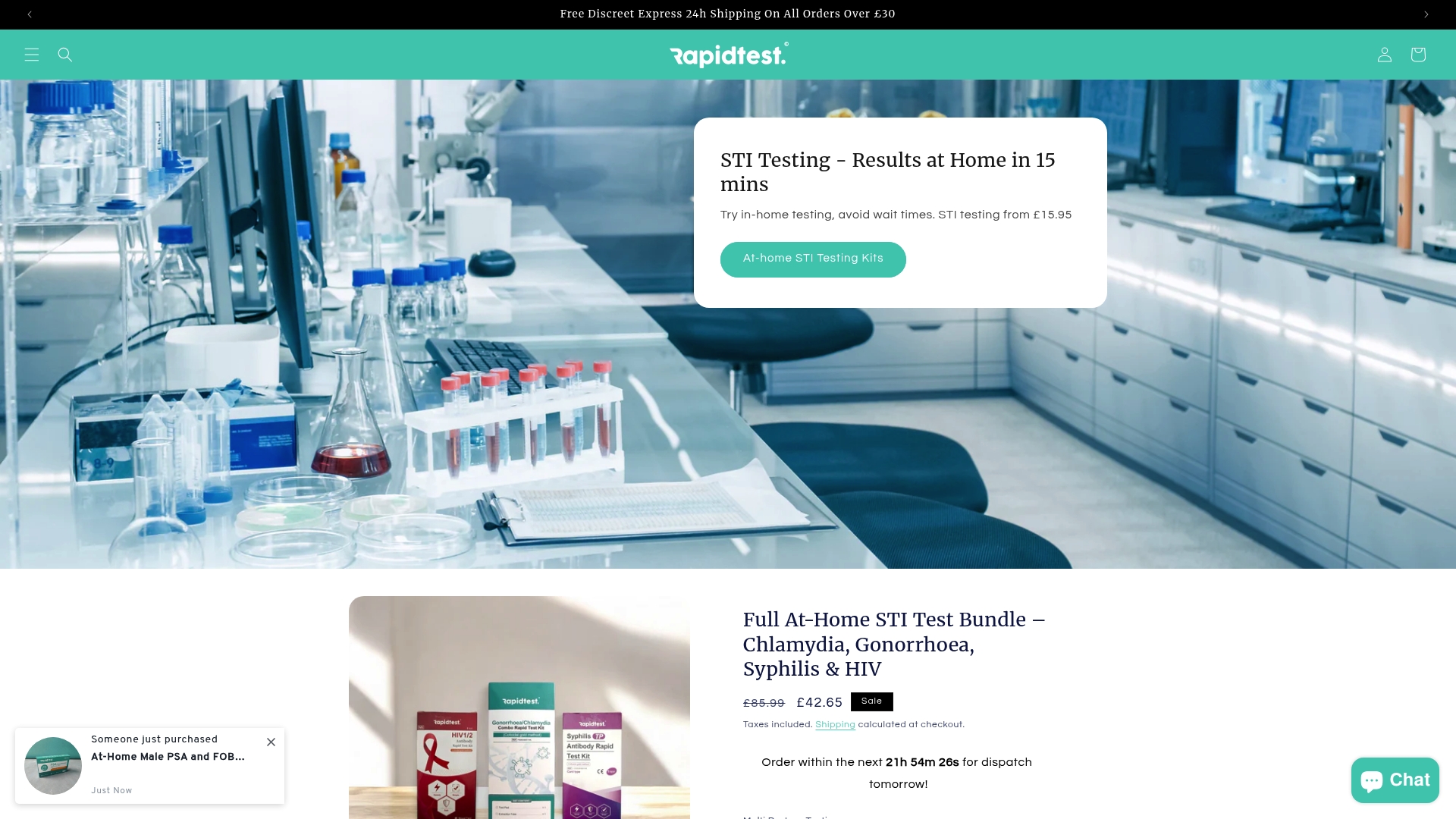
If you want to take control of your health without booking an appointment or sitting in a waiting room, Rapidtest is built for exactly that. Rapidtest offers at-home STI testing kits that give you results in 15 minutes, privately, at home. No lab visit, no GP referral, no queue.
For people who have read this far and are thinking “I really should get tested,” that is the nudge you needed. Rapidtest also covers HPV rapid testing, fertility testing, and PSA and FOB screening for prostate and bowel health. Discreet packaging, straightforward instructions, and results you can trust.
FAQ
Is self-collection for cervical screening accurate?
Yes. Self-collected vaginal swabs are clinically equivalent to clinician-collected samples for detecting HPV, according to WHO and BASHH guidance. Accuracy depends on following the kit instructions correctly.
Can you test for HPV at home?
You can collect a vaginal swab sample at home using a self-collection kit and send it to a laboratory for HPV testing. Rapidtest also offers an HPV rapid test kit for faster at-home results.
How do women get tested for HPV in the UK?
HPV testing in the UK is done through cervical screening, either via a clinician-collected sample using a speculum or a self-collected vaginal swab sent to a lab.
Who should use a self-collection kit?
Anyone due for cervical screening who finds clinic appointments difficult, uncomfortable, or inaccessible. BASHH guidance highlights self-collection as particularly beneficial for underserved or hard-to-reach populations.
Key takeaways
Self-collection kits are clinically validated tools that let you collect your own sample at home and send it to a lab, with accuracy equivalent to clinician-collected samples for HPV detection.
| Point | Details |
|---|---|
| What the kit does | Collects your biological sample at home; diagnosis is done by a lab, not the kit itself. |
| HPV accuracy | Self-collected vaginal swabs are clinically equivalent to clinician-collected samples per WHO and BASHH. |
| Who benefits most | People overdue for cervical screening, or those facing barriers to traditional clinic appointments. |
| UK compliance | Kits must be CE-marked and meet NHS regulatory standards; always check packaging before use. |
| Rapidtest option | Rapidtest offers private at-home STI and HPV testing kits with results in 15 minutes, no appointment needed. |