


Throat gonorrhoea symptoms for sexually active adults: Test 2–14 days
Most throat gonorrhoea infections cause no symptoms at all, which is exactly why so many people carry the infection without knowing it. When symptoms do show up, they usually mean a persistent sore throat and redness that won’t clear up. You can’t diagnose it by looking in a mirror. The only way to know for sure is a throat swab test, so if you’ve had oral sex and something feels off, testing is the next step, not guessing.
TL;DR:
- Throat gonorrhoea is often asymptomatic, meaning most people carry it unknowingly, and testing with a throat swab or NAAT is essential for accurate diagnosis.
- Symptoms, when they appear, include a lingering sore throat, redness, swollen lymph nodes, and sometimes a mild fever, but they are too mild to distinguish from other causes without testing.
- It usually develops within two weeks after oral sex, and persistent symptoms despite typical remedies should prompt STI testing rather than self-diagnosis.
- Treatment involves a single dose of ceftriaxone with follow-up testing, as treatment failure is more common in throat infections than in genital cases.
- Rapid, private at-home tests offer a discreet way to check for gonorrhoea, but severe symptoms like difficulty breathing or heavy bleeding require immediate medical attention.
Table of Contents
- What throat gonorrhoea symptoms actually feel like
- Throat gonorrhoea vs strep throat: how to tell them apart
- How throat gonorrhoea is diagnosed: swabs, NAAT, and timing
- Throat gonorrhoea treatment and what happens after a positive result
- When throat gonorrhoea symptoms mean you need urgent care
- Protecting yourself: prevention and next steps after exposure
- Why I think most people underestimate the throat entirely
- A discreet way to check your throat symptoms sooner
- Sources
- FAQ
What throat gonorrhoea symptoms actually feel like
Here’s the tricky part: pharyngeal gonorrhoea is a quiet infection more often than not. Human saliva contains enzymes that make the throat a fairly hostile place for Neisseria gonorrhoeae to settle in, which is part of why oropharyngeal infections are less common than genital ones, and why so many cases pass through completely unnoticed.
When symptoms do turn up, they tend to follow a familiar pattern rather than anything dramatic:
- A sore throat that lingers longer than a typical cold or bug
- Visible redness (erythema) at the back of the throat
- Swollen lymph nodes in the neck
- A mild fever in some cases
- Occasional throat itching or a scratchy feeling
- Difficulty swallowing (less common)
- Ulceration or bleeding tissue in the throat (rare)
Pro Tip: A sore throat that hangs around for more than a week after oral sex, especially with no cough or cold symptoms alongside it, is worth testing for rather than waiting out.
Clinical reviews and public health sources consistently describe throat infection as typically asymptomatic in the majority of people who have it. That’s the whole reason screening exists separately from symptom checking: if you waited for signs before testing, you’d miss most cases entirely. Sore throat gonorrhoea doesn’t announce itself the way a raging bacterial infection might, and that quiet presentation is precisely what makes it spread.
Throat gonorrhoea vs strep throat: how to tell them apart
You genuinely cannot eyeball this one. Strep throat tends to arrive fast and hit hard: rapid onset, a high fever, and white or yellow patches on the tonsils. Gonorrhoea throat infection signs overlap with almost every other cause of a sore throat, including viral pharyngitis, so appearance alone tells you very little.
A few practical signals should nudge you towards STI testing rather than just riding it out with lozenges:
- Symptoms appearing within roughly two weeks of oral sex with a new or unknown partner
- A sore throat that doesn’t respond to normal remedies (fluids, rest, over-the-counter pain relief)
- Persistent throat symptoms with no cold, flu, or cough alongside them
- Any sore throat combined with genital symptoms or a known exposure
Clinical guidance is blunt about this: clinical appearance alone cannot distinguish gonococcal pharyngitis from other causes of sore throat. A GP or clinic looking down your throat is making an educated guess without a swab. That’s not a criticism of them, it’s just the reality of how this particular infection behaves.
How throat gonorrhoea is diagnosed: swabs, NAAT, and timing
Diagnosis comes down to one method that actually works: a nucleic acid amplification test, or NAAT, run on a swab taken from the back of the throat. This is the diagnostic standard for oropharyngeal samples, and it’s worth being specific with whoever tests you, because a routine STI panel doesn’t always include a throat swab unless you ask for one.
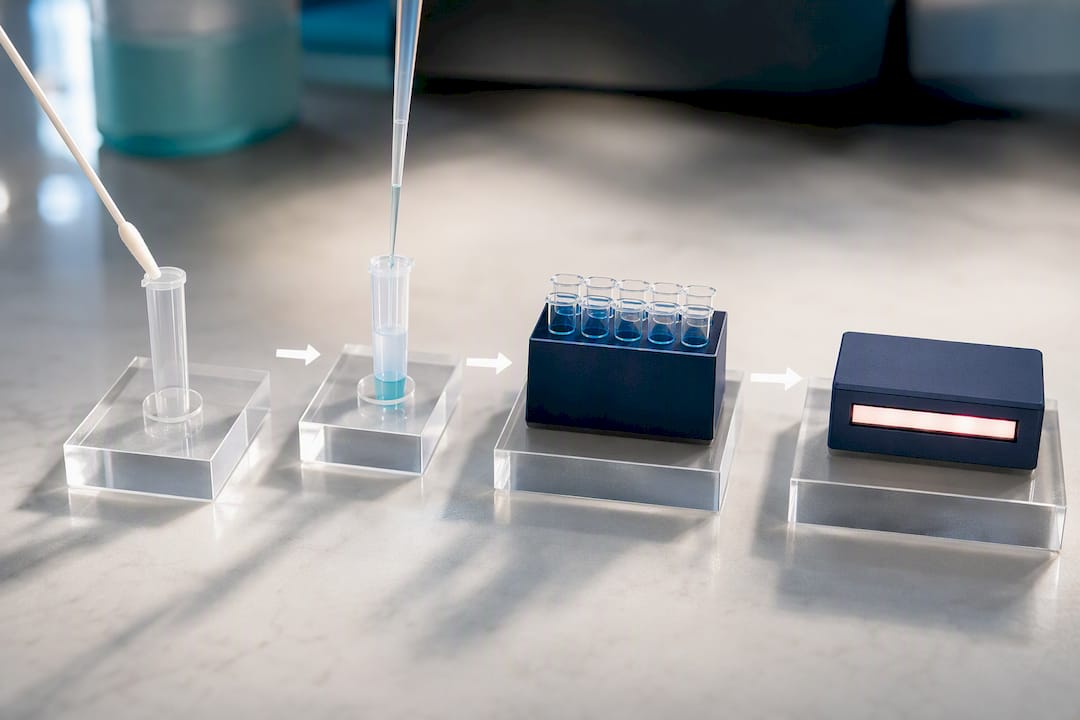
Timing matters too. Symptoms, when they appear, commonly show up somewhere between 2 and 14 days after exposure, but since pharyngeal infection is frequently asymptomatic, plenty of people need testing even when nothing feels wrong.
Your testing options generally break down like this:
- Sexual health clinic: a clinician takes the swab, sends it for NAAT, and can test for other STIs at the same visit.
- GP surgery: similar process, though turnaround and throat-swab availability vary by practice.
- Private at-home screening: discreet, no appointment needed, though a positive result on some rapid formats may warrant confirmatory clinic testing.
Whichever route you take, our gonorrhoea test guide breaks down accuracy differences between NAAT and rapid formats in more depth. If you tested very early after exposure, it’s also worth understanding the window period before trusting a negative result completely.
Throat gonorrhoea treatment and what happens after a positive result
Treatment for pharyngeal infection typically follows recommended antibiotic regimens, most commonly a single intramuscular dose of ceftriaxone. The throat is a site where treatment failure happens more often than in genital infections, which is part of why follow-up matters more here than it might elsewhere.
A few things to expect and act on once you’ve been treated:
- Avoid any sexual contact, including oral sex and kissing, until treatment is fully complete
- Notify recent partners so they can get tested too, even if they feel completely fine
- Arrange a test of cure, usually recommended around 7 to 14 days after treatment for pharyngeal infections specifically
- Don’t assume symptoms disappearing means the infection is gone. It’s the test of cure that confirms clearance, not how you feel
Skipping the test of cure is the most common mistake people make here, largely because once the sore throat settles, it’s tempting to consider the whole thing closed.
When throat gonorrhoea symptoms mean you need urgent care
Complications from throat infection specifically are rare, and most people who get treated promptly never see any of this. But a handful of warning signs shouldn’t be sat on.
Disseminated gonococcal infection, where the bacteria spread beyond the initial site, can cause fever, joint pain, and skin lesions. It’s uncommon but recognised in clinical literature as a reason pharyngeal infections deserve proper follow-up rather than being ignored once symptoms fade.
Get help immediately, rather than waiting for a routine appointment, if you notice:
- Difficulty breathing or severe throat swelling
- Heavy bleeding from the throat
- Fever alongside joint pain or unusual skin spots
For any of these, contact NHS 111, your GP, or a sexual health clinic straight away rather than waiting to book something in a few days.
Protecting yourself: prevention and next steps after exposure
Barrier methods during oral sex (condoms, dental dams) cut your risk meaningfully, and regular screening matters more if you have new or multiple partners.
If you think you’ve been exposed recently:
- Avoid further sexual contact until you’ve been tested
- Book a throat swab test, either at a clinic or through private screening
- Tell recent partners so they can get checked too
- Prioritise clinic testing over home screening if you’re pregnant, have severe symptoms, or suspect another infection alongside gonorrhoea
Why I think most people underestimate the throat entirely
Genital symptoms get all the attention in STI conversations, and throat gonorrhoea barely gets a mention until someone’s already worried about it. That’s backwards, given how often it presents with nothing at all. The gap between what people expect (a dramatic, obviously “off” sore throat) and what actually happens (a mild, forgettable scratchiness that most people blame on the weather) is where transmission quietly continues.
The other thing worth saying plainly: a negative-looking throat tells you nothing reliable. I’d rather someone tested unnecessarily than skipped testing because their throat “looked fine.” Rapidtest exists to make that decision easier, not to replace a clinician, and anyone with severe or systemic symptoms should always see one. This perspective is shaped by clinical literature and public health guidance, not personal medical practice.
— Jack
A discreet way to check your throat symptoms sooner
Booking a GP appointment for a sore throat you suspect might be something else can feel like an awkward hurdle, and waiting for a clinic slot delays answers you’d rather have now. Rapidtest offers CE-certified at-home STI testing with results in 15 minutes, no lab returns and no appointment needed, so you can screen privately before deciding whether a clinic visit is necessary.

The gonorrhoea rapid test is built for exactly this kind of situation: private, fast, and delivered in discreet packaging with free UK shipping. It’s a genuinely useful first check, though a positive result, or any severe symptom like breathing difficulty or heavy bleeding, still needs a clinic visit and confirmatory NAAT testing. Rapidtest backs its kits with a 60-day refund guarantee if a kit doesn’t work as expected. If a sore throat after oral sex has been on your mind, order a kit from the full STI test kit range and get a private answer tonight.
Sources
Claims on prevalence and clinical presentation draw on NCBI’s gonorrhoea overview and StatPearls on oral mucosal infections, with symptom and testing guidance from the NHS and further reading in our gonorrhoea testing resources.
This article is general information, not a substitute for advice from a qualified doctor. Consult a qualified healthcare professional about your own circumstances before acting on anything here.
- Bacterial infections of the oral mucosa - StatPearls - NCBI Bookshelf
FAQ
Can you have gonorrhoea for 10 years and not know it?
Yes. Pharyngeal gonorrhoea is frequently asymptomatic, and without screening it can persist undetected for years while still being transmissible to partners.
How is gonorrhoea in the throat treated?
Treatment typically involves a single intramuscular dose of ceftriaxone, followed by a test of cure around 7 to 14 days later, since the throat is a site where treatment can occasionally fail.
Do throat gonorrhoea symptoms go away on their own?
Symptoms can settle without treatment, but the infection itself doesn’t clear on its own and remains transmissible. A negative-feeling throat is not the same as a cured infection, which is why a test of cure matters more than symptom relief.
What are the first signs of an STI in the throat?
The earliest and most common sign is a persistent sore throat with redness, sometimes with swollen neck lymph nodes; many people notice nothing at all. If you’ve had oral sex recently and want certainty rather than a guess, at-home STI testing or a clinic throat swab is the only reliable way to check.