


Gonorrhea test guide: Types, accuracy, and home options
Most people assume they’d know if they had gonorrhea. The reality? A lot of people carrying the infection feel completely fine. No burning, no unusual discharge, no telltale signs at all. That’s not a scare tactic. That’s just how this infection often works, especially in women and in sites like the throat or rectum. Routine screening has genuinely never been easier or more discreet, and understanding the different types of gonorrhea tests, how accurate they are, and what you can do at home puts you firmly in control of your own health. Here’s everything you need to know.
Table of Contents
- Understanding gonorrhea and why testing matters
- How gonorrhea tests work: From NAATs to cultures
- Sample types and collection methods
- Accuracy, limitations, and what happens after a positive result
- Beyond the lab: What most guides miss about gonorrhea testing
- Convenient, private testing: Your next step
- Frequently asked questions
Key Takeaways
| Point | Details |
|---|---|
| Routine screening vital | Most gonorrhea infections don’t cause symptoms, so regular testing helps protect your health and partners. |
| NAATs are gold standard | Modern tests use DNA or RNA detection for accuracy above 95%, with at-home options now widely available. |
| Sample choice matters | Depending on exposure site, urine or swab samples—including self-swabs—are critical for reliable results. |
| Test-of-cure required | After treatment, a follow-up test ensures the infection is fully cleared and helps prevent antibiotic resistance. |
Understanding gonorrhea and why testing matters
Gonorrhea is a bacterial infection caused by Neisseria gonorrhoeae. It spreads through unprotected vaginal, oral, and anal sex, and it can also be passed from a pregnant person to their baby during delivery. It’s one of the most common sexually transmitted infections (STIs) in the UK and across Europe, and rates have been climbing steadily over the past decade.
Left untreated, gonorrhea doesn’t just clear up on its own. In women, it can spread to the reproductive organs and cause pelvic inflammatory disease (PID), which is a leading cause of infertility and chronic pelvic pain. In men, it can lead to epididymo-orchitis, a painful swelling of the testicles that can also affect fertility. In any gender, untreated gonorrhea increases your risk of getting or transmitting HIV.
Here’s the part that trips most people up. A large number of gonorrhea infections produce zero symptoms. Many infections are asymptomatic, especially in women and at extragenital sites like the throat and rectum, which is exactly why routine screening is advised for sexually active adults aged 18 to 45 who are at higher risk. Even when symptoms do appear, they can be mild and easy to dismiss as something else entirely.
The takeaway: You don’t need to feel unwell to have gonorrhea. If you’re sexually active with new or multiple partners, routine screening is part of taking care of yourself, not just something you do after a scare.
Routine screening is recommended at least once a year for sexually active adults, and every three months for people with multiple partners or those in higher-risk groups. Our gonorrhea testing guides break down who should test and how often, based on your circumstances.
It’s also worth knowing that false negatives are possible. If you’ve taken antibiotics recently, used a douche within 24 hours, or the sample quality wasn’t great, the test may not pick up the infection. Understanding those limitations is part of using testing effectively. The at-home STI test benefits article covers how private kits help remove barriers to regular, consistent screening.
Key risks of untreated gonorrhea:
- Pelvic inflammatory disease in women, which can cause lasting fertility issues
- Epididymo-orchitis in men
- Increased HIV susceptibility
- Spread to partners who also remain unaware
- Systemic infection, which though rare, can affect joints and other organs
How gonorrhea tests work: From NAATs to cultures
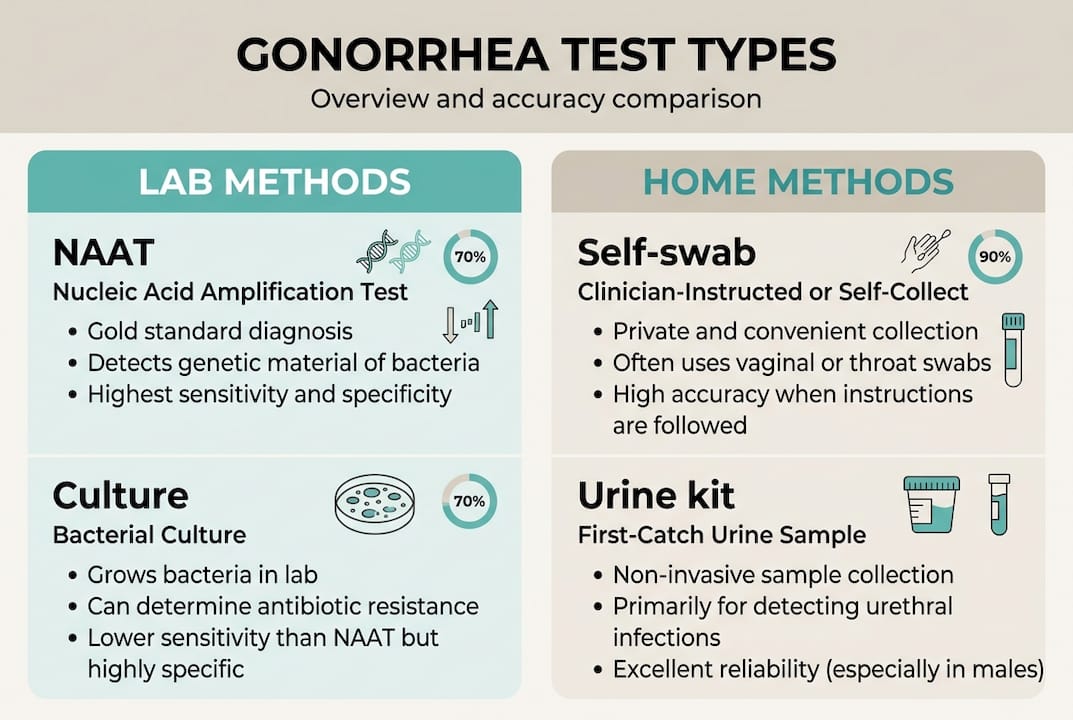
Now that you know why testing is so important, let’s talk about how it actually works. There are two main approaches: Nucleic Acid Amplification Tests (NAATs) and cultures. They work differently, and they serve different purposes.
NAATs: The gold standard
A gonorrhea test primarily uses Nucleic Acid Amplification Tests, or NAATs. These are highly sensitive and highly specific, which in plain terms means they’re very good at detecting infections that are there and very good at not flagging infections that aren’t. That dual reliability is what makes them the preferred choice for routine screening.
Here’s how they work without the jargon. A NAAT looks for the genetic material of Neisseria gonorrhoeae in your sample. Using a process called Polymerase Chain Reaction (PCR), the test amplifies tiny fragments of bacterial DNA or RNA until there’s enough to detect and confirm. Think of it like making thousands of copies of a single document until it’s clear and readable. Even very low levels of bacteria in the sample can trigger a positive result, which is one reason why NAATs detect bacterial DNA via PCR far more reliably than older methods.
Cultures: Still relevant, here’s why
A culture involves placing the sample on a growth medium and waiting to see if gonorrhea bacteria grow. It sounds old-fashioned compared to DNA testing, but cultures are still clinically important. The big reason? Antibiotic resistance. Gonorrhea has become increasingly resistant to a range of antibiotics over the years, and a culture test lets clinicians identify which antibiotics the specific strain responds to. That kind of information shapes treatment decisions.
Cultures are typically done in clinic settings, not at home. They’re used alongside NAATs rather than instead of them.
| Test type | What it detects | Sample type | Speed | Antibiotic resistance info |
|---|---|---|---|---|
| NAAT (PCR) | Bacterial DNA/RNA | Urine, swab | 1-2 days | No |
| Culture | Live bacteria | Swab (clinic) | 3-5 days | Yes |
| Rapid NAAT | Bacterial DNA/RNA | Urine, swab | 15 minutes | No |
Worth knowing: NAATs can detect gonorrhea even when bacterial numbers are very low. That’s particularly important for extragenital sites like the throat, where infections often produce no symptoms at all.
Pro Tip: If you’ve been told you need treatment for gonorrhea, ask whether a culture was done at the same time. Knowing the antibiotic resistance profile of your infection means your treatment plan is tailored to what will actually work.
For convenient, private screening at home, our at-home gonorrhea test uses NAAT-based technology to give you reliable results in just 15 minutes.
Sample types and collection methods
The science behind gonorrhea testing is only half the picture. The other half is how the sample gets collected. Getting this right makes a real difference to how accurate your results will be.
Urine vs. swabs: When each is used
For men, a first-void urine sample is usually preferred. “First-void” simply means the first urine of the day or the first portion of your stream after holding it for at least an hour. This ensures the highest concentration of any bacteria present. Swabs from the urethra are also an option, though less commonly used due to discomfort.
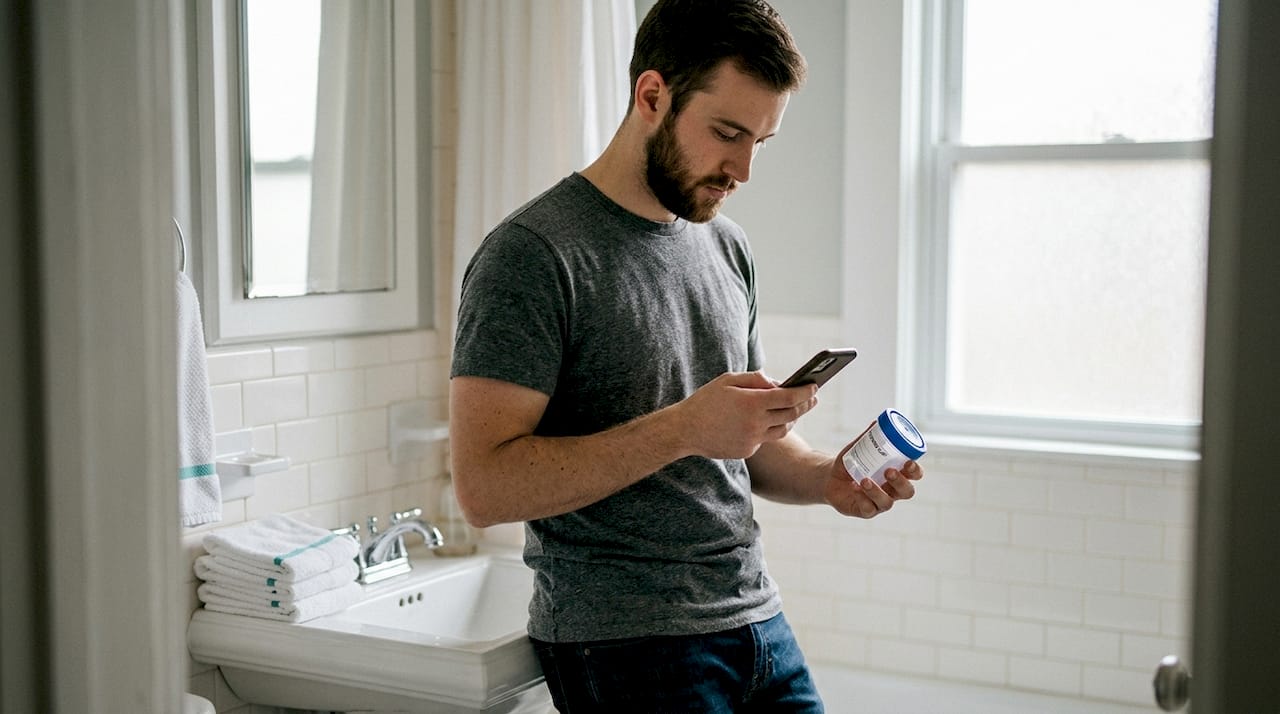
For women, vulvovaginal swabs are generally preferred over urine because they tend to produce a higher bacterial concentration and more reliable results. Cervical swabs are collected during clinic-based examinations.
Common sample types include urine and swabs from the urethra, cervix, vulvovaginal area, rectum, throat, and even the eyes in cases of exposure there. Self-collected swabs are considered clinically acceptable and perform comparably to clinician-collected samples.
Extragenital testing: Don’t skip these sites
This is where a lot of people fall short. If you’ve had oral or anal sex, testing only the genitals will miss infections at the throat or rectum. Pharyngeal (throat) and rectal gonorrhea are often completely asymptomatic, meaning you’d have no idea the infection was there without a site-specific test.
This is especially relevant for men who have sex with men (MSM), but it applies to anyone with oral or anal sexual contact.
| Sample site | When to use it | Self-collection possible? |
|---|---|---|
| First-void urine | Best for men | Yes |
| Vulvovaginal swab | Best for women | Yes |
| Rectal swab | After anal sex | Yes, with guidance |
| Throat swab | After oral sex | Yes |
| Urethral swab | Clinic-based | Usually no |
How to avoid common pitfalls at home:
- Don’t urinate for at least 1-2 hours before giving a urine sample
- Avoid antibiotics, douches, or lubricants in the 24 hours before testing
- Follow kit instructions precisely, including how to store and send the sample
- Make sure your swab reaches the right depth for a throat or rectal test
Pro Tip: If you’re testing for multiple exposure sites, use a kit that covers each one. A combo STI test kit or our full at-home STI bundle lets you test several sites in one go, which is far more practical than piecing together separate tests.
Accuracy, limitations, and what happens after a positive result
You’ve collected your sample properly. Now what? Understanding what your result actually means, including when it might be wrong, sets realistic expectations and helps you take the right next steps.
How accurate are gonorrhea tests?
For NAATs, accuracy is consistently high. NAAT sensitivity and specificity often exceed 95 to 100% in clinical validations. One lab-developed assay specifically demonstrated 100% sensitivity and 100% specificity for urine samples. In practical terms, that means a well-conducted NAAT is about as reliable as any diagnostic test gets.
That said, no test is infallible. Here’s when false negatives are more likely:
- Testing too soon after exposure. There’s a window period during which the infection is present but not yet detectable. For gonorrhea, this is typically around 1-5 days, though testing after 2 weeks is recommended for the most reliable result.
- Recent antibiotic use. Antibiotics can suppress bacterial levels enough that even a highly sensitive test misses them.
- Poor sample quality. Contamination from stool in a rectal swab, blood in a urine sample, or an inadequately placed swab can all reduce accuracy.
- Low bacterial load. Very early or very mild infections may not yet have enough bacterial material to trigger a positive result.
- Genetic variants. Certain strains of Neisseria gonorrhoeae have genetic deletions that can cause some NAAT assays to produce false negatives, though this is increasingly accounted for in modern tests.
Stat worth noting: When sample collection is done correctly, NAAT-based gonorrhea testing achieves accuracy rates above 95% across most tested sites. For urine, results can reach 100% sensitivity in controlled settings.
After a positive result: What you need to do
Testing positive for gonorrhea is manageable. Here’s the process:
- Get treated promptly. Gonorrhea is treated with antibiotics, most commonly an intramuscular injection of ceftriaxone. Follow your provider’s specific advice.
- Test-of-cure at two weeks. Due to rising antibiotic resistance, a follow-up NAAT two weeks after treatment is required by UK and European guidelines (NHS, BASHH, and ECDC). This confirms the infection has cleared.
- Notify your partners. Anyone you’ve had sex with recently needs to know so they can get tested and treated. Most clinics offer anonymous partner notification services if you’d prefer not to do it directly.
- Abstain from sex during treatment. Wait until both you and any partners have completed treatment and received a clear result before resuming sexual activity.
- Schedule your next screen. A positive result is a signal to screen more regularly going forward, not less.
Checking out our guidance on safe self-testing is a good next step if you want to understand how home kits fit into your overall health routine.
Pro Tip: Don’t skip the test-of-cure. Gonorrhea resistance to standard antibiotics is a growing problem across Europe, and confirming clearance isn’t optional. It’s a key part of protecting both your own health and your partners’.
Beyond the lab: What most guides miss about gonorrhea testing
Here’s the honest version that most articles skip over. There’s a tendency to focus on genital symptoms, get the test, take the antibiotics, and move on. But that approach misses a significant slice of infections. Throat and rectal gonorrhea are common, often completely symptom-free, and routinely go undetected because people either don’t know to test those sites or find the conversation too uncomfortable to have.
The rise of home testing kits changes this. When you can test privately, in your own bathroom, without any awkward clinic conversations, the barriers to comprehensive screening come right down. That’s genuinely significant for high-risk groups who might otherwise delay testing or avoid it altogether. An at-home gonorrhea kit makes regular screening something you can actually stick to.
One thing we’d push back on: the idea that a NAAT alone is always enough. If gonorrhea keeps coming back or treatment doesn’t seem to be working, culture-based testing for antibiotic resistance deserves serious attention. Resistance patterns are shifting, and a one-size-fits-all antibiotic approach is no longer reliable for everyone.
Repeat screening isn’t a sign that something went wrong. For sexually active people with multiple partners, it’s just smart, ongoing health management. Treat it the same way you’d treat any other routine health check.
Convenient, private testing: Your next step
If anything in this article has you thinking “I should probably check,” that instinct is worth acting on. Testing is quicker and more discreet than most people realize, and you don’t need to wait for symptoms to show up before you do it.
Our at-home STI and STD test kits are designed for exactly this situation. Collect your sample at home, follow the simple steps, and get your result in 15 minutes. No queues, no doctor’s appointment, and nothing to explain to anyone. Whether you want a gonorrhea-specific screen or a broader panel, our rapid STI test kit covers you. All kits are aligned with UK and EU testing guidelines, so you can trust what they’re telling you. Head to Rapidtest to find the right option for you.
Frequently asked questions
How long does a gonorrhea test take?
Most NAAT-based tests provide results in 1-2 days via clinics or labs, while some at-home kits deliver results in as little as 15 minutes.
Can I test for gonorrhea at home?
Yes. NAATs are the gold standard for gonorrhea screening and can be used with self-collected samples at home, giving you accurate, private results without a clinic visit.
Do I need to test even if I have no symptoms?
Absolutely. Many gonorrhea infections are asymptomatic, particularly in women and at extragenital sites, which is why routine screening is recommended for sexually active adults in higher-risk groups.
What happens if my test is positive?
You’ll need antibiotic treatment followed by a test-of-cure NAAT at two weeks post-treatment, as required by NHS, BASHH, and ECDC guidelines. Your recent sexual partners should also be tested and treated.