


5 Questions to Pick an STI Panel or Single Test in the UK
If you know exactly what you’ve been exposed to and just need confirmation, a single test is usually your fastest, cheapest route. If your exposure history is unclear, involves more than one partner, or you simply want broad reassurance in one go, a multiplex panel makes more sense. Either way, timing matters more than the format you choose, and no test taken too early tells you anything reliable.
TL;DR:
- Single tests are most effective when checking for a known infection or following up after treatment due to their targeted, precise detection methods.
- Multiplex panels are better suited for routine screening when exposure history is unclear or involves multiple partners, covering infections like HIV, syphilis, chlamydia, and gonorrhea.
- Tests relying on NAAT/PCR detect infections soon after exposure, while serology-based tests like HIV and syphilis require longer window periods to produce reliable results.
- Timing is crucial, with chlamydia and gonorrhea detectable within one to two weeks post-exposure, but HIV and syphilis testing needing several weeks to avoid false negatives.
- At-home rapid test kits work well for quick, privacy-focused screening but cannot reliably detect extra-genital infections, which require clinic-based swabs.
Table of Contents
- STI panel vs single test: a quick comparison
- What is an individual (single) STI test?
- What is a multiplex (panel) STI test?
- How tests detect infection: NAAT/PCR versus serology
- Timing and the window period: when to test each infection
- Specimen types and extra-genital infections: when a clinic visit is necessary
- Practical checklist: how to choose the right test now
- Where at-home Rapidtest kits fit, and where they don’t
- Cost comparison: single tests versus panels, and insurance
- Privacy and confidentiality: single test or panel, who sees what
- What to do after your result: positive, negative, and partner notification
- Why the “just test everything” instinct often backfires
- Get tested privately with Rapidtest
- Sources
- FAQ
STI panel vs single test: a quick comparison
The core difference is simple: an individual STI test detects one specific infection, while a combined multiplex panel screens a single sample for several infections at once. Everything else, cost, speed, sample type, follows from that basic split.
- Best for: Single tests suit a known exposure, a partner’s confirmed diagnosis, or a test-of-cure check. Panels suit routine screening, unclear exposure, or multiple partners.
- Typical coverage: Panels often include HIV, syphilis, chlamydia and gonorrhoea, and sometimes hepatitis B or C. A single test targets just one of these.
- Sample types: Urine and genital swabs cover chlamydia and gonorrhoea; blood samples cover HIV, syphilis and hepatitis. Throat and rectal swabs generally need a clinic visit.
- Limitations: Window periods vary by infection, extra-genital sites are frequently missed by home kits, and no panel, however broad, tests for everything a person could plausibly have picked up.
None of this makes one option universally “better.” It makes them suited to different questions. A panel answers “what might I have?” A single test answers “do I still have this specific thing?”
What is an individual (single) STI test?
A single test checks for one infection using the method best suited to how that pathogen behaves in the body. Chlamydia and gonorrhoea are usually picked up with NAAT or PCR technology, which detects the pathogen’s genetic material directly. HIV and syphilis rely on serology instead, which looks for the antibodies your immune system produces in response.
Single tests earn their place in three common scenarios:
- Your partner has been diagnosed with a specific infection and you need to check whether it has passed to you.
- You have symptoms pointing towards one likely cause, such as discharge suggesting gonorrhoea rather than a blanket screen.
- You’ve finished treatment and need a test-of-cure to confirm it has actually cleared.
The advantage is precision. You’re not paying for four results when you only need one, and you can time the test to the specific window period of that infection rather than compromising across several.
Pro Tip: If a partner tells you which infection they’ve tested positive for, ask for the exact name, not just “an STI.” Chlamydia and gonorrhoea have short window periods; syphilis and HIV need longer before testing is reliable.
What is a multiplex (panel) STI test?
Multiplex testing means one sample, or one small set of samples, gets screened for several infections simultaneously. There are two broad approaches: immunochromatographic rapid devices, the kind used in many at-home kits, and molecular multiplex assays run in laboratories that can detect several pathogens’ genetic material from a single swab or blood draw.
Panel line-ups vary by provider, but a typical setup covers:
- HIV and syphilis, tested via a blood sample.
- Chlamydia and gonorrhoea, tested via urine or a genital swab.
- Hepatitis B and C, included in some but not all panels.
The appeal is convenience rather than superior accuracy. A systematic review of multiplexed testing technologies found that combined approaches reduce the number of visits needed and often speed up how quickly someone gets linked to care after a positive result, largely because people are more likely to follow through when one sample answers several questions instead of four separate appointments. That review also noted a strong preference among many participants for same-day, multiplex results over waiting on multiple separate tests.
How tests detect infection: NAAT/PCR versus serology
The method behind a test determines when it actually works, which matters more than most people assume. NAAT and PCR tests detect the pathogen’s own DNA or RNA. Because the organism itself is what’s being found, these tests can pick up chlamydia and gonorrhoea relatively soon after exposure, once enough of the pathogen is present at the sample site.
Serology works differently. It detects antibodies your immune system produces in response to an infection, which takes time to build up. That’s why HIV, syphilis and hepatitis testing all depend on an adequate window period; test too soon and the antibodies simply haven’t developed yet, regardless of how sensitive the test is.
This split has practical consequences:
- A panel combining NAAT and serology components will be reliable for its chlamydia and gonorrhoea results sooner than for its HIV or syphilis results.
- In areas or groups where a specific infection is less common, a positive NAAT result, particularly from an extra-genital site, can carry a lower positive predictive value, which is why national gonorrhoea testing guidance recommends supplementary confirmatory testing before treatment decisions in low-prevalence settings.
- A single “positive” or “negative” result on a panel doesn’t mean every component was tested with equal confidence at that timepoint.
Knowing which mechanism sits behind each result helps you read a panel report properly instead of treating every line as equally certain.
Timing and the window period: when to test each infection
Testing too early is the single most common way people get a false sense of security, and it applies to every infection on a panel, not just one. Chlamydia and gonorrhoea can often be detected within one to two weeks of exposure, since NAAT tests look for the pathogen directly. HIV and syphilis need longer, typically several weeks, because they rely on antibody development.

Window periods differ by infection, and testing too early risks false reassurance across every target included in a panel, not just the slowest one. A panel taken at day ten might correctly rule out chlamydia while giving a false negative on HIV, and there’s no visual difference between those two results on the report you receive.
Practical timing guidance:
- Test chlamydia and gonorrhoea from around one to two weeks post-exposure.
- Wait longer, generally several weeks, for a reliable HIV or syphilis result, and repeat if you tested early.
- If you’ve had a specific high-risk exposure and want earlier clinical input, a clinic can offer more nuanced advice than a standard home panel timeline allows.
If in doubt, retest at the later window rather than trusting an early “all clear.”
Specimen types and extra-genital infections: when a clinic visit is necessary
Sample type determines what a test can actually see. Urine and genital swabs cover chlamydia and gonorrhoea at the genital site; blood samples cover HIV, syphilis and hepatitis. What most home panels don’t collect is a throat or rectal swab, and that gap matters more than it sounds.
Many at-home rapid panels rely on a fingerstick blood sample plus a genital swab, which captures the common infections but misses extra-genital sites entirely. For anyone with oral or anal exposure, particularly within groups where extra-genital screening guidance specifically recommends it, a genital-only panel can miss an infection sitting quietly in the throat or rectum with no symptoms at all.
- Extra-genital infections often show no symptoms, so a “clear” genital result doesn’t rule them out.
- Clinic-based throat and rectal swabs exist specifically to close this gap.
Pro Tip: If your exposure included oral or anal sex, book a clinic appointment for site-specific swabs alongside, or instead of, a home panel. It’s the one gap a rapid kit genuinely can’t close.
Practical checklist: how to choose the right test now
Run through this before you book anything:
- What was the exposure? A single, known contact with one confirmed infection points towards a targeted single test.
- What type of sex was involved? Oral or anal exposure means you likely need clinic-based extra-genital swabs, not just a home panel.
- Are there symptoms? Symptom-directed testing usually means a single test aimed at the likely cause.
- How long since exposure? If it’s under one to two weeks, hold off or test only for the fastest-detecting infections and repeat later.
- Multiple partners or unclear history? This is where a panel earns its cost, giving broad coverage in one sitting rather than four separate bookings.
If your situation is narrow and specific, a single test saves money and gives a cleaner answer. If it’s uncertain, routine, or you simply haven’t been checked in a while, a panel is the more sensible starting point, with a clinic visit added on for any extra-genital exposure.
Where at-home Rapidtest kits fit, and where they don’t
Rapidtest’s at-home kits are built for scenarios where speed and privacy matter, providing rapid results without requiring laboratory returns or appointments, though exact time may vary. That suits routine screening, a check after a new partner, or confirming a specific exposure without sitting in a waiting room.
They’re not a substitute for clinic care in every case, though. Extra-genital exposures still need swab-based testing a home kit can’t offer, and any early result inside a window period needs repeating rather than trusting outright… Used with realistic timing and an understanding of what it does and doesn’t sample, an at-home panel is a genuinely useful first step rather than a full replacement for clinical judgement.
Cost comparison: single tests versus panels, and insurance
A single test costs less upfront simply because you’re paying for one result instead of several. That makes sense when you know precisely what you’re checking for, say, a test-of-cure after chlamydia treatment. Pay for one target, get one clear answer.
Panels cost more per test but usually work out cheaper than buying four or five single tests separately, since you’re covering multiple infections with one sample collection and one set of processing. If you were going to test for chlamydia, gonorrhoea, HIV and syphilis anyway, a combined panel is very likely the better value, not just the more convenient option.
Insurance coverage in the UK varies by provider and policy, and private health insurance doesn’t typically extend to routine, self-initiated home testing in the way it might cover a GP-referred clinic panel. NHS sexual health clinics remain free at the point of use for both single tests and full screens, which is worth factoring in before paying privately for either format. At-home kits sit outside that NHS pathway entirely. You’re paying directly for convenience, speed and privacy rather than clinical necessity, which is a reasonable trade when those things matter to you, but it’s not something an insurer is likely to reimburse. Budget accordingly, and don’t assume a panel’s higher sticker price makes it the more expensive route once you account for what you’d otherwise spend testing separately.
Privacy and confidentiality: single test or panel, who sees what
Privacy concerns often drive the decision as much as clinical need does, and it’s worth being honest about that. A clinic visit means a face-to-face conversation, a record on your GP or sexual health service file, and potentially a partner or family member noticing an appointment.
At-home testing, whether single or panel, removes most of that friction. Results arrive privately, nobody needs to know you tested at all unless you choose to tell them, and there’s no waiting room encounter to navigate. This is true regardless of whether you’re running one test or a full panel, so privacy itself isn’t really a deciding factor between the two formats. What does differ is discretion around delivery and packaging, worth checking before you order, particularly if post arrives somewhere shared.
Confidentiality around results is another matter entirely. Clinic results typically sit on an NHS record accessible to your GP; positive results for some infections are subject to public health reporting requirements regardless of where you tested. A positive at-home result still needs following up through the NHS for treatment, which means it enters a medical record at that point, whichever route you started with. Privacy at the testing stage doesn’t mean permanent anonymity if treatment is needed. That’s not a reason to avoid at-home testing, but it is worth knowing before you assume a home result stays entirely off the books.

What to do after your result: positive, negative, and partner notification
A negative result within the correct window period is reassuring but not permanent. It reflects your status at that moment, not immunity going forward, and if you’re sexually active with new or multiple partners, periodic retesting matters more than a single clear result ever will.
A positive result needs three things to happen, in roughly this order. First, confirmation, particularly for a positive gonorrhoea result from an extra-genital site or from a low-prevalence context, where supplementary testing is recommended before treatment begins. Second, treatment, which for bacterial infections like chlamydia and gonorrhoea usually means a short antibiotic course, while HIV and hepatitis require ongoing specialist management rather than a one-off fix.
Third, and often the part people dread most, partner notification. Sexual health clinics offer confidential partner notification services that can contact partners without naming you directly, which takes the pressure off an awkward personal conversation while still protecting people who need to know they’ve been exposed. Skipping this step doesn’t just risk reinfecting yourself; it lets an infection continue circulating untreated.
Whichever route brought you the result, home panel or clinic single test, the follow-up pathway converges on the same NHS sexual health services for confirmation, treatment and partner notification support.
Why the “just test everything” instinct often backfires
The instinct to book the biggest panel available, just to be safe, is understandable but sometimes the wrong call. If you know exactly what you’re checking for, a broad panel adds cost without adding useful information, and can even create false confidence if you assume “comprehensive” means “complete.” No panel, however many infections it lists, covers everything a person could plausibly have picked up, and that gap between what a panel promises and what it actually screens for is where most misplaced reassurance comes from.
The conventional advice to “just get a full panel to be safe” also glosses over sample site. A genital swab and blood draw tell you nothing about a throat or rectal infection, and that’s not a rare edge case for anyone whose exposure wasn’t purely genital. Matching the test to the actual exposure, not the biggest available bundle, is the judgement this evidence actually supports.
What I’d prioritise first is timing, not test choice. A perfectly matched single test taken inside the window period is more useful than an expansive panel taken too early. Get the timing right, then decide between single and panel based on how clear your exposure history actually is.
— Jack
Get tested privately with Rapidtest
Rapidtest gives you a private alternative to booking a clinic appointment: CE-certified at-home rapid test kits with results in 10 to 15 minutes, no lab returns, and discreet packaging that arrives without drawing attention.
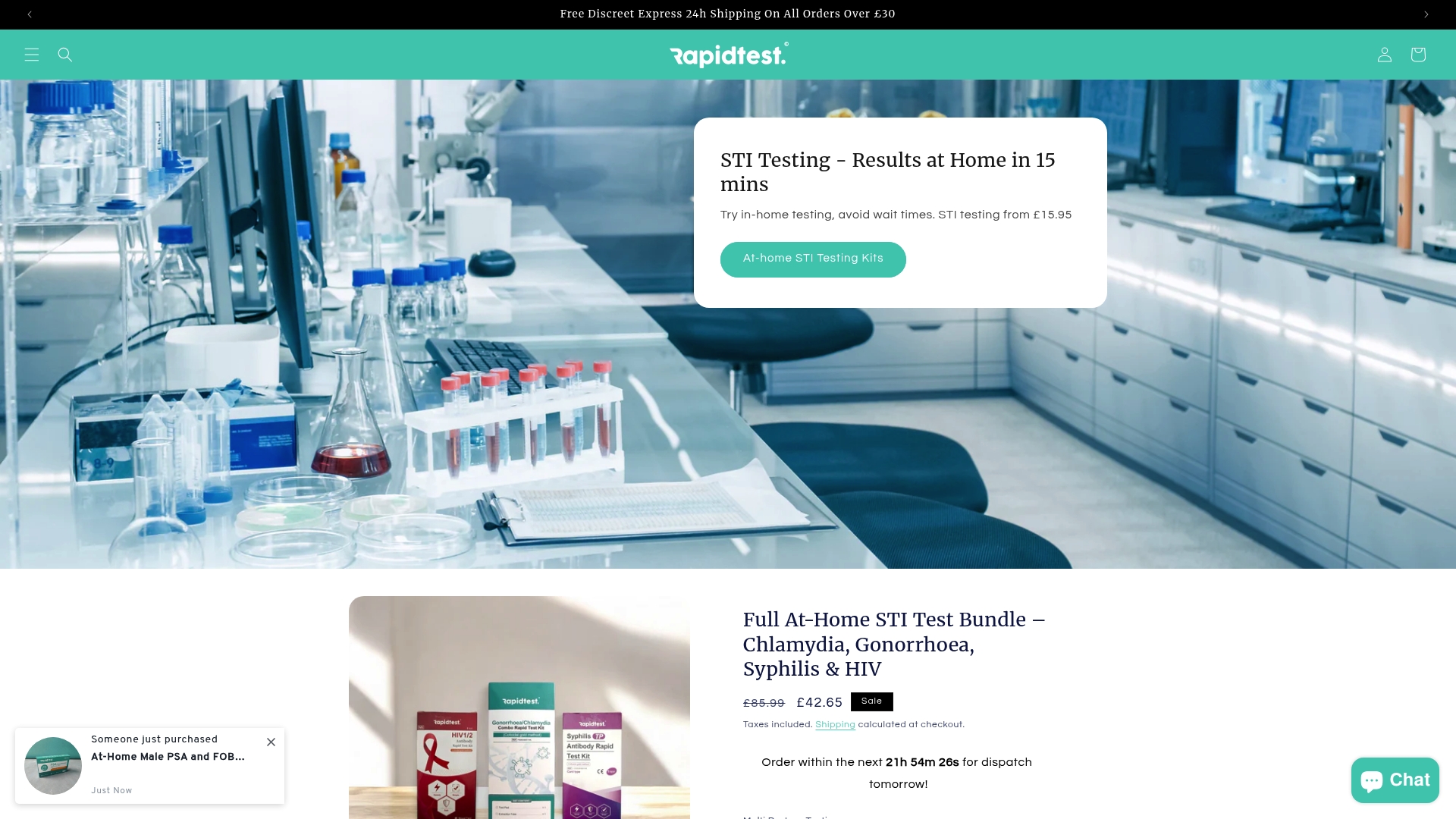
If your situation calls for broad screening rather than a single targeted check, the full at-home STI testing bundle covers chlamydia, gonorrhoea, syphilis and HIV in one order, which suits the routine screening and unclear-exposure scenarios this article has walked through. For a narrower need, browse the full range of STI and STD test kits and pick the single test that matches your actual exposure rather than paying for coverage you don’t need. Every order ships with full instructions, and Rapidtest backs its kits with a 60-day refund guarantee if a kit doesn’t work as expected. If you’ve worked through the checklist above and know which route fits, place your order today and get a private answer within minutes rather than days.
Sources
- PubMed: multiplex versus single testing (review)
- BMJ Global Health systematic review of multiplexed technologies (2021)
- i-Base: what is the window period
- Gonorrhoea testing guidance (national laboratory/public health guidance)
FAQ
What does a full STI panel consist of?
A typical panel covers HIV, syphilis, chlamydia and gonorrhoea, with some providers adding hepatitis B and C. Coverage varies by provider, so “full” is a marketing term rather than a fixed medical standard, and no panel tests for every possible infection, including HPV or herpes, unless specifically included.
What shows up on an STI panel?
A panel returns separate results for each infection tested, usually drawn from a combination of blood, urine, and genital swab samples depending on which infections are included. Multiplex testing screens one sample for several infections simultaneously, rather than running one test at a time.
Is 2 weeks too early for an STD test?
It depends on the infection. Chlamydia and gonorrhoea can often be reliably detected from around one to two weeks post-exposure using NAAT testing, but HIV and syphilis typically need longer, since window periods differ by infection and testing too early risks a false negative. If you tested at two weeks, plan to repeat for HIV and syphilis at the later recommended window.
What are the three types of STI tests?
The three main categories are molecular tests (NAAT/PCR, which detect pathogen DNA or RNA), serology tests (which detect antibodies for infections like HIV and syphilis), and rapid antigen or antibody devices used in many at-home kits. Each suits different infections and different points in the window period.
Is a single test or a panel better for a new partner check?
For a new partner with no known exposure history, a panel generally makes more sense, since it screens for the common infections in one sitting rather than requiring several separate bookings. Rapidtest’s at-home test kits start from £21.95 and deliver results in 10 to 15 minutes for exactly this kind of routine check.