


Signs of prostate problems: what men over 40 need to know
Signs of prostate problems are defined as changes in urinary function, pelvic comfort, or sexual health that indicate the prostate gland is not working normally. These changes are most common in men over 40 and can point to three main conditions: benign prostatic hyperplasia (BPH), prostatitis, or prostate cancer. Recognising the difference matters. About 25% of men experience urinary difficulty linked to prostate issues, yet many write it off as normal ageing. That assumption costs time, and sometimes health.
What are the most common signs of prostate problems?
Urinary changes are the most consistent early warning sign of a prostate condition. The prostate sits directly below the bladder and wraps around the urethra, so any swelling or inflammation disrupts urine flow almost immediately.
The most frequently reported urinary symptoms include:
- A weak or interrupted urine stream
- Difficulty starting urination, even when the urge is strong
- A feeling that the bladder has not fully emptied
- Sudden, urgent need to urinate
- Urinating more than twice during the night (nocturia)
- Increased frequency during the day
Nocturia is commonly dismissed as a side effect of getting older. That dismissal is a mistake. Disrupted sleep is a quality of life issue in its own right, and it is also a reliable signal that something is changing with your prostate.
The pattern of symptoms matters as much as the symptoms themselves. BPH tends to build gradually over months or years. Prostatitis often arrives suddenly, with pain alongside the urinary changes. Early prostate cancer, by contrast, frequently produces no urinary symptoms at all in its initial stages.

Pro Tip: Keep a simple symptom diary for two weeks. Note how often you urinate, whether you wake at night, and how strong your flow feels. That record is genuinely useful when you speak to a GP.
What other physical signs suggest a prostate condition?
Urinary symptoms are not the whole picture. Several other physical signs point to prostate trouble, and some of them are more urgent than others.
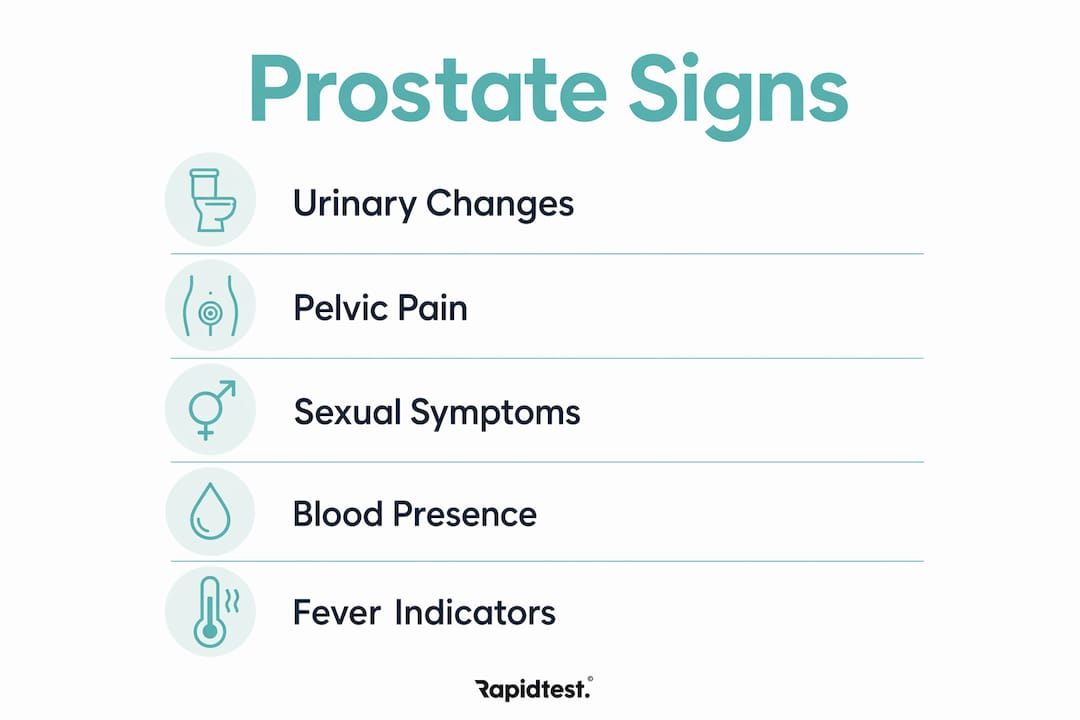
Prostatitis is the most common urinary tract condition in men under 50. Acute bacterial prostatitis causes pelvic pain, painful urination, and flu-like symptoms including fever and chills. That combination is distinctive and requires prompt medical attention.
Symptoms grouped by condition type:
- BPH (enlarged prostate): Gradual urinary obstruction, weak stream, post-void dribbling, and a sense of incomplete emptying. Pain is not usually a feature.
- Prostatitis: Pelvic, perineal, or scrotal pain; painful ejaculation; burning urination; and in acute cases, fever, chills, and lower back ache.
- Advanced prostate cancer: Bone pain (particularly in the hips, spine, or pelvis), unexplained weight loss, fatigue, and in some cases blood in the urine or semen.
Blood in the urine or semen is a red flag regardless of which condition you suspect. These symptoms require urgent medical evaluation and should never be left to resolve on their own.
Painful ejaculation is another symptom men tend to stay quiet about. It is associated with both prostatitis and, less commonly, prostate cancer. If it is happening regularly, it belongs in a conversation with your doctor.
Pro Tip: If you develop a fever alongside urinary symptoms, treat it as an emergency. Acute bacterial prostatitis can deteriorate quickly and may need hospital-level care.
How can you tell which prostate condition you have?
The honest answer is that you cannot tell from symptoms alone. Most urinary symptoms arise from non-cancerous conditions like BPH or prostatitis, not cancer. But the overlap between conditions is significant enough that self-diagnosis is unreliable.
The table below summarises how the three main prostate conditions typically differ:
| Feature | BPH | Prostatitis | Prostate cancer |
|---|---|---|---|
| Onset | Gradual, over years | Sudden (acute) or slow (chronic) | Often no symptoms early on |
| Urinary symptoms | Yes, obstructive and storage | Yes, with pain | Rare until advanced |
| Pain | Rarely | Common (pelvic, perineal) | Bone pain in advanced stages |
| Fever or chills | No | Yes (acute bacterial type) | No |
| Blood in urine or semen | Occasionally | Occasionally | Possible in later stages |
| Age group most affected | 50 and above | Under 50 most common | 50 and above |
Early prostate cancer is frequently asymptomatic. This is the detail that catches men off guard. A man can feel completely well and still have early-stage prostate cancer. That is precisely why screening tools like PSA (prostate-specific antigen) blood tests and digital rectal exams exist.
Symptom severity does not reliably indicate prostate size. A man with a mildly enlarged prostate can have severe symptoms, while another with a significantly enlarged gland may barely notice. Clinical tests are the only way to get an accurate picture. The American Urological Association Symptom Score (AUASS) questionnaire is a validated tool GPs use to quantify symptom burden before deciding on next steps.
When should you see a doctor about prostate symptoms?
The short answer: sooner than you think you need to. Men frequently delay seeking care because they assume urinary changes are just part of getting older. That delay can allow BPH to progress to a point where complications develop, including urinary tract infections or kidney damage.
Seek urgent medical attention if you experience any of the following:
- Complete inability to urinate (acute urinary retention)
- Blood in the urine or semen
- Severe pelvic or lower back pain with fever
- Sudden, significant worsening of urinary symptoms
Acute urinary retention is a medical emergency. The bladder becomes painfully full and cannot empty. It requires same-day treatment, typically catheterisation, and should not be managed with a wait-and-see approach.
For symptoms that are present but not acute, a routine GP appointment is the right first step. Expect a conversation about your symptom history, a PSA blood test, and possibly a digital rectal exam. PSA tests and digital rectal exams are the two primary clinical tools for detecting prostate abnormalities. A urine analysis and ultrasound may follow depending on initial findings. Shared decision-making about PSA screening, particularly for men aged 50 to 69, is now standard practice in UK clinical guidelines.
Practical steps for men over 40 to stay on top of prostate health
Proactive monitoring is not about anxiety. It is about giving yourself options before a problem becomes serious. The lifestyle factors that support proactive wellness as you age also support prostate health specifically.
Here are four steps worth building into your routine:
- Monitor your symptoms regularly. Use a simple diary or the AUASS questionnaire online. Tracking changes over time gives you and your GP a baseline to work from.
- Review your diet and activity. Excess body weight increases the risk of BPH progression. Regular physical activity and a diet lower in saturated fat support overall prostate health.
- Talk to your GP about PSA testing. The decision to screen is a personal one, informed by age, family history, and ethnicity. Black men and those with a first-degree relative diagnosed with prostate cancer carry a higher risk and may benefit from earlier screening. Read more about whether annual PSA testing is right for you before your next appointment.
- Consider at-home PSA screening. Home PSA tests give you a preliminary reading between GP appointments. They do not replace clinical assessment, but they do give you information to act on. Rapidtest offers a home PSA test kit with results in 15 minutes.
Pro Tip: If you have a family history of prostate cancer, mention it explicitly at your next GP appointment. It changes the risk calculation and may bring forward the age at which screening is recommended.
Key takeaways
Recognising prostate problem warning signs early is the single most effective step men over 40 can take to protect their long-term health.
| Point | Details |
|---|---|
| Urinary changes are the main signal | Weak flow, urgency, nocturia, and incomplete emptying all warrant attention. |
| Early prostate cancer has no symptoms | PSA testing and clinical exams detect it before symptoms appear. |
| Symptom severity does not match condition severity | A man with mild symptoms can have a significant prostate problem. |
| Red flags need same-day care | Blood in urine or semen and acute urinary retention require urgent assessment. |
| At-home PSA testing adds a useful layer | Home tests provide a preliminary result between GP appointments. |
What I have learned from watching men dismiss the early signs
There is a pattern I have seen play out too many times. A man notices he is getting up twice a night to urinate. He puts it down to age, carries on, and does nothing for two or three years. By the time he sees a doctor, the conversation is harder than it needed to be.
The misconception that bothers me most is the idea that urinary symptoms automatically mean cancer. They almost never do. The majority of urinary symptoms come from benign conditions like BPH or prostatitis. Knowing that should make it easier, not harder, to get checked. There is no catastrophic diagnosis waiting behind every trip to the bathroom.
What I would push back on is the opposite extreme too. Awareness without action is not health management. Reading an article like this one and then doing nothing is the same as not reading it. The men who fare best are the ones who treat their health the way they treat their car. You do not wait for the engine to fail before you check the oil.
The conversation with your GP about PSA screening is not a big deal. It takes ten minutes. The at-home health checks available now mean you do not even need to wait for an appointment to get a first reading. Use them. Then use the result to have a better conversation with your doctor.
— Jack
Rapidtest at-home PSA testing: a practical first step
Knowing the signs is one thing. Having a way to check is another.

Rapidtest’s at-home PSA test kit gives you a PSA reading in 15 minutes, with no GP appointment, no queue, and no awkward waiting room. It is a finger-prick blood test you do at home, and the result tells you whether your PSA level falls within a normal range. If it does not, you have something concrete to take to your doctor. For men who want a broader health picture, the Men’s 35+ Health MOT Bundle covers PSA alongside other key markers. Rapidtest does not replace clinical care. It gives you the information to seek it at the right time.
FAQ
What are the first signs of prostate problems in men?
The earliest signs are usually urinary changes: a weaker stream, difficulty starting urination, increased frequency, or waking at night to urinate. These symptoms often indicate BPH or prostatitis rather than cancer.
Can prostate cancer have no symptoms at all?
Yes. Early-stage prostate cancer is frequently asymptomatic and is typically detected through PSA blood tests or digital rectal exams rather than symptoms.
What is a PSA test and when should men have one?
A PSA (prostate-specific antigen) test is a blood test that measures a protein produced by the prostate. UK guidelines recommend discussing PSA screening with your GP from age 50, or earlier if you have a family history of prostate cancer.
Is blood in the urine always a sign of prostate cancer?
Not always, but blood in the urine requires urgent evaluation regardless of the suspected cause. It can indicate infection, BPH, or cancer, and should never be ignored.
How is prostatitis different from BPH?
Prostatitis causes pelvic pain and flu-like symptoms alongside urinary changes, while BPH typically causes gradual urinary obstruction without significant pain. Prostatitis is more common in men under 50; BPH becomes more prevalent from 50 onwards.