


Retest Right: Exact Windows After a Late Period and Negative Test
A single negative test with a late period usually means you’re not pregnant, especially if you tested very early or your cycle runs irregular. False negatives happen, though, most often from testing too soon or catching diluted urine. If your period still hasn’t shown up, wait several days and retest with first-morning urine, or ask a GP for a blood hCG test if you’re anxious or feeling symptomatic.
TL;DR:
- A negative pregnancy test after a late period often results from testing too early or dilated urine, not necessarily indicating non-pregnancy.
- Late ovulation can delay both conception and period, making early tests unreliable if the cycle is irregular.
- Home tests have a 97 to 99% accuracy when used correctly after the missed period, with first-morning urine increasing detection chances.
- Waiting at least a week with two negative tests before consulting a doctor reduces unnecessary testing and provides more definitive results.
- Blood tests are more sensitive than urine tests and should be considered if multiple negative tests conflict with ongoing pregnancy symptoms.
Table of Contents
- Why pregnancy tests can be negative when your period is late
- How accurate is a home pregnancy test, really?
- When and how to retest: a simple timeline
- When to contact a GP or sexual health service
- How Rapidtest fits into your retest plan
- What actually matters when you’re staring at a negative test
- A private retest option worth knowing about
- Sources
- FAQ
Why pregnancy tests can be negative when your period is late
A negative result feels definitive, but it isn’t always the full story. False negatives happen for a handful of very ordinary reasons, and most of them come down to timing rather than anything wrong with you or the test.
Human chorionic gonadotropin, the hormone these tests detect, needs time to build up after implantation. Test too soon, and there simply isn’t enough of it in your urine yet.
- Testing before hCG has risen enough to register
- Diluted urine from drinking a lot of fluid beforehand
- Not following the test’s instructions precisely (timing the read, storage temperature)
- Late ovulation, which pushes your whole cycle later without you realising
Late ovulation deserves a special mention because it trips up so many women. If you ovulated later than usual that month, your period is due later too, and testing on what you thought was day one just means you’re testing early relative to actual conception. It’s a timing mismatch, not a faulty result.
Less commonly, a negative test alongside a late period can point to an early miscarriage or, rarely, an ectopic pregnancy, particularly if you’re also getting pain or unusual bleeding. And plenty of late periods have nothing to do with pregnancy at all. Stress, sudden weight loss or gain, intense exercise, coming off or starting contraception, breastfeeding, perimenopause, PCOS and thyroid problems can all delay or skip a cycle. Medical News Today’s overview of missed periods lists these as the most common non-pregnancy triggers clinicians see.
How accurate is a home pregnancy test, really?
Home urine tests sit at 97 to 99% accuracy when used correctly after a missed period. That figure only holds under the right conditions, though. It measures accuracy for tests taken at the right time, not tests taken the day you were meant to come on.
hCG typically becomes detectable in urine around 10 days after conception, but levels vary hugely from one woman to the next. That’s exactly why every test box tells you to wait until after your missed period, not before.
- First-morning urine is more concentrated, which raises your chance of catching a genuine low-level hCG signal
- Reading the result at the exact time stated on the packet matters more than most people realise
- A test taken mid-afternoon after two cups of tea is far more likely to give a false negative than the same test first thing
Pro Tip: If you’ve been drinking a lot of water or you tested straight after a big drink, treat that result with caution and retest first thing tomorrow instead.
When urine testing keeps coming back negative but doubt lingers, a blood hCG test is the more sensitive option. MedlinePlus notes that blood tests can pick up much smaller amounts of the hormone, which is why GPs lean on them when a urine result doesn’t match the clinical picture.
When and how to retest: a simple timeline
Rather than testing again and again in a panic, follow a structured retest plan based on how many days have actually passed.
- Tested early? Wait 2 to 7 days, then retest using first-morning urine for the clearest result.
- Not sure when you ovulated? Count forward from your last unprotected sex instead. Testing 21 days after sex gives a far more reliable single-test window than guessing at a “missed period” date on an irregular cycle.
- Two urine tests, a week apart, both negative, and still no period? This is the point to stop testing repeatedly and see a GP for a blood hCG test and further checks.
- Choosing where to test: free NHS sexual health services and Brook centres offer testing and advice at no cost, while a private at-home fertility kit gives you privacy and a result in minutes without booking an appointment. Each route works, it’s a question of what suits you.
Guidance on test timing after intercourse is worth a read if your cycle is genuinely unpredictable.
When to contact a GP or sexual health service
Most late periods with a negative test resolve themselves once ovulation catches up or the underlying stress passes. Some signs mean you shouldn’t wait it out, though.
- Severe abdominal or pelvic pain
- Fainting or dizziness
- Heavy or unusual bleeding
- Ongoing pregnancy symptoms (nausea, breast tenderness, fatigue) despite repeated negative tests
Contact a GP after your second negative test if your period still hasn’t arrived, or sooner if any of the above apply. A clinician will typically start with a blood hCG test, then may check thyroid function or prolactin levels, and refer for an ultrasound if needed. NHS sexual health services and Brook both offer free testing and support, including for people without a GP registered locally.
Pro Tip: Write down your last few cycle lengths before your appointment. A clinician can spot a pattern of irregularity far faster with that history in front of them.
How Rapidtest fits into your retest plan
Jack, who covers testing windows and result interpretation for Rapidtest, has written about the test timing and faint positive scenarios that trip readers up most often, both built around the same principle guiding this article: timing changes what a result means.
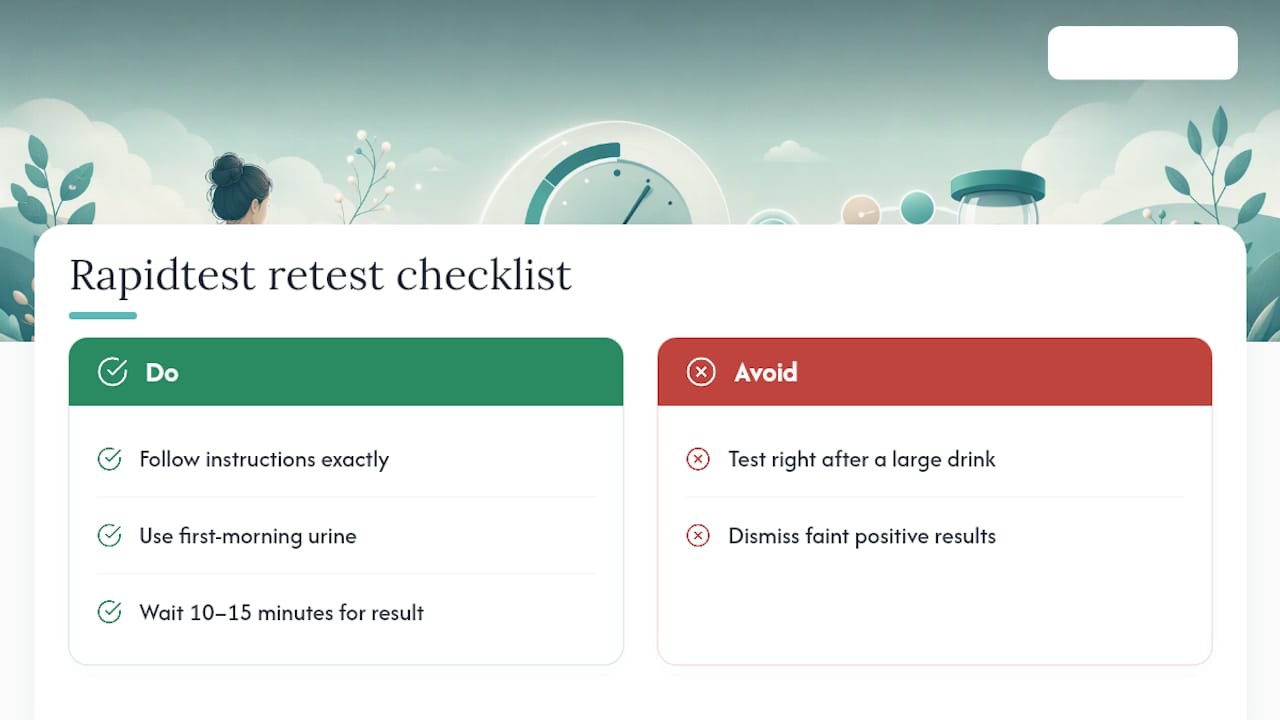
Rapidtest’s own HCG and fertility kits deliver a result in 10 to 15 minutes at home, which makes the structured retest windows above genuinely usable rather than theoretical. The same rules that apply to any urine test still apply here: follow the instructions exactly, use first-morning urine, and skip testing straight after a large drink.
What actually matters when you’re staring at a negative test
The advice most people repeat, “just wait and see”, isn’t wrong, but it’s incomplete. It skips the part where anxiety makes you retest daily with diluted afternoon urine and draw the wrong conclusion from a genuinely poor sample. The fix isn’t more testing, it’s better-timed testing.
Where conventional advice falls short is in treating every late period as either “probably pregnant” or “probably nothing.” Late ovulation alone explains a huge share of these cases, and it’s barely mentioned outside clinical settings. If your cycle has ever run long before, that’s your first suspect, not a faulty test.
Prioritise this: one well-timed first-morning test, seven days after the first, before you consider a blood test. Two clean negatives a week apart is a genuinely reliable signal, and clinicians treat it that way for good reason. Stop testing daily out of worry. It wastes money and tells you nothing new the second test didn’t already say. If those two negatives land and your period still hasn’t started, that’s your cue to see a GP, not to buy a third box of tests.
— Jack
A private retest option worth knowing about
If you’d rather retest privately than wait for a GP appointment, an HCG and fertility kit can give you a result at home in 10 to 15 minutes, with no queue and no awkward conversation.
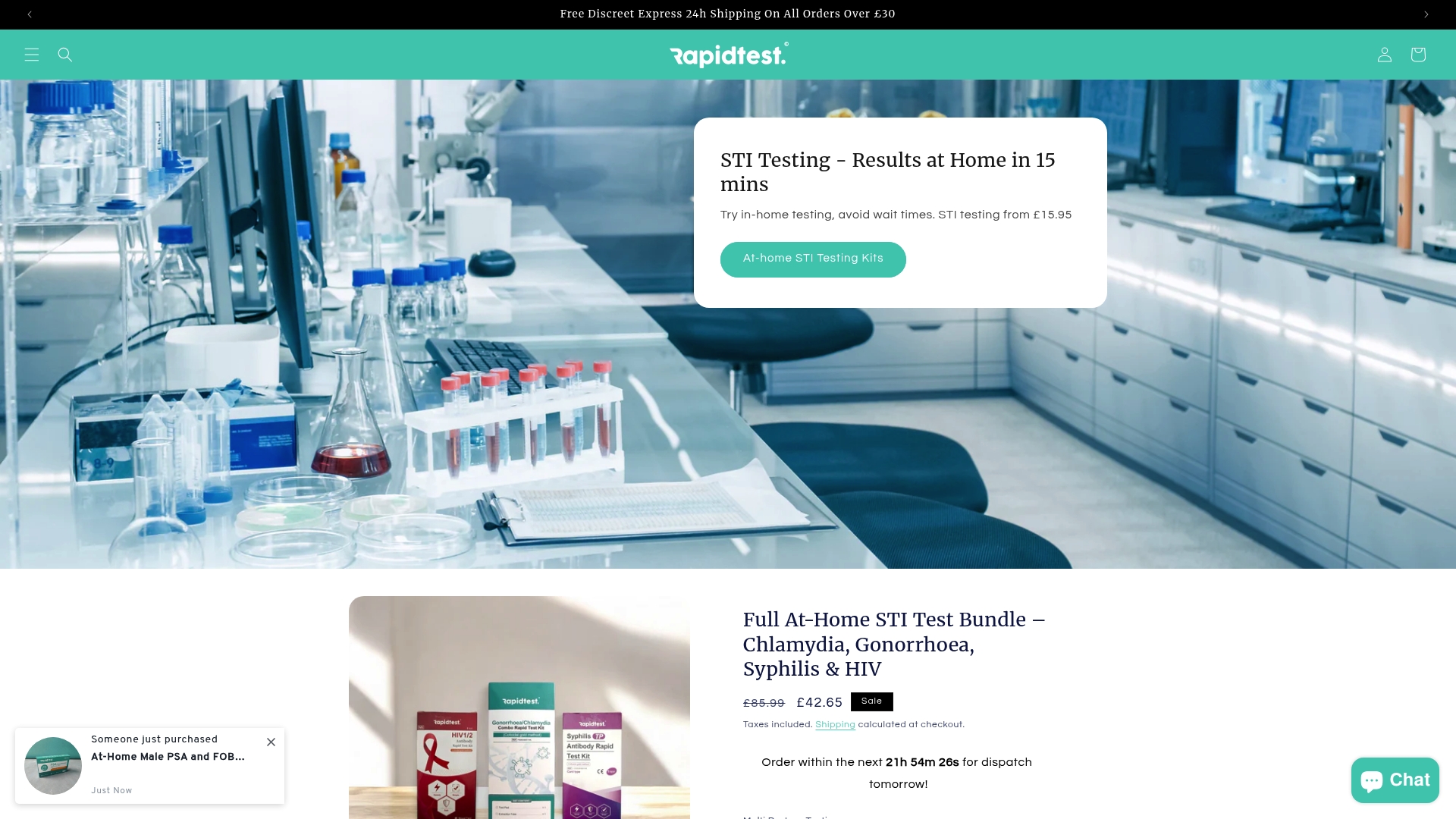
It suits the exact situation this article has walked through: you’ve had one negative test, your period is still late, and you want a fast, private answer to your next retest before deciding whether a blood test is worth pursuing. It isn’t a replacement for clinical blood testing when results stay ambiguous or symptoms persist, but for a straightforward retest a week on from your first attempt, it does the job discreetly and quickly. Alongside pregnancy clarification, some providers also offer at-home STI testing kits for anyone who wants broader sexual health reassurance at the same time. If persistent pelvic discomfort is part of your picture, this guide to managing pelvic girdle pain is worth a look too. Order an HCG and fertility kit today and have your next result within minutes, not days.
This article is general information, not a substitute for advice from a qualified doctor. Consult a qualified healthcare professional about your own circumstances before acting on anything here.
Sources
- Doing a pregnancy test
- Late period negative pregnancy test: Causes and is it common?
- Pregnancy Test: When To Take, Types & Accuracy
- Pregnancy Test: MedlinePlus Medical Test
FAQ
Can I still be pregnant with a negative test and no period?
Yes, though it’s uncommon after a properly timed test. It’s most likely if you tested early, had diluted urine, or ovulated later than usual that cycle.
Can you test negative 11 days late and still be pregnant?
It’s unlikely after a late period, since hCG levels are usually high enough to detect by then. A negative result at this stage points more towards a non-pregnancy cause, and it’s worth retesting with first-morning urine or asking for a blood hCG test to confirm.
Can I be 7 days late and not be pregnant?
Yes, a week’s delay is common and often comes down to stress, weight changes, exercise, or a naturally longer cycle that month rather than pregnancy.
Why is my period late but a negative test?
The most frequent reasons are testing too early, late ovulation shifting your expected date, or a non-pregnancy cause like thyroid changes, PCOS, or recent contraception use. Medical News Today’s breakdown covers these causes in more detail.