


Act within a week: HPV positive at home next steps in the UK
Book a clinician consultation, telehealth or in person, within about a week of your positive result. A positive at-home HPV test usually means HPV was detected, not that anything cancerous has developed. It indicates the need for clinical follow-up to understand the significance. Keep the result on your phone, avoid retesting at home immediately, and seek clinical evaluation to determine the appropriate next steps.
TL;DR:
- A positive home HPV test indicates virus presence but does not specify the type or imply cancer; clinical follow-up is essential.
- Book an appointment within a week, clearly state your positive result, and ask for a co-test or further screening based on your history.
- Most HPV infections clear naturally within one to two years, so routine monitoring, not immediate intervention, is typically recommended unless symptoms or high-risk strains are involved.
- Symptoms like visible warts, unusual bleeding, or pelvic pain require urgent medical attention rather than waiting for a routine check.
- Continuing vaccination, quitting smoking, and maintaining regular cervical screening improve long-term outcomes and immune response.
Table of Contents
- HPV positive next steps: what to do in the first 24 to 72 hours
- What happens at your clinical follow-up, and how long it takes
- When to seek urgent help instead of waiting
- Talking to partners and managing sex in the short term
- Vaccination, smoking, and staying on top of screening
- Getting ready for your clinical appointment
- What a positive HPV result actually means
- Coping with the news: support that actually helps
- HPV infection versus an abnormal smear: not the same thing
- How long HPV sticks around, and what ongoing monitoring looks like
- Reducing transmission risk beyond telling your partner
- A calmer read on what a positive result really means
- Rapidtest: act on your result without the wait
- Sources
- FAQ
HPV positive next steps: what to do in the first 24 to 72 hours
The first week matters more than the first day. Here’s the order that actually gets you seen faster and taken seriously.
- Screenshot or photograph the result the moment you see it, along with the test packaging showing the brand name and lot number.
- Write down the exact wording the test displayed, whether it was a simple positive line or a device readout, so you can repeat it accurately to a clinician.
- Book an appointment within roughly a week. Telehealth works fine for this first conversation, in-person is equally valid if you’d rather.
- State clearly that you have a positive at-home HPV rapid test result when you book, so the receptionist or triage nurse routes you correctly.
- Ask about a clinical Pap or HPV co-test and whether broader STI screening makes sense given your history.
A few things worth flagging before you go:
- Home HPV tests typically confirm presence of the virus but generally don’t identify which of the many HPV types you have.
- A clinical co-test can pin down whether it’s a high-risk strain, which changes the conversation about timelines.
- Don’t cancel or delay the appointment because you feel fine. HPV rarely causes symptoms even when present.
Pro Tip: Save the screenshot to a folder called “HPV result” on your phone right now, not later. You will forget the exact date and wording within a fortnight, and clinicians ask for both.
Resist retesting at home in the meantime. It’s tempting to check again in a week to see if anything’s changed, but early repeat tests rarely alter what happens clinically and mostly just add stress to your week.
What happens at your clinical follow-up, and how long it takes
Clinicians don’t treat every positive result the same way. Your age, screening history, and any symptoms all feed into the decision about what comes next, and that’s a deliberate, evidence-based process rather than a guessing game.
For most people, the advice will be to monitor and retest after a period that clinical guidelines generally recommend to allow the immune system time to clear the virus naturally. The NHS explains that a positive HPV result does not mean you have precancer or cancer, and clinicians use your wider health picture to judge actual risk rather than reacting to the positive result alone.
Some cases move faster. If cytology comes back abnormal, or if a clinical test identifies a high-risk strain such as HPV 16 or 18, your clinician may bring forward a colposcopy rather than waiting the typical monitoring period. The Gov sets out exactly how that risk assessment works, and importantly, most precancerous changes caught at this stage can be treated before they ever progress.
Here’s what typically determines the pace of follow-up:
- Your age and cervical screening history
- Whether cytology results show any cell changes
- Which HPV type was identified, if known
- Presence of symptoms such as bleeding or pain
A retest at two weeks tells a clinician almost nothing new. The clinically useful window is measured in months, because that’s roughly how long meaningful immune clearance takes to show up in results.
When to seek urgent help instead of waiting
Most positive HPV results can wait comfortably for a routine appointment within the week. A smaller set of symptoms can’t wait, and knowing the difference saves you unnecessary worry on one side and unnecessary delay on the other.
Contact a clinician promptly, and don’t wait for your scheduled slot, if you notice any of the following:
- Visible genital warts, new or changing
- Bleeding between periods, after sex, or after menopause
- Persistent pelvic pain that isn’t linked to your normal cycle
- New lesions, sores, or discharge alongside other symptoms
- Any combination of the above appearing together
If you’re unsure whether something counts as urgent, NHS 111 online gives free, non-emergency triage and will tell you honestly whether you need to be seen sooner. Call 111 by phone if you’d rather talk it through. For anything that feels genuinely life-threatening, heavy bleeding that won’t stop, severe pain, call 999 instead.
Everything else, including the positive result itself, sits firmly in “book a routine appointment this week” territory.
Talking to partners and managing sex in the short term
A positive result changes the conversation with a partner, but it doesn’t need to be an anxious one. HPV is genuinely common, and most sexually active adults will encounter it at some point without lasting consequences.
In the short term:
- Use condoms consistently until you’ve had your clinical follow-up
- Avoid sex altogether if you have visible warts, since that’s when transmission risk is highest
- Tell current partners factually: you’ve tested positive, you’re following up with a clinician, and they may want to get checked too
Pro Tip: Keep the conversation practical rather than apologetic. “I tested positive for HPV and I’m getting it checked properly” tells a partner everything they need without turning it into a confession.
There’s no single “right” script for this conversation, but leading with facts rather than guilt tends to land better and keeps things moving towards useful action rather than blame.
Vaccination, smoking, and staying on top of screening
Three things genuinely move the needle on long-term outcomes, and none of them require dramatic lifestyle change.
- Ask about HPV vaccination, even if you’re past the age it’s routinely offered. Some adults still benefit from catch-up doses, and it’s worth raising directly with your clinician rather than assuming you’re ineligible.
- Stop smoking if you smoke. Smoking measurably weakens the immune response that helps clear HPV naturally, so quitting genuinely supports your own recovery timeline, not just your lungs.
- Keep attending routine cervical screening on schedule. A positive result today doesn’t replace your next scheduled screen. It sits alongside it as part of the same monitoring picture.
None of these are quick fixes, but together they shift the odds meaningfully in your favour over the following months.
Getting ready for your clinical appointment
A slightly disorganised appointment wastes everyone’s time. Bring the right things and you’ll get a decision, not just another “come back later.”
- Bring your screenshot or photo of the home result, plus the packaging showing brand and lot number.
- Note the date of your last cervical screening and any past abnormal results.
- Have your vaccination status ready, even a rough guess is useful if you don’t have exact records.
- Ask three things directly: Do I need a clinical Pap or HPV co-test? When should I retest? What symptoms would mean I need to come back sooner than planned?
Walking in with these ready turns a ten-minute chat into an actual plan.
What a positive HPV result actually means
An at-home HPV test looks for genetic material from the human papillomavirus in a self-collected sample. A positive result means that material was detected, full stop. It says nothing on its own about cancer, precancer, or even which of the many HPV types is present.
There are over 100 known HPV types, broadly split into low-risk and high-risk categories. Low-risk types are the ones behind genital warts, uncomfortable but not linked to cancer. High-risk types, including 16 and 18, are the ones clinicians watch more closely because persistent infection with these strains is what’s associated with cervical cell changes over time. MedlinePlus notes that a positive test means HPV DNA was found, and that follow-up, whether colposcopy or more frequent testing, depends entirely on that clinical context.
Here’s the detail most people miss: a home rapid test typically flags presence, not type. That’s exactly why the clinical follow-up test matters so much. It’s the step that actually tells your clinician whether you’re dealing with a low-risk nuisance or a high-risk strain worth monitoring more closely.
If you tested using a urine sample rather than a swab, the same logic applies. Positive means detected, and a clinical test fills in the rest of the picture.
Coping with the news: support that actually helps
A positive result can knock you sideways even when you know, rationally, that HPV is common. That reaction is normal, and it doesn’t mean you’re overreacting.
Specialist cancer centres note that HPV is common, the risk of it developing into anything serious is small, and follow-up testing and colposcopy work well at catching problems early when they’re needed at all. Holding onto that fact helps more than most people expect in the first few anxious days.
Practically, a few things help:
- Talk to your GP or clinician about how you’re feeling, not just the physical result. They’ve had this conversation many times before.
- Sexual health clinics and GUM services often have specific experience supporting people through an HPV diagnosis and can point you towards counselling if you want it.
- Give yourself permission to feel unsettled for a few days without treating that feeling as evidence something is wrong.
Remember how common this is: most sexually active adults encounter HPV at some point in their lives. You are not the exception here, you’re the rule, and the system that follows up with you is built around exactly this situation.
HPV infection versus an abnormal smear: not the same thing
These two get conflated constantly, and untangling them removes a lot of unnecessary fear.
HPV infection means the virus is present in your cells. An abnormal Pap smear (cytology) means the cells themselves look different under a microscope, showing changes that might, over years, develop into something concerning if left unchecked. You can have HPV with completely normal cytology. You can, less commonly, have abnormal cytology tied to a lingering high-risk infection.
This is precisely why a positive home HPV result doesn’t automatically mean anything is wrong with your cervical cells. It means the virus was found. The clinical co-test is what actually looks at the cells, and that combined picture, virus plus cytology, is what the GOV.UK cervical screening pathway uses to decide whether you’re watched, retested, or referred for colposcopy.
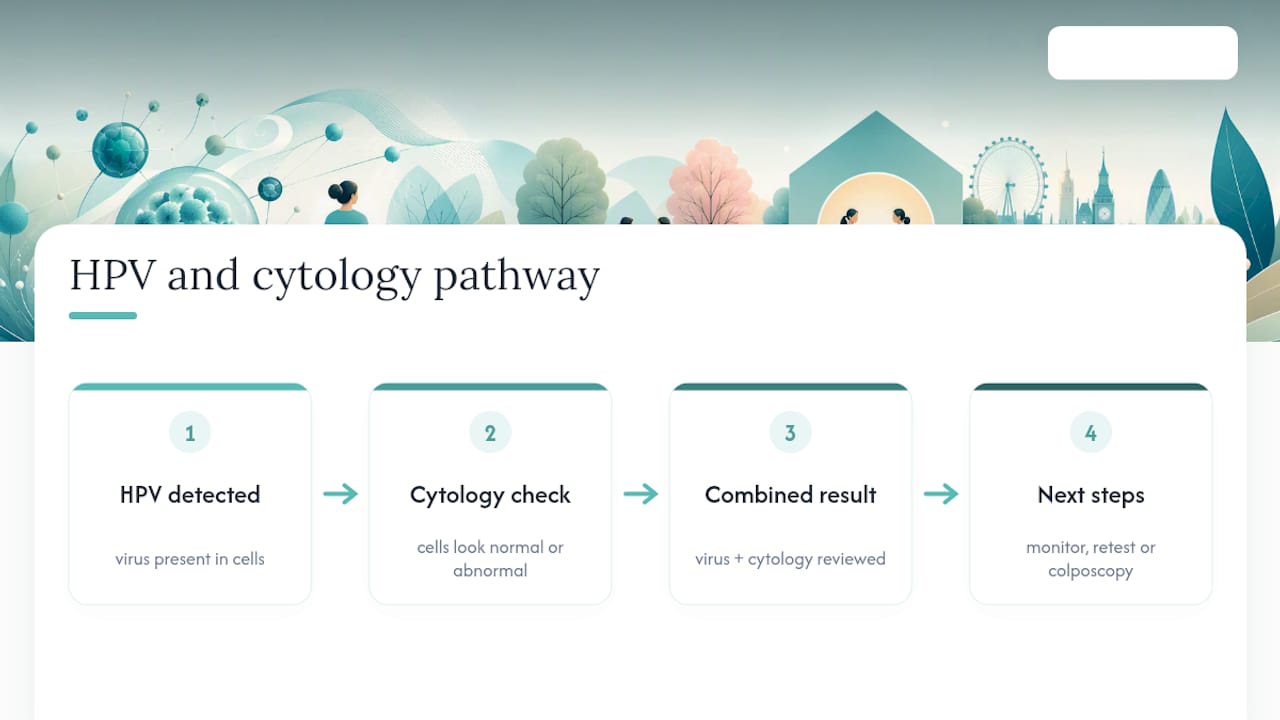
Think of HPV as the cause and abnormal cytology as one possible, and far from certain, effect. Most HPV infections never produce any cytological change at all, which is exactly why the 12-month monitoring approach exists rather than immediate intervention for every positive result.
How long HPV sticks around, and what ongoing monitoring looks like
Most HPV infections are transient. The immune system typically clears the virus within one to two years without the person ever knowing they had it. That’s the biological reality behind the 12-month retest recommendation: it gives the body realistic time to do what it usually does anyway.
Persistence is the exception rather than the rule, but it’s the exception clinicians watch for. When a high-risk strain lingers past that window, particularly HPV 16 or 18, the monitoring becomes more structured: repeat co-testing, closer attention to cytology, and colposcopy if changes appear.
Long-term, this looks less like a single dramatic decision and more like a rhythm:
- Initial positive result → clinical confirmation and risk assessment
- Around 12 months → retest to check for clearance or persistence
- If persistent with abnormal cytology → colposcopy and possible biopsy
- If cleared → return to routine screening intervals
Staying engaged with each of these steps, rather than assuming “no news is good news,” is what keeps the whole system working the way it’s designed to.
Reducing transmission risk beyond telling your partner
Notifying a partner is one piece of a bigger picture. HPV spreads through skin-to-skin genital contact, which means condoms reduce risk substantially but don’t eliminate it entirely, since they don’t cover every area of contact.
A few practical points worth knowing:
- Vaccination protects against the specific high-risk and wart-causing types included in the vaccine, even if you’ve already been exposed to one type.
- Long-term monogamous relationships still carry a small residual risk if either partner was previously exposed, since HPV can persist silently for years before detection.
- Regular screening, for you and any partners with a cervix, remains the most reliable way to catch anything that does develop, regardless of how careful you’ve both been.
None of this is about assigning blame. HPV transmission is so widespread precisely because it’s often silent, which is exactly why testing and screening carry the weight that abstinence-based advice can’t.
A calmer read on what a positive result really means
The gap between how frightening a positive HPV result feels and how manageable it usually is stays the widest gap in sexual health right now. People treat this result the way they’d treat a cancer diagnosis, when the far more accurate comparison is a common cold that the immune system is already working to clear.
What actually helps here isn’t reassurance for its own sake. It’s structure. Bringing a clear, dated screenshot of an at-home result into a telehealth appointment genuinely speeds up triage, because the clinician isn’t starting from scratch, they’re confirming and building on something you’ve already flagged. That single step, done properly, often moves someone from “vague worry” to “specific plan” within one conversation.
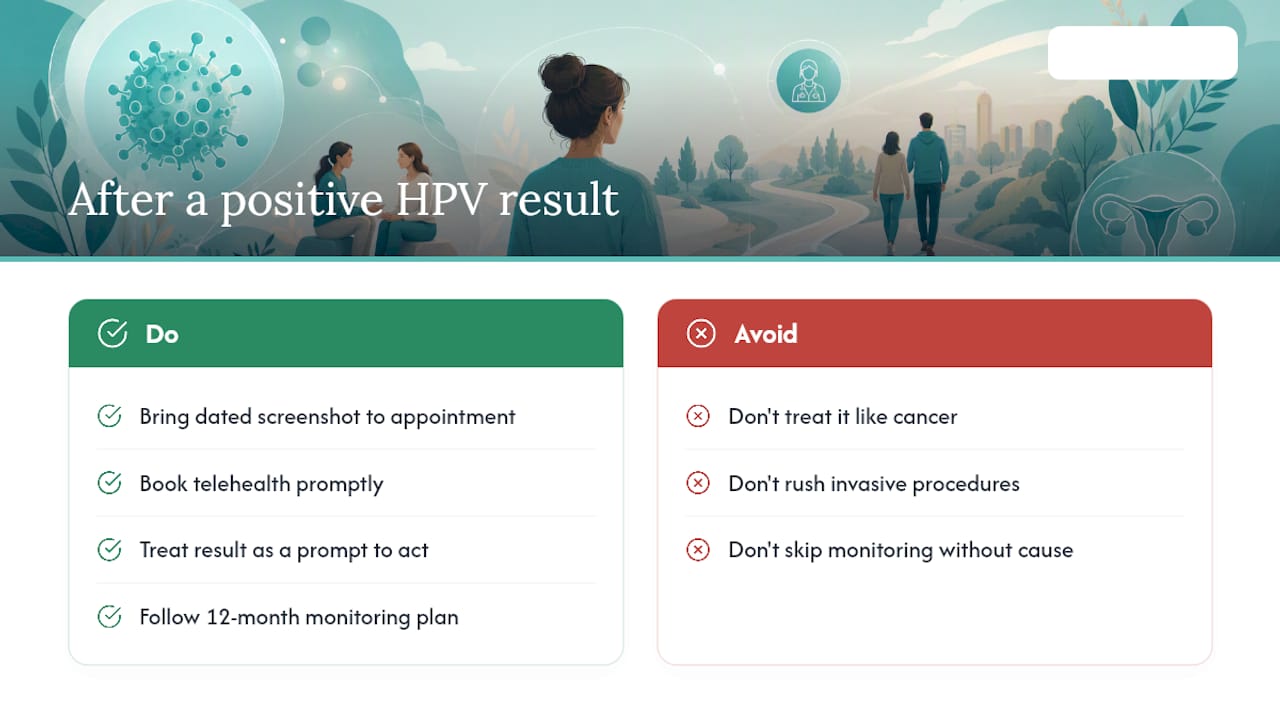
The 12-month monitoring window that so many people find frustrating is, if anything, the system working correctly. It’s not a clinician kicking the can down the road. It reflects decades of evidence about how HPV behaves in most people’s bodies. Rushing to intervene sooner, in the absence of symptoms or abnormal cytology, tends to cause more anxiety and more unnecessary procedures than it prevents harm.
If there’s one thing worth internalising from all of this, it’s that a positive result is a prompt to act, not a verdict to fear.
— Jack
Rapidtest: act on your result without the wait
There are services designed for moments when you need clarity fast, privately, without booking weeks ahead just to find out what a symptom or a suspicion means. The HPV (Genital Warts) Rapid Test Kit gives you a result in around 15 minutes, with discreet packaging and clear instructions that don’t require any medical background to follow.
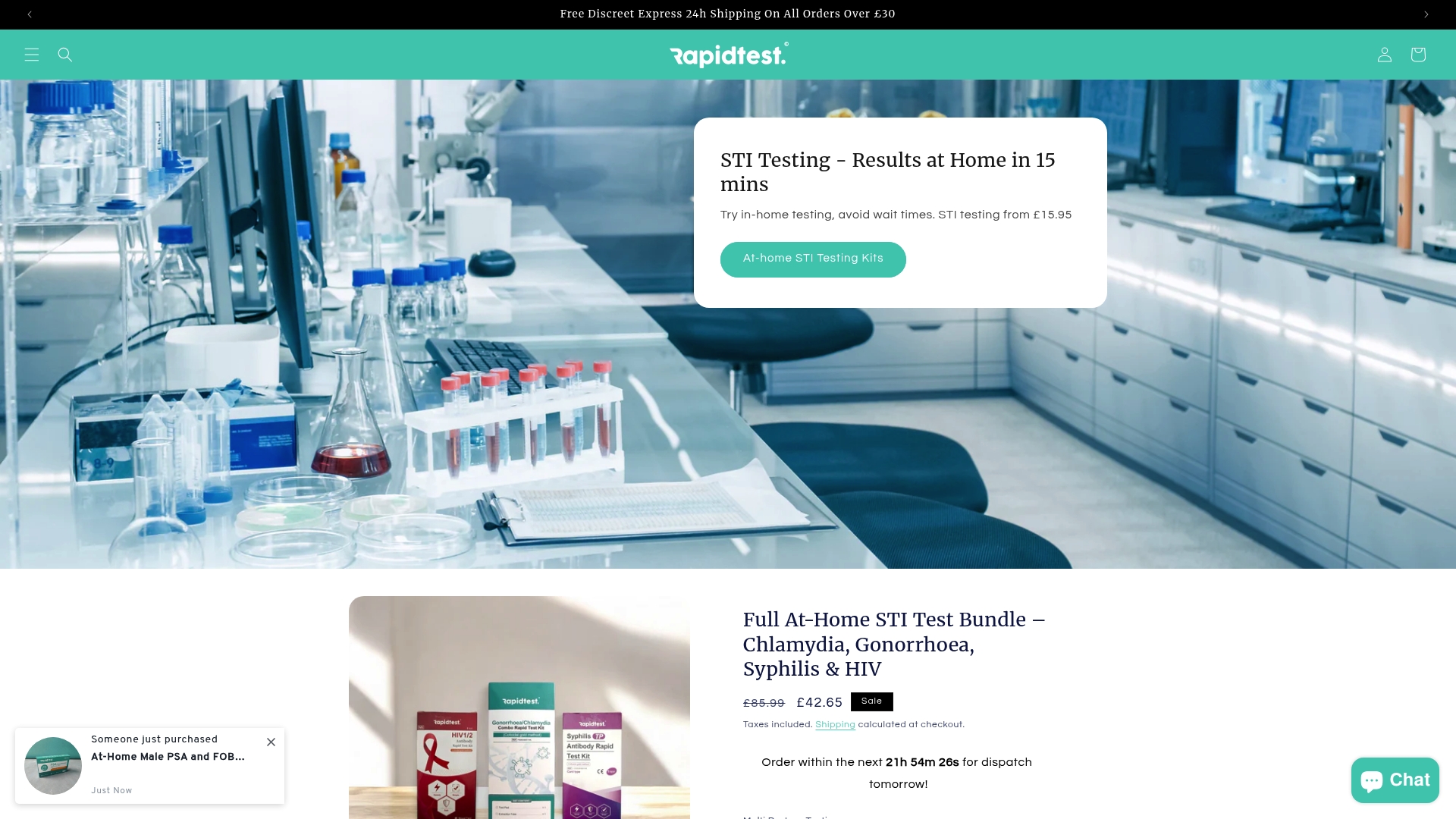
That home result isn’t the end of the process, it’s the useful starting point for the clinical conversation covered throughout this guide. Arriving at a telehealth or GP appointment with a dated screenshot and a clear positive result, rather than a vague symptom or a guess, helps a clinician triage you faster and decide whether you need a co-test, monitoring, or something sooner. If you haven’t tested yet and want that starting point, the full range of at-home STI test kits is available to order now, with results ready before your next appointment even needs booking.
This article is general information, not a substitute for advice from a qualified doctor. Consult a qualified healthcare professional about your own circumstances before acting on anything here.
Sources
- Gov
- Your cervical screening results – NHS
- Human papillomavirus (HPV) test – MedlinePlus
- NHS 111 online
FAQ
Should I retest at home if I get a positive HPV result?
No. Retesting straight away rarely changes anything clinically and mostly adds stress. Wait for clinician guidance, which typically means monitoring and retesting at around 12 months.
How soon should I see a doctor after a positive at-home HPV test?
Book a telehealth or in-person appointment within about a week, and mention clearly that you’ve had a positive at-home HPV rapid test result when arranging it.
Does a positive HPV result mean I have cervical cancer?
No. The NHS is explicit that a positive result does not mean precancer or cancer. It means the virus was detected, and most cases resolve through monitoring alone.
What symptoms mean I shouldn’t wait for a routine appointment?
Visible genital warts, unexplained bleeding, or pelvic pain warrant contacting a clinician sooner. Use NHS 111 online if you’re unsure, or 999 for anything life-threatening.
Can I still get the HPV vaccine after testing positive?
Possibly. Vaccination protects against types you haven’t yet encountered, so it’s worth asking your clinician directly rather than assuming you’re too late or ineligible.
Is a Rapidtest HPV kit result the same as a clinical diagnosis?
No. It’s a strong first signal that flags presence of the virus. A clinical co-test is what confirms strain type and any cervical cell changes.