


How to test for HIV at home: a clear guide
HIV self-testing is the process of collecting your own sample at home and getting a result without visiting a clinic or doctor. You can test for HIV at home using either an oral swab or a finger-prick blood sample, with most rapid kits delivering results in around 15 to 20 minutes. The CDC recommends that everyone aged 13 to 64 gets tested at least once, and more frequently if risk factors apply. Home testing removes the queue, the appointment, and the awkward waiting room. It puts you in control, privately, on your own terms.
What types of HIV home test kits are available?
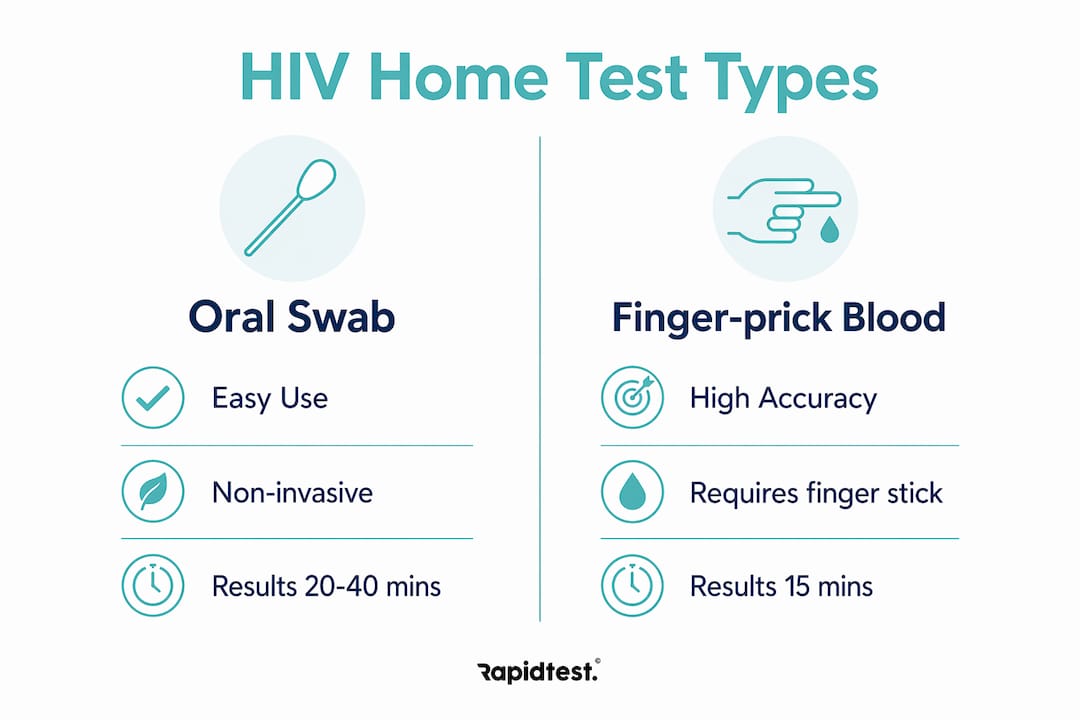
Two main categories of HIV home testing kit exist: oral swab tests and finger-prick blood tests. Each works differently, suits different people, and has its own accuracy profile.
Oral swab tests collect antibodies from the fluid around your gums. The OraQuick HIV Self-Test is the most widely recognised example. It is FDA-approved for over-the-counter use and detects both HIV-1 and HIV-2 antibodies using oral fluid only. Results arrive in about 20 minutes. It is worth noting that OraQuick should only be used with oral fluid specimens. Using it with blood or urine reduces reliability significantly.
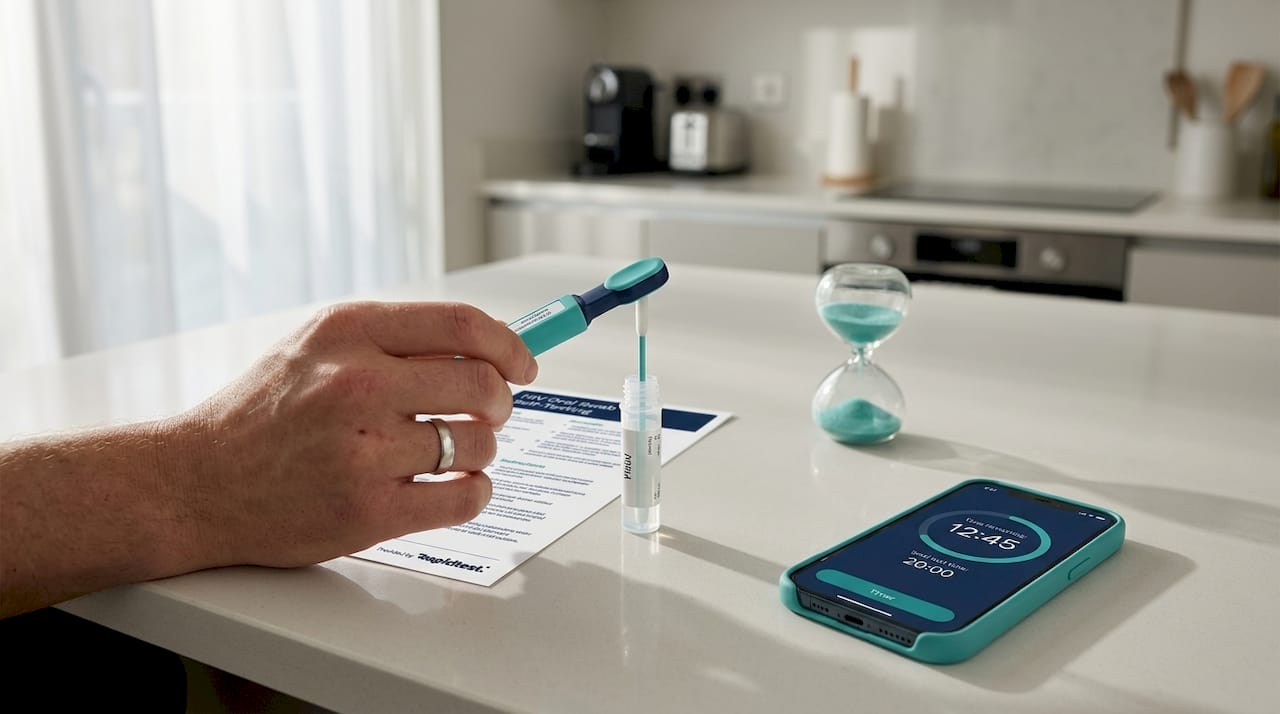
Finger-prick blood tests, such as the INSTI HIV Self-Test, require a small drop of blood from your fingertip. These tests detect antibodies in whole blood and are considered slightly more sensitive than oral fluid tests in some studies. Postal lab tests also exist, where you send a dried blood spot to a laboratory for processing, but results take several days rather than minutes.
Here is a quick comparison of the main options:
| Feature | Oral swab test (e.g. OraQuick) | Finger-prick blood test (e.g. INSTI) |
|---|---|---|
| Specimen type | Oral fluid | Whole blood |
| Result time | ~20 minutes | ~15 minutes |
| Window period | ~3 months | ~4 to 12 weeks depending on test generation |
| Ease of use | Very easy | Slightly more involved |
| Approximate cost | ~£30 to £40 | ~£25 to £40 |
Pro Tip: Check whether your kit tests for both HIV-1 and HIV-2. Most modern rapid kits do, but it is worth confirming on the packaging before you buy.
The specimen type dictates the testing method and timing considerations entirely. Do not mix guidance from one brand’s instructions with another kit.
What do you need before testing for HIV at home?
Preparation makes a real difference to the reliability of your result. A rushed or poorly set-up test is one of the most common reasons for invalid readings.
Most HIV home testing kits include everything you need:
- A test device or cassette
- A lancet (for blood tests) or swab (for oral tests)
- An alcohol wipe and gauze pad
- A buffer solution or developer fluid
- A timer (your phone works perfectly)
- A clear instruction leaflet
Before you open anything, check the expiry date on the packaging. An expired kit should not be used, regardless of how it looks. Read the full instructions from start to finish before you begin. This sounds obvious, but skipping ahead is one of the most common user errors.
Choose a clean, well-lit space where you will not be interrupted for at least 30 minutes. Good lighting matters when you are reading faint lines on a test strip. If you are feeling anxious about the result, consider having a trusted friend available by phone, or note down the number for a support line such as the Terrence Higgins Trust (0808 802 1221) before you start.
Pro Tip: Do not eat, drink, or use oral hygiene products for at least 30 minutes before taking an oral swab test. Food and drink residue can interfere with antibody detection in oral fluid.
You should also decide in advance where you would go for confirmatory testing if your result is reactive. Planning confirmation testing locations before self-testing reduces delays and anxiety if you need to act quickly.
How to perform an HIV home test step by step
The exact steps vary slightly between brands, so always follow your specific kit’s instructions. The process below covers the general procedure for both test types.
For an oral swab test:
- Wash your hands thoroughly with soap and water.
- Remove the swab from its packaging without touching the swab tip.
- Swipe the swab gently along your upper gum once, then your lower gum once.
- Insert the swab into the developer vial and start your timer.
- Wait the full time specified (usually 20 minutes) before reading the result.
- Read the result within the manufacturer’s specified window. Do not read it early or late.
For a finger-prick blood test:
- Wash and dry your hands. Warm them under warm water for a minute to improve blood flow.
- Use the lancet to prick the side of your fingertip, not the pad.
- Wipe away the first drop of blood with the gauze pad.
- Collect the required number of drops into the test device or onto the test strip.
- Add the buffer solution as directed and start your timer.
- Read the result within the stated window.
Common mistakes to avoid:
- Reading the result before the minimum time has passed
- Reading the result after the maximum time window has closed
- Touching the test strip or swab tip with your fingers
- Using an oral swab kit with blood or any other specimen type
- Skipping the buffer solution step on blood tests
Following test instructions exactly is not optional. Missing the correct read window can invalidate results even when the sample was collected perfectly. This is the single most common source of user error across all rapid test formats.
For more detailed guidance on using home STI tests safely, Rapidtest has a dedicated step-by-step resource covering technique and accuracy.
How to read your result and what to do next
HIV home test results fall into three categories: non-reactive, reactive, and invalid.
- Non-reactive (negative): Two lines appear (control and test). This means no HIV antibodies were detected at the time of testing. If your potential exposure was within the window period, retest after the window has closed.
- Reactive (positive): A line appears in the test region alongside the control line. This does not confirm an HIV diagnosis. It means you need a confirmatory laboratory test as soon as possible.
- Invalid: No control line appears, or the result is unclear. Discard the test and use a new kit.
The window period is critical to understand. OraQuick’s window period is three months, meaning a test taken within three months of a potential exposure may not detect HIV accurately. A negative result during this period does not rule out infection. For guidance on when to test after exposure, timing is everything.
If your result is reactive, do not panic. False positives are rare but possible, and a reactive home test result must always be confirmed by a laboratory test before any diagnosis is made. Contact your GP, a sexual health clinic, or the Terrence Higgins Trust for next steps.
If you believe you were exposed to HIV within the last 72 hours, do not wait for a home test result. Seek immediate medical assessment for post-exposure prophylaxis (PEP). Home tests cannot detect very recent infection, and PEP must be started within 72 hours to be effective.
Common challenges when testing for HIV at home
Even with the best intentions, things can go wrong. Knowing what to look out for saves you from a wasted test or a misleading result.
Invalid results are usually caused by one of the following:
- Insufficient sample collected (too little blood or inadequate swabbing)
- Timing errors, either reading too early or too late
- Damaged or expired test components
- Incorrect specimen type used with the kit
If you get an invalid result, do not try to interpret it. Discard the test and start again with a fresh kit. An invalid result tells you nothing about your HIV status.
Anxiety is a real part of home testing for many people. It is completely normal to feel nervous while waiting for results. Having a plan for what you will do if the result is reactive, including knowing where your nearest sexual health clinic is, can reduce that anxiety considerably.
Pro Tip: Set a timer on your phone for both the minimum and maximum read times. This removes the temptation to check early and stops you from missing the valid read window entirely.
Self-testing increases testing frequency particularly for people with risk-based exposure scenarios. If you are sexually active with multiple partners, testing every three months is a reasonable routine. Regular testing means any change in status is caught early, which is when treatment is most effective.
Key takeaways
Accurate HIV home testing depends on choosing the right kit, preparing properly, following the instructions without shortcuts, and knowing exactly what to do with your result.
| Point | Details |
|---|---|
| Choose the right kit | Oral swab tests and finger-prick blood tests differ in specimen type, window period, and ease of use. |
| Prepare before you start | Check expiry dates, read instructions fully, and plan for confirmatory testing before opening the kit. |
| Follow timing exactly | Reading results outside the manufacturer’s window invalidates the test, even with a perfect sample. |
| Understand your result | A reactive result requires confirmatory lab testing. A negative result within the window period may need repeating. |
| Act fast after exposure | If exposure was within 72 hours, seek PEP immediately. Home tests cannot detect very recent infection. |
Why home HIV testing changed how I think about sexual health
I have spoken to a lot of people who put off HIV testing for years, not because they did not care, but because the process felt loaded. The clinic, the wait, the conversation with a stranger. It all adds up to a barrier that is easy to keep avoiding.
What strikes me about home testing is not just the convenience. It is the shift in ownership. When you test at home, you are making a deliberate, private choice to know your status. That is genuinely different from waiting until a GP suggests it.
The window period is the thing most people underestimate. A negative result feels like a green light, but if you tested too soon after a potential exposure, it may not mean what you think it means. Understanding the timing of HIV testing is as important as the test itself.
My honest view is that regular testing, every three months for sexually active adults with multiple partners, should be as routine as any other health check. Home kits make that realistic in a way that clinic appointments simply do not for most people’s lives. The stigma around HIV testing has not disappeared, but a private kit in your bathroom goes a long way towards making it feel like a normal part of looking after yourself.
— Jack
Test at home with Rapidtest: results in 15 minutes
Rapidtest offers an HIV home testing kit with 99.8% accuracy and results in just 15 minutes. No appointment, no queue, no awkward conversation. You order online, test privately at home, and know your status before the day is out. Every kit arrives in discreet packaging and includes everything you need to test safely and accurately. If you are ready to take control of your sexual health, browse Rapidtest’s full range of at-home STI testing kits and find the right option for you.
FAQ
Can you test for HIV at home accurately?
Yes. Rapid HIV home testing kits such as OraQuick and INSTI are clinically validated and highly accurate when used correctly. Following the manufacturer’s instructions exactly is the single most important factor in getting a reliable result.
How long does an HIV home test take?
Most rapid HIV home tests deliver results in 15 to 20 minutes. Postal lab-based tests take several days as the sample must be processed in a laboratory.
What does a reactive HIV home test result mean?
A reactive result means HIV antibodies were detected, but it does not confirm a diagnosis. Confirmatory laboratory testing is required before any clinical decision is made.
When is the best time to test after a potential exposure?
The window period for most rapid tests is around three months. Testing before this window closes may produce a false negative. If exposure was within 72 hours, seek medical advice about PEP immediately rather than relying on a home test.
How often should you test for HIV at home?
The CDC recommends at least one routine HIV test for all adults aged 13 to 64, with more frequent testing for those with ongoing risk factors. For sexually active adults with multiple partners, testing every three months is a practical and responsible routine.