


How to test for chlamydia at home: Fast, discreet guide
Testing for chlamydia doesn’t have to mean sitting in a waiting room, filling out awkward paperwork, or having an uncomfortable conversation with someone you’ve never met. At-home chlamydia tests have changed the game completely. They’re private, quick, and genuinely reliable. In this guide, you’ll find out exactly why home testing makes sense, what kit you need, how to use it correctly step by step, and what to do when your results appear. Whether you’re in the UK, across Europe, or anywhere in between, this is your practical, no-judgment starting point.
Table of Contents
- Why test for chlamydia at home?
- What you need to test for chlamydia at home
- Step-by-step instructions for chlamydia self-testing
- Interpreting your chlamydia test results and next steps
- The uncomfortable truth most guides miss about at-home chlamydia testing
- Find trusted at-home STI test kits and get results fast
- Frequently asked questions
Key Takeaways
| Point | Details |
|---|---|
| At-home chlamydia testing is discreet | You can test in private, avoiding clinics and waiting rooms. |
| Effective and reliable options | UK and European users have access to rapid, trustworthy tests. |
| Simple step-by-step process | Home kits usually require just a swab, follow instructions, and read your results. |
| Quick results help faster treatment | Many kits provide results within 15-30 minutes so you can act quickly if needed. |
| Regular testing recommended | Screening at home is key, especially for those under 25 and anyone sexually active. |
Why test for chlamydia at home?
Let’s be real. Chlamydia is one of the most common STIs out there, and most people who have it have zero symptoms. That’s what makes it genuinely sneaky. You can carry it, pass it on, and never know unless you test. And yet, millions of sexually active adults avoid testing every year simply because the process feels awkward or inconvenient.
That’s where home testing steps in and changes everything.
Privacy is the number one reason most people choose to test at home. No clinic visit. No face-to-face consultation. No wondering who might see you walking into a sexual health center. You do it in your own space, on your own terms, and nobody else needs to know.
Convenience is a close second. You can test at any time. Early morning, late at night, during your lunch break. You’re not working around clinic hours or waiting weeks for an appointment slot.
Here’s what makes at-home testing particularly important:
- Chlamydia has no visible symptoms in around 50% of men and 70% to 80% of women, meaning routine screening is the only reliable way to catch it
- The UK National Chlamydia Screening Programme (NCSP) specifically targets sexually active people under 25, who carry the highest infection rates
- Regular, low-barrier testing is essential for breaking transmission chains
- Home testing removes the practical barriers that cause people to delay or skip testing altogether
“Home testing is especially powerful for asymptomatic screening. If you’re waiting to feel unwell before you test, you’re already behind.”
Home self-sampling is highly effective, with studies in the UK showing positivity rates of 6 to 9% in clinic settings, slightly lower among home testers, likely because home users tend to be lower-risk. Still, the uptake figures confirm that people trust and use these kits regularly.
The UK government’s own chlamydia screening data shows that testing rates have shifted significantly, with home-based options driving much of the accessibility gains in recent years. You can explore chlamydia rapid test kits designed specifically for home use, or check a step-by-step breakdown of how the process works before you even order.
What you need to test for chlamydia at home
Good news: you don’t need much. Most home chlamydia test kits are designed to be simple, and everything you need comes in the box.
Here’s what a standard kit typically includes:
- A sterile swab (vaginal swab for people with a vulva, or a urine sample kit for people with a penis)
- A test cassette or reactive strip
- A buffer solution or activating liquid
- A sample collection tube
- Clear, illustrated instructions
- A disposal bag for used materials
The two main types of kits you’ll come across are rapid test kits and mail-in sample kits. They work differently, and the right one for you depends on what matters most.
| Feature | Rapid test kit | Mail-in sample kit |
|---|---|---|
| Results time | 15 to 30 minutes | 2 to 5 days |
| Lab involved | No | Yes |
| Privacy level | Very high | High |
| Accuracy | High (CE-marked kits) | Very high (lab analysis) |
| Cost | Generally lower | Can be higher |
| Best for | Immediate answers | Maximum clinical detail |
When choosing a kit, look for the CE mark. This is your assurance that the kit has met European health and safety standards and has been tested for accuracy. Avoid anything without clear manufacturer details, and always buy from a reputable source rather than random marketplaces.
Pro Tip: Order your kit a few days before you plan to test. Rushing the process or using an expired kit can compromise your results. Always check the expiry date when your order arrives.
You’ll also want a clean, private space with good lighting. A bathroom works well. Give yourself 20 to 30 minutes so you’re not rushing. Self-testing kit safety matters more than people realize, and understanding how kits work before you start puts you in a much better position for accurate results.
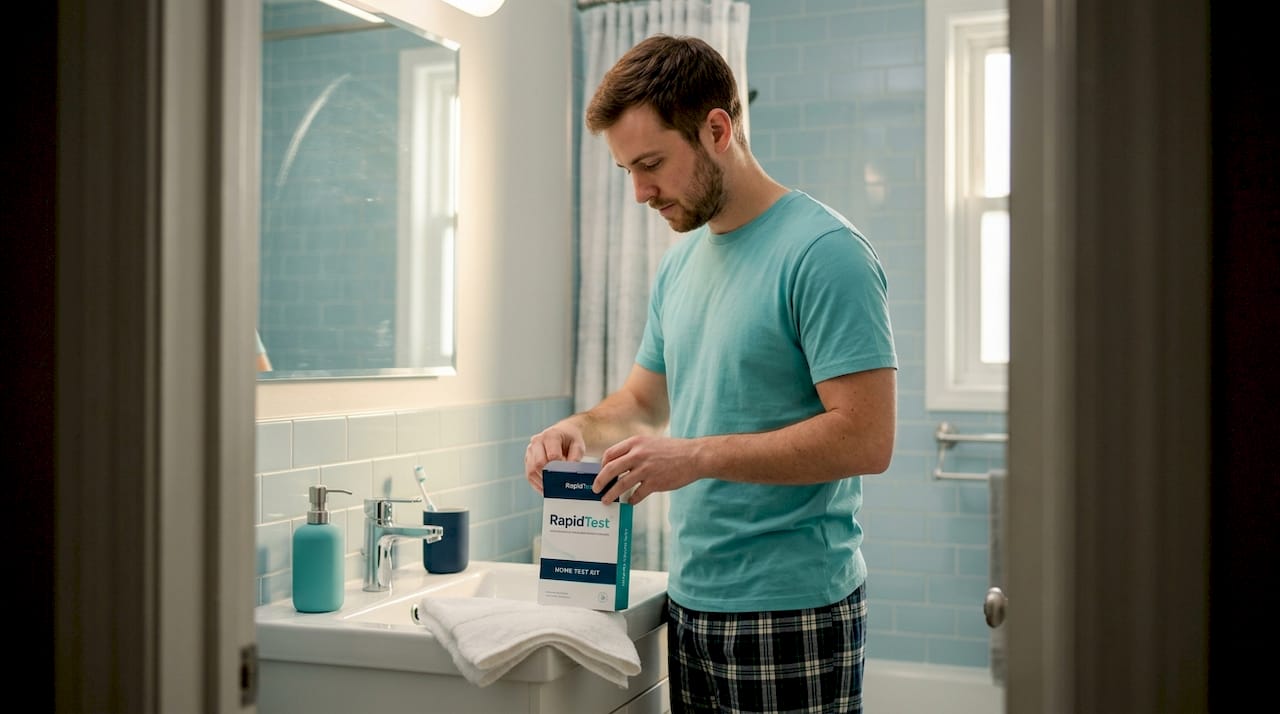
Reliable chlamydia rapid test kits that carry CE certification are available directly from trusted UK retailers, giving you both confidence in the result and full control over your privacy.
Step-by-step instructions for chlamydia self-testing
You’ve got your kit. Now let’s walk through the actual process clearly so there’s no guesswork involved.
Before you begin:
Read the instructions that came with your specific kit in full. Don’t skip this step. Different kits can have slight variations in sample collection technique, timing, or how to apply the buffer solution. Spend two minutes reading before you touch anything.
Step 1: Collect your sample
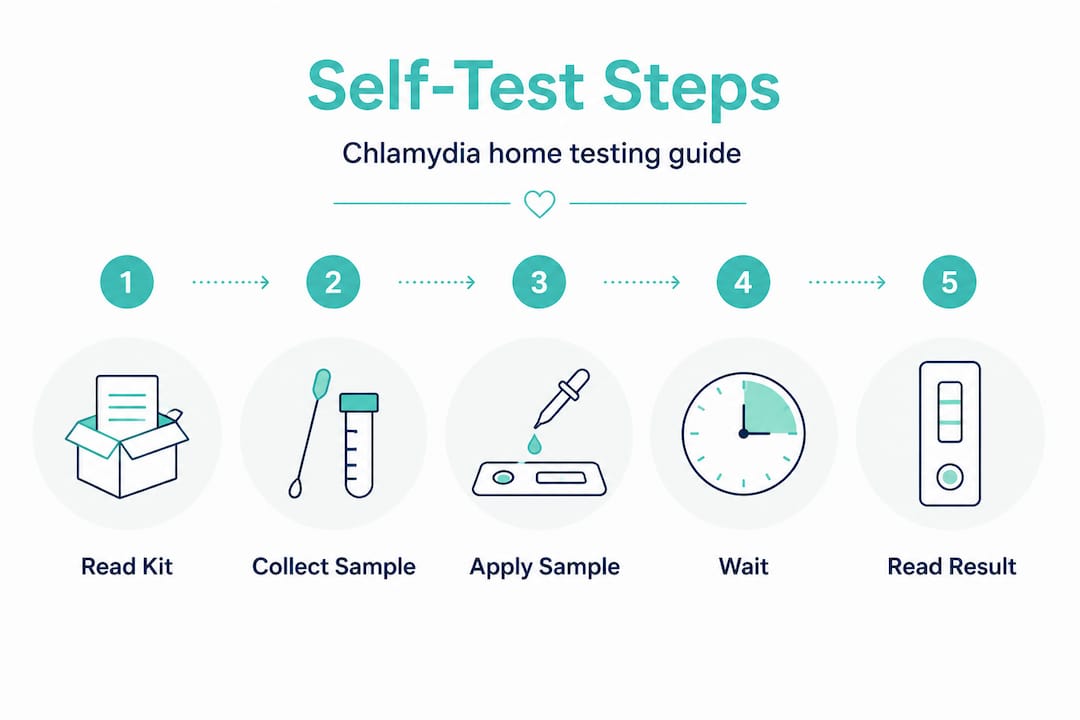
For vaginal swabs, insert the swab gently into the vaginal opening, rotate it for 15 to 30 seconds, and remove carefully. For urine-based kits, collect the first catch of urine in the provided container, usually the first few seconds of urination, as this contains the highest concentration of bacteria if present.
Step 2: Apply the sample to the test cassette
Transfer your sample using the method specified in your instructions. This usually involves dipping the swab into the buffer solution, then applying a few drops to the sample well on the test cassette. Take your time and be precise.
Step 3: Wait for your results
Most rapid kits ask you to wait 15 to 20 minutes. Set a timer and leave the cassette on a flat surface. Don’t pick it up or tilt it during this time. Reading results too early or too late can both cause errors.
Step 4: Read and record your result
Look at the lines that appear in the result window. Record exactly what you see. Two lines typically means negative. One line in the test area usually indicates positive. No lines at all means the test didn’t work correctly.
| Test type | Time to results | Typical accuracy |
|---|---|---|
| Rapid home kit | 15 to 30 minutes | 90% to 97% sensitivity |
| Mail-in lab kit | 2 to 5 days | 95% to 99% sensitivity |
Self-sampling accuracy is well-supported by research, particularly for vaginal swab collection, which consistently shows strong sensitivity rates when done correctly.
“Handle all biological samples with care. Wash your hands before and after sample collection. Dispose of used materials in the sealed bag provided and place in your regular household waste. Never flush swabs or cassettes down the toilet.”
Pro Tip: Keep your phone nearby during the testing window. If you’re unsure about any step, you can pull up the kit’s guidance online or contact the retailer’s support line. Most reputable brands offer real-time help.
For a more thorough breakdown of the full process, the at-home STI testing safety guide is worth reading. You’ll also find a broader STI screening guide useful if you’re considering testing for multiple infections at the same time.
Interpreting your chlamydia test results and next steps
Reading your result correctly is just as important as collecting the sample properly. Here’s what each outcome means and what you should do next.
Negative result:
This means chlamydia was not detected in your sample. If you’ve had no recent exposure since your last test and you used the kit correctly, this is reassuring. However, a negative result doesn’t mean you’re permanently clear. Regular testing every three to six months is still recommended if you’re sexually active with new or multiple partners.
Positive result:
A positive result means chlamydia was detected. This is not a crisis. Chlamydia is one of the most easily treatable bacterial infections. A single course of antibiotics prescribed by a doctor clears it effectively in the vast majority of cases. The key is acting quickly.
Inconclusive or invalid result:
If no lines appear, or the control line doesn’t show, the test hasn’t worked. This can happen due to sample collection error, a faulty kit, or improper storage. Don’t panic. Simply use a new kit and repeat the process.
Here’s a quick reference for next steps by result:
- Negative: Continue regular screening. Practice safe sex and retest after any new exposure or partner change
- Positive: Contact a GP or sexual health clinic for antibiotic treatment. Notify recent sexual partners so they can also test and treat if needed
- Inconclusive: Retest with a new kit. If results remain unclear, visit a clinic for a definitive lab test
Pro Tip: Take a photo of your result as soon as you read it. This gives you a record to share with a healthcare provider if needed, especially if you later need to discuss treatment or partner notification. Don’t rely solely on memory.
Understanding what your result means is straightforward once you know what to look for. A dedicated guide to reading test results at home can walk you through the line-reading process in detail. And if you want to explore further resources or learn more about chlamydia specifically, the chlamydia resources hub has everything in one place.
Research consistently supports the use of home self-sampling as a legitimate and effective method for chlamydia detection, with results you can act on just as you would with a clinic-based test.
The uncomfortable truth most guides miss about at-home chlamydia testing
Here’s something the standard “how-to” articles rarely address: the emotional side of testing yourself at home.
When you’re in a clinic, there’s a nurse or advisor on hand. If the result is positive, someone guides you through next steps, answers your questions, and helps you figure out what happens now. When you’re at home, it’s just you and a test cassette. That’s genuinely hard for some people, and there’s nothing wrong with admitting it.
The privacy that makes home testing so appealing is also the thing that can leave you feeling isolated if the result isn’t what you hoped. A lot of people take a positive result, feel overwhelmed, and then do nothing with it. That’s the real risk here. Not the test itself, but the follow-through.
We’ve seen this pattern repeatedly. People trust the test, get a result, and then let anxiety take over. The follow-up gets delayed. Partners don’t get notified. Treatment gets pushed back. And in the meantime, transmission continues.
The other thing worth saying honestly is that one negative result doesn’t mean you’re done. This is not a one-and-out scenario. If you’re sexually active with new or changing partners, regular testing is the only approach that actually protects you and the people you’re intimate with.
“A negative result today is not a guarantee for tomorrow. Treat testing as an ongoing habit, not a one-time reassurance.”
Understanding the safety and design of your home testing kit helps you use it with more confidence and less anxiety. And approaching every result, positive or negative, as a starting point rather than a final verdict is what actually keeps you healthy over time.
Pro Tip: Build testing into your routine the same way you’d schedule any other health check. Every three months if you’re regularly sexually active. Every time you have a new partner. It stops being a big deal when it’s just part of how you look after yourself.
Find trusted at-home STI test kits and get results fast
Now that you know exactly how home chlamydia testing works, the next step is making sure you’ve got a kit you can actually trust.
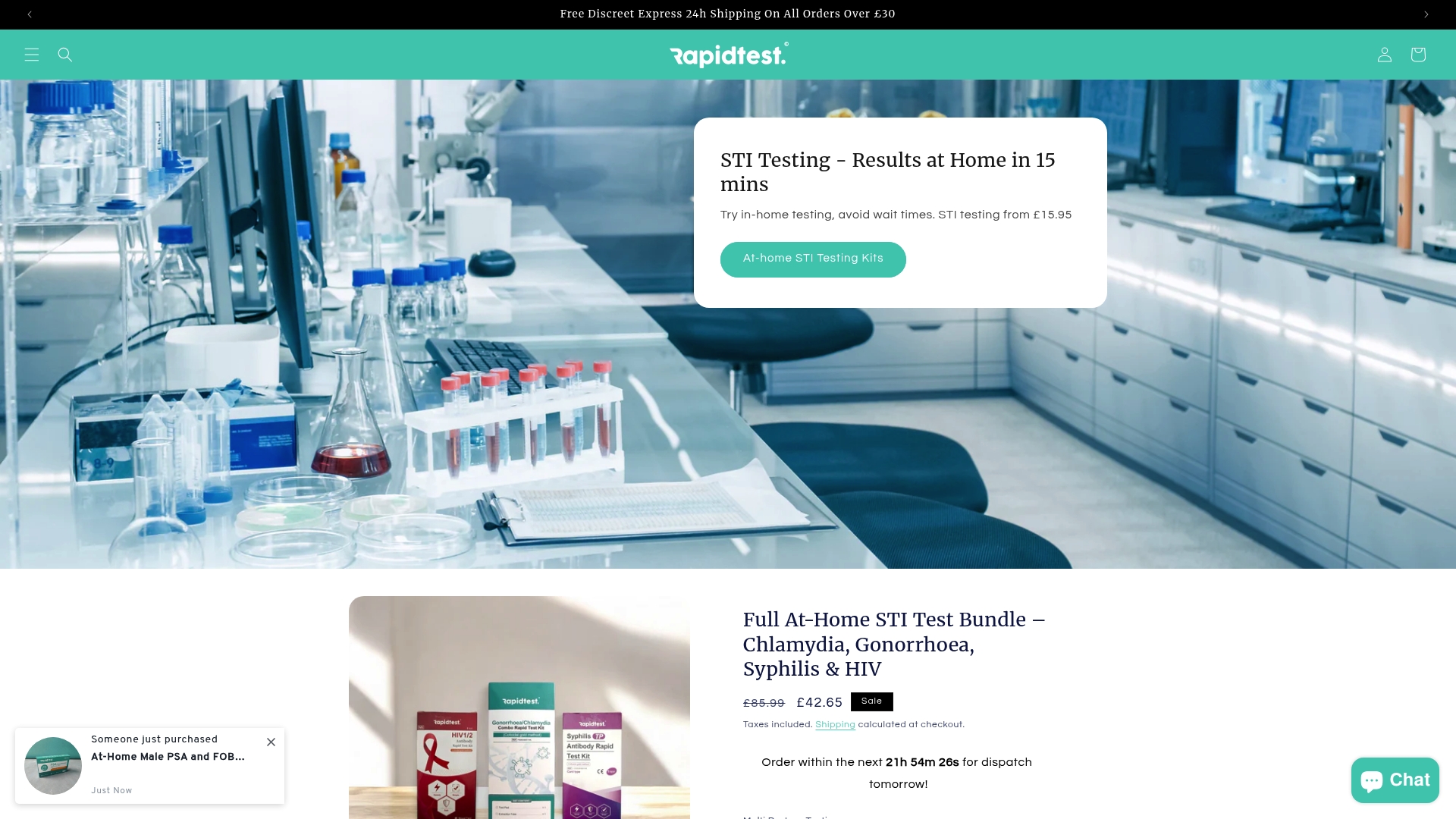
At Rapidtest, we stock CE-marked chlamydia rapid test kits that give you results in 15 minutes, no appointment, no queue, no awkward conversation required. Our kits are designed for real people with busy lives who want to stay on top of their sexual health without it becoming a production. We also stock broader STI panels if you want to test for multiple infections at once. And if you ever want guidance on using your kit correctly, our step-by-step testing resources are right there alongside every product. Fast. Private. Straightforward.
Frequently asked questions
Are at-home chlamydia tests accurate?
Yes. Home self-sampling is reliable, with high uptake and dependable results, particularly for vaginal swab collection in the UK, though lab-based kits generally offer slightly higher sensitivity.
How soon can I get results from an at-home chlamydia test?
Rapid test kits deliver results in 15 to 30 minutes, while mail-in kits that use lab analysis typically take between two and five days.
Who should get tested for chlamydia at home?
Any sexually active adult should consider regular testing, but under-25s in the UK are particularly encouraged through the National Chlamydia Screening Programme, given the higher infection rates in this age group.
What should I do if my home chlamydia test is positive?
Contact a GP or sexual health clinic as soon as possible for a course of antibiotics, and notify any recent sexual partners so they can also get tested and treated promptly.
Can I test for more than one STI at home?
Yes. Many at-home testing kits allow simultaneous screening for multiple STIs, including chlamydia and gonorrhea, using the same convenient and private process.