


What is HIV rapid testing? Quick, private screening explained
Nearly 45% of HIV tests in England are now self-sampled or done online. That’s not a small shift. It means the old image of booking a clinic appointment, sitting in a waiting room, and waiting days for a phone call is quickly becoming outdated. HIV rapid testing has gone mainstream, and for good reason. If you’re a man over 40 who wants to stay on top of your sexual health without the hassle or awkward conversations, this guide is for you. We’ll walk you through exactly what rapid testing is, how it works, and what to do with your results.
Table of Contents
- What is HIV rapid testing?
- How HIV rapid tests work: Types and mechanics
- Accuracy, timing, and the window period
- Risks, consumer info, and post-test actions
- Our take: What most guides miss about HIV rapid testing
- Fast, private testing: At-home solutions for your peace of mind
- Frequently asked questions
Key Takeaways
| Point | Details |
|---|---|
| Rapid and private | HIV rapid testing allows men to screen privately at home with results in under 20 minutes. |
| Accuracy depends on timing | Testing too soon after exposure may lead to false negatives, so follow window period guidelines for reliable results. |
| Follow-up is essential | Any positive or uncertain rapid result must be followed up with confirmatory laboratory testing at a clinic. |
| Information gaps exist | Many kits lack clear accuracy and post-test action info, so users should seek reliable guidance. |
What is HIV rapid testing?
HIV rapid testing is exactly what it sounds like: a way to test for HIV that gives you a result fast, usually within 15 to 20 minutes. You don’t need a lab, a doctor’s appointment, or even to leave your home. That’s a big deal for anyone who’s ever put off testing because life got in the way.
Traditionally, HIV testing meant going to a clinic, giving a blood sample, and then waiting several days for results to come back from a laboratory. Rapid HIV tests give results in minutes at the point of care or at home, while clinic tests may take days. That waiting period is stressful for most people, and for many men, it’s enough to put them off testing altogether.
Rapid testing flips that. As UKHSA guidance notes, rapid testing is designed to provide immediate results and improve access, particularly for people who face barriers to traditional healthcare settings.
Here’s a quick look at how rapid testing compares to standard clinic testing:
| Feature | Rapid home test | Standard clinic test |
|---|---|---|
| Time to result | 15 to 20 minutes | 2 to 7 days |
| Location | At home | Clinic or lab |
| Sample type | Saliva or finger-prick | Venous blood |
| Privacy | Very high | Moderate |
| Confirmatory follow-up | Needed if positive | Done within clinic |
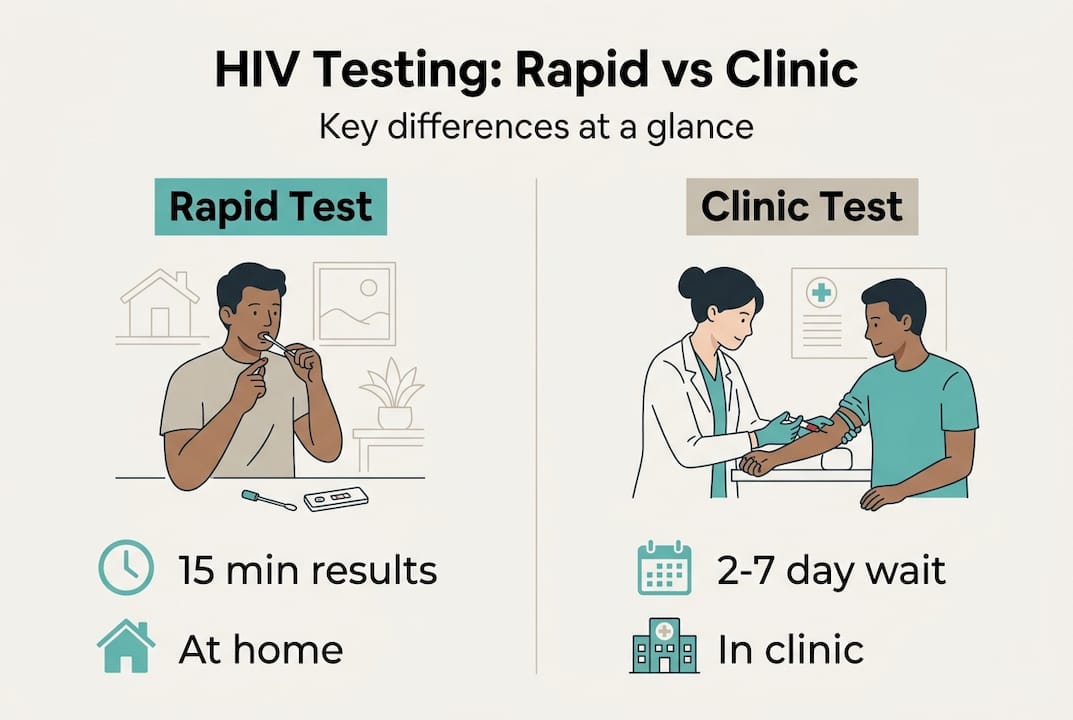
What makes rapid testing especially useful for men over 40 is its privacy. You can screen yourself discreetly, at a time that suits you, without involving anyone else. No receptionist. No waiting area. No explaining yourself to anyone.
You can find out more about how these kits work in our self-testing kit explained guide. The key takeaways for now are:
- Results arrive within minutes, not days
- Testing can happen in your own home
- Kits use simple sample collection methods
- A positive result requires clinic follow-up for confirmation
- Negative results offer immediate reassurance for most exposures
How HIV rapid tests work: Types and mechanics
Now that you know what rapid testing is, let’s break down how these kits actually work, from sample collection to getting your result.
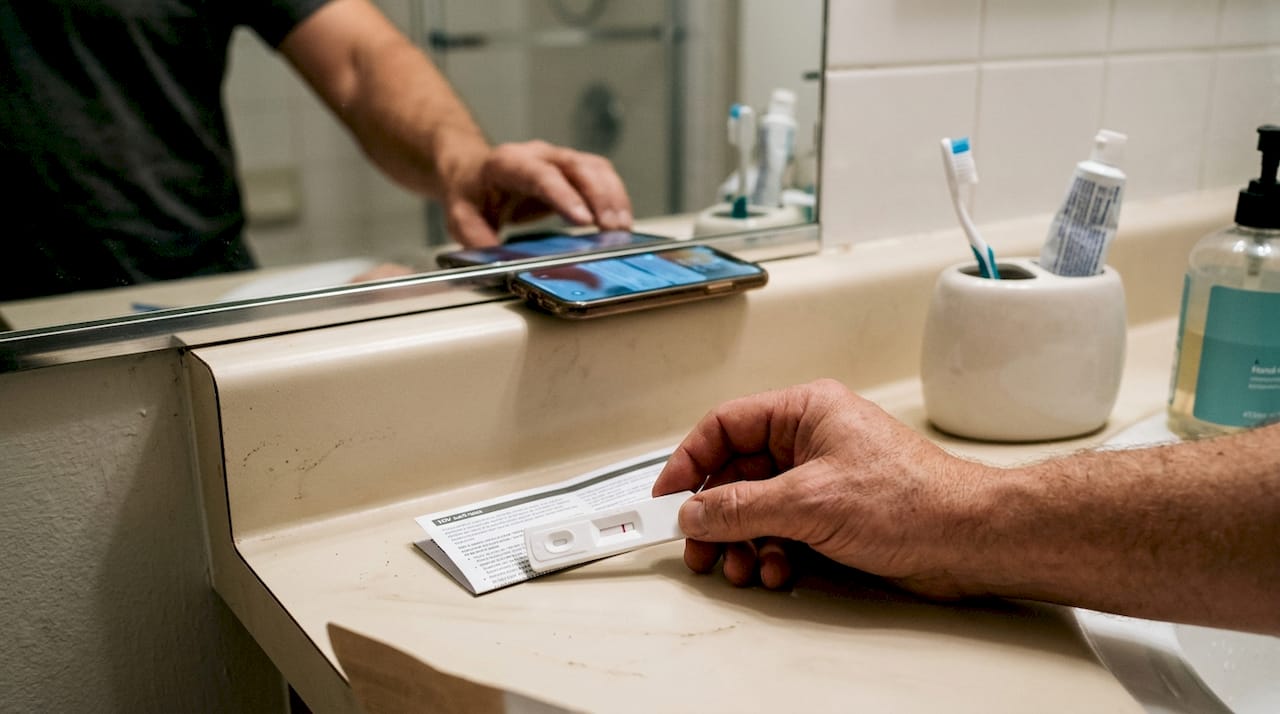
Most at-home HIV kits use one of two sample types: saliva collected from your gum line, or a small drop of blood from a finger prick. Both methods are straightforward, and the kit instructions walk you through every step. NHS guidance confirms that tests use saliva or finger-prick blood, and that a positive result is preliminary and requires confirmatory testing.
Here’s the general process:
- Purchase your kit from a trusted, regulated supplier
- Read all instructions before starting, start to finish
- Collect your sample using the swab or lancet provided
- Apply the sample to the test device as directed
- Wait the specified time, usually 15 minutes, without disturbing the test
- Read your result against the guide in the kit, not from memory
- Follow up at a clinic immediately if the result is reactive
“A positive rapid test result is a preliminary finding, not a definitive diagnosis. Always seek confirmatory testing at a sexual health clinic.”
Pro Tip: Always read the result within the exact timeframe shown in your kit’s instructions. Reading too early or too late can give a misleading outcome. Set a timer.
If your result is negative and you had no recent exposures, you can feel reassured. If the result is reactive (positive-looking), don’t panic. As the UKHSA recommends, confirmatory laboratory testing after a reactive rapid result is the essential next step before any diagnosis is made.
If you’re thinking about testing beyond HIV, our full STI testing bundle covers a broader range of infections in one go. And if you have questions about staying private while testing at home, check out our privacy tips for men.
Accuracy, timing, and the window period
Understanding mechanics isn’t enough. Timing and accuracy are critical for meaningful at-home HIV screening.
The window period is the gap between when someone is exposed to HIV and when a test can reliably detect it. Testing too soon after exposure can produce a false negative, where the test shows negative even though HIV is present. This is because your body hasn’t yet produced enough antibodies or antigens for the test to pick up.
As UKHSA/RCPath guidance states, accuracy is influenced by sample type, frequency, window period, and correct interpretation, and testing soon after exposure can produce false negatives.
Here’s a comparison worth keeping in mind:
| Test type | Detection window | Accuracy when used correctly |
|---|---|---|
| 4th gen lab test | 45 days post-exposure | Very high (>99%) |
| Rapid blood test | 45 to 90 days post-exposure | High (around 99%) |
| Rapid saliva test | 90+ days post-exposure | Good, slightly lower sensitivity |
For the most reliable result, follow these steps:
- Wait at least 45 days after potential exposure before testing
- Choose a blood-based (finger-prick) kit if you tested shortly after exposure
- Use only kits that are marked and regulated for self-testing
- Always confirm a positive result at a clinic with a full laboratory test
- Repeat testing if you remain uncertain or have ongoing exposures
Pro Tip: If you know the date of potential exposure, check out our guidance on when to test after exposure before purchasing a kit. Testing at the right time makes a real difference to your result’s reliability.
For a deeper look at window periods and which kit timing fits your situation, we’ve got you covered.
Risks, consumer info, and post-test actions
With timing and accuracy in mind, it’s vital to look at real-world risks and responsibilities for at-home HIV rapid testing.
Here’s something that doesn’t get talked about enough. A 2025 BMJ study found that most at-home HIV self-tests lack clear post-test guidance and accuracy statements. That means men buying these kits are often left without a clear next step if results come back reactive, or unclear.
Important: A reactive result is not a diagnosis. But it is a signal that needs fast, professional follow-up. Don’t sit on it.
There are also real usability risks associated with self-testing. These include reading results incorrectly, using the wrong sample volume, or misidentifying what a faint line means.
Here’s what responsible at-home testing looks like:
- Always use regulated kits that are CE marked and approved for self-testing in the UK and Europe
- Read the full instructions before opening anything in the kit
- Do not use expired kits, even if the test looks fine
- Photograph your result within the reading window for reference
- Contact a sexual health clinic the same day if your result is reactive
- Don’t delay treatment if you’re worried. Modern HIV treatment is highly effective when started promptly
We’ve covered the broader picture in our guide on the rise of at-home STI testing, including how to select kits you can actually trust. Our self-testing kit info page also breaks down exactly what to look for on packaging and labeling before you buy.
Our take: What most guides miss about HIV rapid testing
Here’s what most basic HIV testing guides forget to mention, especially when writing for men over 40.
Privacy is the reason most men choose rapid home testing. That’s totally valid. But privacy alone won’t get you the emotional support you might need if a result isn’t what you hoped for. Rapid testing solves the access problem brilliantly. It does not solve the guidance or reassurance problem.
If you get a reactive result alone at home, the next few hours can be frightening. Knowing in advance where to turn, which clinic, which helpline, which trusted person makes that moment far more manageable.
We also think too many men treat a negative home test as a permanent green light. It isn’t. Regular testing, especially if you’re sexually active with more than one partner, is the real foundation of sexual health. A negative result today tells you about yesterday, not tomorrow.
Treat a preliminary positive as a call to connect with health resources, not as a final verdict. And use our privacy guide for men 40+ to plan your testing routine in a way that fits your life without adding stress.
Fast, private testing: At-home solutions for your peace of mind
You know the facts. Now here’s how to put that knowledge into action quickly and privately.
At Rapidtest, we offer regulated, reliable kits that give you a result in 15 minutes, no queues, no doctor, no awkward conversations. Our rapid HIV testing kit is 99.8% accurate and designed specifically for at-home use across the UK and Europe.
If you want to cover more ground in one go, our 15-minute at-home STI testing bundle screens for multiple infections quickly and discreetly. Everything ships in plain packaging. Visit our HIV rapid test page for full details on how to get started today.
Frequently asked questions
How quickly can I get HIV rapid test results at home?
Most at-home kits provide results within minutes of sample collection, typically 15 to 20 minutes. No waiting room, no delays.
Does a positive HIV rapid test mean I definitely have HIV?
No. A reactive rapid result is preliminary only. Confirmatory blood testing at a sexual health clinic is always required before any diagnosis is made.
Is rapid HIV testing less accurate than clinic testing?
Rapid tests are highly reliable when used correctly, but test accuracy depends on timing, sample type, and interpretation. Clinic tests offer built-in confirmatory follow-up.
What should I do if I test negative but was exposed recently?
Repeat testing is recommended. A window period affects reliability, meaning a negative result shortly after exposure may not be accurate. Retest at 45 to 90 days.
Are at-home HIV tests private and safe for men over 40?
Yes. UK and European kits are designed for private, fast self-screening. As BMJ 2025 research highlights, users should read all instructions carefully and seek post-test guidance if results are unclear.