


How to check your health status at home
Checking your health status at home means regularly measuring key vital signs and completing simple self-assessments without visiting a clinic. A 10-minute baseline check can cover blood pressure, waist circumference, sleep quality, and stress level. With the right tools, including blood pressure monitors, pulse oximeters, glucometers, and home testing kits from services like Rapidtest, you get a clear picture of where you stand. No queues, no waiting rooms, no awkward conversations.
How to check health status at home: the tools you need
The right equipment makes the difference between a useful reading and a wasted effort. You do not need a clinical setup. You need a small, reliable kit of devices suited to the health markers that matter most to you.
Here is a breakdown of the most useful home health monitoring tools:
- Blood pressure monitor. An automatic arm cuff is the gold standard. Arm cuff devices must cover 80% of your upper arm for accurate readings. Wrist and finger monitors are less reliable and best avoided.
- Pulse oximeter. A clip-on device that measures blood oxygen saturation in seconds. Affordable, widely available, and useful for anyone with respiratory concerns.
- Glucometer or CGM. A finger-prick glucometer gives a snapshot of blood sugar. A continuous glucose monitor (CGM) sends real-time readings wirelessly to a compatible device, making it far more useful for trend tracking.
- Mobile ECG device or smartwatch. Devices like the KardiaMobile or an Apple Watch can detect atrial fibrillation by recording your heart rhythm. Most require 30 seconds of finger contact. Wrist-based devices cost between £65 and £200 and are not typically covered by insurance.
- Tape measure and scales. Simple, free, and underused. Waist circumference is one of the strongest predictors of metabolic risk.
- Home testing kits. At-home preventive screenings can detect conditions like diabetes, high cholesterol, STIs, and some cancer markers. Rapidtest offers kits for sexual health, fertility, PSA levels, and bowel cancer screening, with results in 15 minutes.
| Tool | What it measures | Approximate cost | Best for |
|---|---|---|---|
| Arm cuff blood pressure monitor | Blood pressure | £25 to £60 | Hypertension monitoring |
| Pulse oximeter | Blood oxygen saturation | £10 to £30 | Respiratory health |
| Glucometer | Blood sugar | £15 to £40 | Diabetes risk and management |
| Mobile ECG device | Heart rhythm | £65 to £200 | Atrial fibrillation detection |
| Home testing kit (e.g. Rapidtest) | STI, PSA, fertility, FOB | £10 to £30 | Private preventive screening |
Pro Tip: Buy a validated blood pressure monitor from the British and Irish Hypertension Society’s approved list. Not all devices on the market meet clinical accuracy standards, and the difference matters.
Step-by-step: how to perform key health checks at home
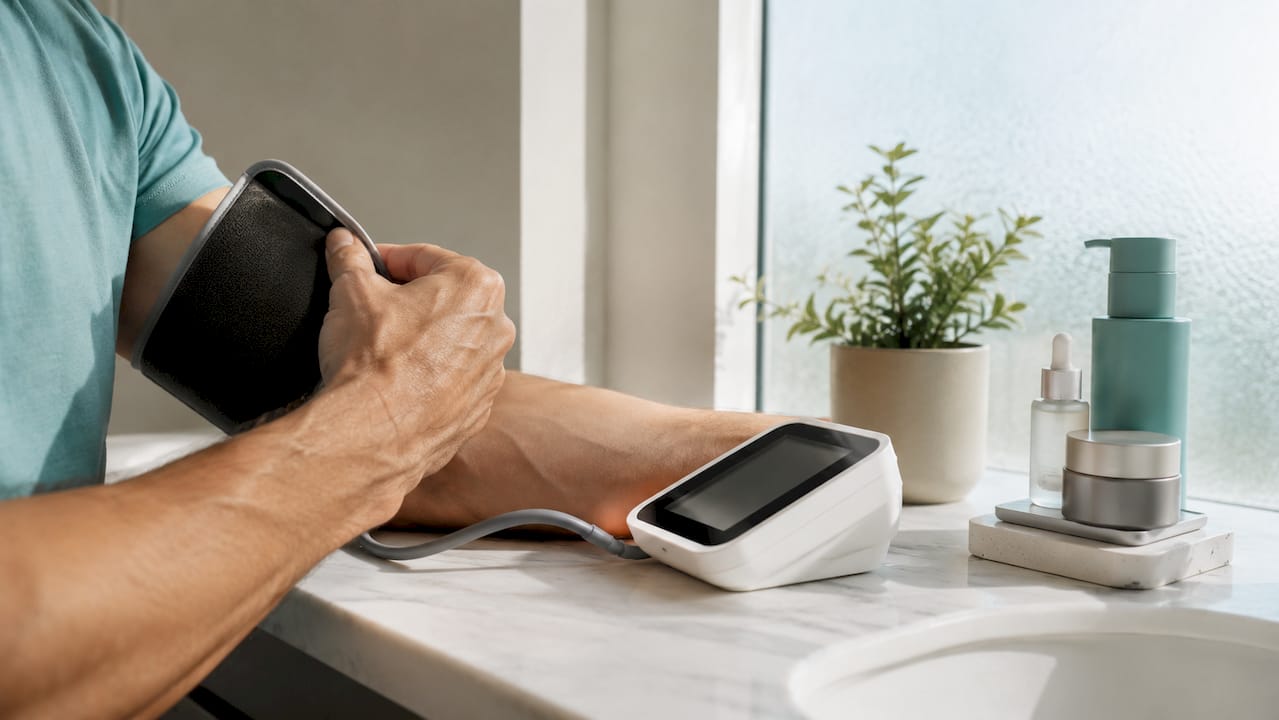
Knowing which tools to use is only half the job. How you use them determines whether your readings are worth anything. Follow these steps for each core check.
Blood pressure
- Sit quietly for five minutes before measuring. Avoid caffeine, exercise, or smoking for at least 30 minutes beforehand, as improper preparation can cause falsely high readings.
- Sit with your back supported, feet flat on the floor, and your arm resting at heart height on a table.
- Place the cuff on your bare upper arm, two finger-widths above the elbow.
- Press start and stay still. Do not talk.
- Record the reading. Take two or three readings, two minutes apart, and use the average.
Oxygen saturation
- Clip the pulse oximeter onto a clean, warm fingertip. Cold hands reduce accuracy.
- Stay still for 30 to 60 seconds.
- A healthy oxygen saturation is 95% or above. Readings below 92% warrant prompt medical attention.
Heart rhythm
- Open your ECG app or device.
- Place your fingers on the sensors for 30 seconds as instructed.
- Review the reading for any irregular rhythm flags. Share results with your GP if the device flags a concern.
Blood sugar
- Wash and dry your hands thoroughly.
- Use the lancet to prick the side of a fingertip.
- Apply a small drop of blood to the test strip and wait for the reading.
- A fasting reading below 5.6 mmol/L is normal. Between 5.6 and 6.9 mmol/L suggests prediabetes.
Waist circumference
- Stand relaxed and breathe out normally.
- Wrap a tape measure around your bare waist, midway between your lowest rib and the top of your hip bone.
- For men, a waist above 94 cm carries increased health risk. For women, the threshold is 80 cm.
Sleep and stress self-rating
Rate your sleep quality and stress level on a simple 1 to 5 scale each morning. Poor sleep is linked to diabetes and heart disease. Consistently high stress scores are a signal worth discussing with a healthcare professional.
Pro Tip: Do your blood pressure check at the same time each day, ideally in the morning before medication. Consistency matters far more than a single perfect reading.
How to interpret your results and when to get help
A single reading tells you very little. Tracking trends over time is what gives home monitoring its real value, because patterns reveal what a one-off clinic visit cannot. That said, some readings do require immediate action.
Here are the normal ranges to keep in mind:
| Measurement | Normal range | When to act |
|---|---|---|
| Blood pressure | Below 120/80 mmHg | Above 180/120 mmHg: seek urgent care |
| Oxygen saturation | 95% or above | Below 92%: contact a doctor promptly |
| Fasting blood sugar | Below 5.6 mmol/L | Above 7.0 mmol/L: speak to your GP |
| Waist circumference (men) | Below 94 cm | Above 102 cm: high metabolic risk |
| Waist circumference (women) | Below 80 cm | Above 88 cm: high metabolic risk |
Home tests are screening tools, not diagnostic ones. A positive result from a Rapidtest STI kit or a PSA reading above the normal range does not confirm a diagnosis. It tells you something needs following up. Knowing how to read your results with confidence is the difference between panic and a productive next step.
Watch out for these red flags that need same-day or urgent medical attention:
- Blood pressure above 180/120 mmHg, especially with headache, chest pain, or vision changes
- Oxygen saturation below 90%
- Fasting blood sugar above 11.0 mmol/L
- Irregular heart rhythm flagged repeatedly by an ECG device
- Any home test result you do not understand or that contradicts how you feel
Share your home monitoring data with your GP at your next appointment. A log of readings over several weeks is far more useful to a clinician than a single number you recall from memory.
What are the benefits and limitations of home health monitoring?
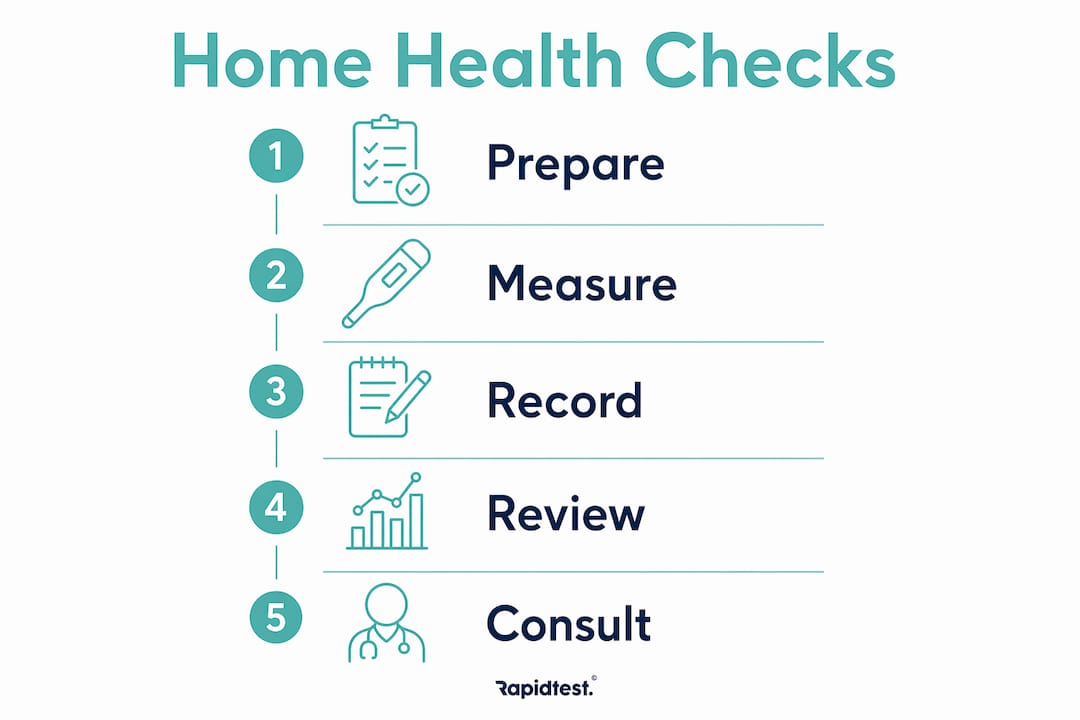
Home health monitoring gives you something the NHS cannot always offer: consistency. You can check your readings weekly, spot a trend before it becomes a crisis, and walk into a GP appointment with actual data rather than vague symptoms.
The benefits are real. Early detection of rising blood pressure, irregular heart rhythm, or elevated blood sugar can prompt earlier intervention. Remote patient monitoring programmes in clinical settings require devices to upload data regularly to qualify for chronic condition management, which reflects how seriously structured home monitoring is taken by healthcare systems. For people managing long-term conditions, that consistency is genuinely life-changing.
“The main value of home monitoring is spotting trends to manage chronic conditions effectively.” — Dr Howard LeWine, Harvard Health
The limitations are equally real, though. Accuracy depends entirely on correct technique. A poorly fitted cuff, cold fingers on a pulse oximeter, or a glucometer used without clean hands will give you a misleading number. Home health tools supplement but do not replace professional clinical assessments. They are not a substitute for a GP, a blood panel, or a specialist referral.
Pro Tip: Keep a simple health log, whether in a notebook or an app like Apple Health or Samsung Health. A week of readings is useful. Three months of readings is genuinely powerful.
The most common misunderstanding about home testing kits is that a negative result means you are completely clear. It means the test did not detect what it was looking for, within its detection window. Reading the instructions carefully and understanding what each kit does and does not screen for is non-negotiable. Rapidtest’s self-testing kit guidance walks you through exactly what each result means.
Key takeaways
Checking your health at home works best when you combine consistent device-based measurements with reliable testing kits and share your findings with a healthcare professional.
| Point | Details |
|---|---|
| Start with the basics | Blood pressure, oxygen saturation, and waist circumference cover the most critical risk markers. |
| Use validated devices | Arm cuff monitors with correct sizing give the most reliable blood pressure readings. |
| Track trends, not snapshots | A log of readings over weeks reveals patterns that a single clinic visit cannot. |
| Know your red flags | Oxygen below 92% or blood pressure above 180/120 mmHg requires same-day medical attention. |
| Home tests are screening tools | Positive or borderline results need professional follow-up, not self-diagnosis. |
Why I think most people are doing home health checks wrong
Here is what I have noticed after years of writing about preventive health. Most people buy a blood pressure monitor after a scare, use it three times, get confused by the numbers, and put it in a drawer. That is not monitoring. That is panic followed by avoidance.
The people who genuinely benefit from home health checks are the ones who treat it like a routine, not a reaction. Ten minutes, once a week, same time, same conditions. You log the numbers. You notice when something shifts. You bring that log to your GP and suddenly you are having a completely different kind of conversation. One where you have data and they have context.
I also think there is a real gap in how people use home testing kits. They are brilliant tools, but only if you understand what they are screening for and what the result actually means. A Rapidtest STI kit or PSA test does not give you a diagnosis. It gives you information. And information, used well, is what keeps small problems from becoming big ones.
The other thing worth saying: do not wait until something feels wrong. Most of the conditions that home monitoring catches early, including high blood pressure, elevated PSA, and irregular heart rhythm, have no obvious symptoms in the early stages. That is exactly why checking matters.
— Jack
Get started with Rapidtest at-home health kits
Rapidtest makes it straightforward to take your health into your own hands. Whether you want to screen for STIs privately, check your PSA levels for prostate health, or explore fertility testing options for you or your partner, Rapidtest has a kit for it. Results arrive in 15 minutes, at home, with no appointment and no waiting room. Every kit is designed to be simple to use and easy to understand. If a result raises a question, take it to your GP. That is exactly what it is there for. Browse STI testing kits and PSA test kits at Rapidtest today.
FAQ
What is a home health assessment?
A home health assessment is a self-conducted review of key health markers, including blood pressure, oxygen levels, blood sugar, and waist circumference, using consumer-grade devices and testing kits. It gives you a baseline picture of your health without a clinical appointment.
How accurate are home health monitoring devices?
Accuracy depends on the device and how correctly you use it. Arm cuff blood pressure monitors with correct sizing are the most reliable for home use. Wrist and finger monitors are less accurate. Following the preparation steps, such as resting beforehand and avoiding caffeine, significantly improves results.
Can a home testing kit replace a GP appointment?
No. Home testing kits are screening tools that flag potential concerns. They do not diagnose conditions. Any result that falls outside the normal range, or that you are unsure about, should be discussed with a healthcare professional.
How often should I check my health at home?
For most people, a weekly blood pressure check and monthly waist measurement is a practical starting point. If you are managing a chronic condition, your GP may recommend more frequent monitoring. Consistency matters more than frequency.
What should I do if a home test result looks abnormal?
Do not ignore it and do not self-diagnose. Write down the result, note when you took the test and any relevant context, and contact your GP. For urgent red flags such as very low oxygen saturation or very high blood pressure, seek medical attention the same day.